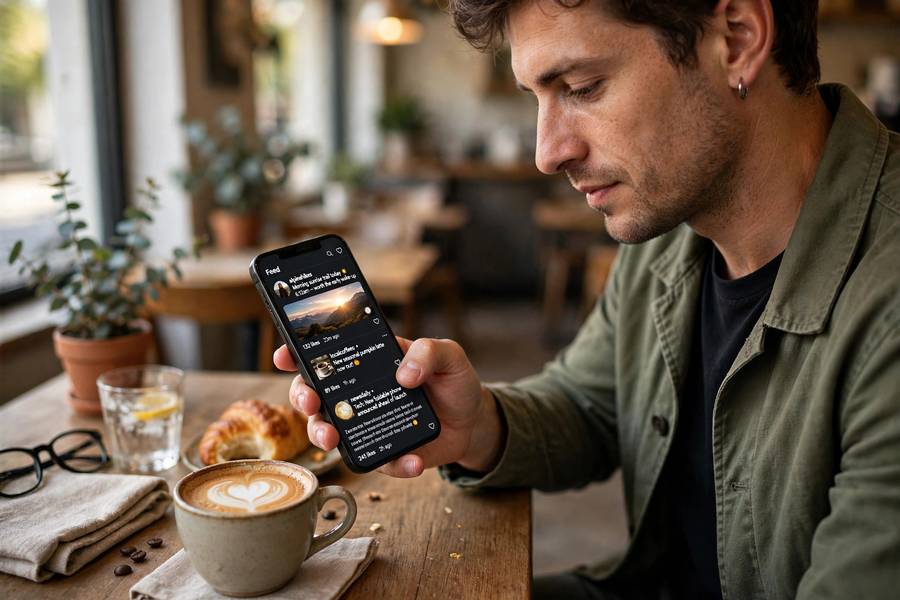
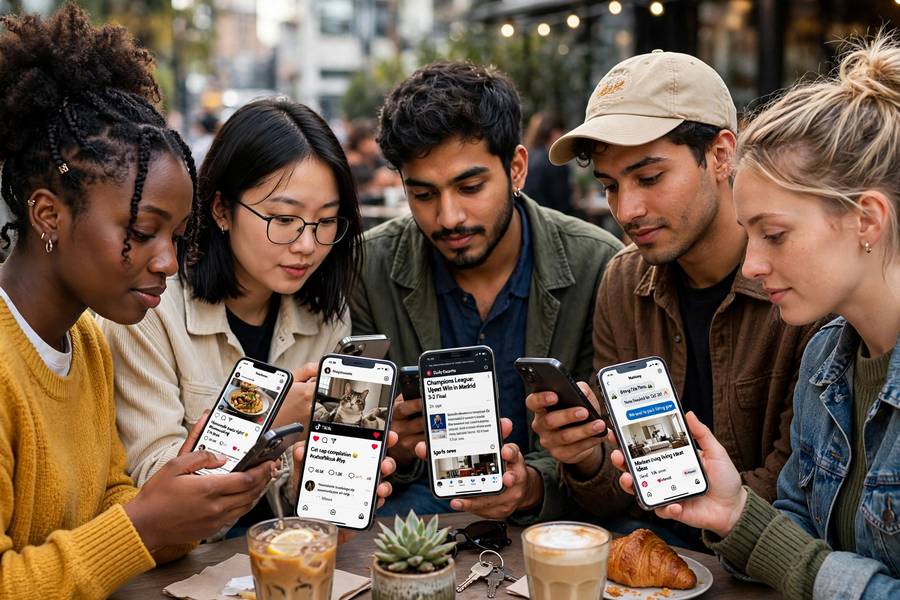
Your Facebook feed, your X timeline, your LinkedIn homepage — none of them show you everything. Each shows you a ranked selection, chosen by algorithms, from far more content than you could ever read. Two friends with the same 500 connections see different feeds. The same person sees a different feed at 9am than at 9pm. The news feed is not a window — it’s a curation, and the curator is a machine optimizing for engagement.
I’ve always thought news feeds are the most consequential recommendation systems ever built — more than Netflix or Spotify — because they mediate not just entertainment but information, relationships, and public discourse. Understanding them isn’t optional anymore; it’s civic literacy. Here’s how they work, platform by platform, and what you can do about it. The shared math is in how recommendation algorithms work.
Table of Contents
- The Problem Every Feed Solves
- The Universal Ranking Formula
- Facebook: Meaningful Interactions
- X (Twitter): Velocity and Your Graph
- LinkedIn: Professional Relevance
- The Signals: What Gets Measured
- Why You See What You See (and Don’t See the Rest)
- The Engagement Trap
- Taking Back Control
- Frequently Asked Questions
The Problem Every Feed Solves
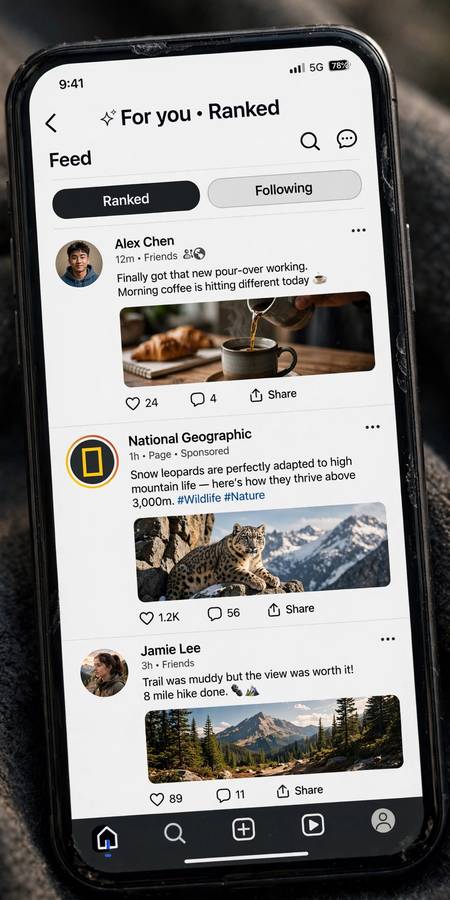
The average user follows hundreds of accounts. Those accounts post thousands of items daily. Nobody can read thousands of posts — so every platform must choose. The feed algorithm’s job: from everything available, select and order the few dozen items you’ll actually see.
This is recommendation with a twist: the inventory isn’t a catalog of movies or products — it’s your social world. What’s being ranked is your friends’ updates, news from pages you follow, suggested content, and ads. The ranking doesn’t just shape your entertainment; it shapes your relationships (whose life events you see) and your worldview (which news reaches you).
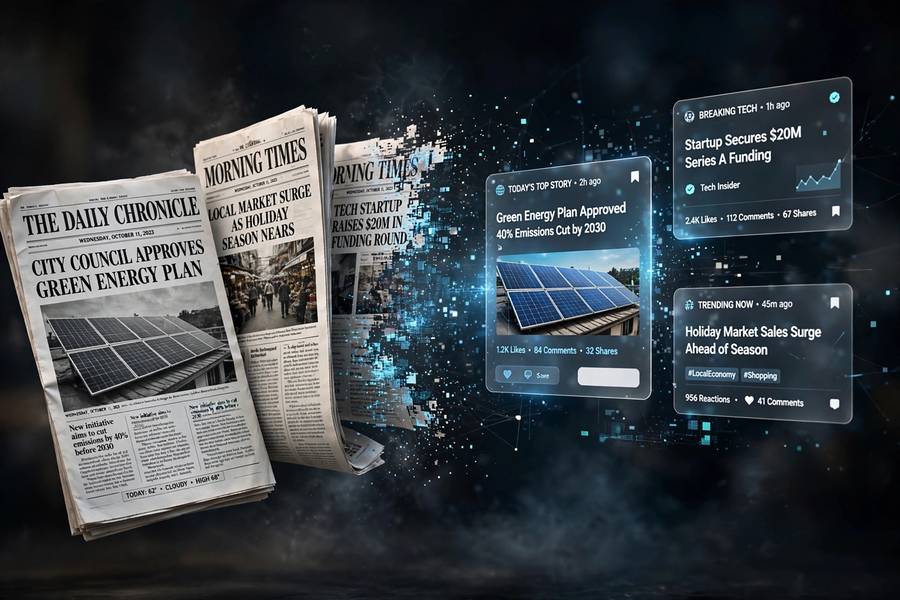
The chronological feed — everything in time order — was the original solution, and it’s still available (buried) on most platforms. The algorithmic feed replaced it because chronological has a flaw: the best content drowns in the merely recent. If your brilliant friend posts at 3am, chronological buries it. Algorithmic promises: we’ll surface what matters most, whenever it was posted.
That promise is genuine. The price is everything below.
The Universal Ranking Formula
Despite platform differences, every news feed ranks with the same skeleton:
Score = predicted engagement × relationship strength × recency × content quality signals
Each platform weights differently, but the components are universal:
Predicted engagement. For each post, for you, specifically: how likely are you to like, comment, share, click, dwell? Machine learning models trained on your history produce these probabilities. This is the dominant term everywhere.
Relationship strength. How close are you to the poster? Measured by interaction frequency, profile visits, mutual connections, messaging. Your best friend’s posts outrank acquaintances’ — the system models your social graph’s weights.
Recency. Newer posts score higher, with decay curves tuned per platform. X decays fast (hours); LinkedIn slower (days); Facebook in between. Recency is why feeds feel “fresh” — the algorithm is biased toward now.
Content signals. The post’s own performance: early engagement velocity, media type (video usually boosted), length, and quality classifiers (spam detection, misinformation flags, “integrity” scores).
Multiply these, rank, display top N. Simple formula, profound consequences.
Facebook: Meaningful Interactions
Facebook’s stated ranking philosophy since 2018: prioritize “meaningful social interactions” — content that sparks conversations between people who know each other.
In practice, the ranking weights:
Comments and shares above likes — especially comments, and especially comments that get replies (conversation depth). A post with 50 comments outranks one with 500 likes.
Close relationships — family and close friends (measured by interaction history) get priority. Facebook explicitly wants your feed to feel personal, not publisher-driven.
Groups — group posts get significant distribution, since groups drive the “meaningful interaction” metric well.
Video — particularly longer video with high completion, though Facebook has dialed video boosting up and down over the years as strategy shifted.
The consequence: Facebook’s feed is optimized for discussion, which means it’s optimized for the kinds of posts that generate discussion — opinions, life events, debates, and yes, arguments. “Meaningful interaction” is a euphemism that includes your uncle’s political rant getting 200 comments. The algorithm doesn’t distinguish meaningful from merely heated; engagement is engagement.
Facebook also offers “Most Recent” (chronological) via a buried menu, and “Favorites” — up to 30 friends/pages prioritized. These controls exist; almost nobody uses them.
X (Twitter): Velocity and Your Graph
X’s timeline (“For You”) is the most velocity-driven of the major feeds:
Recency dominates. X is a real-time platform; the ranking decays fast. A post from six hours ago is ancient. This makes X the best platform for breaking news and the worst for anything requiring reflection.
Your interaction graph. Likes, reposts, replies, follows — X maps who you engage with and boosts their content plus content engaged with by people you engage with (second-degree amplification).
Velocity. Posts gaining engagement fast get boosted fast — the system detects breakout content in minutes and amplifies it. This is why things “blow up” on X: the algorithm is designed to catch and ride waves.
The “For You” vs “Following” split. X maintains both: algorithmic (“For You”) and chronological-ish (“Following”). The default is algorithmic, and the platform nudges toward it — but the Following tab exists, a rare concession to user control.
Reply dynamics. Replies are weighted heavily, which on X means dunking and discourse get amplified. The platform’s reputation for argumentativeness isn’t accidental — it’s the ranking formula expressing itself.
X’s feed is the purest engagement machine of the bunch: fast, reactive, and optimized for the heat of the moment. Informative in a crisis; exhausting as a lifestyle.
LinkedIn: Professional Relevance
LinkedIn’s feed optimizes for professional value — or its engagement proxy:
Professional graph. Your connections, colleagues, industry peers. Relationship strength here means professional proximity — same industry, same company, shared connections.
Dwell time. LinkedIn famously weights how long you spend on a post — including time spent reading before the “see more” expansion. Thoughtful content that holds attention wins.
Early engagement. Posts that get quick likes and comments from your network get broader distribution. The first hour determines a post’s fate — which is why “engagement pods” (groups that mutually engage) game the system.
Content type. Native video, documents/carousels, and text posts with genuine discussion outperform external links — LinkedIn, like all platforms, penalizes content that takes you away.
The cringe factor. LinkedIn’s optimization for engagement produced the infamous “broetry” — single-sentence-per-line inspirational posts engineered for dwell time and comments. The format is the algorithm made visible: content shaped to the metric.
LinkedIn is the most transparent about its ranking (it publishes explanations), and the most professionally consequential — the feed influences careers, hiring perceptions, and industry discourse.
The Signals: What Gets Measured
Across platforms, the measured behaviors:
Explicit: likes, reactions, comments, shares/reposts, saves, follows from feed, clicks, “not interested”/hide/mute, report.
Implicit: dwell time per post, scroll speed, profile taps, media expansions, video watch time and completion, return visits to a post.
Relational: interaction frequency with each poster, messaging, profile visits, mutual connections, group co-membership.
Content: post format, length, media type, posting time, early engagement velocity, link vs. native, language.
Negative: hides, mutes, unfollows, “show less,” quick scrolls-past, reports.
The systems build per-user models from these: your engagement probabilities per content type, your relationship weights, your activity rhythms. The feed you see is the output of a model of you, applied to the firehose of available content.
Why You See What You See (and Don’t See the Rest)
The question everyone asks eventually: “why didn’t I see my friend’s post about X?” The answers, in order of likelihood:
The algorithm didn’t rank it highly enough. Your friend posted; the system predicted low engagement from you (based on your history with their posts); it lost the ranking competition to 500 other candidates. This is the common case — not suppression, just losing.
Recency decay. You opened the app twelve hours later; the post aged out of contention. Feeds are perishable.
The poster has low distribution. If the post got little early engagement, the system didn’t amplify it — to you or anyone. Most posts die quietly; you only notice the absence for people you care about.
You’ve trained it away. You scroll past that friend’s posts quickly, never engage — the system learned you don’t care (even if you do, but express it elsewhere). Your behavior taught it wrong.
Actual suppression (demonstrably rare for ordinary users): the post tripped integrity classifiers — misinformation flags, spam detection, sensitive content filters. Platforms do moderate distribution; the scale of ordinary-user impact is much smaller than folklore suggests.
The meta-point: the feed is a competition, and most content loses. What you see is the winners of a tournament you never watched, judged by a model of you that you never approved.
The Engagement Trap
Here’s the structural critique, stated plainly: news feeds optimize for engagement, and engagement correlates with emotional intensity — outrage, tribalism, envy, anxiety. The systems therefore systematically amplify the most emotionally charged content, because that’s what the metric rewards.
The consequences are well-documented: political polarization (outrage drives shares), mental health effects (comparison drives envy, especially on visual platforms), misinformation spread (false-but-shocking outperforms true-but-boring), and the general coarsening of discourse. These are textbook examples of AI bias in the broad sense of what AI bias is — systematic skews emerging from optimization, not intent.
The platforms know this — internal research has repeatedly confirmed it. The mitigations are real but marginal, because they fight the core objective. A feed optimized for engagement will always drift toward intensity. The only fix is a different objective.
This isn’t a reason to quit social media. It is a reason to understand that your feed is not reality — it’s reality filtered through an engagement optimizer. The world is calmer, kinder, and more nuanced than your feed suggests.
Taking Back Control
Practical steps for a healthier relationship with news feeds:
Curate your inputs. Unfollow/mute liberally — every account you follow is a candidate source. Your feed can only be as good as its inputs. This is the highest-leverage action available.
Use lists and favorites. Facebook Favorites, X Lists, close-friends features — these are manual overrides of the algorithm. Use them for the people and topics that actually matter.
Go chronological periodically. A weekly chronological check-in shows you what the algorithm filtered out. The comparison is illuminating.
Engage deliberately. Like, comment, and share the content you want more of — especially from smaller creators and close friends. Your engagement is the training signal; make it intentional.
Diversify. No single feed should be your information diet. Newsletters, RSS, direct sources, real conversations — the unmediated inputs matter more as the mediated ones get more sophisticated.
Frequently Asked Questions
They rank available posts by predicted engagement, relationship strength with the poster, recency, and content quality signals — then show you the top-ranked selection. Every major platform (Facebook, X, LinkedIn) uses this formula with different weights: Facebook emphasizes comments and close relationships, X emphasizes velocity and recency, LinkedIn emphasizes dwell time and professional relevance.
Because your feed is a ranked competition, not a complete list. Posts lose the ranking if the system predicts low engagement from you, if they’re too old (recency decay), or if they got little early engagement. Your past behavior with that poster’s content heavily influences whether you see their future posts.
Yes, on most platforms — Facebook has “Most Recent,” X has the “Following” tab, LinkedIn has “Recent” sort — but they’re buried and often reset to algorithmic. Chronological shows everything in order and lets you actually finish; algorithmic maximizes engagement. Try chronological for a week to see what the algorithm filters out.
They systematically amplify emotionally intense content because engagement optimization rewards it — outrage, tribalism, and sensationalism outperform nuance on every engagement metric. This creates skews in what you see that reflect the objective function more than reality. Questions about algorithmic bias apply here in full force.
Keep reading: