Unique Business Name Ideas for Startups: Stand Out From Day One

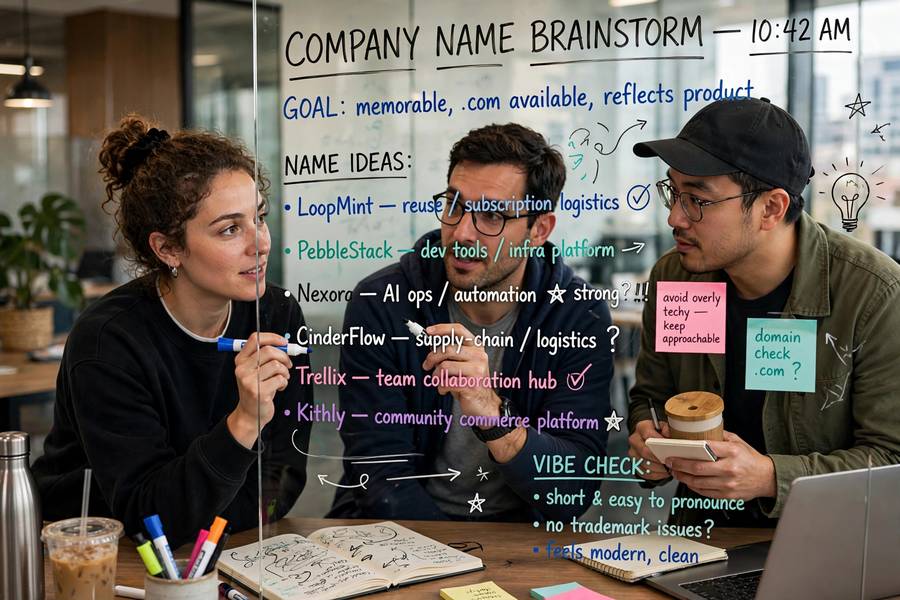
Startups face a naming paradox: you need a name unique enough to own — legally, digitally, memorably — but familiar enough that customers understand and trust you. Lean too far toward unique and you get an unpronounceable puzzle. Lean too far toward familiar and you get “another” company in a sea of sameness. The startups that nail it find the tension point: distinctive but intuitive.
I have named startups across industries, and the process is learnable. This guide gives you the uniqueness strategies that actually work, 60+ examples across startup categories, and the availability gauntlet every name must survive. (For the complete framework, see how to name a business; for what not to do, business naming mistakes to avoid.)

What “Unique” Actually Means in Naming
Founders usually mean one of three things by “unique,” and they need different strategies:
Legally unique — trademarkable, defensible, ownable. This is about distinctiveness in your industry class. Coined words win here; descriptive words lose.
Digitally unique — the .com is available, the handles are free, Google returns you (not competitors) for your name. This is about search-engine reality, and it kills more names than trademarks do.
Memorably unique — customers remember it after one exposure and can spell it when they search. This is about cognitive stickiness, and it is the hardest to engineer deliberately.
A great startup name hits all three. Most founders optimize for memorability, discover the digital and legal walls late, and end up with their fourth choice. Work the constraints from the start and your first choice has a fighting chance.
The 6 Uniqueness Strategies
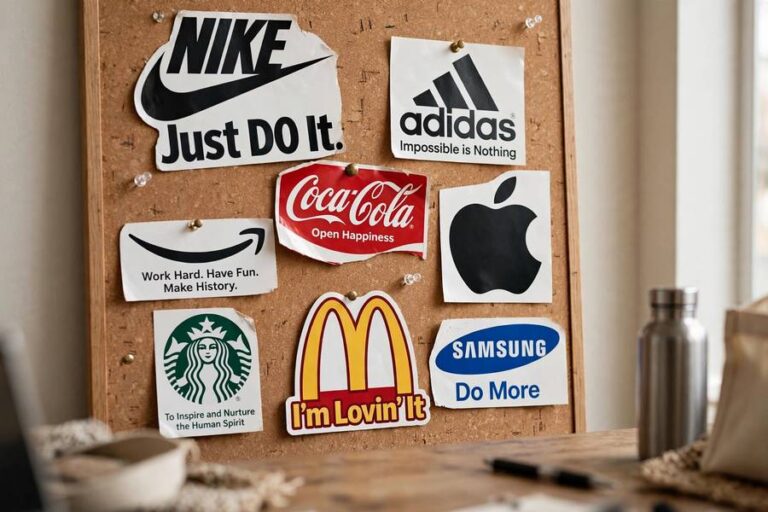
1. The coined word. Invent from phonetic parts: “Zillow” (zillions + pillow), “Etsy” (meaningless, tested for likability). Coined words are maximally ownable — nothing to conflict with. The risk is meaninglessness; compensate with great branding and a descriptive tagline.
2. The unexpected real word. “Apple,” “Stripe,” “Notion” — ordinary words in extraordinary contexts. The familiarity makes them instantly likable; the surprise makes them memorable. Harder to trademark than coined words, but stronger customer intuition.
3. The mashup. Two concepts fused: “Instagram” (instant + telegram), “Pinterest” (pin + interest). Carries double meaning in a compact form. The fusion must feel inevitable, not forced.
4. The foreign borrowing. Words from other languages that sound right in English: “Ubuntu,” “Hulu” (Mandarin for gourd), “Asana” (Sanskrit for posture). Exotic but pronounceable. Always check the meaning in the source language — and in major other languages, to avoid the infamous “Nova” problem.
5. The founder-adjacent coinage. Built from founder names, places, or origin stories: “Adidas” (Adi Dassler), “IKEA” (Ingvar Kamprad, Elmtaryd, Agunnaryd). Personal and ownable, but consider whether you want your identity fused to the company permanently.
6. The evocative abstraction. Words that suggest a feeling rather than a thing: “Luminary,” “Catalyst,” “Northstar.” Broad enough to survive pivots — critical for startups, which pivot constantly. The risk is vagueness; pair with a concrete tagline.
SaaS and Tech Startups
Short, confident, slightly technical. The name must survive pivots, so avoid boxing into a feature:
Vexla, Corelink, Databay, Nimbus, Forgepoint, Quantia, Syntheta, Loopwire, Axion, Veltrix, Codora, Nexora, Zentask, Flowbase, Kernelly, Prismo, Devhaven, Stackline, Bitbound, Cloudfold
The pattern: two syllables, crisp consonants, tech-adjacent roots (data, cloud, flow, stack, bit). Test each against the ” Series B test” — will this name still fit when the company is ten times bigger and doing three more things? If not, keep looking.
DTC and Consumer Brands
Warm, sensory, personality-driven. Consumer brands live in customers’ homes and feeds — the name should feel like a friend:
Wilderkind, Fern & Fable, The Daily Crave, Honeyroot, Copperline, Juniper & Co., Golden Hour Goods, Wildflower Supply, Sunday Standard, Ember & Oak, Poppyseed, Meadowlark, Salt & Stone, Brightside Goods, Willow & Wren
Consumer names can be longer and more evocative than SaaS names — they appear on packaging, where there is room for personality. The “&” construction (Fern & Fable) signals craft and curation; the single evocative word (Wilderkind) signals modern minimalism. Pick the lane that matches your aesthetic.
Fintech Startups
Trust-first. Fintech names must feel like they have been around for decades:
Ledgerline, Sterling & Co., Vaultly, Meridian Pay, Cornerstone & Grey (pattern), Granite Wealth, Compass Capital (pattern), Foundry Partners, Anchorpoint, Truebalance, Fiscora, Monetix, Capitalwell, Trustmark (pattern), Prudent
Fintech naming rule: if it sounds playful, it is wrong. Nobody wants to trust their savings with a company that sounds like a game. Understated confidence — solid nouns, established-sounding compounds — is the entire playbook. For more naming craft, see creative business name examples.
Wellness Startups
Calm authority. The name must soothe without making specific promises:
Vitalis, Wellroot, Clarity Cove (pattern), Restore Co., Align Wellness, Thrive Point, Serenica, Bloom & Branch (pattern), Mindful Mile, Ritual Wellness, Haven House (pattern), Nourish Lab, Calma, Welnest
Wellness startups walk a regulatory line — names that imply specific outcomes (“Curely,” “Healfast”) invite scrutiny. Suggest wellbeing, vitality, and balance; never promise results. When in doubt, the calmer name is the safer name.
Food and Beverage Startups
Craveable sounds. The name should make mouths water or curiosity spike:
Crumb & Craft, Zesty, The Fermentary, Brine & Barrel, Golden Crust Co., Sippable, Morsel, Craveworthy, The Pickle Project, Butter & Bean, Fizz Pop Co., Umami Lab, Snackcraft, The Daily Loaf, Poppable
Food startup names get spoken in noisy environments and typed with sticky fingers — clarity is non-negotiable. Say every candidate over a bad phone connection. If it does not survive, it does not ship.
Service and Marketplace Startups
Trust + clarity. Customers must instantly grasp what the service does:
Taskrabbit (pattern), Handypro, Fixfolio, Servly, Trusttrade, Proconnect, Helphouse, Skillshare (pattern), Oddjob (avoid — negative connotations), Tasktide, Servora, Handyperson (pattern), Quotequest, Profind
Service names carry a special burden: they must work for both sides of the marketplace. Providers must feel proud to be “on” the platform; customers must feel safe booking through it. Test names with both audiences — they often react differently.
The Availability Gauntlet
For startups, availability is existential — you will raise capital, hire, and build brand equity on this name. Run every finalist through:
USPTO trademark search. Federal, in your industry classes. Startups get acquired and go national; state-only clearance is insufficient. Budget $250–$400 for a professional search on your top choice — cheap protection.
Domain. The .com, ideally exact. Investors and customers type .com by default; alternatives (.io, .co) work in tech but confuse mainstream audiences. If the .com is parked, investigate purchase — $2,000–$10,000 is normal for a decent startup name domain.
Social handles. All major platforms, consistent. Inconsistent handles signal amateur hour to the exact audiences (investors, press, early adopters) who check.
App store names. Even if you are web-first today, check — conflicts create confusion later.
International screening. If you might ever operate globally, screen for negative meanings in major languages. The classic failures are well-known; do not join them.
State registration. The easy one — do not skip it in the excitement of the harder checks.
Expect an 80–90% kill rate through this gauntlet. Generate accordingly — 50+ candidates to yield a handful of survivors.
Testing Before You Commit
The investor test. Say it as a pitch: “We’re [Name], and we do X.” Does it sound fundable? Investors pattern-match on names more than they admit — a strong name does not close rounds, but a weak one opens with friction.
The customer test. Show it to 20 target customers with no context. Ask what they think the company does. If fewer than half are close, the name is not doing its job.
The press test. Imagine it in a headline: “[Name] Raises $10M to Disrupt Y.” Does it read well? Headline-ability matters more than founders expect.
The employee test. “I work at [Name].” Will people be proud to say it? Your first fifty hires are also your first fifty brand ambassadors.
The five-year test. Will this name fit the company you hope to become, not just the product you have today? Startups pivot; names should not have to. Choose for the destination, not the departure.
Frequently Asked Questions
Use six strategies: coined words (Zillow-style), unexpected real words (Apple-style), mashups (Instagram-style), foreign borrowings, founder-adjacent coinages, or evocative abstractions. Generate 50+ candidates, filter by sound and meaning, then run survivors through trademark, domain, and social handle checks.
A good startup name is legally ownable (trademarkable), digitally available (.com + handles), memorable after one exposure, pronounceable and spellable, and broad enough to survive pivots. It should pass the investor pitch test, the customer comprehension test, and the five-year test.
Not necessarily — descriptive names limit pivots and are hard to trademark. Evocative or coined names (Stripe, Notion, Zillow) cost more to establish but own more territory long-term. If you go abstract, pair the name with a clear descriptive tagline until the brand carries meaning itself.
$2,000–$10,000 is normal for a decent .com on the aftermarket. Set your ceiling before negotiating. If the price exceeds your ceiling, choose a different name — a great name with a compromised domain (hyphens, wrong TLD) underperforms a good name with a clean .com.
You can (Adidas, IKEA patterns), and it’s maximally ownable. But it fuses your identity to the company permanently — complicating future sales, pivots, and personal privacy. Most startups are better served by a brand name that can outlive and outgrow its founders.