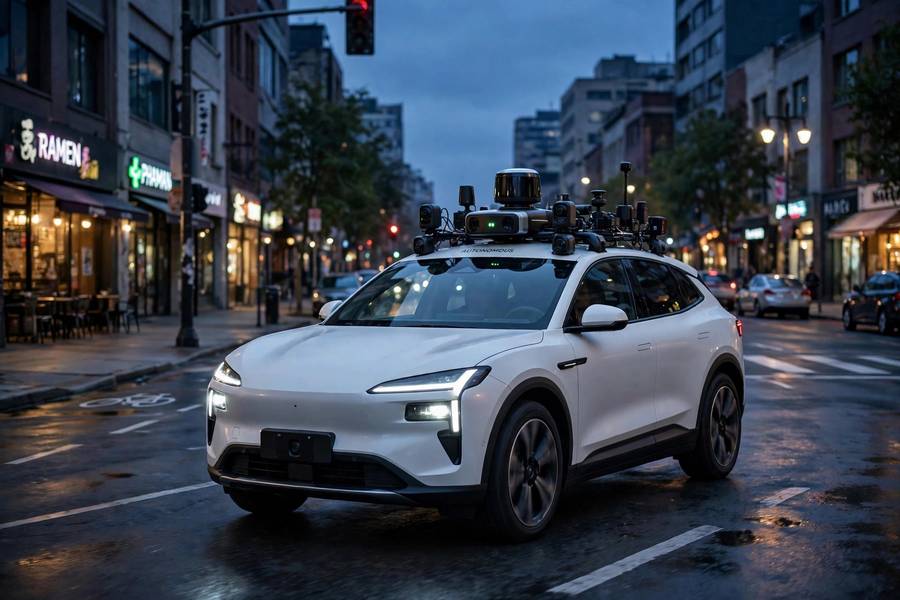
“Autonomous vehicle” is one of those phrases that sounds precise and means almost nothing until you unpack it. Your car probably already brakes for you, keeps you in your lane, and parks itself — is it autonomous? Sort of. A robotaxi with nobody behind the wheel in Phoenix — is that autonomous? Also sort of, but in a completely different way. The term covers everything from fancy cruise control to cars with no steering wheel, and most confusion about self-driving technology comes from mixing up these very different things.
Let me untangle it. An autonomous vehicle is any vehicle that can perform some or all driving tasks without human input. The key word is some: autonomy is a spectrum, not a switch. This guide explains the levels of that spectrum, how the technology actually works under the hood, and where things genuinely stand today — no hype, no doom, just the mechanics.
For the deep technical dive, see my full guide on how self-driving cars work.
Table of Contents
- The 6 Levels of Autonomy
- What the Car Actually Does: Sense, Think, Act
- The Sensor Suite
- The Brain: How the Software Decides
- How the Car Knows Where It Is
- Where the Technology Stands Today
- What Autonomous Vehicles Still Can’t Do
- Frequently Asked Questions
The 6 Levels of Autonomy
The industry standard is the SAE scale, from Level 0 to Level 5. Memorize this and you will instantly see through most self-driving marketing:
Level 0 — No automation. You drive. The car might warn you about things, but it does nothing. Your grandfather’s sedan.
Level 1 — Driver assistance. The car helps with one thing: either steering or speed. Classic cruise control lives here. You are fully in charge.
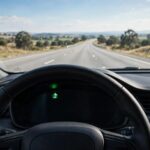
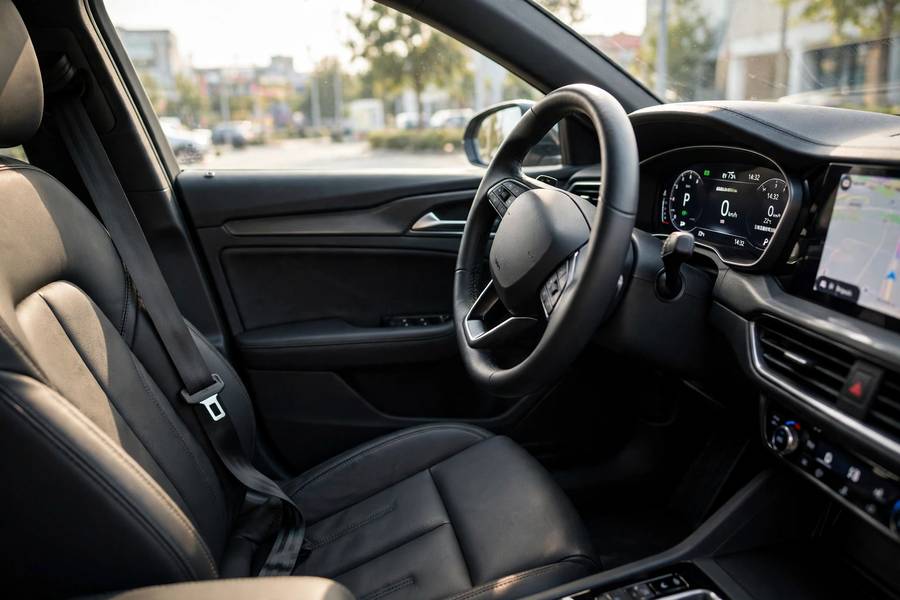
Level 2 — Partial automation. The car handles steering and speed together — think Tesla Autopilot or GM Super Cruise on a highway. But you must watch the road constantly and be ready to take over instantly. This is where most “self-driving” cars you can buy today actually sit, and where most of the confusion lives: the car feels autonomous, but legally and practically, you are the driver.
Level 3 — Conditional automation. The car drives itself in specific situations, and you can look away — but you must be ready to take over when it asks. Almost nobody sells this yet. The handoff problem (a distracted human suddenly needing to drive) makes it the awkward middle child of autonomy.
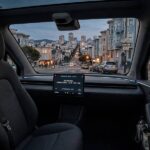
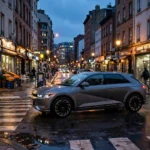
Level 4 — High automation. The car drives itself completely, with no driver needed — but only in defined areas and conditions. Waymo’s robotaxis in Phoenix and San Francisco are the real-world example: no one behind the wheel, but only within mapped zones, in decent weather. This is genuinely driverless, with an asterisk.
Level 5 — Full automation. The car drives anywhere, in any conditions, with no controls needed at all. No steering wheel required. This does not exist, and honest engineers will tell you it is a research goal, not a product roadmap item.
When someone says “self-driving car,” ask which level they mean. The answer changes everything about the conversation.
What the Car Actually Does: Sense, Think, Act
Strip away the marketing and every autonomous vehicle runs the same three-step loop, hundreds of times per second:
Sense. The car builds a picture of the world around it — other vehicles, pedestrians, cyclists, lane markings, traffic lights, road signs, potholes, that mattress tied to the roof of the car ahead. It does this with cameras, radar, LiDAR, and ultrasonic sensors, fused into a single model of the surroundings.
Think. The software decides what it all means and what to do: that pedestrian is about to cross, that car is merging, the light turns red in three seconds, so slow down now. This involves prediction (what will others do?), planning (what is my best path?), and control (execute smoothly).
Act. Steering, throttle, brakes. The unglamorous part, and the part traditional automakers were already good at — anti-lock brakes and stability control were robots driving your car decades before anyone said “AI.”
The loop runs continuously. Sense, think, act, sense, think, act — ten times a second or more. When people say a car “drives itself,” they mean this loop runs without a human in it. The hard part is not any single step; it is doing all three, perfectly, in a world full of unpredictable humans.
The Sensor Suite
An autonomous vehicle perceives the world through overlapping sensors, each covering the others’ weaknesses:
Cameras are the primary eyes — cheap, high-resolution, and rich in information. They read traffic lights, signs, lane markings, brake lights, and the subtle body language of a pedestrian deciding whether to cross. Their weakness: darkness, glare, fog, and rain. A camera is only as good as the light hitting it.
Radar sees through weather. It bounces radio waves off objects to measure distance and speed, and it works in rain, fog, and darkness where cameras go blind. Its weakness: low resolution. Radar knows something is 50 meters ahead moving at 30 km/h; it cannot tell you it is a child on a bicycle versus a trash can.
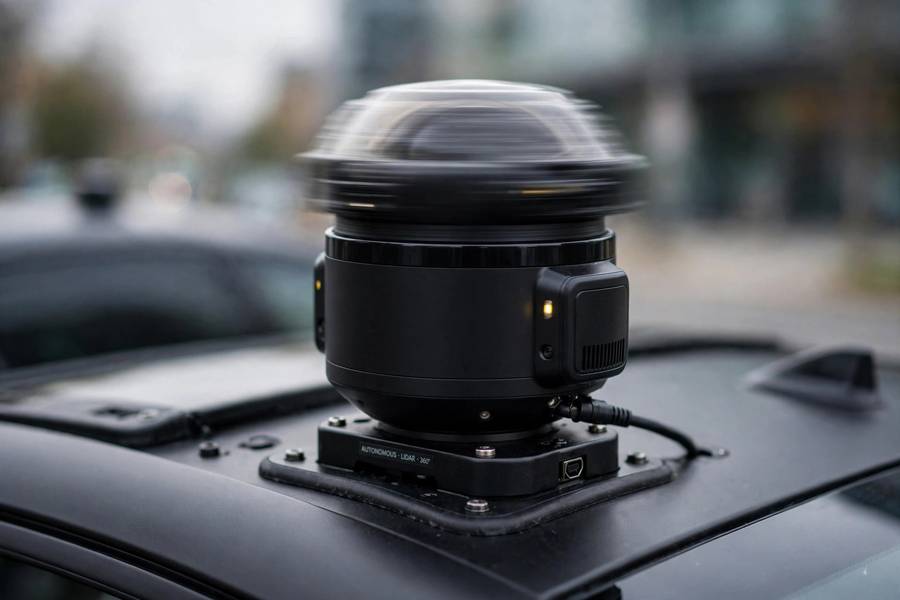
LiDAR is the precision instrument: spinning lasers that build a detailed 3D point cloud of the surroundings, accurate to centimeters. It is how the car knows exactly where the curb is and how tall that truck is. Its weaknesses: cost (though falling fast), and degraded performance in heavy rain or snow.
Ultrasonic sensors handle the close stuff — parking, detecting the bumper of the car beside you. Short range, cheap, reliable.
GPS and inertial measurement tell the car roughly where it is on Earth; high-definition maps fill in the rest (more on that below).
The industry’s great religious war is over which sensors are necessary. Waymo bets on the full suite including LiDAR. Tesla bets on cameras alone, arguing humans drive with two eyes so cars can too. I will not settle that debate here — but notice what it reveals: even the experts disagree about what “seeing” requires.
The Brain: How the Software Decides
The software stack has three main layers:
Perception. Neural networks process the sensor data and output a structured understanding: there is a car at coordinates X,Y moving at speed Z; there is a pedestrian on the sidewalk facing the road; that traffic light is red. Modern perception systems are deep learning models trained on millions of miles of driving data — which is why how AI models are trained matters so much here. The quality of the training data largely determines the quality of the perception.
Prediction and planning. Given the current scene, the system predicts what each actor will do over the next few seconds — will that cyclist swerve? is that car actually going to stop? — and then plans a trajectory that is safe, legal, and comfortable. This is where the “intelligence” most visibly lives: not in recognizing a stop sign, but in negotiating a four-way stop with three human drivers who all arrived simultaneously and are all waving each other through.
Control. The planned trajectory becomes steering angles, acceleration, and braking — executed smoothly enough that passengers do not get carsick. Less glamorous than perception, absolutely critical to trust.
Increasingly, companies are moving toward “end-to-end” learning, where a single large neural network goes from sensor input to driving output, rather than separate hand-engineered modules. It is powerful and slightly terrifying: the system works, but explaining why it made a specific decision gets harder. The AI behind self-driving cars deserves its own deep dive, which I have written.
How the Car Knows Where It Is
GPS alone is not enough — it is accurate to a few meters, and a few meters is the difference between your lane and oncoming traffic. Autonomous vehicles localize themselves to centimeters using:
HD maps. Companies like Waymo pre-map their operating areas in excruciating detail: every lane marking, curb, sign, and traffic light, down to centimeters. The car then matches what its sensors see against the map to pinpoint itself. This is why robotaxis work in mapped zones and not elsewhere — the map is part of the system. No map, no autonomy.
Sensor matching. Even without a perfect map, the car matches LiDAR and camera data against known landmarks to refine its position continuously.
Inertial dead reckoning. When GPS drops (tunnels, urban canyons), accelerometers and gyroscopes track the car’s movement from its last known position. It drifts over time, but it bridges the gaps.
The HD map dependency is the technology’s open secret: today’s best autonomous vehicles are not really driving anywhere — they are driving on rails they built themselves, one meticulously mapped street at a time. Expanding the map is the business; the driving is increasingly solved.
Where the Technology Stands Today
A sober status report, as of now:
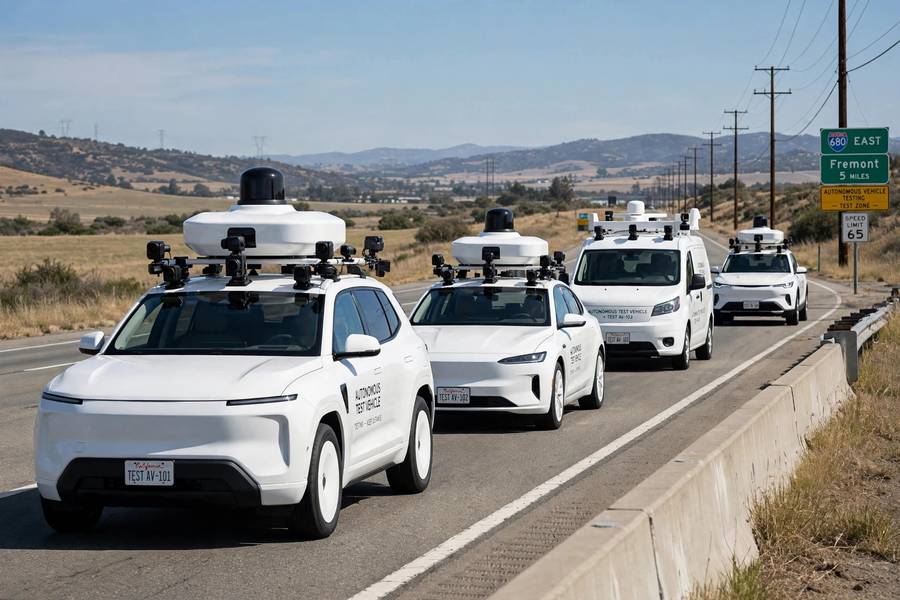
Robotaxis are real and operating. Waymo runs fully driverless rides in several US cities, completing hundreds of thousands of trips. This is not a demo; it is a service. The constraints — mapped areas, good weather, carefully managed fleets — are real, but within those constraints, the technology works.
Consumer cars are at Level 2. Tesla’s Full Self-Driving, GM’s Super Cruise, Ford’s BlueCruise — these are advanced driver assistance, not autonomy. They are impressive and they still require an attentive human. Every crash involving a driver who treated Level 2 as Level 4 is a tragedy born of exactly this confusion.
Trucking is quietly advancing. Long-haul highway trucking — structured environment, professional oversight, enormous economic incentive — is where autonomy may arrive at scale first, with less fanfare than robotaxis.
Level 5 remains distant. Nobody credible will give you a date. The remaining problems — truly novel situations, adversarial weather, the infinite creativity of human unpredictability — are not engineering tasks with known solutions. They are research problems.
What Autonomous Vehicles Still Can’t Do
Honesty requires the list:
- Handle the truly novel. A mattress flying off a truck, a parade, a road covered in fresh snow with no visible markings, a traffic cop waving you through a red light with hand signals — humans improvise; machines mostly do not.
- Read human intent reliably. That pedestrian looking at their phone versus looking at you — the difference between stopping and going — is still genuinely hard.
Frequently Asked Questions
An autonomous vehicle is a vehicle that can perform some or all driving tasks without human input. Autonomy is measured on a 0-5 scale: Level 0 is no automation, Level 2 covers today’s driver-assistance systems, Level 4 is driverless within defined areas (like Waymo robotaxis), and Level 5 — full autonomy anywhere — does not exist yet.
They use cameras, radar, LiDAR, and ultrasonic sensors together. Cameras read signs and lights, radar measures speed and distance through bad weather, LiDAR builds precise 3D maps of surroundings, and ultrasonic sensors handle close-range parking. The data is fused into one model of the world, updated many times per second.
No. Consumer cars top out at Level 2 driver assistance (Tesla Autopilot, GM Super Cruise), which still requires an attentive driver. Truly driverless Level 4 vehicles exist only as robotaxi fleets in limited mapped areas. There is no Level 5 car and none on the horizon.
The terms are used interchangeably, but “autonomous” technically covers the full 0-5 spectrum while “self-driving” usually implies the car drives itself. Both are vague without the level number — always ask which SAE level someone means.
GPS is only accurate to a few meters — not enough to stay in a lane. Companies pre-map operating areas down to centimeters (lane markings, curbs, signs), and the car matches live sensor data against the map to pinpoint itself. This is why robotaxis work in mapped zones but not elsewhere.