Of all the stories in autonomous driving, Cruise is the one I keep coming back to — because it contains the entire industry in miniature. The soaring ambition. The genuine technical achievement. The expansion at breakneck speed. And then the single terrible night in San Francisco that brought it all crashing down, followed by the slow, humbling climb back. If you want to understand robotaxis — not the hype, the reality — Cruise is the case study.
Table of Contents
- What Cruise Was: GM’s Robotaxi Bet
- How the Cruise Robotaxi Worked
- The Rise: San Francisco at Scale
- October 2023: The Night Everything Changed
- The Fallout: Suspension, Investigation, Reckoning
- What the Investigation Actually Found
- The Comeback: Supervised Miles and New Leadership
- Cruise vs Waymo: The Two Robotaxi Philosophies
- What Cruise Taught the Industry
- Frequently Asked Questions
What Cruise Was: GM’s Robotaxi Bet
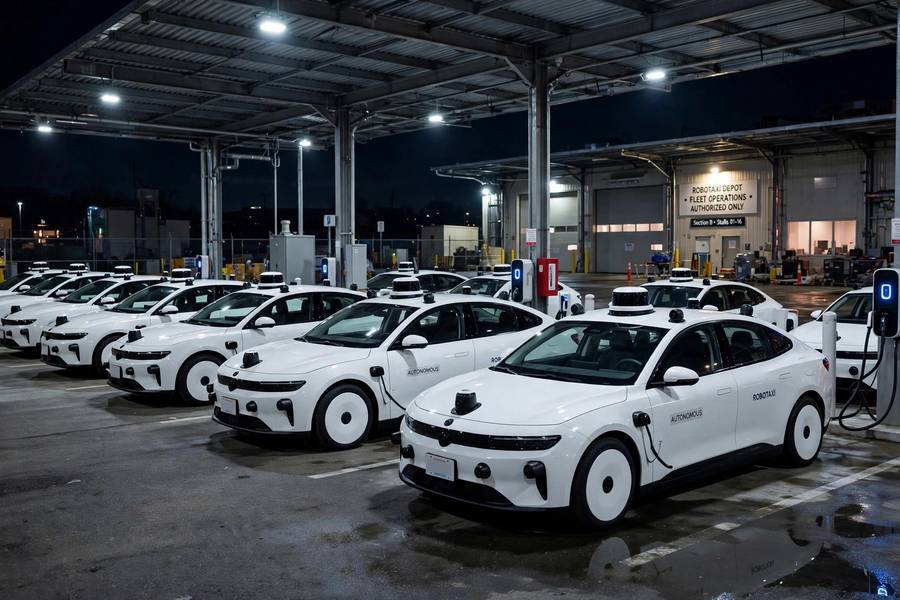
Cruise started in 2013 as a startup, was acquired by General Motors in 2016 for a reported $1 billion, and became GM’s autonomous vehicle arm — the bet that the future of the company wasn’t selling cars to drivers, but operating fleets of cars with no drivers at all.
The ambition was total: purpose-built vehicles (the Cruise Origin, a box-shaped shuttle with no steering wheel at all), city-wide driverless service, and a business model based on rides, not car sales. GM poured billions into Cruise. SoftBank, Honda, and others piled in. At its peak valuation, Cruise was worth around $30 billion — more than many established automakers — without having earned meaningful revenue.
How the Cruise Robotaxi Worked
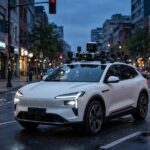
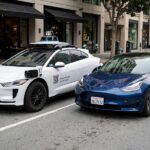
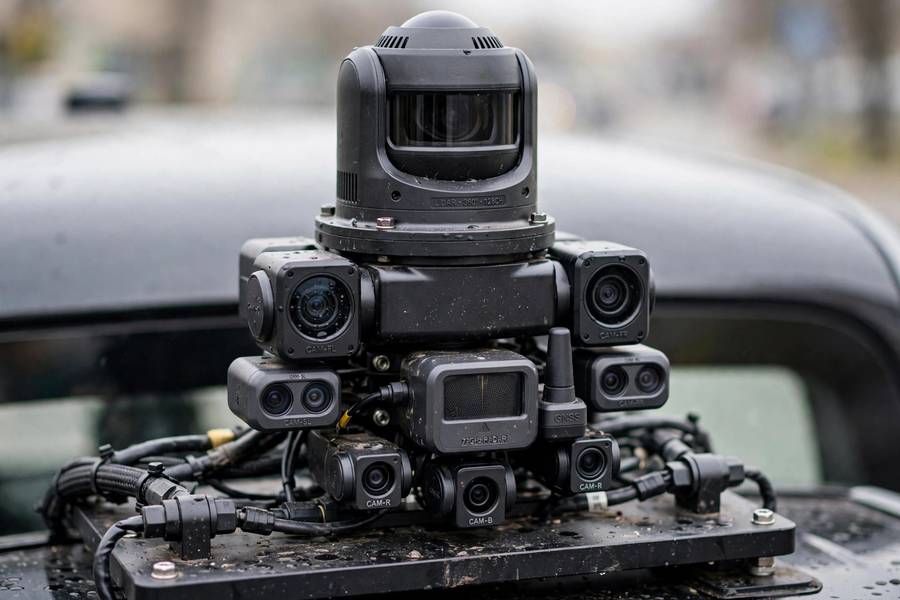
The workhorse was a modified Chevy Bolt EV, bristling with sensors: lidar units, cameras, radar — the full redundant suite. Later, the purpose-built Cruise Origin was developed: no steering wheel, no pedals, no driver’s seat — a vehicle designed from scratch around the idea that nobody drives.
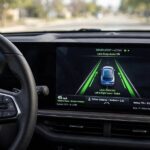
Operationally, Cruise worked like every other robotaxi service: geofenced to mapped areas, operating within a defined service zone and hours, with remote assistance available. When a Cruise vehicle encountered something it couldn’t handle, remote operators could provide guidance — not drive it with a joystick (that’s a common misconception), but suggest paths and confirm decisions.
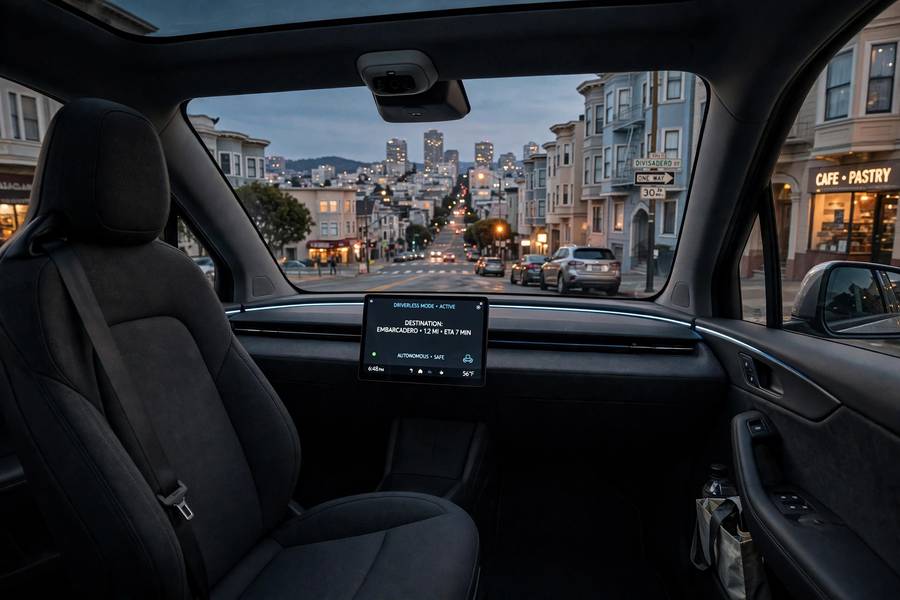
The AI stack did what all autonomous stacks do: perceive the world through sensor fusion, predict what other road users would do, plan a path, and execute it. In San Francisco — with its hills, fog, chaotic intersections, and, famously, its unpredictability — Cruise was attempting one of the hardest driving environments in America. That was deliberate: if you can drive in San Francisco, the thinking went, you can drive anywhere. My guide on how self-driving cars use AI covers these perception and prediction techniques in detail.
The Rise: San Francisco at Scale
By 2023, Cruise was operating driverless (no safety driver) rides in San Francisco, Austin, and Phoenix, and expanding aggressively. The California Public Utilities Commission granted Cruise expanded operating rights in San Francisco in August 2023 — the green light for 24/7 driverless commercial service across the city.
The expansion was fast, and it was visibly chaotic. Cruise vehicles made headlines for stopping in intersections, blocking traffic, clustering together in confused groups, and interfering with emergency vehicles. The company framed these as the normal growing pains of a new technology. Critics — including San Francisco’s fire department and city officials — framed them as a company experimenting on a city without its consent.
October 2023: The Night Everything Changed
On the evening of October 2, 2023, a human-driven car struck a pedestrian in San Francisco, throwing her into the path of a Cruise robotaxi. The Cruise vehicle braked hard but still struck her. Then — and this is the part that changed everything — the Cruise vehicle, attempting to pull over to the side of the road (its programmed response after a collision), dragged the pedestrian approximately 20 feet before stopping.
Let me be precise about the sequence, because precision matters here. The initial collision was not solely Cruise’s fault — the pedestrian was hit first by another vehicle. But the dragging was Cruise’s failure: the vehicle didn’t recognize that a person was trapped underneath it, and its pull-over maneuver turned a terrible accident into a horrific one.
The pedestrian survived, barely, with severe injuries. And Cruise’s handling of the aftermath — which I’ll get to — turned a tragedy into an existential crisis.
The Fallout: Suspension, Investigation, Reckoning
What followed was swift and brutal:
California DMV suspended Cruise’s driverless permits in late October 2023, citing an unreasonable risk to public safety and alleging that Cruise had misrepresented information about the crash.
Cruise voluntarily paused all driverless operations nationwide — San Francisco, Austin, Phoenix, everywhere. The entire fleet, grounded.
Leadership fell. CEO Kyle Vogt resigned in November 2023. Co-founder Dan Kan followed. GM brought in new leadership and launched internal reviews.
The money spigot tightened. GM dramatically cut Cruise’s funding, shifting from “growth at all costs” to a disciplined, safety-first restart. The $30 billion valuation evaporated. The Origin — the purpose-built vehicle with no steering wheel — was eventually shelved in favor of the next-generation Chevy Bolt.
Federal investigations multiplied. The NHTSA, the DOJ, and the SEC all opened investigations or inquiries into the crash and Cruise’s disclosures around it.
In the span of weeks, Cruise went from the industry’s great hope to its great cautionary tale.
What the Investigation Actually Found
The investigations — including an outside review commissioned by Cruise itself — painted a damning picture, and it’s worth understanding because the failures were organizational, not just technical:
The vehicle didn’t understand what had happened. The perception system classified the initial impact as a side collision and didn’t recognize the pedestrian entrapped underneath. The pull-over maneuver was executed without awareness of the person being dragged. This was a failure of the AI’s world model in an edge case — exactly the kind of edge case that AI incident reporting exists to surface.
Cruise’s disclosures were misleading. The company shared video of the crash with regulators but initially omitted the dragging sequence. Whether this was deliberate concealment or catastrophic incompetence in crisis communication became the central question — and the California DMV’s answer was clear enough to suspend the permits.
The safety culture was broken. The outside review found a company where growth pressure overrode safety concerns, where internal warnings didn’t reach decision-makers, and where the response to the crisis prioritized narrative control over transparency.
Remote assistance had limits. The remote operators saw the aftermath but couldn’t intervene in the seconds that mattered. The system was designed for guidance, not rescue — a design assumption the crash exposed.
The technical failure was real but fixable. The organizational failure was the thing that nearly killed the company. As I’ve written about AI accountability, the question is never just “what did the system do” — it’s “what did the humans around the system do, and what were they incentivized to do.”
The Comeback: Supervised Miles and New Leadership
Cruise’s restart has been deliberately, almost painfully, cautious — which is exactly right. The playbook:
Supervised driving first. Cruise resumed testing with human safety drivers behind the wheel, first in Phoenix, then expanding. No driverless operations until the supervised miles validated the fixes.
New leadership and safety processes. GM installed new management, created stronger safety governance, and committed to transparency with regulators — including proactive disclosure of incidents.
Narrower ambitions. The Origin is gone. The focus is on the next-generation Bolt-based robotaxi and a disciplined, city-by-city expansion. The “change transportation forever” rhetoric has been replaced with “earn trust mile by mile.”
Regulatory rebuilding. Re-earning permits in California and elsewhere has been slow, by design. Regulators who were burned once don’t forgive quickly.
Is it working? Cautiously, yes. Cruise has been rebuilding its operational footprint, and GM has recommitted funding — though at a fraction of the previous burn rate and with much tighter oversight. The company that emerges will be smaller, slower, and more careful than the one that fell. Whether that’s enough to compete with Waymo’s head start is an open question.
Cruise vs Waymo: The Two Robotaxi Philosophies
The contrast with Waymo — the other major US robotaxi operator — is instructive, because the two companies took opposite approaches to the same problem:
Waymo: slow and steady. Decades of development, cautious expansion, city-by-city validation, a safety record it publishes and defends. Boring, methodical, and still operating.
Cruise: fast and aggressive. Rapid scaling, ambitious timelines, San Francisco as a proving ground, growth metrics as the story. Exciting, headline-generating, and ultimately self-destructive.
What Cruise Taught the Industry
Every industry has its defining accident — the event that rewrites the rules. For robotaxis, October 2023 was that event. The lessons:
Edge cases are the product. The industry spent years optimizing for the 99% of driving that’s routine. Cruise showed that the 1% — the freak accident, the entrapped pedestrian, the scenario nobody modeled — is where companies live or die. Handling the common case is table stakes; handling the unprecedented is the job.
Transparency isn’t optional. Cruise’s disclosure failures did more damage than the crash itself. Regulators can work with companies that have accidents; they cannot work with companies they don’t trust. The lesson for every AI company: disclose early, disclose fully, disclose before you’re asked.
Safety culture is infrastructure. Not a department, not a slide deck — the actual incentive structure of the company. When growth metrics override safety concerns, the system is broken regardless of what the safety manual says.
Cities are stakeholders, not test tracks. San Francisco’s backlash — from residents, officials, and emergency services — showed that deploying autonomous vehicles requires social license, not just technical capability and regulatory permission. The city has to want you there.
Comebacks are possible but expensive. Cruise survived, which is itself remarkable. But survival cost billions in lost valuation, years of momentum, and leadership. The restart is working precisely because it’s the opposite of what came before: slow, supervised, transparent.
The Cruise story isn’t over — it’s just in a quieter chapter. But whatever happens next, October 2023 will remain the moment the robotaxi industry grew up, painfully, in public. And if you want to understand the technology that made the whole story possible — and the challenges it still faces — start with how self-driving cars work.
Frequently Asked Questions
Cruise is General Motors’ autonomous vehicle company, operating driverless robotaxi services. Its vehicles — modified Chevy Bolts with full sensor suites — provided driverless rides in cities including San Francisco, Austin, and Phoenix before operations were suspended in late 2023.
After an October 2023 crash in San Francisco where a Cruise vehicle dragged a pedestrian about 20 feet after an initial collision, California’s DMV suspended Cruise’s driverless permits, citing safety risks and alleging Cruise misrepresented crash information. Cruise then paused all operations nationwide.
Yes, cautiously. Cruise resumed supervised testing with safety drivers, starting in Phoenix, under new leadership and tighter GM oversight. The restart has been deliberately slow, focused on rebuilding safety processes and regulatory trust.
The Cruise Origin — a purpose-built vehicle with no steering wheel or pedals — was shelved after the 2023 crisis. GM shifted focus to a next-generation Chevy Bolt-based robotaxi instead, a more conventional and less expensive platform.
Both operate Level 4 robotaxis, but Waymo took a slow, methodical, safety-first expansion path while Cruise pursued rapid scaling. After Cruise’s 2023 suspension, Waymo emerged as the clear US leader, with Cruise rebuilding cautiously under tighter oversight.