
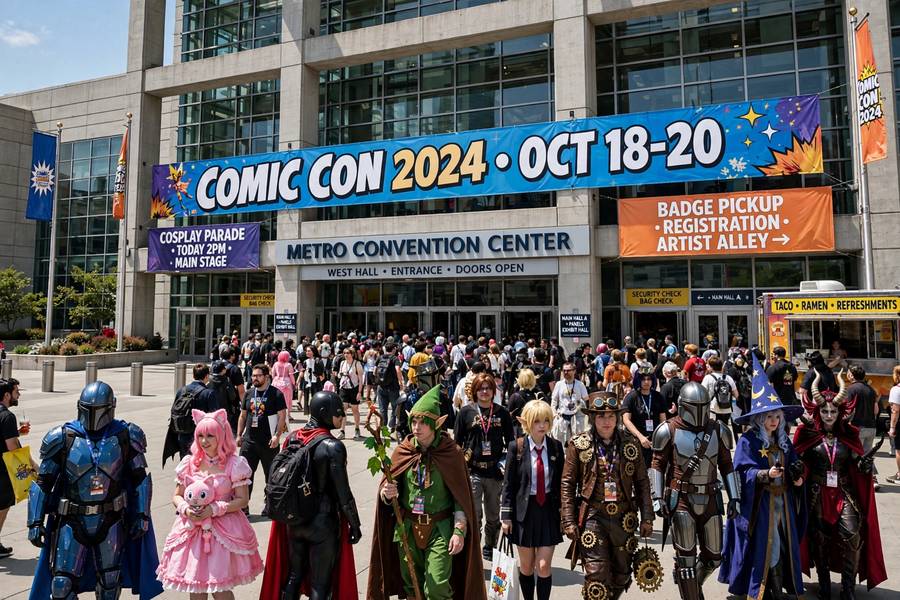
I’m Ava. I’ve covered entertainment for years, and I can tell you: nothing in pop culture works quite like Comic-Con. It’s where Marvel drops the trailer that breaks the internet, where a TV show nobody’s heard of becomes the thing everyone talks about, and where 130,000 people in costumes ranging from screen-accurate to gloriously homemade take over an entire city for four days.
If you’ve ever wondered what Comic-Con actually is — beyond the headlines — this is your guide.
In This Guide
- What Comic-Con Is
- How It Started (It’s Not What You’d Expect)
- San Diego vs. New York vs. The Rest
- What Actually Happens There
- Why Hollywood Cares So Much
- How to Attend: Tickets, Badges, and Survival Tips
- Cosplay Culture
- Frequently Asked Questions
What Comic-Con Is
Comic-Con is a multi-day fan convention celebrating comics, movies, TV, gaming, and pop culture. The flagship — San Diego Comic-Con (officially Comic-Con International) — draws 130,000+ attendees to San Diego each July and is the most important pop-culture event in the world.
But “Comic-Con” has also become a generic term: dozens of cities host their own comic conventions (New York Comic Con, Emerald City Comic Con in Seattle, MCM London, and many more). They’re independently run events sharing the format: celebrity panels, exclusive previews, artist alleys, cosplay, and merchandise.
Despite the name, comics are now a fraction of the programming. Modern Comic-Con is really about everything in genre entertainment — the name is a legacy of its origins, which are humbler than you’d guess.
How It Started (It’s Not What You’d Expect)
San Diego Comic-Con began in 1970 as a gathering of a few hundred comic book fans in a hotel basement. Its founder, 37-year-old Shel Dorf, just wanted comic fans to meet the creators they admired. For its first decade, it was exactly that: comics people talking about comics.
The transformation came in the 2000s, when Hollywood realized that 100,000 passionate genre fans in one place were the perfect launchpad for blockbusters. Studios started bringing exclusive footage, A-list casts, and massive presentations. The fans came for comics; Hollywood came for the fans; and the event became the center of the entertainment universe for one week each summer.
It’s now run as a nonprofit, which surprises people — this cultural juggernaut is technically a charitable organization dedicated to comics and popular art. The scale changed; the mission statement didn’t.
San Diego vs. New York vs. The Rest
San Diego Comic-Con (July): the original, the biggest, the hardest to attend. Badges sell out in under an hour. This is where the major studios make their biggest announcements — the Hall H panels are legendary, with fans camping overnight for seats. If pop culture had a capital city for one week a year, this would be it.
New York Comic Con (October): the East Coast answer, run by ReedPop. Slightly more comics-and-publishing focused, slightly more accessible, still enormous at 200,000+ attendees. The anime and manga presence is particularly strong here.
The rest: Emerald City (Seattle), C2E2 (Chicago), Dragon Con (Atlanta — more fan-run party atmosphere), MCM (London), and hundreds of regional shows. These are often better experiences for casual fans: cheaper, less crowded, easier badges, and plenty of celebrities and exclusives.
My honest take: unless you’re chasing Hall H exclusives, a major regional con gives you 80% of the magic at 30% of the cost and stress.
What Actually Happens There
A Comic-Con day, decoded:
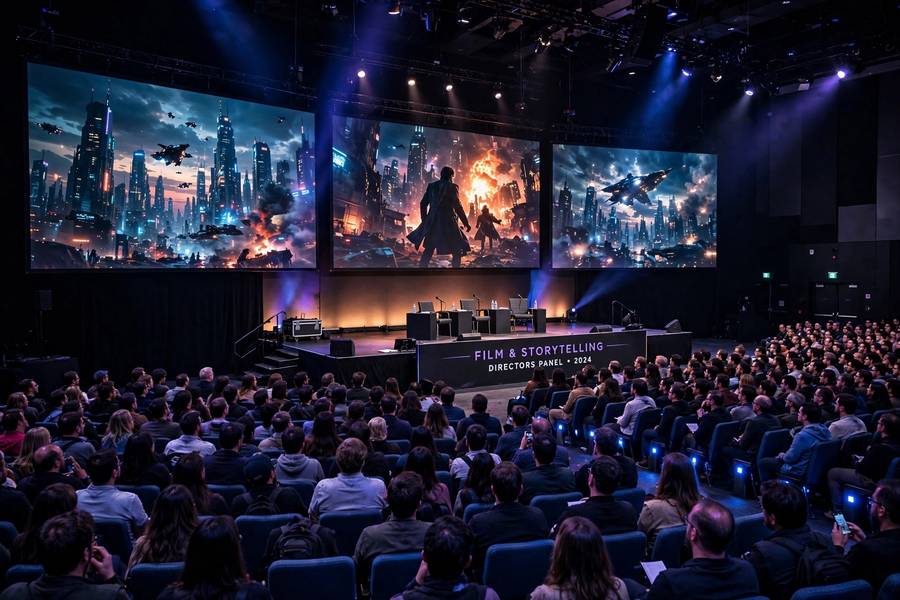
Panels. The headline events. Studios and networks present upcoming projects with cast appearances and exclusive trailers. Hall H (6,500 seats, San Diego) hosts the mega-panels — Marvel, DC, Star Wars. Smaller rooms host everything from animation deep-dives to academic discussions of comics history.
The exhibit floor. Hundreds of thousands of square feet of booths: studios, publishers, merchandisers, gaming companies. This is where exclusive collectibles live — limited-edition figures and variants made only for the con, which promptly sell out and appear online at 10x prices.
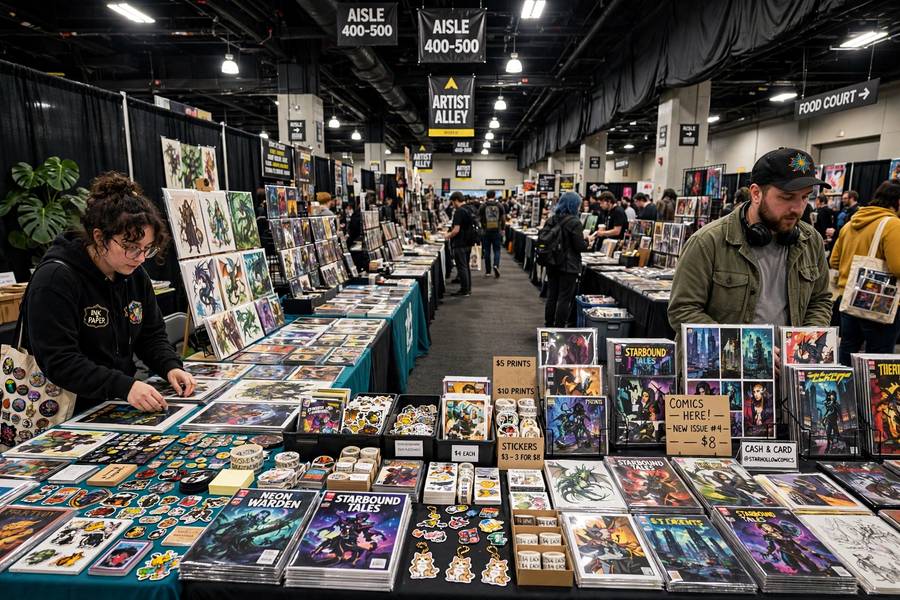
Artist Alley. Rows of comic artists, illustrators, and creators selling prints, doing sketches, and signing books. For comics purists, this is still the soul of the event — you can meet legendary creators face to face.
Screenings and premieres. Pilot episodes, anime premieres, and exclusive footage debut here, sometimes months before public release.
Gaming. Video game demos, tabletop gaming areas, tournaments — a convention within the convention.
Parties and off-sites. After hours, the surrounding Gaslamp Quarter becomes an extension of the con: studio parties, immersive brand activations, pop-up experiences. Some fans say the off-sites are better than the con itself.
Why Hollywood Cares So Much
Comic-Con attendees are the most valuable audience in entertainment: passionate, vocal, and influential far beyond their numbers. When 6,500 people in Hall H lose their minds over a trailer, that reaction becomes the entertainment news cycle for a week. Studios have learned that winning Comic-Con creates momentum that marketing money can’t buy.
It’s also a testing ground. Audience reactions to pilot screenings and announcements genuinely shape studio decisions — I’ve seen projects gain or lose studio confidence based on a single panel’s reception. In an industry that spends $200M on films, the cost of a Comic-Con presentation is trivial compared to the market intelligence it provides.
For the inside view of what those trailers are selling, my pieces on how movies are made and filmmaking tips go behind the camera.
How to Attend: Tickets, Badges, and Survival Tips
Badges (tickets): San Diego sells “badges” not tickets, and they’re notoriously hard to get — open registration typically sells out within an hour. You need a Comic-Con member ID (free, register early), and you must be ready the moment sales open. NYCC and regional cons are far easier.
Costs: badges run $50–$75/day for major cons (4-day SDCC badges ~$300+), but the real cost is hotels — San Diego hotels during Comic-Con charge 3–5x normal rates, and they sell out a year ahead. Budget $1,500–$3,000 all-in for SDCC; half that for regional cons.
Survival tips from veterans:
– Plan panels in advance but stay flexible — lines and room capacities are unpredictable
– Bring a portable phone charger; you’ll drain your battery by noon
– Comfortable shoes are non-negotiable — you’ll walk 8+ miles daily
– Eat real meals; the exhibit floor food is overpriced and the lines are long
– Hall H requires overnight camping for major panels — decide if it’s worth it to you
– Download the official app for schedules and last-minute changes
If the logistics sound intense, that’s because they are — and it’s worth reading general event-survival advice like my music festival tips, since multi-day conventions and festivals share the same survival fundamentals.
Cosplay Culture
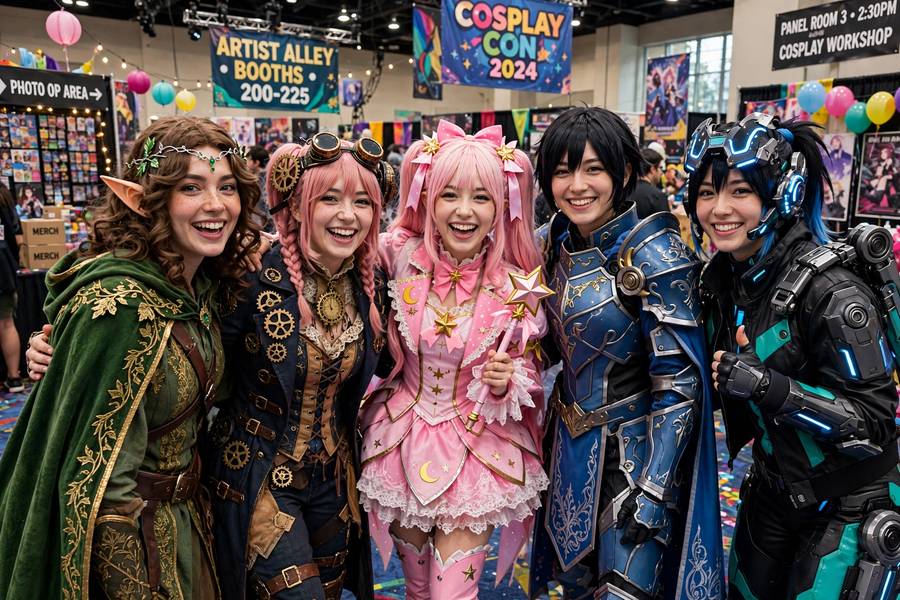
Cosplay (costume play) is Comic-Con’s beating heart. Tens of thousands of attendees arrive in costumes ranging from closet-assembled to jaw-dropping professional builds that took months and thousands of dollars.
The culture has its own etiquette: always ask before photographing cosplayers, respect “cosplay is not consent” (the community’s firm and important rule), and appreciate the craft — many of these costumes involve serious engineering, sewing, armor-smithing, and makeup artistry.
Masquerades (costume competitions) are highlight events, with craftsmanship judged at genuinely impressive standards. Even if you don’t cosplay yourself, the people-watching is half the experience.
Comic-Con is where pop culture goes to announce itself: part trade show, part festival, part pilgrimage. Whether you brave San Diego’s badge wars or start with a regional con, go once — the scale of collective enthusiasm is something you have to feel in person. Just wear comfortable shoes.
Frequently Asked Questions
Comic-Con is a multi-day fan convention celebrating comics, movies, TV, gaming, and pop culture. The flagship San Diego Comic-Con draws 130,000+ attendees each July and is where major studios premiere trailers and make big announcements. Dozens of other cities host their own comic conventions in the same format.
Badges for major cons run $50–$75 per day (a 4-day San Diego badge is ~$300+), but hotels are the real cost — San Diego hotels charge 3–5x normal rates during the con. Budget $1,500–$3,000 all-in for San Diego; regional conventions cost roughly half.
You need a free Comic-Con member ID, then participate in open online registration — badges typically sell out within an hour. Returning attendees get early access. If you miss out, consider New York Comic Con or regional conventions, which are far easier to attend.
Celebrity panels with exclusive trailers and announcements, a massive exhibit floor with exclusive merchandise, Artist Alley where comic creators sell art and sign books, screenings and premieres, gaming areas, cosplay, and after-hours parties and brand activations throughout the host city.
No — despite the name, comics are now a fraction of the programming. Modern Comic-Con covers movies, TV, streaming, gaming, anime, and all of genre entertainment. The name is a legacy of its 1970 origins as a comic book fan gathering; the event outgrew the name decades ago.