Every car commercial brags about horsepower. Almost none explain torque — the number that actually determines how your car feels pulling away from a stoplight, merging onto the highway, or hauling a trailer uphill.
I’m Marcus. Ten years around cars, and if I had to pick one spec that predicts how a car drives in the real world, it’d be torque, not horsepower. Here’s what it is in plain English — no physics lecture — and why it matters more than the brochures suggest.
Table of Contents
- Torque in One Sentence
- Torque vs Horsepower: The Real Difference
- Why Torque Matters More in Daily Driving
- Diesel vs Gasoline vs Electric: The Torque Story
- How to Read Torque Numbers When Car Shopping
- The Limits: When Torque Misleads
- Frequently Asked Questions
Torque in One Sentence
Torque is twisting force — the rotational push your engine applies to the crankshaft, which becomes the force turning your wheels.
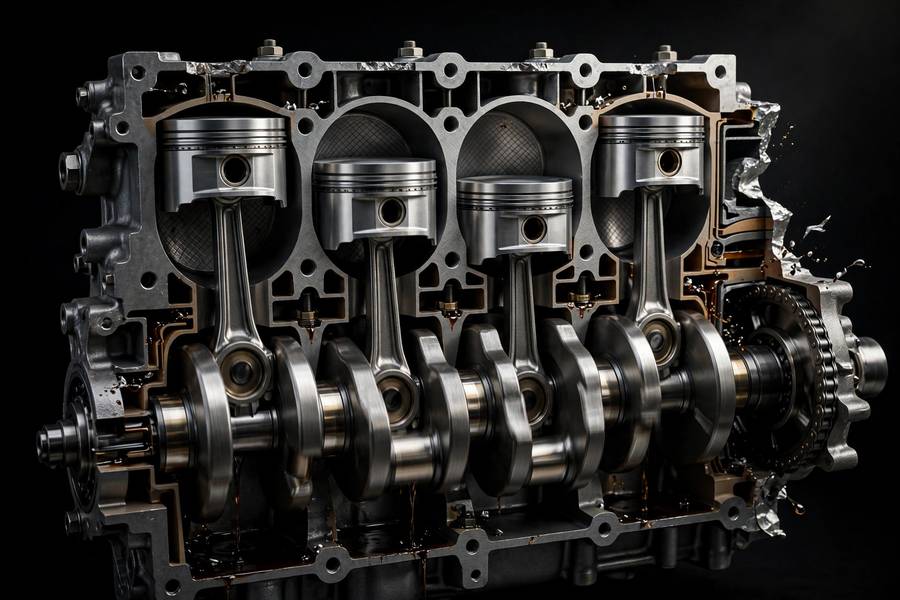
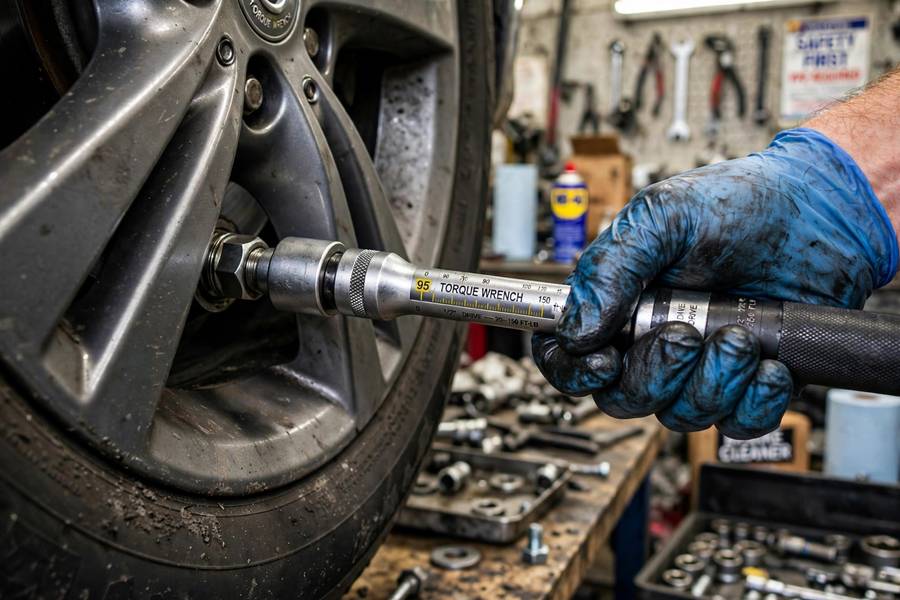
When you tighten a lug nut with a wrench, you’re applying torque. Your engine does the same thing thousands of times per minute: each power stroke shoves a piston down, the connecting rod pushes the crankshaft off-center, and that creates twist. More twist = more shove at the wheels.
It’s measured in pound-feet (lb-ft) — one pound of force applied one foot from the pivot. The shop-floor version: torque is the muscle, horsepower is how fast the muscle keeps working. A powerlifter has huge torque; a marathon runner has horsepower. You want the powerlifter to get a heavy trailer moving.
Torque vs Horsepower: The Real Difference
The entire relationship fits in one formula:
Horsepower = Torque × RPM ÷ 5,252.
Horsepower isn’t a separate thing your engine makes — it’s torque multiplied by engine speed. An engine making 300 lb-ft at 2,000 RPM produces about 114 hp. The same 300 lb-ft at 6,000 RPM is 343 hp. Same twist, different speed, different horsepower number.
In practice:
- Torque is the push — the shove into your seat, the ability to climb a hill without downshifting, the grunt to pull a trailer.
- Horsepower is how long that push sustains at speed — top speed and high-RPM pull.
The analogy I give everyone: torque is how hard you can twist a stuck bolt; horsepower is how fast you can keep twisting once it breaks loose. Getting things moving — 90% of daily driving — is about twist.
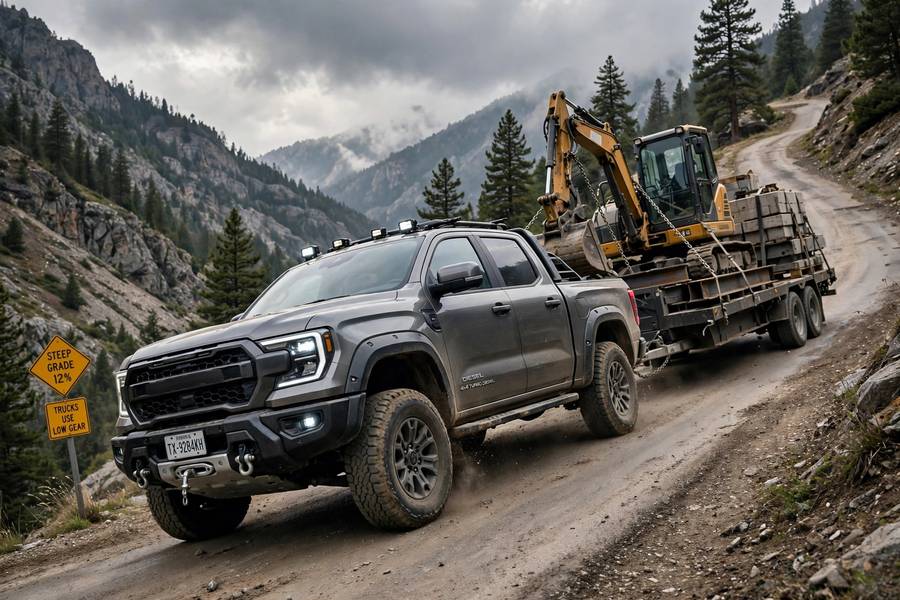
This is why horsepower numbers mislead. A sports car making 400 hp at 7,500 RPM might make only 280 lb-ft, most of it high in the rev range — around town at 2,500 RPM it feels oddly lazy. A diesel pickup making “only” 300 hp but 600 lb-ft at 1,800 RPM feels like a freight train off the line. Same-ish horsepower, completely different drive. Guess which one I’d rather tow with. Guess which number leads the brochure.
Why Torque Matters More in Daily Driving
How often are you above 5,000 RPM? Almost never. You live at 1,500–3,500 RPM: lights, merges, passing, hills. All of it runs on low-end and mid-range torque.
Strong low-end torque means effortless pull-away, confident merging without the transmission hunting, relaxed towing — and a car that doesn’t have to scream to do its job. That relaxed feel people describe in “nice” cars? That’s torque.
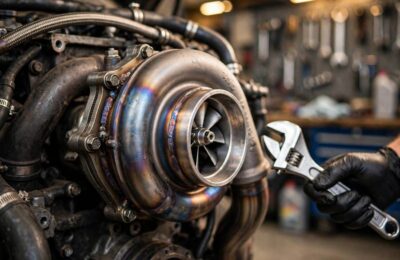
This is why turbocharged small engines took over. A 2.0L turbo making 280+ lb-ft at 1,800 RPM feels like a much bigger engine around town — the turbo is a torque cheat code. And it’s why EVs feel violent off the line: electric motors make peak torque at zero RPM. No waiting for revs or boost — just instant twist. The first time I drove a performance EV, I laughed out loud at a stoplight.
Gearing multiplies torque, by the way. First gear can multiply engine torque 3–4x before it reaches the wheels — that’s why cars launch hard in first and feel gutless in sixth at the same RPM. It’s also why regearing is the classic truck mod for bigger tires: taller tires effectively raise gearing and reduce wheel torque, so trucks on 37s regear the axles to get the twist back. One of the few mods I’d call genuinely smart instead of cosmetic. Less glamorous but more useful: knowing how to jump start a car — the single most-used roadside skill you’ll ever learn.
Diesel vs Gasoline vs Electric: The Torque Story
Diesel: The torque kings of combustion. High compression and long strokes deliver massive low-end twist — a 3.0L diesel can make 440+ lb-ft at 1,750 RPM. That’s why every serious tow rig is diesel. The trade: low redlines, modest horsepower, heavier engines, complex emissions equipment. For towing, nothing touches diesel torque per dollar.
Gasoline: The all-rounders. Modern turbo gas engines deliver near-diesel low-end torque without the trade-offs — cheaper, lighter, simpler. A turbo 2.0L with 295 lb-ft at 1,700 RPM tows a small trailer, merges happily, and still revs for fun. Naturally aspirated engines are weakest on low-end torque but sweetest at high RPM — enthusiasts love them; commuters don’t miss them.
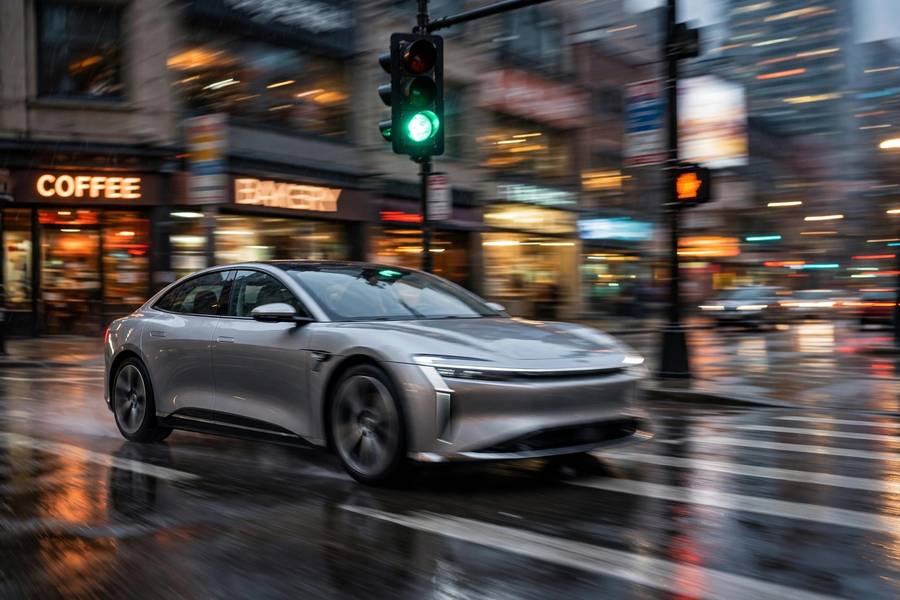
Electric: The cheat code. Full torque at zero RPM, no gears, no waiting. A dual-motor EV with 600+ lb-ft from a standstill embarrasses sports cars at stoplights silently. Trade-offs live elsewhere — weight, range, charging — but on torque delivery, pistons can’t compete. This is the biggest reason EVs feel so quick in normal driving: all the twist, right now.
How to Read Torque Numbers When Car Shopping
Brochures list “295 lb-ft @ 1,750–4,500 RPM” and most people skip it. Don’t:
Read the RPM, not just the number. 300 lb-ft at 1,800 RPM is far more useful than 320 lb-ft at 5,500 RPM. Lower RPM = torque you feel every day.
Read the range. A wide band (1,750–4,500 RPM) means flexible, effortless power. A narrow peak means a peaky engine and a busy transmission.
Compare torque-to-weight. 300 lb-ft in a 3,200-lb car feels strong; in a 5,500-lb SUV it feels adequate. Divide torque by weight for the real story.
Test drive with intent. Pull away normally (strained?), merge at part throttle (needs a downshift to wake up?), climb a hill without flooring it. A torquey car does all three without drama. If the transmission constantly kicks down and the engine screams, the torque isn’t where you need it — whatever the brochure says.
For family cars, ignore peak horsepower bragging. I’d take 280 lb-ft at 1,800 RPM over 320 hp at 6,500 RPM every time for daily driving. Would I spend my own money on the high-horsepower, low-torque option as a commuter? No. I’ve watched buyers pick the bigger horsepower number, then complain the car “feels slow” around town. The number they should’ve read was three lines down.
The Limits: When Torque Misleads
Torque is one ingredient, and it can be misapplied:
- Too much torque through the wrong wheels makes tire smoke. High-torque FWD cars fight torque steer — the wheel tugging under hard acceleration. It’s why serious performance went RWD or AWD.
- Torque without control is wasted. Traction control, good tires, and proper gearing turn twist into motion. A torque monster on cheap all-seasons is a burnout machine.
- Usable torque beats peak torque. The area under the curve in your normal RPM range, delivered effectively — a flat, wide curve in a well-geared car beats a bigger peak number every day.
Modern cars manage all this constantly behind the scenes — traction control, torque vectoring, and systems like cruise control modulating throttle (and therefore torque) to hold speed on hills. Your car does torque management nonstop; you just never think about it.
Bottom line: torque is the twisting force that moves your car, horsepower is how fast that force gets applied, and low-end torque predicts whether you’ll love or merely tolerate your daily driver. Read the torque line. Your right foot will thank you.
Frequently Asked Questions
Torque is twisting force, measured in pound-feet (lb-ft). It is the rotational push your engine applies to the crankshaft that ultimately turns your wheels. More torque means stronger acceleration from a stop, easier hill climbing, and better towing.
Torque is twisting force; horsepower equals torque times RPM divided by 5,252. Torque is the push you feel accelerating, while horsepower determines how long that push sustains at speed. For daily driving at low RPM, torque matters more.
Diesels use very high compression ratios and long-stroke designs that produce massive twisting force at low RPM. A 3.0L diesel can make 440+ lb-ft at just 1,750 RPM. That low-end grunt is why diesels dominate towing.
Electric motors produce peak torque at zero RPM, instantly from a standstill. A gas engine must spin up to build torque, but an electric motor delivers full twisting force the moment you press the pedal, which is why even modest EVs feel violent at stoplights.
Low-end torque matters more for daily driving. You spend your time at 1,500-3,500 RPM pulling away from lights and merging, not at 6,500 RPM. A car with strong low-RPM torque feels effortless; a high-horsepower, low-torque car can feel lazy until revved hard.
Check the RPM first: 300 lb-ft at 1,800 RPM is far more usable than 320 lb-ft at 5,500 RPM. A wide torque band means flexible power. Compare torque to vehicle weight, and test drive for real-world pull at part throttle rather than trusting peak numbers.