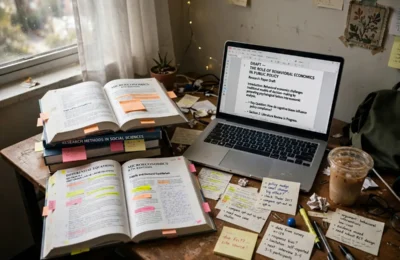
I used to tutor students one-on-one, and scholarship essays were the assignment everyone dreaded most. Not because students lacked stories worth telling — they had plenty — but because nobody had ever told them what the judges are actually looking for.
Here’s what I learned from years of helping students win real money: scholarship essays aren’t about having the most dramatic story. They’re about being specific, being genuine, and answering the actual question. Let me walk you through exactly how.
Table of Contents
- What Judges Actually Want
- Before You Write: The Prep Work
- A Structure That Works Every Time
- The Opening: Hook Them in 3 Sentences
- The Middle: Show, Don’t Just Tell
- The Ending: Land the Plane
- Mistakes That Get Essays Tossed
- Editing: The Unsexy Part That Wins
- Frequently Asked Questions
What Judges Actually Want
Let me demystify this first. Scholarship judges — often volunteers reading hundreds of essays — are looking for three things:
- Did you answer the question? Shockingly, many essays don’t. If the prompt asks about leadership, don’t write about your vacation.
- Are you specific? Vague essays blur together. Specific details stick. “I volunteered” is forgettable; “I spent every Saturday for a year tutoring two brothers in fractions” is memorable. (There’s deep science behind hands-on learning, by the way — the Montessori method built an entire philosophy on it.)
- Do you seem real? Judges read thousands of essays. They can smell insincerity instantly. The student who writes honestly about a small moment beats the one performing grandeur.
Notice what’s not on the list: perfect grammar (nice but not decisive), tragedy (not required), or sounding like a 45-year-old nonprofit director (actively harmful).
One more thing judges want: evidence you’ll use the money well. They’re investing in you. Show them the investment makes sense — your goals, your plan, your drive.
Before You Write: The Prep Work
Don’t open a blank document yet. Do this first:
Read the prompt like a detective. Underline the actual question. Circle key words. Many prompts ask two things (“describe a challenge AND how it shaped your goals”) — students routinely answer only one.
Research the organization. Who funds this scholarship? What’s their mission? A community foundation, a company, a memorial fund — each cares about different things. Mirror their values honestly (don’t fake it; align where it’s true).
Brainstorm before you choose. List 5-7 possible stories or angles. Then pick the one that’s most specific and most honest — not the most dramatic. The quiet story well told beats the big story told vaguely.
Gather details. For your chosen story: dates, names, numbers, sensory details, what you felt, what changed. Specifics are the raw material of good essays. “It was hard” is nothing; “I cried in my car after the third rejection, then rewrote the whole application at midnight” is something.
A Structure That Works Every Time
You don’t need a fancy structure. This one works for almost every scholarship essay:
- Hook (2-3 sentences) — a specific moment, image, or line of dialogue that drops the reader into your story
- Context (1 paragraph) — just enough background to understand the hook
- The turn (2-3 paragraphs) — what happened, what you did, what it cost you
- The reflection (1 paragraph) — what you learned or how you changed (be honest, not grandiose)
- The forward look (1 paragraph) — connect to your future goals and why this scholarship matters
That’s it. Five parts, 500-750 words for most scholarships. Simple structure, specific content — that’s the formula.
The Opening: Hook Them in 3 Sentences
Your opening has one job: make the judge want to read sentence four. Compare:
❌ “I have always been passionate about helping others. Since I was young, I knew I wanted to make a difference.” (Every judge has read this 500 times. It says nothing.)
✅ “The first time I translated a doctor’s instructions for my grandmother, I was eleven, and I got the dosage wrong.” (Specific. Stakes. I need to know what happened next.)
Techniques that work: – Start in a moment, not with background (“The letter said no…”) – Use dialogue (“‘You can’t afford college,’ my counselor said…”) – State something surprising (“I failed my first three scholarship applications…”) – Ask the question the essay will answer (“What do you do when the plan falls apart at seventeen?”)
What doesn’t work: dictionary definitions (“Webster’s defines leadership as…”), broad philosophical statements, or apologizing for your writing.
The Middle: Show, Don’t Just Tell
This is where essays live or die. “Show, don’t tell” is cliché advice because it’s correct — but let me make it practical:
Instead of adjectives, use scenes. Don’t say “I’m hardworking” — describe the 5 AM shifts before school. Don’t say “I’m compassionate” — show the Saturday tutoring sessions.
Use numbers. “I raised money” → “I raised $2,300 over four months.” Numbers make abstract claims concrete and credible.
Include a setback. The best essays have a moment where things went wrong. Perfection is boring and unbelievable. What did you do when it got hard? That’s character, and that’s what judges fund.
Stay in your lane. Write about what you actually experienced and felt. Don’t inflate, don’t borrow someone else’s story, don’t write what you think sounds impressive. Judges fund real people, not performances.
The Ending: Land the Plane
Weak endings summarize (“In conclusion, this experience taught me…”). Strong endings look forward:
- Connect your story to your future goals — what will you study, what will you do? (If the answer involves a PhD, you’re signing up for a doctoral dissertation — the clear-writing muscles you’re building now are exactly what that demands.)
- Connect to the scholarship itself — why does this organization’s mission matter to you specifically?
- End with forward motion, not a summary. The last line should point ahead.
Example: “That eleven-year-old who mistranslated a dosage is now studying to be the pharmacist her grandmother needed. This scholarship doesn’t just fund tuition — it funds the moment no other family has to guess.”
See the difference? It’s specific, it’s forward-looking, and it connects the story to the money.
Mistakes That Get Essays Tossed
From my tutoring years, the fastest ways to lose:
- Not answering the prompt. Read it again. Then again.
- Generic everything. If your essay could have anyone’s name on it, it will get no one’s money.
- Tragedy performance. Hardship is fine to discuss honestly; performing pain for points is transparent and off-putting.
- Listing accomplishments. That’s what the application form is for. The essay is for the person behind the list.
- Going over the word limit. It signals you can’t follow instructions. Cut ruthlessly.
- Typos in the organization’s name. Instant credibility death. Check three times.
- Submitting the first draft. See below.
Editing: The Unsexy Part That Wins
The students who won weren’t always the best writers — they were the best revisers. My process:
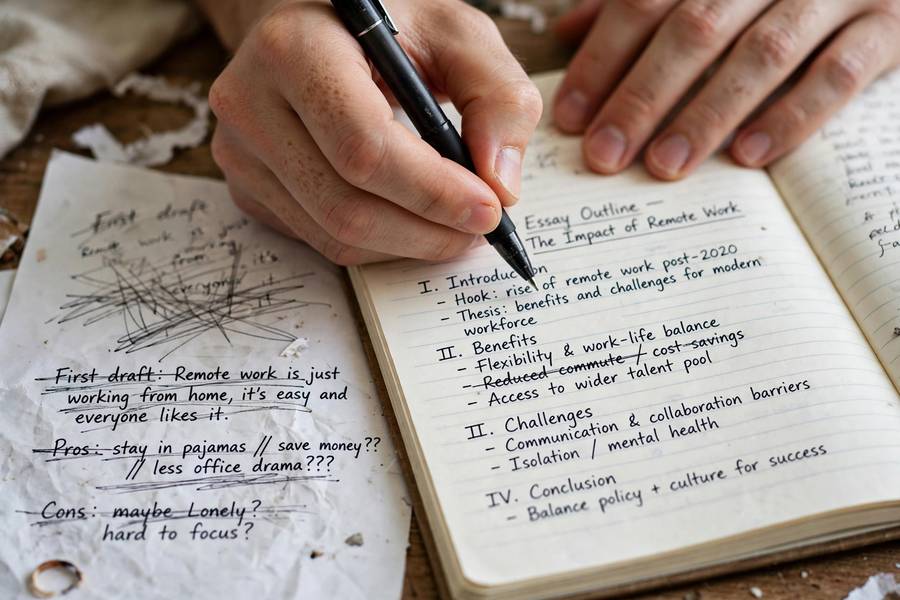
- Write the messy first draft. Get it all out. Don’t edit while writing.
- Sleep on it. Come back with fresh eyes. You’ll see problems you were blind to.
- Cut 20%. Almost every essay is 20% too long. Cut throat-clearing, repetition, and throat-clearing about repetition.
- Read it aloud. Your ear catches what your eye misses — awkward phrasing, run-on sentences, rhythm problems.
- Get one honest reader. A teacher, not a friend. Ask: “Where did you get bored? What confused you?”
- Proofread backwards. Read the last sentence first, then the second-to-last. It breaks your brain’s auto-correct and catches typos.
For general study skills that support all of this, my guide on how to study for final exams covers the broader habits.

Frequently Asked Questions
Start in a specific moment, not with background or general statements. Use a vivid image, a line of dialogue, or a surprising statement from your real experience. Avoid dictionary definitions, broad philosophical claims, and “I have always been passionate about…” — judges have read those openings thousands of times.
Three things: whether you actually answered the prompt, specificity (concrete details over vague claims), and authenticity (real voice over performed grandeur). They also want evidence you’ll use the money well — clear goals and a plan. Perfect grammar helps but matters less than being specific and genuine.
Follow the stated limit exactly — usually 500-750 words. Never exceed the word count; it signals you can’t follow instructions. If no limit is given, 500-750 words is the sweet spot: enough for a real story, short enough to hold a busy judge’s attention.
Only if it’s honest and relevant — and focus on what you did, not just what happened to you. Judges fund character and forward motion, not pain. A small, honestly-told story about overcoming something real beats a dramatic tragedy performed for points. Never invent or inflate hardship.
The biggest: not answering the actual prompt, being generic (the essay could have anyone’s name on it), listing accomplishments instead of telling a story, exceeding the word limit, typos (especially in the organization’s name), and submitting a first draft without revision.
Plan for at least three: a messy first draft to get ideas out, a structural revision after sleeping on it (cut ~20%), and a polish pass with read-aloud proofreading. Get one honest reader — ideally a teacher — to flag boring or confusing spots before you submit.