What Is an Escape Room? The Beginner’s Guide

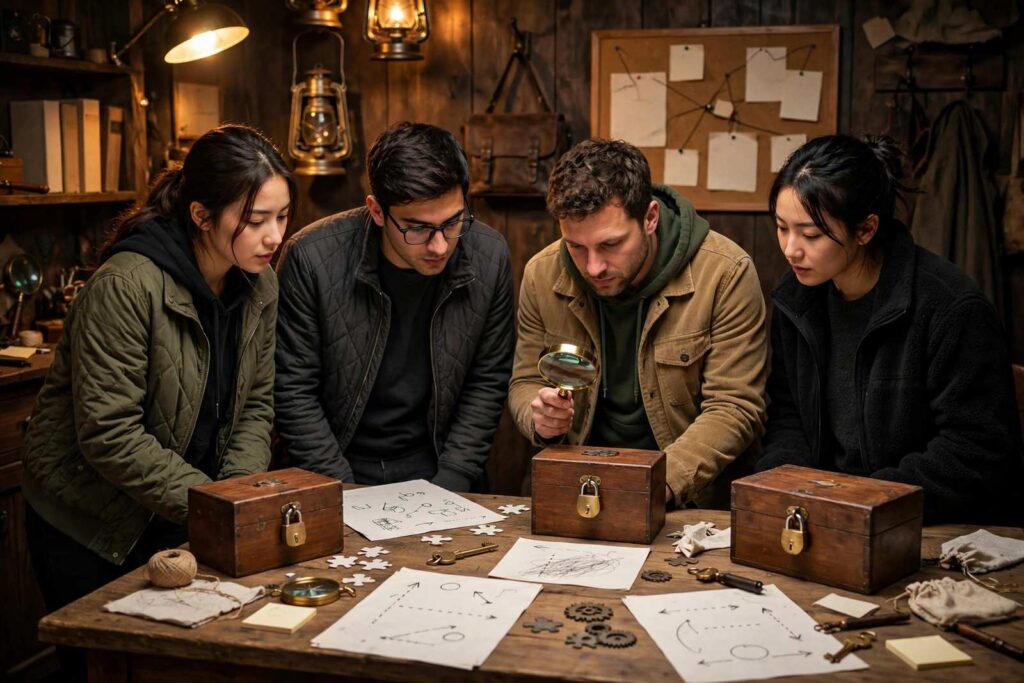
You’ve probably had a friend say “we HAVE to do an escape room” and nodded along without fully knowing what you’d signed up for. Here’s the deal: an escape room is a real-life puzzle game where you and your friends get locked in a themed room (figuratively — more on that later) and have to solve your way out before the clock runs out. It’s part scavenger hunt, part puzzle box, part theater set.
I’ve done enough of these to know what first-timers actually worry about: Am I going to be stuck? What if I’m bad at puzzles? What do I wear? Do I need to be smart? This guide answers all of it — what happens inside, the themes, the timing, the cost question, and the tips that separate a great first escape from a frustrating one.
What Is an Escape Room?
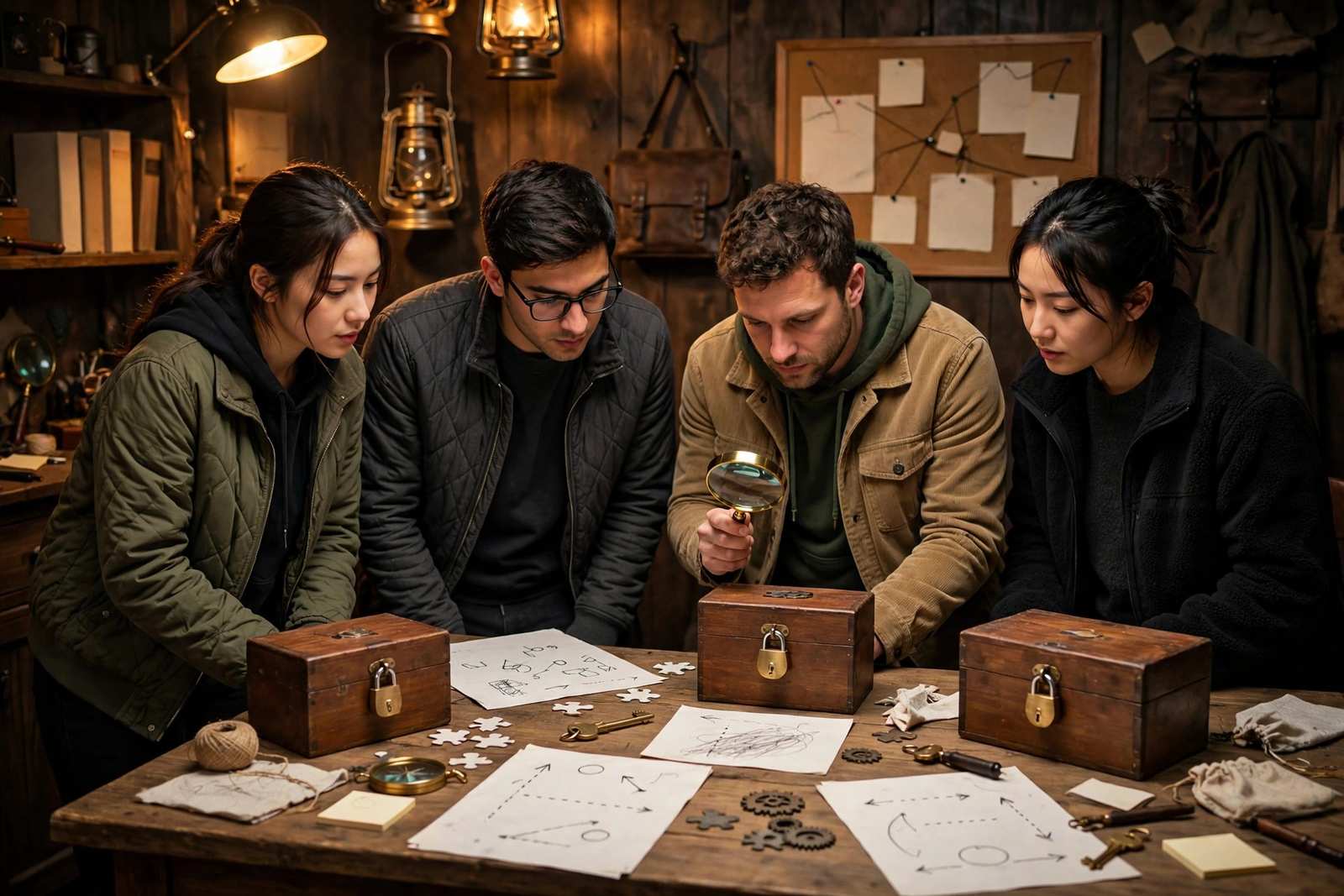
An escape room is a team-based, live-action puzzle game. The basic concept: you enter a themed room (a detective’s office, a prison cell, a spaceship), and you have to find clues, solve puzzles, and unlock your way through — usually against a time limit.
Three roles and elements make it work:
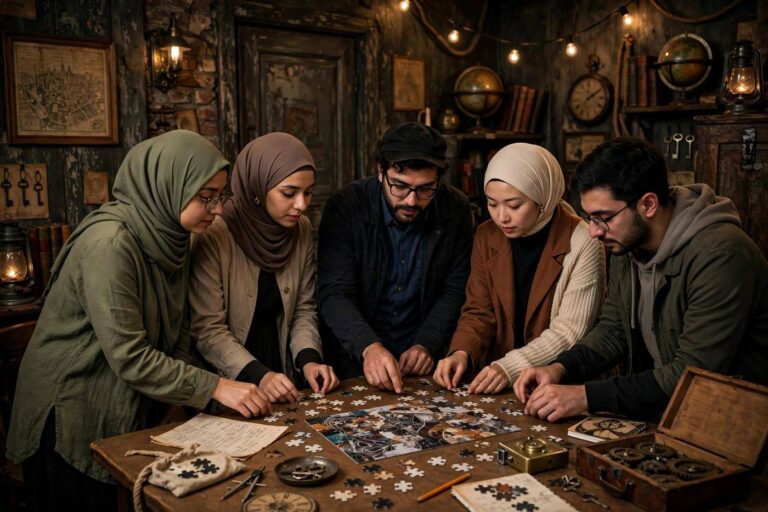
- The themed room itself. You’re not in a conference room with a worksheet. The set design — locked boxes, hidden compartments, UV lights, magnetic locks — is half the experience.
- The puzzles. Codes, ciphers, pattern recognition, physical manipulation. They chain together: solving one puzzle gives you the key (literal or figurative) to the next.
- The game master. A staff member who briefs you, monitors your progress on camera, and hands out hints when you’re stuck. You’re never truly alone in there — the game master is watching and can nudge you.
That’s the whole pitch: a movie you get to be inside of, with puzzles instead of a script. And unlike a movie, the ending is up to you — which is exactly why groups walk out either buzzing or already planning their revenge run.
Curious how venues actually build all of this? How escape rooms work goes behind the scenes on the mechanics, and how do escape rooms work covers the technology that powers the puzzles.
What Happens Inside: Step by Step
The game runs in three phases:
1. Briefing. The game master explains the story, the rules, and how to ask for hints. This takes five minutes. Pay attention to the hint system — some rooms give you three hints, some give unlimited, some penalize you for asking. Know the rules before you start.
2. Play. You explore the room, find clues, and solve puzzles in sequence. Typical components: a locked exit door, padlocked boxes, keys hidden in unlikely places, hidden doors leading to multiple rooms (many games open into a second or third room halfway through). The puzzles build on each other — that locked box you found in minute two probably opens with the code you’ll find in minute twenty.
3. Debrief. Time runs out (or you escape). The game master walks you through what you missed, shows you the puzzles you didn’t reach, and takes the group photo. The debrief is genuinely fun — half the group will be arguing about the puzzle they almost solved.
How Much Time Do You Get?
Most escape rooms give you less than 60 minutes — 60 minutes is the industry standard ceiling. Some rooms run shorter sessions, but if you’re booking your first, assume an hour.
An hour sounds like a lot. It isn’t. The first fifteen minutes disappear into exploring and getting oriented. The middle thirty are the real game. The last fifteen are panic. My advice: don’t spend more than five minutes stuck on any single puzzle. That’s what hints are for.
Popular Themes
Venues rotate themes constantly, but the big categories are:
- Mystery/detective — solve the crime, find the missing person. The classic.
- Horror — haunted house, zombie lab. (As a game theme only — scarier lighting, same puzzles.)
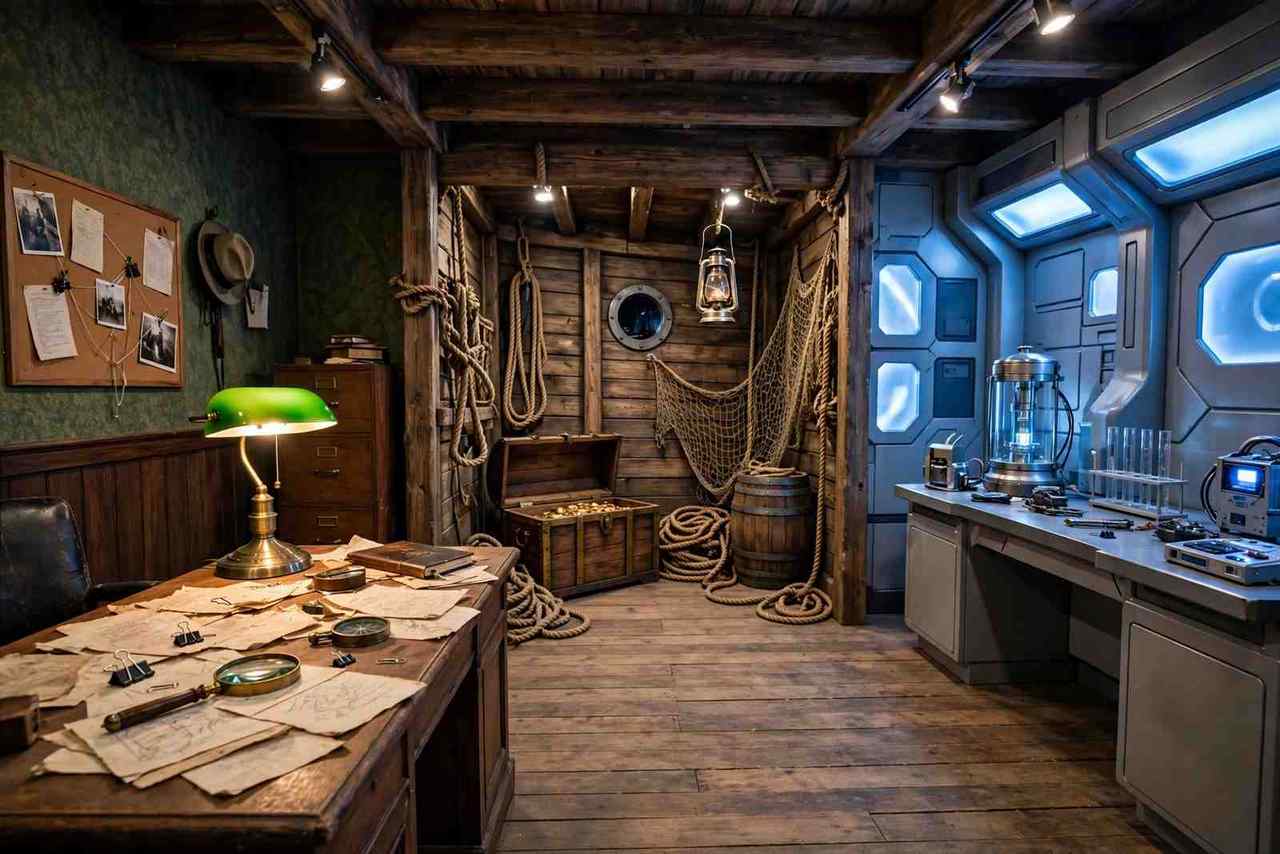
- Adventure — treasure hunts, lost temples, pirate ships.
- Sci-fi — spaceships, laboratories, time machines.
- Historical — bank heists, prison breaks, spy missions.
- Heist — steal the diamond, crack the vault.
Pick a theme your group will enjoy being inside of for an hour. A horror theme with a jumpy friend is a bad first experience. A heist theme with a competitive group is perfect.
How Many Players?
Escape rooms are team games, and venues accommodate a wide range — some advertise from 2 players up to 90 for large-format or corporate events. For a standard room, the sweet spot is 4–6 players: enough brains to split up puzzles, few enough that nobody’s standing around.
Two players can absolutely do it — you’ll just work harder. Eight-plus in a standard room gets crowded; check whether the venue recommends splitting into two rooms and racing.
First-Timer Tips (7)
- Search everything first. Before solving anything, do a full sweep of the room. Open every drawer, check under everything, look behind things. Half of “hard” puzzles are just unfound clues. Assign zones — you take the desk, I’ll take the bookshelf — so the search is systematic, not four people opening the same drawer.
- Communicate constantly. Call out everything you find. The person across the room might be holding the other half of your puzzle. Escape rooms are lost by silence, not by stupidity. Get in the habit of narrating: “Found a key, no lock yet.” “This painting has numbers on the back.” Out loud, every time.
- Don’t hoard clues. If you found a key, say so. If you solved something, announce it. The team can’t use information it doesn’t have. The classic failure mode is the quiet genius who solves half the room alone while everyone else stands around — bring the group with you.
- Use your hints. Hints aren’t cheating — they’re part of the game design. A hint at minute 25 beats a miserable 20 minutes of staring at the same lock. Good teams budget their hints like currency: spend early enough to keep momentum, save one for the final stretch.
- Divide and conquer, then reconvene. Split up to search, but come back together for the actual solving. Two people staring at different puzzles in silence is how groups stall. My rule: search alone, solve together.
- Think about what the designer intended. Escape room puzzles are designed to be solvable by normal people. If your theory requires a PhD in cryptography, it’s wrong. The intended solution is always simpler than you think. When you’re overcomplicting, step back and ask: “What’s the obvious thing we’re missing?”
- Wear comfortable clothes and shoes. You’ll be crouching, reaching, and moving around for an hour. This is not a heels situation. Pockets help too — you’ll be carrying keys, codes, and random objects the whole game.
Escape Room at Home (DIY)
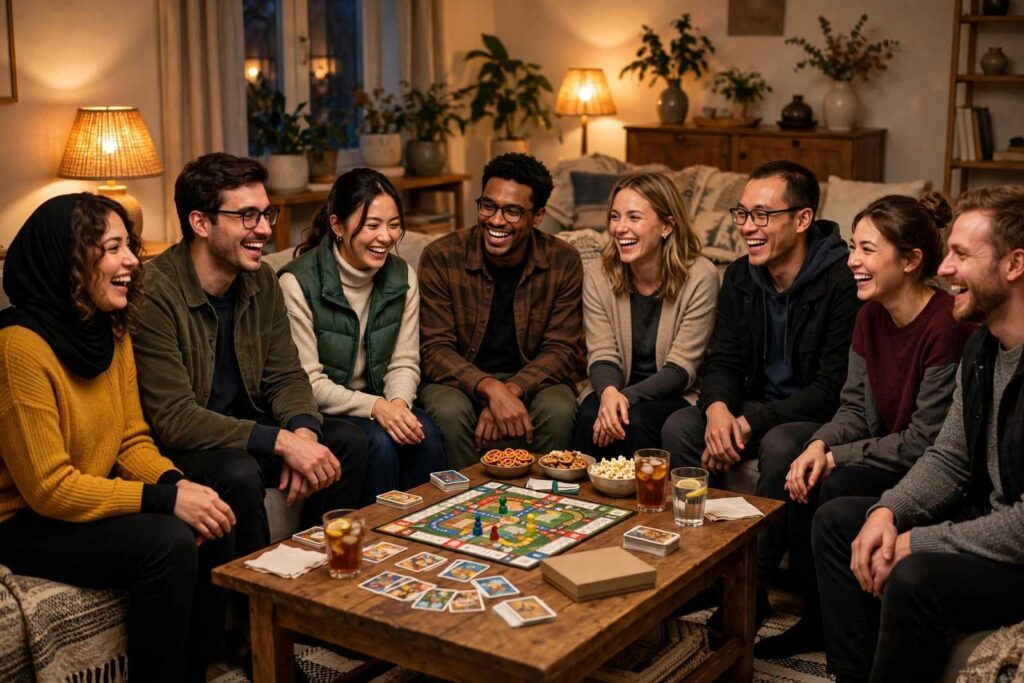
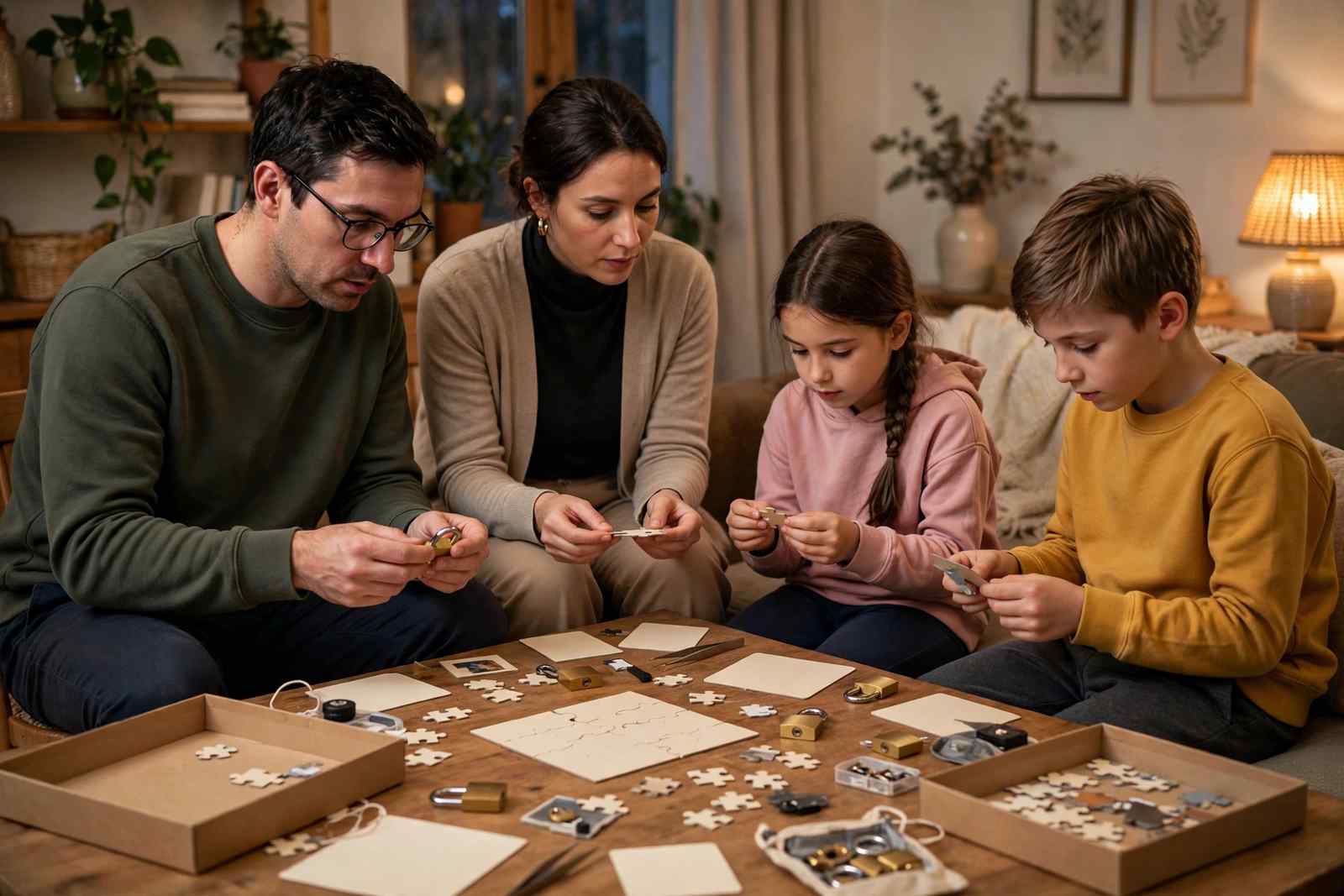
Can’t get to a venue? The at-home version is real: DIY escape room kits — boxed sets with the puzzles, locks, and story printed and ready — let you run the game in your living room. Same structure (briefing, play, debrief), same puzzle chains, minus the set design. They’re great for parties, family nights, and testing whether your group actually likes this kind of thing before paying venue prices.
One person has to be the game master — and it can’t be someone who also wants to play, because they’ll know all the answers. Pick your most theatrical friend for the role; a good game master who commits to the story is worth more than a fancy kit. Set a timer on your phone (the 60-minute pressure is half the fun), clear the coffee table, and dim the lights. It’s not the full venue experience, but the puzzles are real, the teamwork is real, and the debrief arguments are very real.
Frequently Asked Questions
How much time do you get in an escape room?
Most escape rooms give you less than 60 minutes — an hour is the standard. Don’t spend more than five minutes stuck on one puzzle; use your hints.
Do you actually get locked in an escape room?
The “locked room” is the theme — in practice, venues have safety exits and the game master monitors you throughout. You’re never truly trapped. (Venue-specific safety details vary; check with your venue.)
How many people can play an escape room?
Escape rooms are team games — some venues handle anywhere from 2 to 90 players for large events, but the sweet spot for a standard room is 4–6 players.
Are escape rooms good for beginners?
Yes — they’re designed for all levels, from first-timers to veterans. The game master adjusts hints to your group, and the puzzles are meant to be solvable by normal people.
How much does an escape room cost?
Pricing varies widely by city and venue — check local venue listings for current per-person rates rather than relying on a single number. (No single sourced figure is cited here; prices change frequently.)
Can you play an escape room at home?
Yes — DIY escape room kits bring the same structure (briefing, puzzles, debrief) to your living room, minus the professional set design. Great for parties and family nights.