How to Fold a Suit Jacket for Travel (Wrinkle-Free)

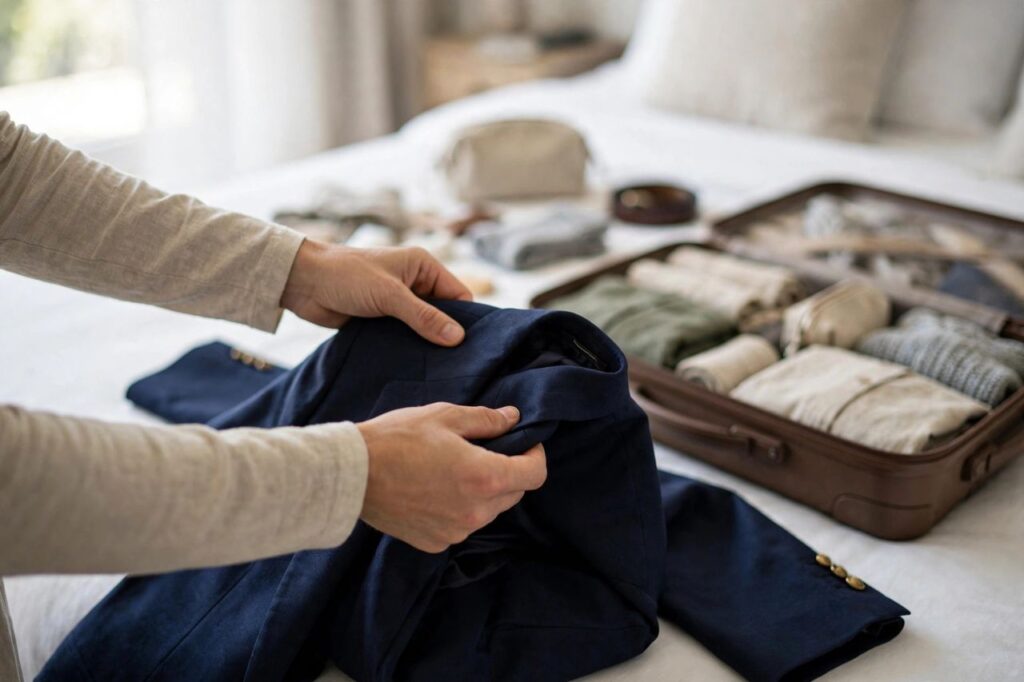
Few things sting like opening your suitcase at the hotel and finding your blazer has arrived looking like a crumpled napkin. The good news: a suit jacket folds beautifully if you use the right method — and the wrong method is exactly what most travelers default to, which is why so many jackets arrive wrinkled.
There are two methods worth knowing. The shoulder-tuck fold is the best all-rounder, and the shirt-style fold wins when space is tight. Once the jacket technique is down, the companion guide to folding clothes to save closet space applies the same compact-fold thinking to everything else in the bag. Below: both methods step by step, the prep that makes them work, packing order, fabric guidance, and the hotel-room rescue for whatever survives the journey anyway. For wrinkles on everything else in your bag, the companion guide to removing wrinkles without an iron is worth bookmarking.
Why Suit Jackets Wrinkle in Luggage (and How Folding Fixes It)
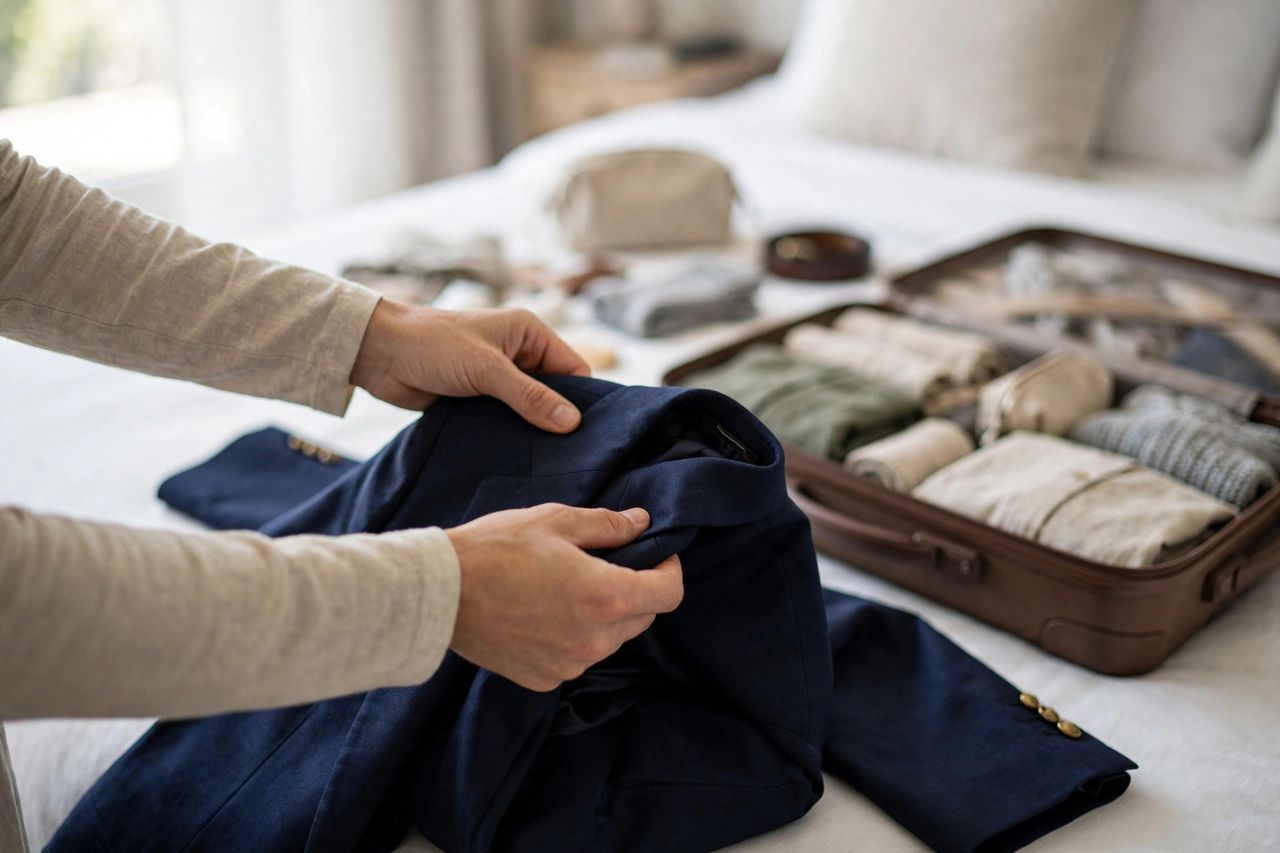
A suit jacket is a structured garment — canvas, lining, lapels pressed into shape. Every fold presses that structure against itself, and pressure plus time equals wrinkles. The longer a crease sits under the weight of your suitcase contents, the deeper it sets.
Folding works when it respects the structure instead of fighting it. The shoulder-tuck method turns the jacket inside out, so any creases land on the lining rather than the visible outside. The shirt-style fold minimizes sharp angles. Both beat stuffing the jacket in as an afterthought — which is how most wrinkles happen.
Before You Fold: 4 Prep Steps
Good folding starts before you touch a sleeve. First, empty every pocket — a forgotten pen or receipt creates a pressure point that wrinkles the fabric around it. Second, button the front and fasten any interior buttons so the jacket holds its shape. Third, check for existing wrinkles; fold a wrinkled jacket and you lock the wrinkles in. Fourth, lay the jacket flat on a clean surface, face up, and smooth it with your hands so you’re folding an even garment, not a bunched one.
The Shoulder-Tuck Fold (Best Method, Step by Step)
This is the method to learn first — four steps, and your jacket travels inside-out so the visible fabric stays protected.
Step 1 — Lay it flat. Jacket face-up on the bed or table, buttons fastened, sleeves straightened. Smooth the lapels flat with your palms.
Step 2 — Pop one shoulder. Reach inside and push one shoulder out from the inside so it inverts — the shoulder pad turns inside out like a pocket being pulled out. This is the heart of the method.
Step 3 — Tuck the other shoulder in. Fold the jacket in half vertically and tuck the other shoulder into the inverted one, so the two shoulders nest together. The jacket is now inside-out, lining facing out, and the two sides mirror each other. The common mistake here is rushing: force the tuck and the lapels bunch up, which creates exactly the wrinkles you’re trying to avoid. Take the extra five seconds.
Step 4 — Fold in half. Fold the nested jacket in half horizontally, top to bottom. You now have a neat, compact rectangle with the delicate outer fabric facing inward, protected by the lining.
The Shirt-Style Fold (When Space Is Tight)
When the suitcase is full and the jacket has to squeeze into a corner, use the shirt-style fold — four steps, built for tight spaces.
Step 1 — Face down. Lay the jacket face-down, back facing up. Step 2 — Fold the sleeves. Fold each sleeve back across the back of the jacket so they lie flat. Step 3 — Fold the sides in. Fold the left side in, then the right, narrowing the jacket into a column. Step 4 — Fold in half. Fold the column in half horizontally. The result is smaller than the shoulder-tuck bundle — not as wrinkle-proof, but far better than a crumpled ball.
The Dry-Cleaning Bag Trick
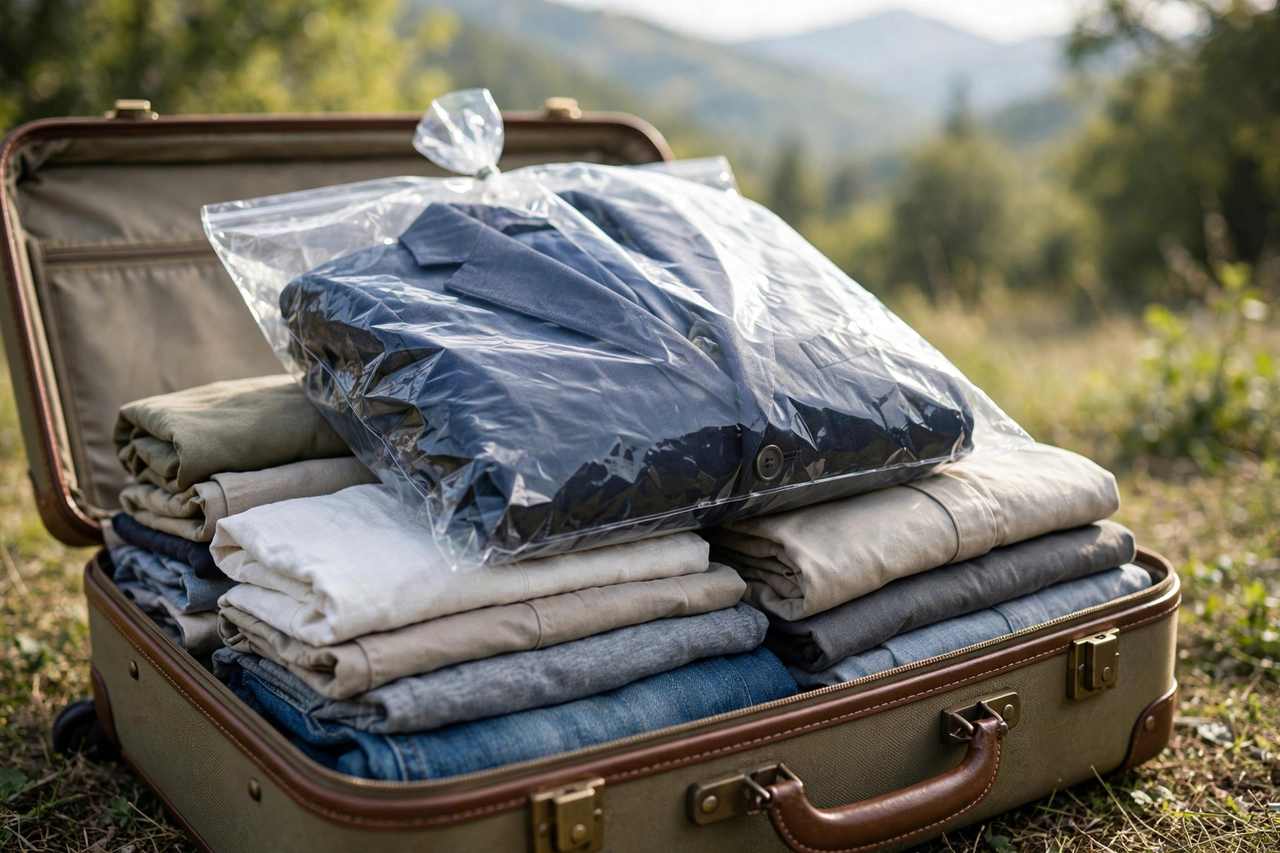
A plastic dry-cleaning bag is the cheapest packing accessory you own. Slide your folded jacket inside one before it goes in the suitcase. The slippery plastic lets layers shift against each other instead of gripping and creasing, and it protects the fabric from anything that leaks or rubs.
This trick stacks with both fold methods — fold first, bag second. Keep a couple of bags in your suitcase permanently; they weigh nothing and they also work as garment bags for shoes and delicates on the return trip.
Packing the Trousers Without Creases
Trousers wrinkle for the same reason jackets do: sharp folds under pressure. The rule is two folds at most — more folds mean more crease lines. Lay the trousers flat, fold once along the natural crease line, then fold in half once more. Done.
Place the folded trousers flat in the suitcase rather than rolled or jammed into gaps. If you want extra protection, sandwich them between layers of clothing so nothing hard presses directly against the fabric.
Full Suitcase Packing Order (What Goes Where)
Packing order decides what gets crushed and what doesn’t. Six steps, bottom to top: shoes go in first, in bags, along the walls of the suitcase. Heavy items — jeans, sweaters, toiletry kits — form the next layer. Then rolled casual clothes, which fill gaps and cushion everything. Your trousers lie flat above those. Delicate items and the dry-cleaning-bagged jacket go near the top. And the jacket itself goes last — on the very top of the pile, where nothing presses down on it.
The biggest enemy here is over-stuffing. A suitcase packed so full the lid strains will wrinkle everything regardless of method. If the case barely closes, you’ve packed too much.
Garment Bag vs Suitcase vs Checked Luggage
A garment bag is the gold standard — the jacket hangs, nothing folds, nothing wrinkles. If you’re traveling for a wedding or an interview where the suit must be perfect, the garment bag is worth the extra carry-on.
In a suitcase, the folded jacket rides on top as described above. Checked luggage is the riskiest option: bags get thrown, stacked, and compressed, and a folded jacket in checked luggage faces the harshest conditions of all. If you must check a bag, the garment bag inside the checked case is the compromise — folded as little as possible, protected by the bag.
Which Fabrics Travel Best (Wool vs Linen vs Cotton)
Fabric choice matters as much as folding technique. Wool and tweed are the travel champions — their fibers are naturally resilient and spring back from compression, so a wool jacket can survive a fold that would ruin other fabrics. Tweed behaves similarly.
Linen and cotton are the opposite: they wrinkle the moment they look at a suitcase. If your trip involves a linen blazer, either wear it on the plane or accept that it will need attention at the hotel. When you’re choosing what to pack, reach for wool — it forgives the journey. And if your travel look needs to hold up beyond the suit itself, the guide to styling a blazer casually shows how far one good jacket goes.
At the Hotel: Unpack, Steam, and Rescue Wrinkles
The first thing you do in the hotel room is unpack the jacket — within 24 hours at the latest, before any creases set in permanently. Hang it immediately on a proper hanger, not the wire kind, and give the fabric a day to relax.
For remaining wrinkles, the bathroom-steam method is the classic rescue: hang the jacket in the bathroom, run the shower hot with the door closed, and let the steam work for 15 to 20 minutes. The damp heat relaxes the fibers and releases most travel wrinkles without any equipment. Planning the rest of your travel look? The guide to what to wear to the airport keeps the whole trip coherent.
Ironing a Suit Jacket Safely (If You Must)
Sometimes steam isn’t enough and the iron comes out — but a suit jacket is not a shirt, and the rules are stricter. Always use a press cloth between the iron and the jacket; direct iron heat can shine or scorch the fabric. Check the care label first and set the iron to the temperature it specifies. Press, don’t slide: lift and press the iron down, then lift again. Sliding stretches the fabric and distorts the shape.
If the jacket has any interfacing or structure you’re unsure about, skip the iron entirely and repeat the steam treatment or call the hotel’s pressing service. A pressed-by-a-professional jacket beats a self-ironed disaster every time.

Frequently Asked Questions
Is it better to roll or fold a suit jacket for travel?
Fold. Rolling crushes the jacket’s structure — the lapels, canvas, and lining press into each other unevenly. The shoulder-tuck fold turns the jacket inside out so creases land on the lining, which is far kinder than any roll.
Can I pack my blazer in checked luggage?
You can, but it’s the riskiest option — checked bags get thrown and compressed. Use a garment bag inside the checked case, fold as little as possible, and place the jacket on top of everything else.
How do I get wrinkles out of a suit jacket in a hotel room?
Hang the jacket immediately, then use the bathroom-steam method: hot shower running, door closed, jacket hanging nearby for 15 to 20 minutes. If you must iron, use a press cloth, follow the care label temperature, and press rather than sliding.
How long can a blazer stay folded before wrinkles set in?
Unpack within 24 hours of arrival — beyond that, creases start to set permanently. The moment you reach the hotel, the jacket comes out of the suitcase and onto a hanger.
What fabrics travel best for a blazer?
Wool and tweed travel best — their fibers spring back from compression. Linen and cotton wrinkle easily and need wearing on the plane or attention at the hotel. When in doubt, pack the wool jacket.
Should I use a garment bag or fold the jacket in a suitcase?
A garment bag is the gold standard for trips where the suit must look perfect. For ordinary travel, the shoulder-tuck fold in a dry-cleaning bag, placed on top of the suitcase contents, travels very well.