How to Serve in Badminton: Rules, Types & Technique

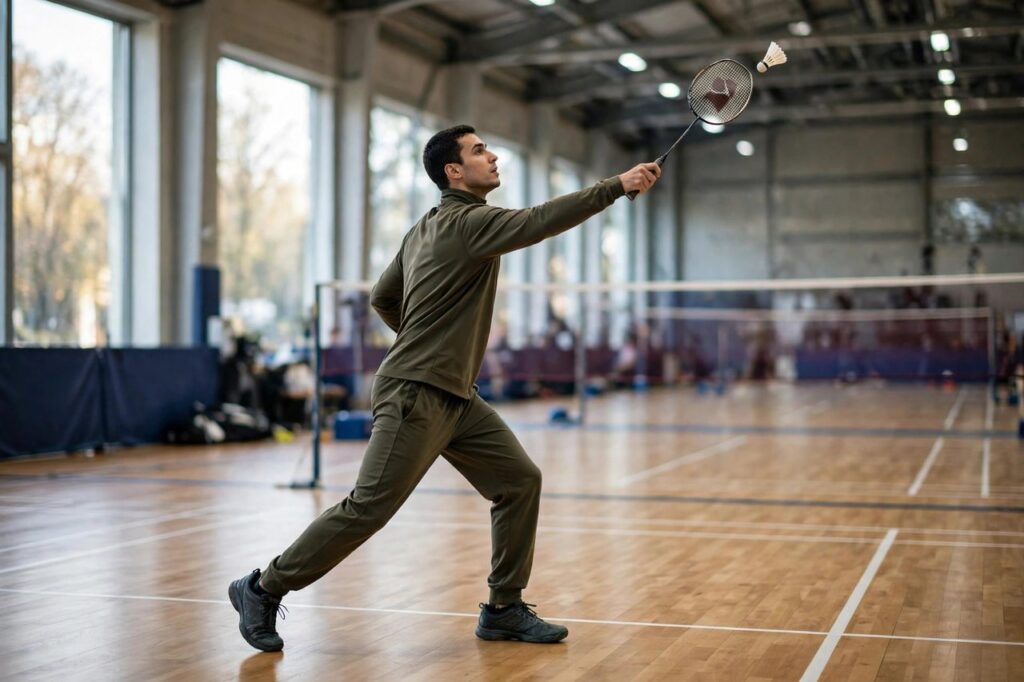
The serve is the one shot in badminton nobody can take away from you. The shuttle starts dead in your hand, the court is quiet, and you decide how the rally begins. A sloppy serve leaks points for a career; a sharp one hands you an edge on every point.
Most players learn it badly — buried in rule-book language, or copying a fancy flick without knowing when it’s legal. This guide fixes both: the legal serve in plain English, four serve types with step-by-step technique, singles-versus-doubles strategy, the fault list, and a drill that makes it stick.
Why the Serve Matters in Badminton
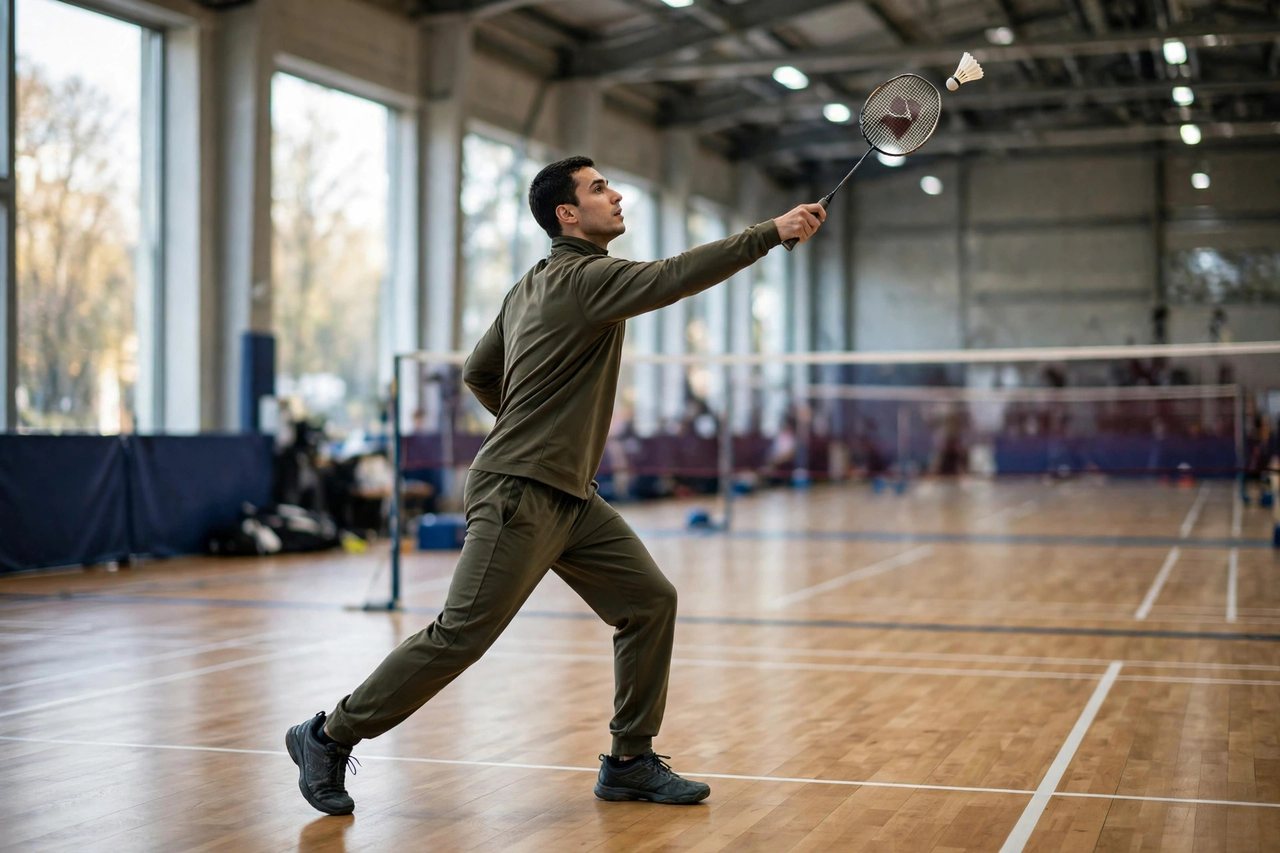
The serve is the only fully controlled shot in the sport. Clears get pressured, drops get anticipated, smashes get blocked — but your serve happens exactly as you plan it, every time. That control is responsibility.
A weak, high, mid-court serve in doubles invites your opponent to kill it at the net. A short high serve in singles hands them an attacking position on shot one. You don’t just start the rally — you set its terms. Attack or defend is decided before you strike the shuttle.
So train the serve like your smash. Ten focused minutes at the start of every session, shuttle after shuttle, until the motion is automatic. In a tight third game you won’t think about technique — you’ll run the pattern your body owns. Build that pattern now.
The Legal Serve: BWF Law 9 and the 1.15 m Rule
BWF Law 9 governs the serve, and it’s simpler than the rule-book sounds. The serve must travel diagonally into the opponent’s service box — cross-court, never straight. Strike cork-first, feathers trailing; feathers-first is a fault. The swing must be one continuous motion — no pausing, stopping, or feinting. Any hitch is a fault.
Both feet must stay grounded until the serve is delivered, and both feet inside your service court — touching a line counts as out. You get one serve per rally. No second serve exists: a faulty serve loses the rally, not earns a retry.
Then the height rule, the most misunderstood in the sport. At contact, the entire shuttle must be below 1.15 meters. Not the cork, not most of it — the whole shuttle. This fixed standard arrived in 2018, replacing the old waist rule, which let taller players contact higher and was nearly impossible to judge. Same number for everyone now. It’s also why you can’t serve overhand: an overhand strike happens well above 1.15 meters. Tennis converts, take note — your muscle memory will fight this for weeks. The serve technique principles transfer across racket sports, but badminton’s no-second-serve rule makes legality non-negotiable.
Which Court to Serve From: Even Score Right, Odd Score Left
Your position is decided by your score, and the rule never changes: even score, serve from the right; odd score, from the left. Zero counts as even, so every game starts right.
The serve always goes diagonally into the receiver’s matching box — your right into their right, your left into their left. That diagonal geometry feels familiar if you know the basic rules of racket sports, though details differ.
Drill both sides equally, because your side changes constantly with the score. Players who only practice from the right look lost the first time an odd score puts them left. And the side is only legal if everything else is — feet grounded, feet inside, shuttle below 1.15 m. One illegal element poisons the serve.
Serve Types Overview: Low, High, Flick, Drive
Four serve types, each solving a different tactical problem. Know all four; two do most of the work.
The low serve is the doubles workhorse. Struck backhand, shuttle held cork-down, it skims the tape and drops steeply into the front of the box. Its job: deny the receiver anything to attack.
The high serve is the singles standard. Deep and high to the back boundary, buying time to set your base. It turns the rally’s opening into a neutral reset.
The flick serve is the low serve’s evil twin. Same setup and early motion — then a late wrist snap sends it deep. Pure deception, working only when the honest low serve is a real threat.
The drive serve is flat and fast, aimed at a receiver drifting too far forward or back. Use sparingly; a drive that sits up is a sitting duck.
Step-by-Step: The Forehand High Serve (Singles)
The high serve is your singles default — build it first. Don’t skip steps; the order is the technique.
Stand sideways, racket-side foot back, relaxed and balanced. Hold the shuttle by the feathers in your non-racket hand, arm extended, clearly below 1.15 m. Drop your racket arm back and down — a full, unhurried backswing, not a jab.
Swing upward in one smooth, continuous motion. Power comes from the upward path plus a sharp wrist flick at contact, not shoulder muscle. Strike cork-first below 1.15 m, sending the shuttle high and deep toward the back boundary. Follow through up and across.
Two checkpoints: contact below the line (the most common beginner fault) and depth. A mid-court high serve invites the attack — worse than useless. Drill until ten in a row land deep without thought. That’s the standard for every serve type: ten in a row, no thought.
Step-by-Step: The Backhand Low Serve (Doubles)
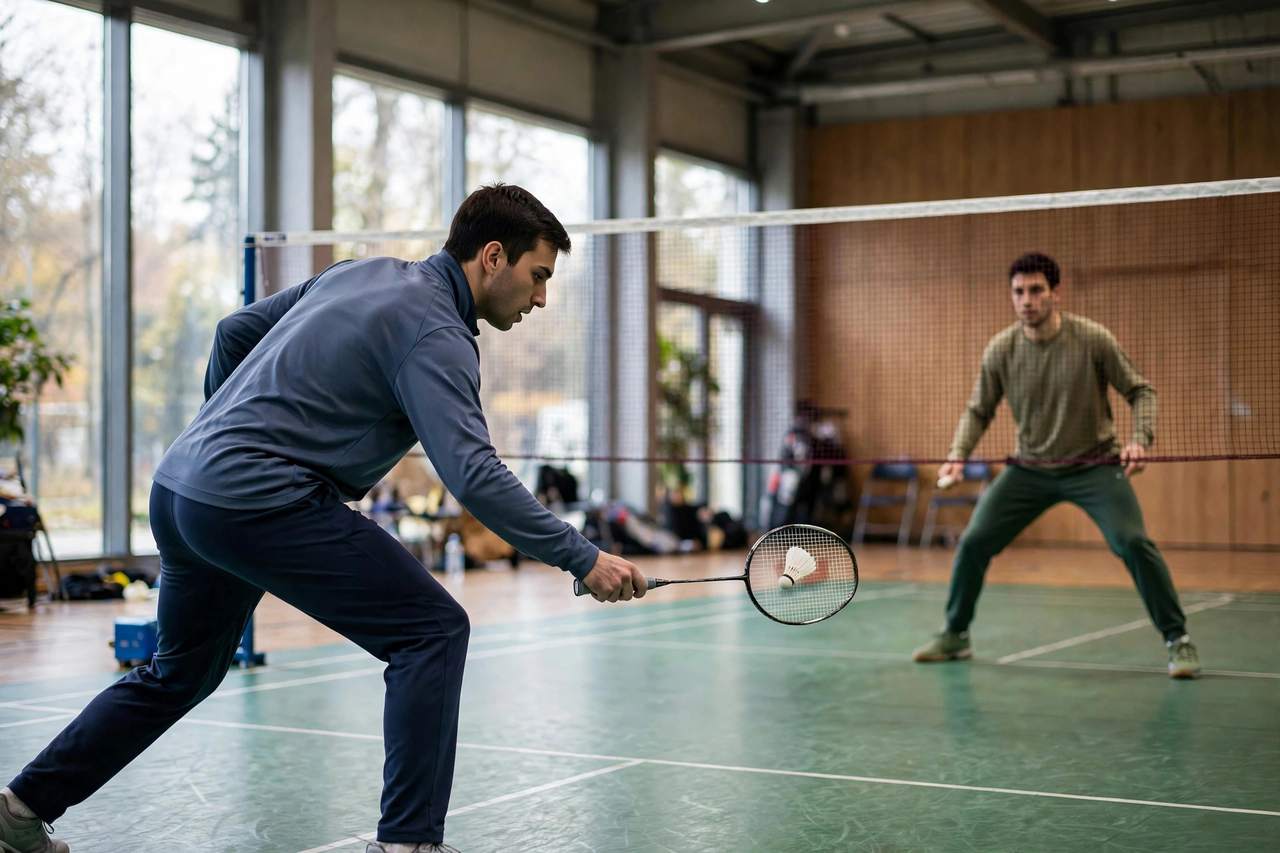
In doubles, the backhand low serve is the standard — full stop. The front court is a killing zone; anything loose gets punished. This serve’s purpose is giving the receiver nothing to attack.
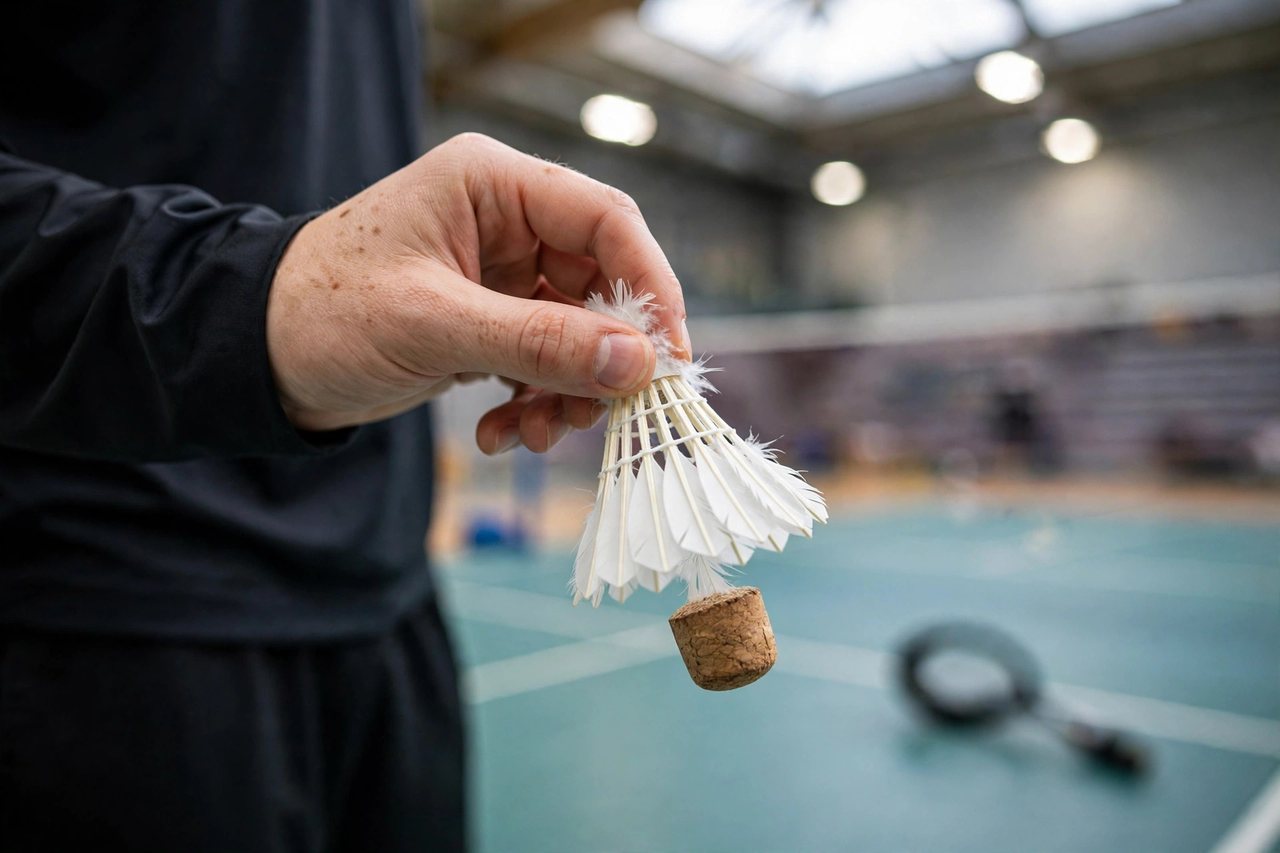
Short backhand grip, racket head up in front of your body. Hold the shuttle by the feathers, cork pointing down — cork-down keeps the flight flat. Stand close to the short service line, square to the net, balanced.
The motion is a short push, not a swing. Push forward with thumb and compact racket movement — continuous, no pause, no fake. Target a flat trajectory barely clearing the tape, dropping just beyond the 1.98 m short service line. High is dead; tape on your side is dead. The margin is thin — precision is the weapon.
The classic failure: powering a serve that needs none. It travels only a short distance past the net; force sends it long or high. Placement, not power. Twenty in a row within a racket-length past the short line means you own it.
The Flick Serve: How to Disguise It
The flick lives or dies on disguise. Read early, and you’ve gifted a high shuttle to the back — exactly what they wanted. Mirror your low serve until the last instant.
Same stance, same grip, same hold, same early body language as the backhand low. Begin the small push — then snap the wrist at the final moment, accelerating through the shuttle flat and deep to the back of the box.
Two rules. First, use it sparingly: a flick every few service games keeps the receiver honest; every serve lets them camp deep. Second, flick the creeper. When your opponent inches forward to attack your low serve, that’s the trigger. The flick punishes forward movement as the low serve punishes backward drift — a complete system, the honest serve and the lie making each other deadlier.
Singles vs Doubles Serve Strategy
Serve choice is mostly a format decision. In singles, the court is long and the receiver starts deep. The high serve is standard — pushing them back, buying time to establish your base. Mix the low serve to drag them forward; flick rarely as a change-up. Depth does tactical work every rally.
In doubles, everything compresses. The receiver stands close, the front court is attacked instantly. The backhand low serve is standard — anything loose gets killed at the net. The flick is your pressure valve: when the receiver crowds the net, one flick sends them scrambling back and buys your low serve five more points of respect.
The serve rules parallel in squash shows the same principle: a serve’s job is defined by what the receiver wants next. Deny that and you win from shot one. Racket sport rules overlap more than players expect — but serve reps are sport-specific. No shortcuts past the shuttle count.
Common Service Faults
Umpires call these weekly at every level. Audit your serve against each.
Contact above 1.15 m — the most called fault in the modern game. Any part of the shuttle at or above the line at contact kills the serve. In doubt, hold and strike lower than feels natural.
Foot fault — either foot lifting before delivery, or touching a boundary line. Grounded and inside until the shuttle is struck.
Not cork-first — feathers-first or sideways contact. Cork leads, feathers trail. Every time.
Pause or feint — the swing must be one continuous forward motion. Stop, hitch, or fake, and it’s a fault.
Wrong box or short — wrong side for the score, outside the diagonal box, short of the 1.98 m line, or beyond the doubles long service line (0.76 m inside the back boundary) in doubles.
Second-serve thinking — none exists. A fault ends the rally. Internalize it and your first serve gets careful.
Practice Drills to Build a Reliable Serve
Technique without reps is trivia. Run this progression at the start of every session.
Drill 1: Short-line target. Towel just beyond the 1.98 m short service line, diagonal box. Ten backhand low serves at it. Standard: 8 of 10 within a racket-length. Watch each flight — long, short, high — adjusting one thing at a time.
Drill 2: Deep zone. Mark the last meter of the singles box. Ten forehand high serves, same 8-of-10 standard. Landing short? Fuller upward swing and later wrist snap — not muscle.
Drill 3: Flick on command. Partner receives, creeping forward without warning; flick only when you see it. Disguise against a live reader — the only condition that matters. Five clean wrong-footings is a set.
Finish with ten serves alternating sides — even right, odd left — keeping both grooved.
Quick Recap + What to Learn Next
The non-negotiables: whole shuttle below 1.15 m at contact (fixed rule since 2018), cork first, one continuous motion, feet grounded and inside until delivery, diagonal into the correct box, one serve per rally. Even from the right, odd from the left. Singles: high and deep. Doubles: backhand low. Flick and drive are change-ups.
Next: the return of serve. Once your serve crosses the net, the rally belongs to whoever reads it first. Learn to receive the low serve without lifting it into the killing zone, and to attack a short high serve before it costs you. Then sharpen the serve again. The skills feed each other — and winning the first three shots of every rally, in a sport this fast, is most of the match.
Frequently Asked Questions
Can you serve overhand in badminton?
No. The entire shuttle must be below 1.15 meters at contact, making an overhand strike impossible within the rules. The legal serve is underhand or sidearm — the standard since the fixed-height rule replaced the waist rule in 2018.
What is the 1.15 m rule in badminton serving?
The whole shuttle must be below 1.15 meters from the court surface when the racket strikes it. Introduced by the BWF in 2018, it replaced the waist-height rule with a fixed, measurable line for every player.
Which side do you serve from in badminton?
Right service court on even scores, left on odd scores. The serve always travels diagonally into the receiver’s matching box.
What are the four types of serves in badminton?
Low (flat over the net — the doubles standard), high (deep to the back — the singles standard), flick (disguised as low, sent deep), and drive (flat and fast, a sparing surprise).
Is a serve that hits the net and lands in legal?
Yes. Clipping the tape but landing in the correct diagonal box is legal — the net cord is part of the game. Only a fault if the serve misses the box or breaks another rule.
What are the most common service faults in badminton?
Contact above 1.15 m, foot lifting before delivery, not cork-first, pausing or feinting, and landing short of the 1.98 m line or outside the box. No second serve — a fault loses the rally.