Nobel Prize Winners 2026: The Complete List of All 10 Laureates

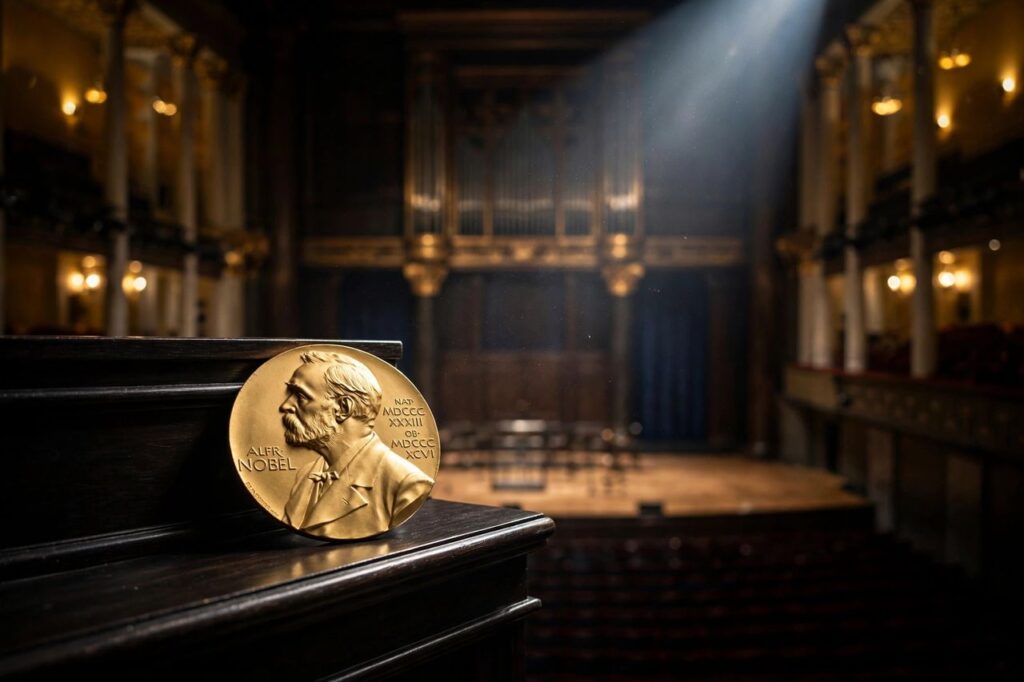
The Nobel Prize winners for 2026 are now all announced. Over six days from October 5 to October 12, ten laureates were named across the six prize categories: Physiology or Medicine, Physics, Chemistry, Literature, Peace, and Economic Sciences. From the neuroscientists who learned to control brain cells with light to a Canadian poet who reinvented literary form, here is the complete list.
The short version: Medicine went to Karl Deisseroth, Peter Hegemann, and Georg Nagel for optogenetics; Physics to Francis Halzen for the IceCube Neutrino Observatory; Chemistry to Henri B. Kagan and Kenso Soai; Literature to Anne Carson; Peace to Navi Pillay; and Economic Sciences to Robert E. Hall and Michael Woodford. Award ceremonies take place on December 10.
Nobel Prize Winners 2026: The Full Table
| Category | Winner(s) | Announced | Awarded for |
|---|---|---|---|
| Physiology or Medicine | Karl Deisseroth, Peter Hegemann, Georg Nagel | Oct 5 | Light-gated ion channels and optogenetics |
| Physics | Francis Halzen | Oct 6 | IceCube Neutrino Observatory; high-energy astrophysical neutrinos |
| Chemistry | Henri B. Kagan, Kenso Soai | Oct 7 | Non-linear effects and autocatalysis in asymmetric organic synthesis |
| Literature | Anne Carson | Oct 8 | Bold, inventive oeuvre in dialogue with classical tradition |
| Peace | Navanethem “Navi” Pillay | Oct 9 | Efforts to promote peace and international law |
| Economic Sciences | Robert E. Hall, Michael Woodford | Oct 12 | Microeconomic foundations of macroeconomic stabilisation |
Medicine: The Scientists Who Control Brains With Light
On October 5, the Nobel Assembly at Karolinska Institutet awarded the medicine prize to American psychiatrist and bioengineer Karl Deisseroth (Stanford University), German biochemist Peter Hegemann (Humboldt University of Berlin), and German biophysicist Georg Nagel (University of Würzburg) for discoveries concerning light-gated ion channels, the foundation of optogenetics.
Optogenetics is a technique that uses light to switch individual neurons on and off in living brains, giving neuroscientists unprecedented precision in studying how brains work. It has opened an entirely new field of neuroscience and is being explored for future therapies. The three laureates’ complementary discoveries, spanning decades, made the technique possible.
Physics: Catching Ghost Particles in Antarctic Ice
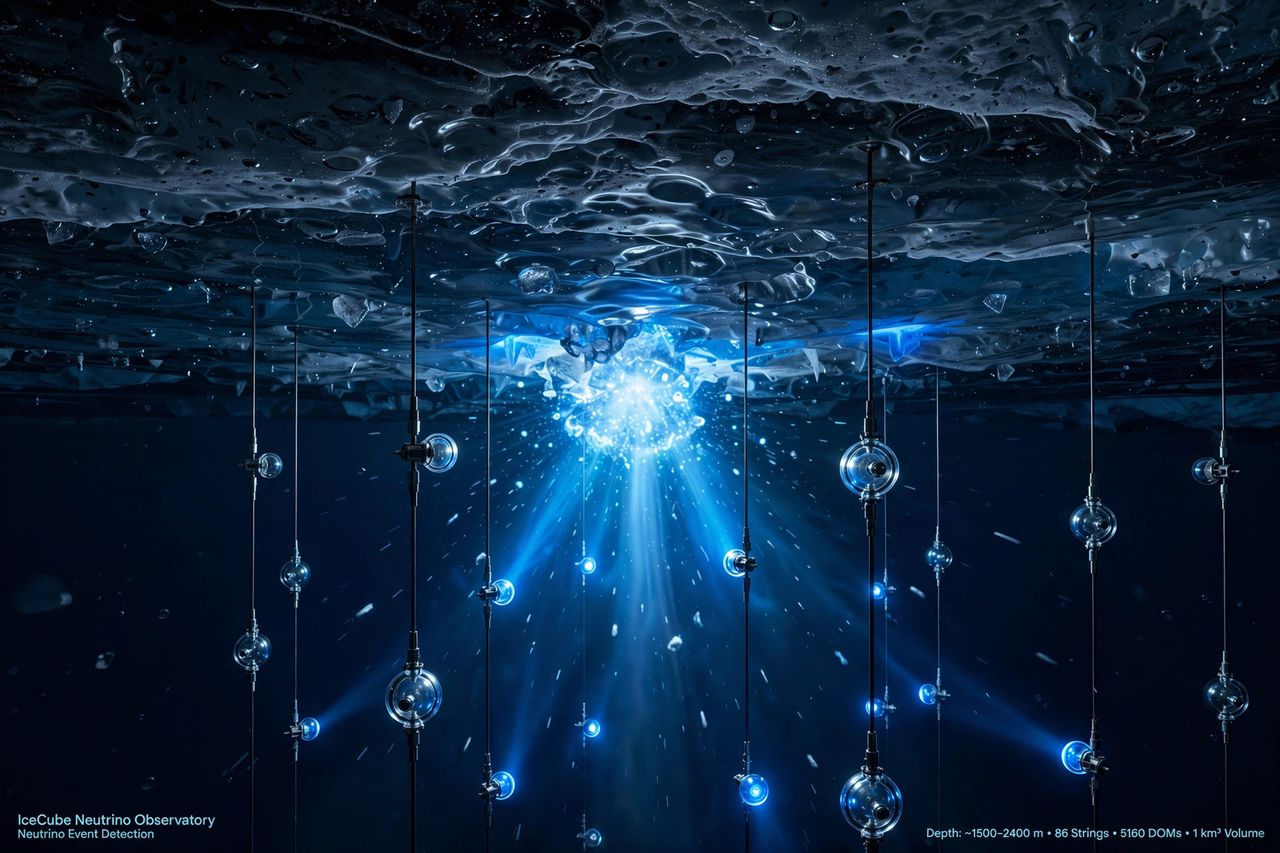
On October 6, the Royal Swedish Academy of Sciences awarded the physics prize to Francis Halzen of the University of Wisconsin-Madison for what the Academy called decisive contributions to the IceCube Neutrino Observatory and the discovery of high-energy neutrinos of astrophysical origin.
Neutrinos are nearly massless, chargeless particles that pass through almost everything, making them extraordinarily hard to detect. Halzen’s audacious idea was to turn a cubic kilometer of Antarctic ice into a detector, watching for the faint flashes produced when neutrinos collide with matter. The observatory has since detected neutrinos from beyond our galaxy, opening a new window on the universe. Halzen, born in Belgium, is the prize’s sole 2026 physics laureate.
Chemistry: Untangling Molecules’ Mirror Images
On October 7, the chemistry prize went to France’s Henri B. Kagan (Universite Paris-Sud) and Japan’s Kenso Soai (Tokyo University of Science) for the discovery of non-linear effects and autocatalysis in asymmetric organic synthesis.
Many molecules come in mirror-image versions, like left and right hands, and in chemistry the difference matters enormously: one version of a drug can heal while its mirror image harms. Kagan and Soai found ways to make chemical reactions pick a side, describing and designing reactions that produce the desired mirror image. Their work underpins countless modern pharmaceuticals and transformed how medicines are made.
Literature: Anne Carson’s Bold Invention
On October 8, the Swedish Academy awarded the literature prize to Canadian author Anne Carson “for her bold and inventive oeuvre that, in playful dialogue with the classical tradition, has created new forms for contemporary literature,” as reported by the BBC via Wikipedia’s 2026 Nobel Prizes page.
Carson, a poet, essayist, and classicist, is known for works that fuse ancient Greek literature with startlingly modern forms. Her win continues the Academy’s recent pattern of honoring writers who expand what literature can be, and she is among the most decorated poets of her generation.
Peace: Navi Pillay’s Fight for International Law
On October 9, the Norwegian Nobel Committee in Oslo awarded the peace prize to Navanethem “Navi” Pillay of South Africa for her efforts to promote peace and international law. Pillay is a former UN High Commissioner for Human Rights and a former judge of the International Criminal Court, with a career spanning decades of work on accountability for atrocities.
The choice lands in a year of extraordinary global conflict, and the Committee’s citation frames international law itself as an instrument of peace, a pointed statement about the institutions under strain worldwide.
Economic Sciences: The Micro Foundations of Stabilisation
On October 12, the economics prize, formally the Sveriges Riksbank Prize in Economic Sciences in Memory of Alfred Nobel, went to Americans Robert E. Hall and Michael Woodford “for microeconomic foundations of macroeconomic stabilisation.”
Their work built rigorous models connecting individual economic behavior to the big-picture tools governments use to manage downturns, the intellectual machinery behind modern central banking. The announcement closed out Nobel Week 2026, as covered by The Manila Times and Jagran Josh.
What Is the Nobel Prize?
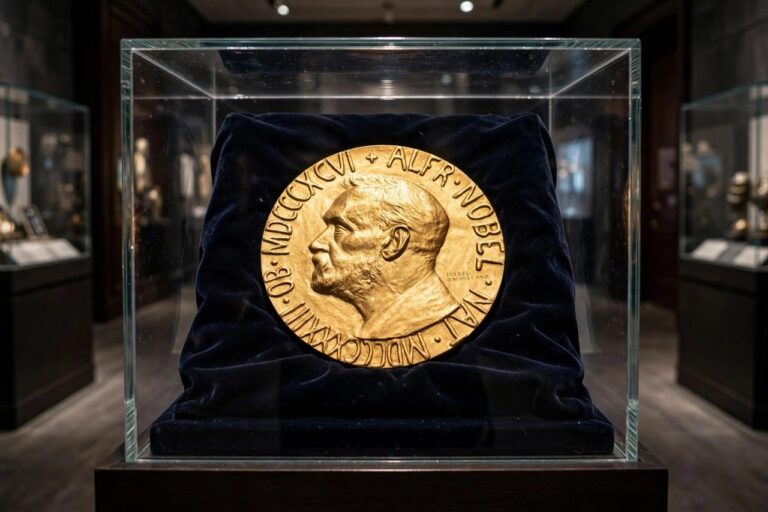
The Nobel Prizes were established by the 1895 will of Alfred Nobel, the Swedish inventor and industrialist, and first awarded in 1901. The original five categories, Physics, Chemistry, Physiology or Medicine, Literature, and Peace, are joined by the Economic Sciences prize, established by Sweden’s central bank in 1968. Each prize carries a medal, a diploma, and a cash award: this year’s prize money is 12 million Swedish kronor per prize, roughly $1.2 million, shared among laureates in each category, according to Adda247.
The awards are presented every year on December 10, the anniversary of Alfred Nobel’s death, with the Peace Prize ceremony in Oslo and the others in Stockholm.
How Nobel Week 2026 Unfolded
Nobel Week follows a ritual unchanged for over a century. Each prize has its own awarding institution and its own announcement day: the Nobel Assembly at Karolinska Institutet opens the week with Medicine on Monday, the Royal Swedish Academy of Sciences follows with Physics, Chemistry, and Economic Sciences, the Swedish Academy announces Literature, and the Norwegian Nobel Committee closes the prestige categories with Peace on Friday in Oslo. In 2026, the sequence ran October 5 through October 12, with the economics prize landing on the following Monday.
Each announcement is a small ceremony: a representative of the awarding institution explains the discovery in plain language, takes questions, and the laureates, often woken by pre-dawn phone calls, react live. The week’s choreography is deliberate; it builds a crescendo of global attention that no single announcement could achieve alone.
The 2026 Laureates Up Close
A few details that bring this year’s winners to life. Karl Deisseroth is both a practicing psychiatrist and a bioengineer at Stanford, a rare dual career that shaped optogenetics’ medical vision. Francis Halzen, born in Belgium, spent decades championing the IceCube concept before it detected its first cosmic neutrinos; his solo physics prize rewards a lifetime of persistence. Anne Carson‘s win caps a career of fusing classical scholarship with avant-garde poetry, she is as much a translator of the ancient world as an inventor of new forms. Navi Pillay brings the gravitas of the International Criminal Court and the UN human rights system to the Peace Prize. And Hall and Woodford‘s economics prize honors the mathematical foundations beneath the central banking decisions that shape everyone’s mortgage.
The Peace Prize in a Year of War
Awarding the Peace Prize for international law in 2026, a year defined by the Iran war, the Hormuz crisis, and conflicts across multiple continents, reads as a deliberate statement. The Norwegian Nobel Committee has often used the prize to defend embattled institutions, and honoring a former ICC judge and UN human rights chief signals that the architecture of accountability matters most precisely when it is under attack. Whether the prize changes anything is debatable; that the Committee felt compelled to make the argument is itself the story.
Nobel Week 2026 by the Numbers
A few figures that put the week in perspective. 10 laureates across 6 categories, announced over 8 days (October 5-12). 12 million Swedish kronor per prize, roughly $1.2 million, the amount awarded in each category. 125 years since the first prizes in 1901. 3 scientists sharing the medicine prize for optogenetics, 1 solo laureate in physics, 2 in chemistry, 1 in literature, 1 in peace, and 2 in economic sciences. And December 10, the anniversary of Alfred Nobel’s death, when all but the Peace Prize are presented in Stockholm (Peace is awarded in Oslo). The numbers are small; the honor is not.
How Nobel Nominations Work
One quirk worth knowing: you cannot nominate yourself, campaign for the prize, or even know you were nominated. The committees discourage all lobbying, and the 50-year seal means nominees take the secret to the grave. It’s an oddly pure system in a cynical age, and it’s why the October announcements still feel like genuine news rather than coronations.
The secrecy around nominations is legendary: for each prize, qualified nominators (past laureates, professors, academy members) submit names, and the full nomination records stay sealed for 50 years. Committees spend months evaluating candidates, consulting experts, and debating in strict confidence. This is why predicting winners is nearly impossible and why the announcements genuinely surprise. The 50-year rule means we won’t know who else was considered for the 2026 prizes until 2076, a timescale that keeps the focus on the winners rather than the politics of selection.
Frequently Asked Questions
Who won the Nobel Prize in 2026?
Ten laureates across six categories: Deisseroth, Hegemann, and Nagel (Medicine); Halzen (Physics); Kagan and Soai (Chemistry); Anne Carson (Literature); Navi Pillay (Peace); and Hall and Woodford (Economic Sciences).
When are the Nobel Prizes announced?
During Nobel Week in early October. In 2026, announcements ran from October 5 (Medicine) through October 12 (Economic Sciences). The award ceremonies follow on December 10.
How much money do Nobel winners get?
The 2026 prize amount is 12 million Swedish kronor per prize, about $1.2 million, divided among the laureates in each category.
Who decides the Nobel Prize winners?
Different institutions per category: the Nobel Assembly at Karolinska Institutet (Medicine), the Royal Swedish Academy of Sciences (Physics, Chemistry, Economics), the Swedish Academy (Literature), and the Norwegian Nobel Committee (Peace).
Is the economics prize a real Nobel Prize?
Technically it is the Sveriges Riksbank Prize in Economic Sciences in Memory of Alfred Nobel, established in 1968 rather than by Nobel’s will. It is awarded alongside the Nobel Prizes and universally counted among them.