What Is the Bar Exam? Format, Cost, and How to Pass

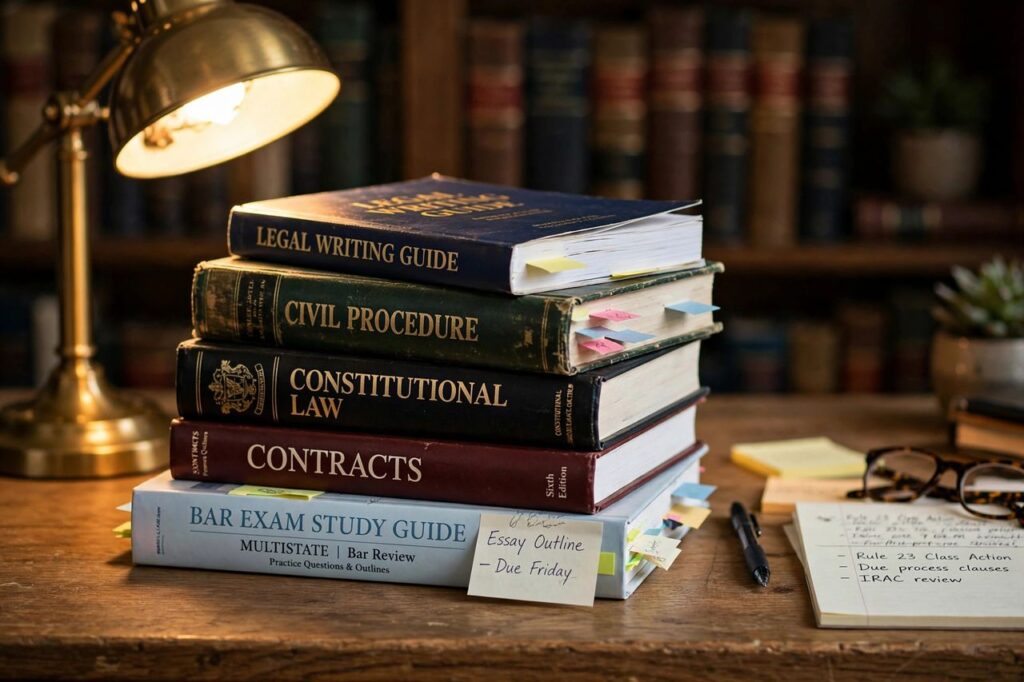
Three years of law school, hundreds of thousands in tuition — and then one final gatekeeper stands between a graduate and the title of “attorney.” What is the bar exam, exactly? It is the licensing examination that determines who may practice law, a grueling multi-day test of legal knowledge, writing, and endurance that has humbled some of the brightest legal minds in history.
What Is the Bar Exam, in Plain Terms?
The bar exam is a standardized test administered by each U.S. state (or territory) that law school graduates must pass to become licensed attorneys. Passing it — along with a character and fitness review — earns admission to that state’s bar, which is the license to practice law there. There is no single national bar exam; each jurisdiction runs its own, though most now share common components.
The name comes from the “bar” itself — the physical railing separating the public gallery from the working area of a courtroom. To be “admitted to the bar” originally meant being allowed past that railing to practice before the court.
The Three Components of the Modern Bar Exam
Most states use a combination of nationally developed test components:
The MBE — Multistate Bar Examination. Two hundred multiple-choice questions covering core subjects: constitutional law, contracts, criminal law and procedure, evidence, real property, torts, and civil procedure. This is the great equalizer — the same questions for everyone, testing breadth and speed across six hours.
The MEE — Multistate Essay Examination. Written essay questions testing your ability to spot legal issues, apply rules, and write clear analysis under time pressure. Topics rotate among subjects like business associations, family law, trusts, and secured transactions.
The MPT — Multistate Performance Test. The most practical section: you are handed a fictional client file and a library of legal materials and asked to produce a real lawyer work product — a memo, a brief, a letter — within 90 minutes. It tests lawyering skills, not memorized rules.
Together, these typically span two full days of testing — a marathon of concentration that examinees describe as one of the most mentally exhausting experiences of their lives.
The UBE: One Score, Many States
The Uniform Bar Examination (UBE) is a standardized version adopted by a majority of states. Its major advantage is portability: a passing UBE score can be transferred to other UBE states, so a lawyer licensed in one can seek admission in another without retaking the entire exam. Each state sets its own passing score, but the test itself is identical. A handful of states still use their own exams or add state-specific components — California and a few others remain notable holdouts with distinctive tests.
Passing the Bar Isn’t Just About the Test
Character and fitness. Every applicant undergoes a background review covering criminal history, financial responsibility, academic misconduct, and candor on the application. The review can take months, and applicants are advised to start it during law school.
The MPRE. Most states separately require the Multistate Professional Responsibility Examination — a focused ethics test covering the rules of professional conduct. It is typically taken during law school, before the bar exam itself.
Continuing obligations. Admission is not the end of testing. Licensed attorneys must complete continuing legal education (CLE) requirements throughout their careers to keep their licenses active.
How Much Does the Bar Exam Cost?
The exam fees themselves run into the hundreds of dollars in most states, varying by jurisdiction. But the real cost is preparation: commercial bar prep courses are the industry standard, and they cost thousands. Add travel and lodging for out-of-town test sites, the application fees, and months of reduced or zero income while studying full-time, and the total investment is substantial — one more reason the exam looms so large in graduates’ lives.
How Long Should You Study?
The conventional wisdom is eight to twelve weeks of full-time study after graduation — roughly 400 to 500 hours of review. Most graduates treat it like a full-time job: lectures, practice questions, memorization, and timed practice essays, six days a week. The MBE rewards relentless practice-question drilling; the essays reward issue-spotting speed; the MPT rewards calm organization under pressure.
How Hard Is It, Really?
Pass rates vary enormously by state and by exam administration, but first-time pass rates in many states hover around two-thirds to three-quarters of takers — meaning a meaningful share of graduates fail on their first attempt. The exam is deliberately designed to test minimum competence, not brilliance, yet its breadth makes it punishing: you are tested on subjects you may not have studied since your first year of law school.
And failure is not the end. Most states allow unlimited retakes (a few impose limits after repeated failures), and many distinguished lawyers — including several who went on to prominent careers — failed the bar on their first try before passing later.

Practical Tips for Passing
Do thousands of MBE questions. The multiple-choice section is the most coachable part of the exam, and performance tracks closely with practice volume.
Write timed essays weekly. Knowing the law is not enough; you must produce organized analysis against a clock.
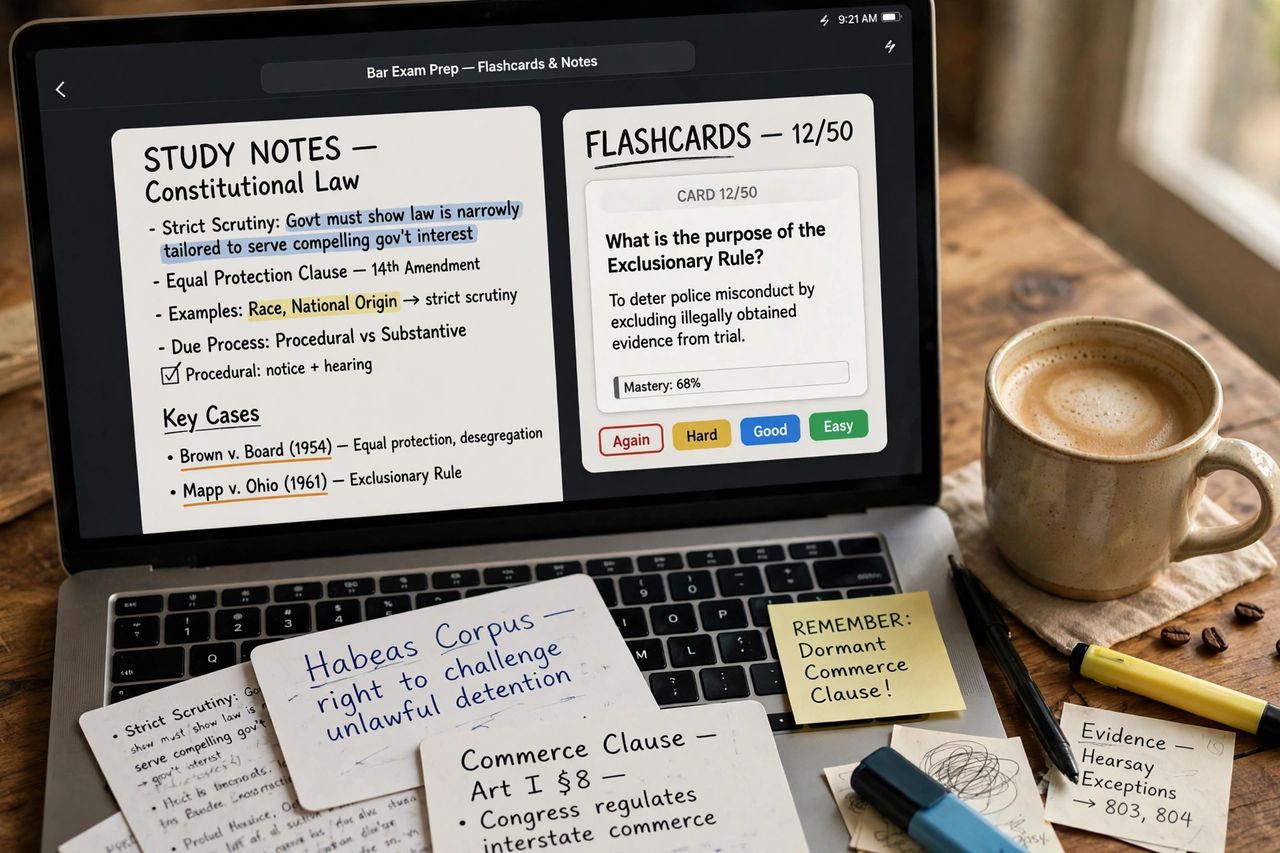
Memorize actively, not passively. Flashcards, self-quizzing, and teaching concepts aloud beat rereading outlines.
Protect your stamina. Two days of high-stakes testing punishes poor sleep and skipped meals. Treat exam week like an athletic event.
Take the MPRE early. Getting the ethics exam out of the way during law school frees your bar summer for the main event.
What Is the Bar Exam Like on Test Day?
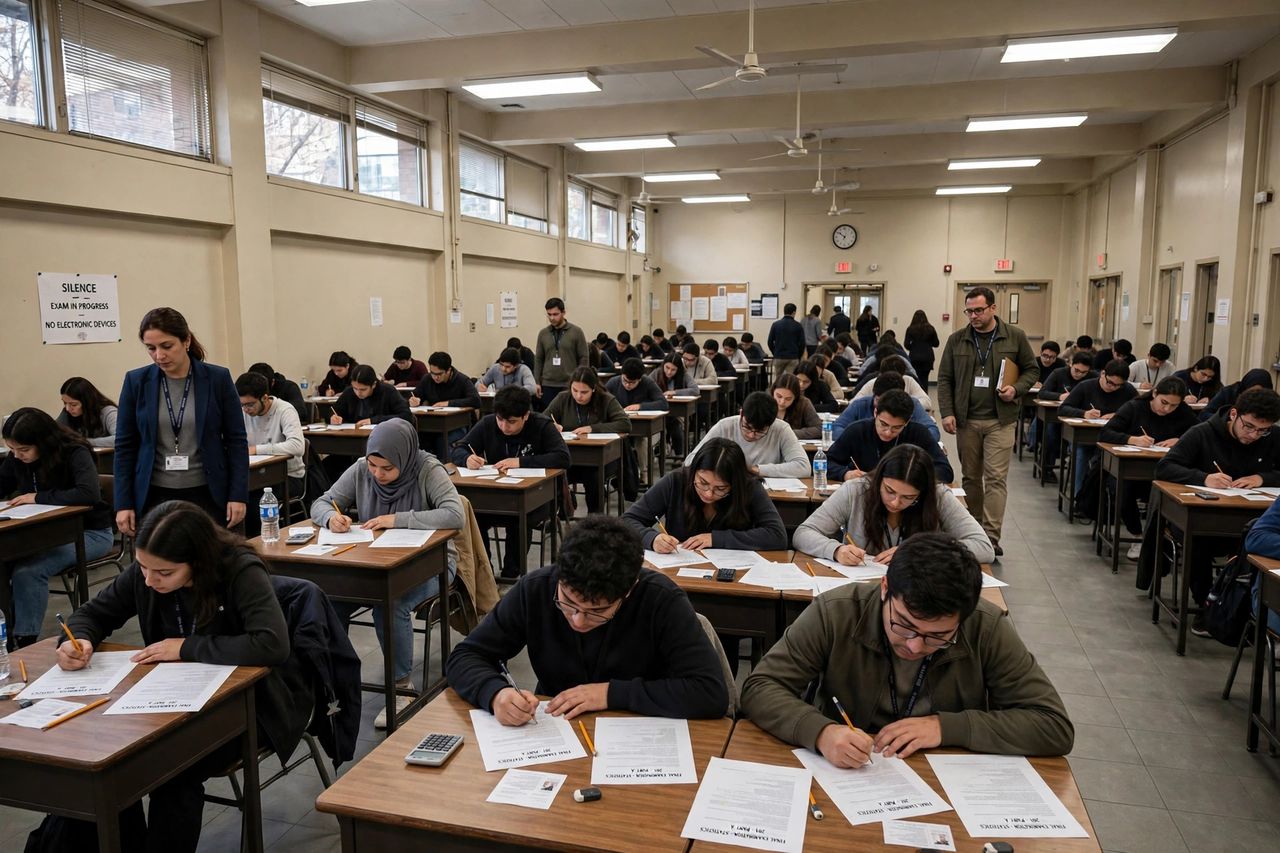
Ask any recent taker and you will hear the same words: grueling, surreal, endless. Test day typically begins before dawn — photo ID checks, assigned seating in a vast hall or testing center, strict rules about what you may bring (laptops with security software for the written portions, nothing else). The MBE day means 200 multiple-choice questions in two three-hour sessions, roughly 1.8 minutes per question, with fatigue as the real opponent by question 150. The essay and performance-test day demands sustained writing under time pressure, with only short breaks between sessions.
The psychological dimension is the part no prep course fully simulates: months of study compressed into two days where a single bad morning can end the attempt. Veterans advise treating it like an endurance event — sleep discipline the week before, familiar food, no cramming the night before. The exam rewards the prepared mind, but it punishes the exhausted one.
Bar Exam by State: Key Differences That Matter
While the UBE standardized much of the landscape, meaningful differences remain:
Passing scores. UBE states set their own cut scores, and the spread between the strictest and most lenient is significant — the same performance passes in one state and fails in another.
Non-UBE states. A handful of jurisdictions use their own exams or add state-specific components. California’s exam is famously distinctive and demanding; a few others test state law separately.
Timing and frequency. Most states offer the exam twice yearly (February and July); some offer it only once.
Reciprocity. Experienced attorneys can sometimes gain admission in a new state without retesting, through reciprocity or motion — rules vary widely.
Choosing where to take the bar is a strategic decision for graduates eyeing multi-state careers, and UBE portability has made it considerably simpler than it once was.
Life After Failing: The Retake Reality
Failing the bar feels catastrophic and is, in practical terms, a delay — not a verdict. Most states impose no limit on attempts, and retakers form a substantial share of every administration. The data consistently show that disciplined retakers pass at strong rates: the first attempt diagnoses weaknesses, and the second attempt targets them. Many accomplished lawyers failed once — some failed more than once — and the profession collectively treats it as a rite of passage rather than a stain. The practical steps are unglamorous: analyze your score report section by section, rebuild your study plan around the weakest areas, and consider a different prep approach if the first one did not fit. Shame is the only part of failing that serves no purpose.
Is the Bar Exam Changing?
Yes — the exam is in the midst of its biggest overhaul in decades. The National Conference of Bar Examiners has been developing the NextGen bar exam, a redesigned test emphasizing real-world lawyering skills — legal research, investigation, client counseling, negotiation — over pure memorization, with integrated question sets replacing some standalone sections. Adoption is rolling out across states through the late 2020s. Supporters say it better measures minimum competence to practice; critics worry about transition turbulence. Either way, the bar exam of 2030 will look meaningfully different from the one your professors took.
Frequently Asked Questions
Is the bar exam hard?
Yes — it is widely considered one of the most difficult professional licensing exams. The challenge is breadth: you are tested across a dozen subjects under strict time limits, after months of high-pressure preparation.
How many times can you take the bar exam?
Most states allow unlimited attempts, though a few restrict retakes after multiple failures or require special permission. Retaking is common and carries no professional stigma.
What is the UBE?
The Uniform Bar Examination is a standardized bar exam used by most U.S. states. Its key benefit is score portability — a passing score can transfer to other UBE jurisdictions, simplifying multi-state practice.
Do you need to go to law school to take the bar exam?
In most states, yes — graduation from an accredited law school is required. A few states still allow “reading the law,” an apprenticeship path where candidates study under a practicing attorney instead of attending law school.
What score do you need to pass?
It varies by state. UBE states each set their own minimum passing score, and the number differs meaningfully between strict and lenient jurisdictions — one reason pass rates vary so much.
Can you practice law without passing the bar?
Generally no. Limited exceptions exist — some states grant temporary supervised practice to recent graduates, and federal practice has its own rules — but a license requires passing the exam and the character review.
The bar exam is a brutal, expensive, exhausting rite of passage. It is also, for all its flaws, the reason the word “attorney” still means something.