How to Choose a Wedding Cake: Portions, Flavors & Tasting Tips

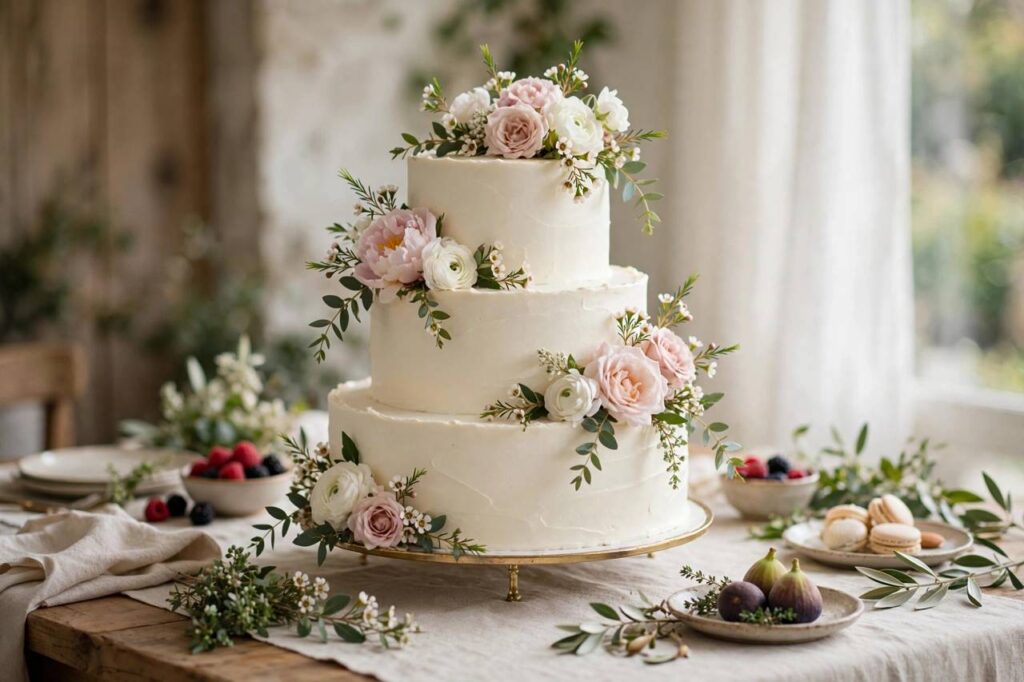
The wedding cake is one of those decisions that seems simple until you are staring at a bakery menu with forty flavors and a tasting appointment in twenty minutes. After years of helping couples through this exact moment, I can tell you that knowing how to choose a wedding cake comes down to a clear framework: portions math first, flavor strategy second, design decisions third. Get those three right and the cake practically chooses itself.
This guide walks you through the whole decision: how much cake you actually need, how to think about flavors for a crowd, buttercream versus fondant, the questions to ask at your tasting, and how to keep the cake within budget without it looking like a compromise. Let us start with the math, because it drives everything else.
Portions Math: How Much Cake Do You Actually Need?
Wedding cake servings are smaller than you think. A standard wedding slice is about one inch by two inches, which means a three-tier cake serves far more people than it looks like it will. The general rule is one serving per guest, and most couples find that seventy to eighty percent of guests actually take cake, since some leave early or skip dessert.
Here is the practical math. For one hundred guests, a three-tier cake in standard six, eight, and ten-inch tiers serves roughly seventy to eighty wedding portions. For one hundred fifty guests, add a tier or go up a size. Your baker will do this math with you, but walk in knowing your guest count and your serving style. If you are also serving another dessert, a dessert table, or late-night snacks, you can reduce the cake order. If the cake is the only dessert, order for the full count.
One more consideration: the top tier tradition. Many couples save the top tier for their first anniversary. If you plan to do this, make sure your portions math accounts for it, or ask your baker to box a fresh tier for the anniversary instead, which honestly tastes better than year-old frozen cake.
Flavor Strategy: How to Choose a Wedding Cake People Remember
The biggest flavor mistake couples make is choosing for themselves alone. You should love your cake, but one hundred guests are eating it too. The strategy that works: pick crowd-pleasing flavors for the main tiers and save the adventurous choice for a small tier or a separate cutting cake.
Vanilla, chocolate, red velvet, lemon, and almond are the reliable workhorses. They photograph well, they pair with most fillings, and almost everyone likes at least one of them. If you want something distinctive, make it the smallest tier or a groom’s cake: carrot cake, pistachio, champagne, or salted caramel. Different tiers can be different flavors, which is the easiest way to please both the traditionalists and the adventurous eaters in your crowd.
At the tasting, taste fillings with the cake, not alone. A filling that is delicious by the spoonful can be overwhelming inside a cake, and a subtle cake can disappear under a bold filling. Bring water and plain crackers to cleanse your palate between samples, limit yourself to four or five combinations, and take notes. Everything blurs together after the sixth bite. And eat a real meal before the tasting, not after. Tasting on an empty stomach makes everything taste amazing and your judgment unreliable.
Buttercream vs. Fondant: The Honest Comparison
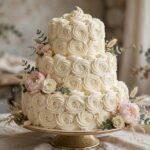
This is the design decision that affects taste, look, and price. Buttercream is frosting made from butter and sugar, and it tastes like what most people think of as cake frosting: creamy, rich, delicious. It gives cakes a soft, slightly textured finish and works beautifully for rustic, romantic, and modern styles. Its weakness is heat. Buttercream softens and melts in warm weather, which matters enormously for outdoor summer weddings.
Fondant is a rolled sugar paste that gives cakes a perfectly smooth, porcelain-like finish. It is the choice for sharp edges, bold colors, and intricate designs. Its weakness is taste and texture: many guests peel it off, and it adds cost. The compromise many bakers offer is a thin fondant layer over buttercream, or fondant only on the decorative elements.
My honest advice: if your wedding is indoors and climate-controlled, choose based on the look you want. If it is outdoors in warm weather, talk seriously with your baker about stability. A melted buttercream cake is a tragedy that fondant would have prevented, and a good baker will tell you the truth about what your venue and season allow.
The Tasting: Questions to Ask Your Baker
The tasting appointment is an interview, not just a snack session. Ask about delivery and setup: does the baker deliver and assemble on site, and is there a fee? Ask about the cake stand: do they provide one, or do you rent it? Ask about timing: when will the cake be delivered relative to the reception, and where will it be stored? Ask about leftovers: will they box slices for you?
Ask about the contract details that matter: the deposit amount, the final payment date, what happens if your guest count changes, and the cancellation policy. Ask to see photos of their actual recent work, not just a portfolio of highlights. And ask for references or reviews from recent couples. A great tasting with a disorganized baker is a warning sign, not a win.
Budget deserves its own conversation. Wedding cakes are priced per serving, and elaborate designs cost more. If the cake of your dreams exceeds the budget, ask the baker about a smaller display cake supplemented by sheet cakes from the kitchen. Guests get the same cake, the photos show the beautiful tiers, and the price drops significantly. Affordable wedding ideas and planning a wedding on a small budget have more strategies in this spirit.
Design Decisions: Style, Flowers, and Toppers
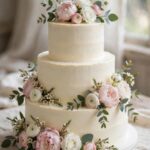
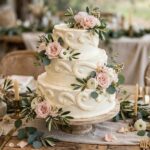
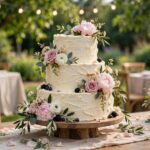
Choose your cake style from your wedding’s overall aesthetic, not from Pinterest in isolation. A rustic buttercream cake with fresh flowers suits a garden wedding. A sleek fondant cake with geometric details suits a modern venue. Bring your baker two or three inspiration photos, not twenty, and be open to their suggestions about what works structurally.
Fresh flowers on cakes are beautiful but need coordination: the flowers must be food-safe and pesticide-free, which means your florist and baker need to talk. Provide the flowers to the baker or have the florist place them at setup. For toppers, classic monograms, fresh blooms, or meaningful objects all work. Avoid anything heavy that the cake was not engineered to hold.
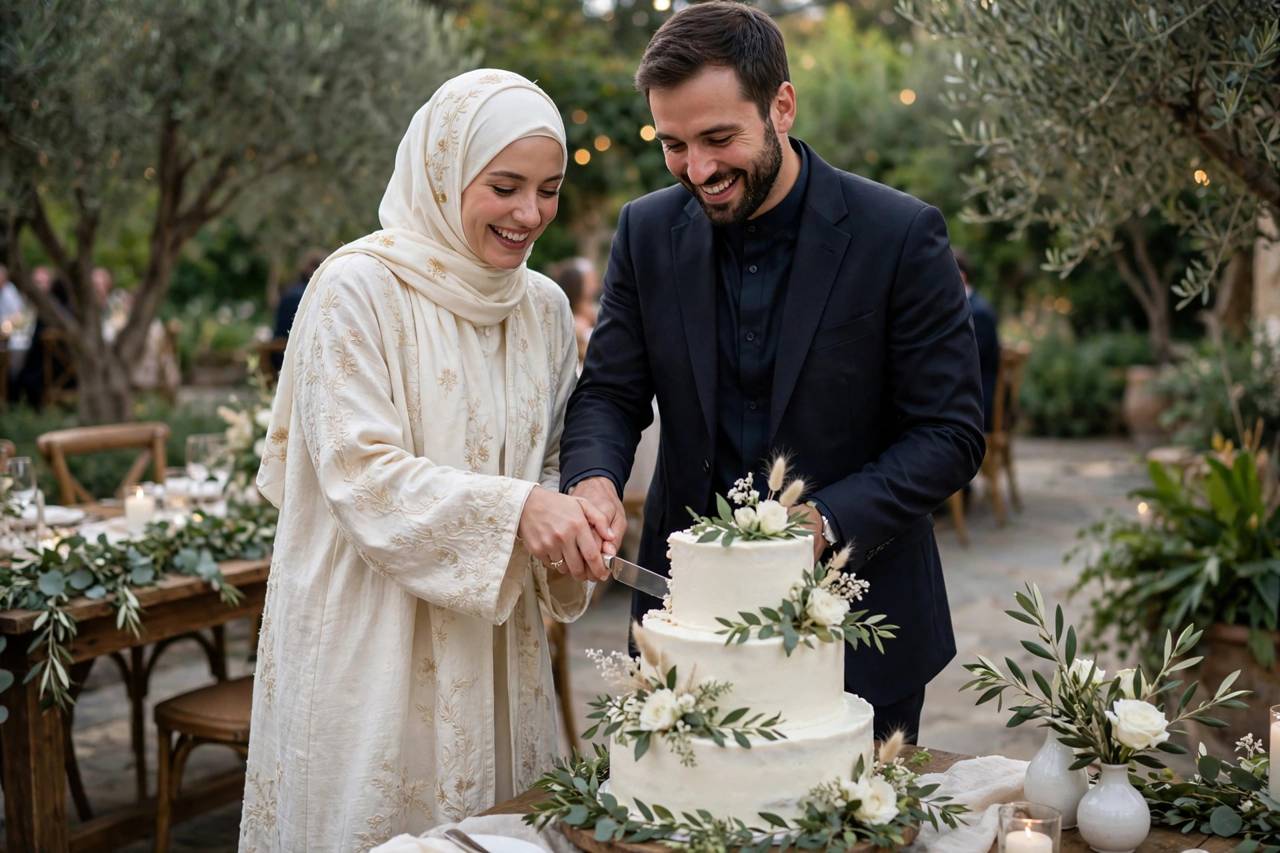
And do not forget the logistics on the day. Assign someone, your coordinator or a trusted wedding party member, to be the cake point person: to receive the delivery, confirm placement, and handle the cutting. Speaking of the day-of details, a wedding day emergency kit should include a small cake-cutting kit and stain remover, because cake and white clothes are a risky combination.
Wedding Cake Alternatives Worth Considering
The traditional tiered cake is wonderful, but it is not the only option, and some couples are happier with an alternative. Here are the ones worth considering.
Cupcakes have become a genuine alternative rather than a compromise. A cupcake tower gives you the visual drama of a tiered cake with built-in portion control and easy serving. Guests love the variety: you can offer four or five flavors without the complexity of multi-flavor tiers. Top the tower with a small cutting cake for the ceremonial slice and the photos, and nobody misses the traditional format.
Dessert tables and dessert bars replace the single cake with abundance: mini pastries, cookies, chocolate-dipped fruit, macarons, and small cakes. This works beautifully for receptions where mingling matters more than a formal cake cutting, and it accommodates dietary restrictions more gracefully than a single cake can. Label everything clearly, including allergen information, and include at least one gluten-free and one dairy-free option.
Non-cake centerpieces are the bold choice: a tower of cheese wheels decorated like a cake, a croquembouche, a stack of artisanal donuts, or a pie table. These suit couples whose tastes run savory or playful, and they photograph distinctively. The key is committing fully. A half-hearted alternative looks like a budget cut. A confident one looks like a statement.
Whatever you choose, keep the ceremonial moment. The cake cutting, or its alternative, is a ritual guests expect and photographers plan for. Even with cupcakes or a dessert table, stage a small cutting moment with a petite cake. It takes two minutes, it gives you the photos, and it signals to guests that dessert has officially begun.
And the budget logic holds across all options. Alternatives are not automatically cheaper; an elaborate dessert table can cost more than a simple tiered cake. Price your actual vision against a traditional cake of similar ambition, and choose based on what delights you, not on assumptions about cost.
Frequently Asked Questions (FAQ)
How far in advance should I order a wedding cake?
Three to six months before the wedding is standard, and longer for popular bakers or peak-season dates. Tastings usually happen two to four months out, with final details confirmed about a month before.
How much wedding cake do I need per guest?
Plan one wedding-size serving per guest, knowing that seventy to eighty percent typically eat cake. Your baker will translate your guest count into tiers. Reduce the order if you are serving other desserts.
Is buttercream or fondant better for a wedding cake?
Buttercream tastes better and suits most styles but melts in heat. Fondant gives a flawless finish and handles warmth better but costs more and many guests peel it off. For outdoor summer weddings, discuss stability honestly with your baker.
Can I have different flavors in different tiers?
Yes, and you should. Different flavors per tier is standard practice and the easiest way to offer both crowd-pleasers and something distinctive. Tell your caterer which tier is which so servers can inform guests.
How do I save money on a wedding cake?
Order a smaller display cake for photos and serve sheet cake from the kitchen, simplify the design, choose buttercream over fondant, and skip elaborate sugar flowers in favor of fresh blooms.
The Bottom Line
Knowing how to choose a wedding cake is a framework, not a talent: portions math from your guest count, crowd-smart flavor strategy, an honest buttercream-versus-fondant decision for your venue and season, and a tasting where you ask the business questions. Do that, and the cake will be beautiful, delicious, and exactly enough.