What Is the G20 Summit? Members, Purpose and How It Works

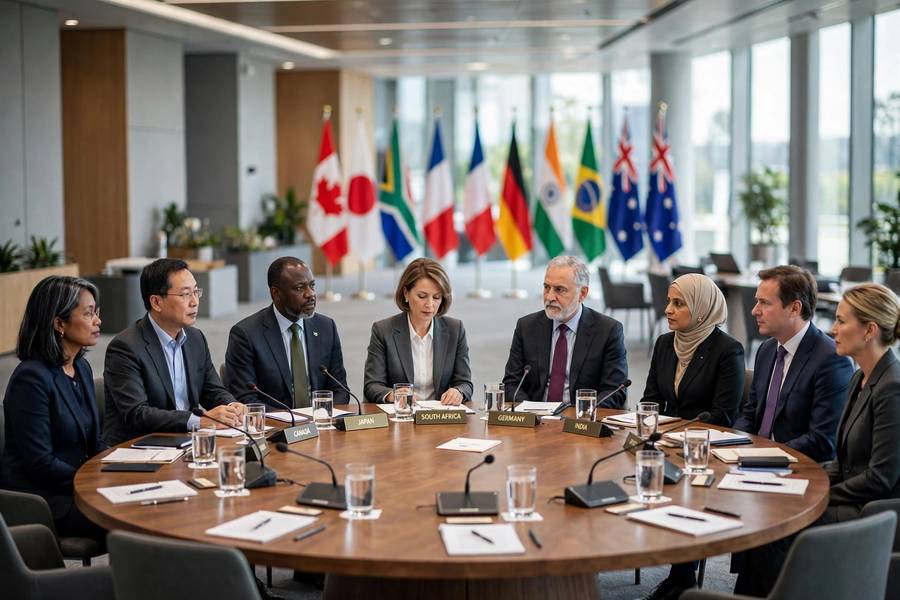
What is the G20 summit? Every year, the leaders of the world’s largest economies gather in one city for two days of meetings that generate enormous headlines and, if you are being honest, a fair amount of confusion about what was actually decided. The G20 summit is the annual meeting of the Group of Twenty — 19 countries plus the European Union and the African Union — where heads of state coordinate on the global economy, climate, health, and security. It is not a world government, it does not pass binding laws, and its communiques are often vaguer than the press releases suggest. But it is also the only table where the leaders of the United States, China, India, the EU, and the African Union all sit down together, and that matters more than the cynics admit.
I cover international institutions for a living, and my ground rules for this guide are the same ones I use for all of them: I will describe how the thing is actually structured, separate what it claims to do from what it demonstrably does, and flag where the criticisms have a point. Let us walk through it.
What Is the G20 Summit?
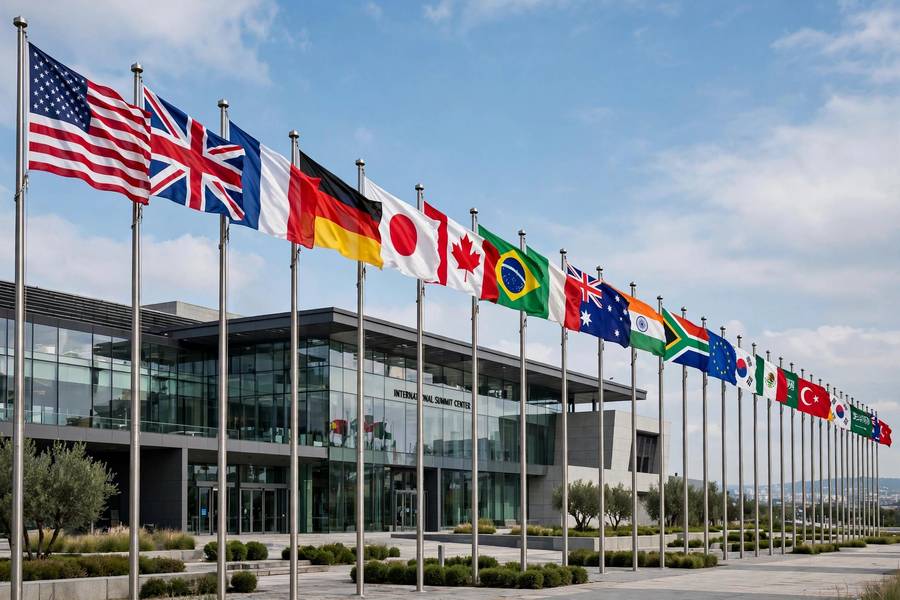
The G20 — the Group of Twenty — is an intergovernmental forum of the world’s major economies. Its members are Argentina, Australia, Brazil, Canada, China, France, Germany, India, Indonesia, Italy, Japan, Mexico, Russia, Saudi Arabia, South Africa, South Korea, Turkey, the United Kingdom, and the United States, plus the European Union and the African Union, which joined as a full member in 2023. Together they represent roughly 85 percent of global GDP, about three-quarters of world trade, and around two-thirds of the world’s population.
The forum was created in 1999, in the wake of the Asian financial crisis, as a meeting of finance ministers and central bank governors — a recognition that the old G7 club of rich Western countries no longer reflected where economic power actually lived. For its first decade, that is all it was: finance people talking about financial stability. Then the 2008 global financial crisis hit, and the G20 was elevated to a leaders’ summit. The first one, in Washington in November 2008, coordinated the stimulus response that arguably kept the crisis from becoming a second Great Depression. That success gave the summit its reputation and its permanent place on the calendar.
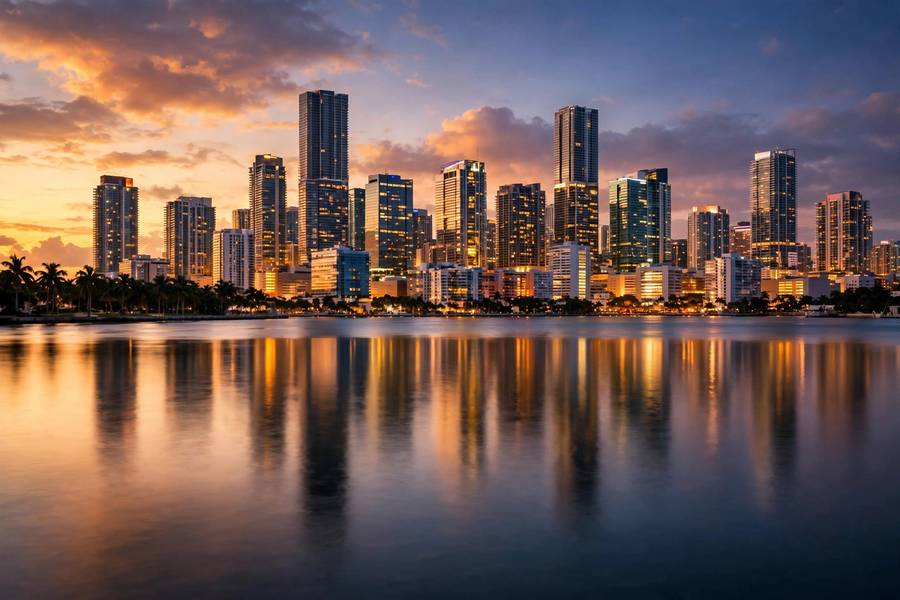
Since then, the G20 summit has been held every year, hosted by a different member under a rotating presidency. Recent hosts include India (New Delhi, 2023), Brazil (Rio de Janeiro, 2024), and South Africa (Johannesburg, 2025). The 2026 summit is scheduled for Miami, Florida, in the United States — the first time the US has hosted a G20 leaders’ summit since Pittsburgh in 2009.
What Happens at the G20 Summit
A summit is the tip of a year-long process. Each presidency sets an agenda, and throughout the year, ministerial meetings — finance ministers, foreign ministers, sherpas (the leaders’ personal representatives) — negotiate the groundwork. Working groups with names like the Framework Working Group and the Development Working Group grind through technical details. By the time leaders arrive, most of the communique has already been drafted; the leaders’ job is to resolve the remaining political disputes and, crucially, to be photographed resolving them.
The agenda has expanded far beyond economics. Recent summits have covered climate finance, pandemic preparedness, digital taxation, food security, artificial intelligence governance, and debt relief for developing countries. Whether the G20 is the right venue for all of these is a live debate — critics argue the agenda has become a laundry list — but the expansion reflects a real logic: the problems are global, and this is the broadest table available.
The summit also runs on bilateral meetings at the margins. Some of the most consequential diplomacy of a G20 happens not in the plenary hall but in the pull-aside rooms, where two leaders meet face to face, sometimes for the first time. The group photo matters for domestic audiences; the side meetings matter for history.
What the G20 Can and Cannot Do
This is where honest explanation matters most, because the G20 is routinely described as both more and less powerful than it is.
What it cannot do: pass binding law. The G20 has no treaty, no charter, no secretariat with enforcement powers, and no mechanism to compel a member to do anything. Its decisions are political commitments, and members break them regularly. If you are looking for an institution that can order countries around, this is not it, and it was never designed to be.
What it can do: coordinate. The 2008–2009 crisis response is the textbook case — synchronized stimulus, a tripling of IMF resources, and a coordinated rejection of 1930s-style protectionism, all agreed at the G20 table. The forum also produced the global minimum corporate tax framework (the 15 percent minimum agreed by over 130 countries grew out of G20/OECD work) and the Debt Service Suspension Initiative that gave breathing room to the poorest countries during the pandemic. These are real outcomes, even if they arrived slower and thinner than promised.
The fair criticism is about follow-through. G20 communiques are famous for ambitious language and weak accountability. Pledges on fossil fuel subsidies, climate finance, and trade openness have a habit of being re-announced at successive summits without being fulfilled. The forum’s defenders reply that coordination among 21 diverse members — including rivals like the United States and China, Russia amid its isolation — is itself the achievement, and that the alternative is no table at all.
G20 vs. G7: What Is the Difference?
People mix these up constantly, so let us be precise. The G7 is the older, smaller club: Canada, France, Germany, Italy, Japan, the United Kingdom, and the United States, plus the EU as a non-enumerated member. It is a group of advanced democracies with broadly aligned interests, which makes agreement easier but representativeness weaker.
The G20 includes the G7 members plus the major emerging economies — China, India, Brazil, Indonesia, South Africa, Mexico, Turkey, Argentina, Saudi Arabia, South Korea, Russia, Australia — plus the African Union. It is more representative and more unwieldy. The G7 can move faster; the G20, when it moves, moves more of the world. They are complementary, not competitors: the G7 often pre-cooks positions that then get negotiated at the G20.
Why the 2026 Miami Summit Matters
Every summit inherits the geopolitics of its moment, and the 2026 edition arrives with plenty. The United States holds the presidency and is hosting in Miami in December 2026. The guest list questions write themselves: Russia’s participation has been the running controversy since 2022, with Western leaders split between isolating Moscow and keeping the table intact. Reports ahead of the summit have focused on whether the Russian president would attend in person — which would be his first in-person G20 since 2019 — and what that would mean for the traditional family photo, let alone the communique.
The substantive agenda, as outlined by the US presidency, centers on economic growth, energy, deregulation, and migration — a notably different flavor from recent presidencies’ emphasis on climate and development. Watch for three things: whether the leaders’ declaration papers over or confronts the deep divisions on climate language, what happens on reform of international financial institutions, and whether any bilateral meeting on the margins produces news bigger than the summit itself. As always with the G20, the official agenda tells you what will be discussed; the margins tell you what mattered.
How the G20 Presidency Works
The presidency rotates annually among the members, grouped into regional clusters to ensure geographic variety over time. The presiding country sets the agenda, hosts the year’s ministerial meetings and working groups, and organizes the leaders’ summit itself — which is why each summit has a distinct flavor. India in 2023 pushed digital public infrastructure and Global South priorities; Brazil in 2024 centered hunger, poverty, and climate finance; South Africa in 2025 emphasized debt, development, and African representation. The presidency also manages the “troika” — the past, current, and incoming presidencies working together to keep continuity between years, so that one country’s pet agenda does not vanish the moment the gavel passes.
Frequently Asked Questions
What is the G20 summit in simple terms?
It is the annual meeting of the leaders of the Group of Twenty — 19 major economies plus the European Union and the African Union — where they coordinate policy on the global economy, climate, health, and other cross-border issues. It produces political commitments, not binding laws.
Which countries are in the G20?
Argentina, Australia, Brazil, Canada, China, France, Germany, India, Indonesia, Italy, Japan, Mexico, Russia, Saudi Arabia, South Africa, South Korea, Turkey, the United Kingdom, and the United States, plus the European Union and the African Union, which became a full member in 2023.
Where is the 2026 G20 summit?
The 2026 G20 leaders’ summit is scheduled for Miami, Florida, in December 2026, hosted by the United States under its G20 presidency. It is the first US-hosted G20 leaders’ summit since Pittsburgh in 2009.
What is the difference between the G20 and the G7?
The G7 is a smaller group of seven advanced democracies (plus the EU). The G20 includes those countries plus major emerging economies like China, India, and Brazil, plus the African Union — broader and more representative, but harder to get to agreement.
Are G20 decisions legally binding?
No. The G20 has no treaty or enforcement mechanism. Its communiques are political commitments, and compliance is voluntary. Its power lies in coordination and peer pressure, not compulsion.
Why do some people criticize the G20?
The main criticisms are weak follow-through on pledges, communiques full of vague language, the exclusion of most of the world’s countries from the table, and the spectacle-to-substance ratio of the summits themselves. Defenders argue it remains the broadest forum where rival powers actually meet.
The Table That Will Not Go Away
The G20 summit is easy to mock — the motorcades, the staged handshakes, the communiques that say a great deal about “reaffirming commitments” and little else. Some of the mockery is earned. But consider the alternative on offer: in a world where the biggest economies include strategic rivals, there is exactly one annual meeting where all of their leaders are in the same room. The G20 does not govern the world. It gives the world a place to argue in person rather than through press releases, and on the hardest problems, that is not nothing. It is, in fact, the whole point.