What Is the Geneva Convention? Rules of War Explained

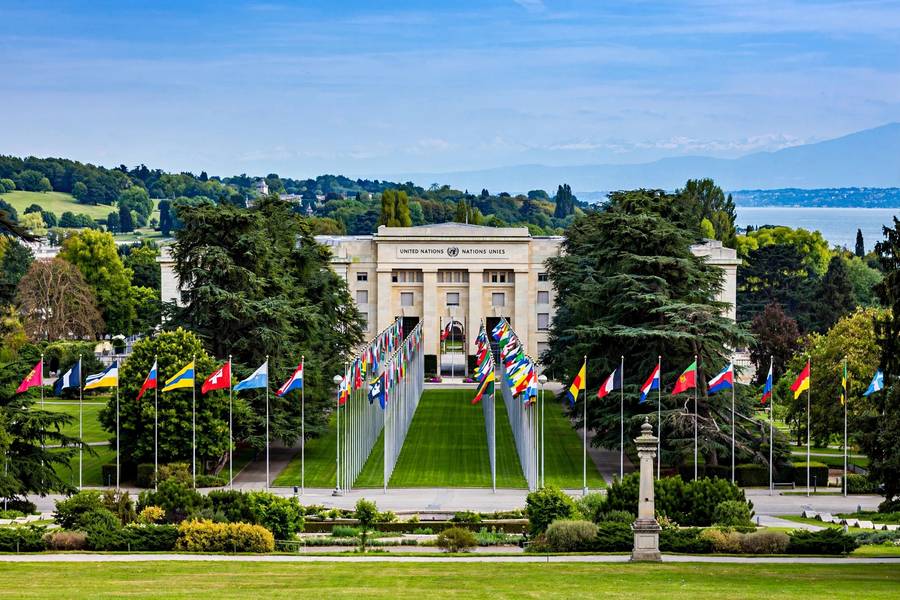
What is the Geneva Convention? The short answer is that it is the body of international law that says even wars have rules: civilians cannot be targeted, prisoners must be treated humanely, the wounded must be cared for regardless of which side they fought on. The longer answer — which treaties make up the Geneva Convention, who exactly they protect, what they prohibit, and why enforcement so often falls short — is what this guide is for. The rules of war are among the most widely agreed-upon laws on Earth and simultaneously among the most violated, and understanding both halves of that sentence matters.
I cover international institutions and global policy for a living, and I will be straight with you about my ground rules here: I am describing what the treaties say and how the system is designed to work, not litigating any specific conflict or taking sides in one. Where the law is clear, I will say so. Where it is contested or routinely ignored, I will say that too. Let us go through it piece by piece.
What Is the Geneva Convention?
The Geneva Convention is not one document. The name most commonly refers to the four Geneva Conventions of 1949, a set of international treaties that form the core of international humanitarian law — the branch of law that regulates conduct during armed conflict. They were adopted on August 12, 1949, in the aftermath of World War II, and they have since been ratified by 196 states, which means effectively every country on Earth. No other body of treaties enjoys such universal acceptance.
The 1949 conventions did not come out of nowhere. The first Geneva Convention was signed in 1864, and it was itself the product of one man’s horror at what he witnessed. In 1859, a Swiss businessman named Henri Dunant came upon the aftermath of the Battle of Solferino in northern Italy, where tens of thousands of wounded soldiers were left with almost no medical care. Dunant organized local civilians to help the wounded on both sides, and his account of the experience led to the founding of the International Committee of the Red Cross in 1863 and the first Geneva Convention a year later. That 1864 treaty was narrow — it protected wounded soldiers and medical personnel — but it established the revolutionary principle that would run through everything after it: human dignity does not evaporate when war begins.
The conventions were revised and expanded in 1906 and 1929, and then comprehensively rewritten in 1949 after the world had seen what industrialized total war could do to civilians. Three Additional Protocols were added later — two in 1977 and one in 2005 — extending protections to certain kinds of internal conflicts and adopting an additional protective emblem, the Red Crystal, alongside the Red Cross and Red Crescent. When people say “the Geneva Convention” in everyday speech, they usually mean this whole architecture: the four 1949 treaties plus their protocols.
The Four Geneva Conventions of 1949
Each of the four conventions covers a different category of protected persons. It helps to think of them as four pillars holding up one roof.
The First Geneva Convention protects wounded and sick soldiers on land. It requires that they be collected and cared for, that medical personnel, hospitals, and ambulances be protected from attack, and that the red cross emblem be respected as a sign of neutrality. Attacking a clearly marked field hospital is not a gray area under this treaty. It is prohibited, full stop.
The Second Geneva Convention extends the same protections to warfare at sea: wounded, sick, and shipwrecked members of naval forces, along with hospital ships, which must be respected and protected provided their names and descriptions have been communicated to the parties in conflict.
The Third Geneva Convention governs the treatment of prisoners of war. It is the longest and most detailed of the four, and it is the one most people are thinking of when they picture Geneva Convention rules. Prisoners of war must be treated humanely at all times. They must be protected against violence, intimidation, insults, and public curiosity — that last phrase is why parading captured soldiers before cameras is a violation. They are entitled to adequate food, shelter, clothing, and medical care, to send and receive letters, and to have their capture reported to a central tracing agency. They may be required to give only their name, rank, date of birth, and serial number.
The Fourth Geneva Convention protects civilians. Before 1949, civilian protections in war were thin and scattered; the deliberate targeting of civilian populations during World War II made a dedicated treaty unavoidable. The Fourth Convention prohibits murder, torture, collective punishment, hostage-taking, deportation, and the taking of reprisals against civilians and their property. It also establishes special protections for children, hospitals, and humanitarian relief.
Who the Geneva Convention Protects
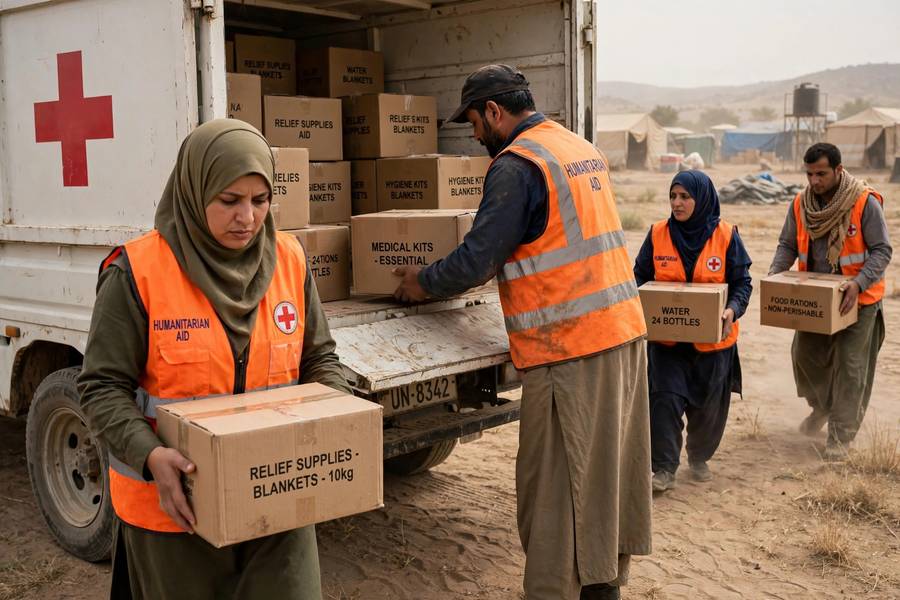
The short version: anyone who is not actively fighting, plus those who have stopped fighting. The treaties use the term “protected persons,” and the category is deliberately broad. It includes civilians, the wounded and sick, medical and religious personnel, prisoners of war, and shipwrecked sailors. Journalists on dangerous assignments are treated as civilians, provided they take no part in hostilities.
One provision deserves special attention because it gets invoked constantly: Common Article 3. It is called “common” because the identical text appears as Article 3 in all four conventions, and it sets a minimum standard of humane treatment for conflicts that are not between two countries — civil wars, insurgencies, and other internal armed conflicts. It prohibits murder, torture, hostage-taking, and unfair trials for anyone taking no active part in hostilities, including fighters who have laid down their arms. Before Common Article 3, internal conflicts were largely outside international humanitarian law. Its inclusion was one of the most important legal innovations of 1949, and it remains the provision most often cited in modern conflicts.
There are limits worth stating plainly. The conventions protect people; a separate set of treaties, the Hague Conventions, primarily regulates the means of warfare — which weapons may be used. And the Geneva framework assumes an armed conflict exists. It does not govern ordinary policing, riots handled by civilian police, or peacetime human rights questions. Those fall under human rights law, a different (though related) body of rules.
What the Geneva Convention Prohibits
Strip away the legal architecture and the prohibitions are direct. Willful killing, torture, and inhuman treatment of protected persons are classified as grave breaches — the treaty term for the most serious violations, which every ratifying state is obligated to criminalize in its own domestic law and to prosecute or extradite suspects of. Other grave breaches include taking hostages, willfully causing great suffering, extensive destruction of property not justified by military necessity, and compelling protected persons to serve in hostile forces.
Beyond grave breaches, the conventions prohibit a long list of practices: collective punishments, reprisals against protected persons, pillage, the use of civilians as human shields, forced transfers and deportations of civilian populations from occupied territory, and attacks on medical units displaying the protective emblems. Starvation of civilians as a method of warfare is prohibited under the Additional Protocols.
It is worth noting what the conventions do not do. They do not outlaw war itself — that is the job of the United Nations Charter, which restricts when states may lawfully resort to force in the first place. The Geneva Conventions answer a different question: given that an armed conflict is happening, what conduct is forbidden within it? This distinction between the law governing the resort to war and the law governing conduct in war is one of the most misunderstood points in all of international law, and confusing the two produces most of the bad arguments you will hear about the conventions.
How Enforcement Actually Works
Here is the honest part. The Geneva Conventions are the most universally ratified treaties in history, and they are also violated with depressing regularity. There is no global police force that descends when a violation occurs. Enforcement works through a patchwork of mechanisms, each partial.
First, states are obligated to enact domestic legislation criminalizing grave breaches and to search for and prosecute suspects — the principle of universal jurisdiction, which holds that some crimes are so serious that any state may prosecute them regardless of where they occurred. A handful of countries have used this principle to try suspects found on their territory.
Second, international tribunals have prosecuted violations. The ad hoc tribunals for the former Yugoslavia and Rwanda in the 1990s applied Geneva Convention law directly, and the permanent International Criminal Court, established in 2002, has jurisdiction over war crimes including grave breaches of the conventions. But the ICC’s reach is limited: major military powers including the United States, China, and Russia are not members, and the court depends on states to make arrests.
Third, the International Committee of the Red Cross acts as the conventions’ guardian. The ICRC visits detainees, monitors compliance, and engages in confidential dialogue with parties to conflicts. Its method is discretion rather than denunciation — it works behind closed doors, which critics call toothless and defenders call the only approach that keeps its people alive and its access open in war zones.
The uncomfortable truth is that compliance ultimately depends on reciprocity, military discipline, and political will. Armies that train their soldiers in the law of armed conflict violate it less. States that fear prosecution behave better. And violations are documented more thoroughly today than at any point in history, which does not prevent them but does make denial harder.
Common Misconceptions About the Geneva Convention
“The Geneva Convention bans all killing in war.” No. It regulates how wars are fought, not whether they are fought. Killing enemy combatants in battle is not a war crime. Deliberately targeting civilians is.
“It only applies to declared wars between countries.” No. Common Article 3 and Additional Protocol II extend minimum protections to internal conflicts, and the conventions have been applied to conflicts no one formally declared.
“Only soldiers get protection.” No. The Fourth Convention exists precisely because civilians needed their own treaty, and in modern conflicts civilians make up the majority of casualties — which is why civilian protection is the most practically important part of the framework.
“Violations mean the law is meaningless.” This is the cynical take, and it mistakes the purpose of law. Domestic murder statutes do not prevent all murders either. The conventions establish the standard against which conduct is judged, enable prosecutions that would otherwise be impossible, and shape how professional militaries train and operate. A law that is violated is not the same as a law that does nothing.
Frequently Asked Questions
What is the Geneva Convention in simple terms?
It is a set of international treaties — mainly the four conventions adopted in 1949 — that establish legal rules for how wars must be fought. They require humane treatment of civilians, prisoners of war, and the wounded, and they prohibit practices like torture, hostage-taking, and targeting hospitals.
How many countries have signed the Geneva Convention?
All 196 states in the world have ratified the four 1949 Geneva Conventions, making them the most universally accepted treaties in history. The Additional Protocols have fewer ratifications — the United States, for example, has not ratified the 1977 protocols, though it accepts much of their content as customary law.
What happens if a country violates the Geneva Convention?
There is no single enforcement body. Violations can be prosecuted by national courts under universal jurisdiction, by international tribunals, or by the International Criminal Court. States are also obligated to criminalize grave breaches in their own laws. In practice, enforcement is uneven and often political.
What is the difference between the Geneva Convention and the Hague Convention?
The Geneva Conventions primarily protect people affected by war — civilians, prisoners, the wounded. The Hague Conventions of 1899 and 1907 primarily regulate the means and methods of warfare, such as restrictions on certain weapons. Together they make up international humanitarian law.
Does the Geneva Convention apply to terrorist groups?
The conventions bind states and organized armed groups that are parties to a conflict. Common Article 3 sets minimum standards for non-international armed conflicts, which covers many situations involving armed groups. Individuals, regardless of affiliation, can be prosecuted for war crimes.
What are grave breaches of the Geneva Convention?
Grave breaches are the most serious violations defined by the treaties: willful killing, torture, inhuman treatment, hostage-taking, willfully causing great suffering, extensive unjustified destruction of property, and compelling protected persons to serve in hostile forces. Every ratifying state must criminalize them domestically.
Why the Geneva Convention Still Matters
The Geneva Convention is, by any measure, an extraordinary achievement: nearly every country on Earth agreed, in writing, that there are things you do not do even to your enemies. The gap between that agreement and reality is real and worth facing honestly. But the framework gives the world a shared vocabulary for condemning atrocities, a legal basis for prosecuting them, and a standard that shapes how professional armed forces operate. In a century that has tested every part of it, the conventions have bent without breaking — and understanding what they actually say is the first step to holding anyone to them.