What Is Eminent Domain? Your Rights Explained

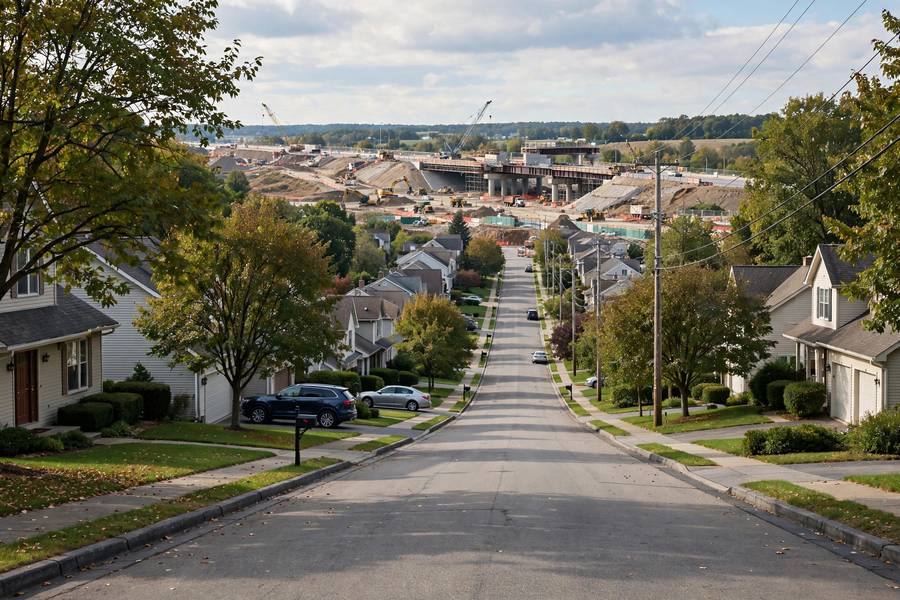
What is eminent domain? In plain English, it is the government’s power to take private property for public use — even if the owner does not want to sell. If you have ever wondered how a highway gets built through a neighborhood, or why a homeowner can lose their house to a shopping mall development, eminent domain is the legal mechanism behind it. I write about property law for ordinary readers, and this is the topic that generates the most “wait, they can really do that?” reactions.
This guide explains eminent domain in plain language: where the power comes from, what “public use” and “just compensation” actually mean, the famous Kelo v. City of New London case that changed the national debate, your rights if it happens to you, and how the law differs across states.
What Is Eminent Domain? The Plain-English Definition
Eminent domain is the inherent power of a government to take private property for public use, provided it pays the owner “just compensation.” In the United States, that power is recognized — and limited — by the Fifth Amendment’s Takings Clause: “nor shall private property be taken for public use, without just compensation.” Those fourteen words are the entire constitutional foundation, and courts have spent two centuries arguing about what they mean.
Two important clarifications. First, eminent domain is the power; condemnation is the legal process of exercising it. People use the terms interchangeably, but condemnation is the lawsuit the government files to take your property. Second, the government usually tries to buy the property first through negotiation. Eminent domain is the backup — the power to force the sale when negotiation fails.
Where Does the Power Come From?
The federal government, every state government, and many local governments hold eminent domain power. It can also be delegated to private entities serving public purposes — utility companies building power lines, pipeline companies, and in some states, private developers carrying out approved redevelopment projects. That last category is where most controversies live.
The power has deep historical roots: the idea that the sovereign can take property for the common good predates the American republic. What the Fifth Amendment did was attach a price tag — the government can take, but it must pay. Many state constitutions add their own protections on top, and as we will see, those state-level differences matter enormously in practice.
“Public Use”: The Most Argued Phrase in Property Law
The Constitution allows takings only “for public use” — but what counts? The easy cases are uncontroversial: highways, schools, parks, courthouses, military bases, flood-control projects. Nobody seriously disputes that building an interstate requires taking some land.
The hard cases involve economic development: can the government take homes and give the land to a private developer because the new project will create jobs and tax revenue? For decades, courts increasingly said yes, treating “public use” as “public benefit” or “public purpose.” That expansive reading set the stage for the most famous eminent domain case in American history.
Kelo v. City of New London: The Case That Changed Everything
In 2005, the U.S. Supreme Court decided Kelo v. City of New London, and the 5–4 ruling stunned the country. The city of New London, Connecticut, had approved a development plan and sought to take several homes — including Susette Kelo’s beloved pink house — transferring the land to private developers for a project expected to bring jobs and tax revenue. The homeowners argued this was not “public use.” The Court disagreed, holding that economic development qualifies as a public use under the Fifth Amendment.
The public backlash was extraordinary and bipartisan — one of the rare issues that united property-rights conservatives and civil-liberties liberals. In response, 44 states reformed their eminent domain laws, many specifically restricting takings for private economic development. Some states amended their constitutions. The irony often noted: the development project in New London ultimately fell through, and the taken land sat vacant for years. Kelo remains the law at the federal level, but in much of the country, state law now provides stronger protection than the Supreme Court required.

“Just Compensation”: What the Government Must Pay You
If the government takes your property, it must pay “just compensation” — generally interpreted as fair market value: what a willing buyer would pay a willing seller on the open market. Sounds straightforward. In practice, it is one of the most fought-over questions in condemnation cases.
Here is what owners should know: fair market value is determined as of the date of the taking, and you are entitled to be compensated for the property’s highest and best use, not just its current use. If your vacant lot could legally become apartments, the valuation should reflect that potential. You can also typically recover certain related costs — relocation expenses under federal law, and in many states, reasonable attorney’s and appraisal fees if the government’s offer was unreasonably low. What you generally cannot recover: sentimental value, the inconvenience of moving, or the value of your memories. The law compensates the property, not the attachment.
Your Rights If the Government Comes for Your Property
Receiving a condemnation notice is frightening, but owners have substantial rights. Walk through them in order:
- You have the right to notice and a hearing. The government cannot simply seize property; it must follow legal procedures, and you can contest the taking in court.
- You can challenge whether the taking is really for public use. Post-Kelo state reforms give this challenge real teeth in many states.
- You do not have to accept the first offer. The government’s initial offer is a starting point. Get your own independent appraisal — government appraisals systematically favor the government, in my observation.
- You have the right to hire your own attorney and appraiser. Many eminent domain attorneys work on contingency or with fees recoverable under state law. Do not navigate this alone.
- You can negotiate everything. Price, timing, relocation assistance, even the exact boundary of what is taken — it is all negotiable until a court says otherwise.
The single most important piece of advice I give: talk to a lawyer who specializes in eminent domain before you sign anything or agree to anything verbally. General practice attorneys are fine people, but condemnation is a specialty with its own procedures, deadlines, and valuation methods. The consultation is often free, and the difference in outcomes is enormous.
Eminent Domain vs. Related Concepts
A few terms people confuse with eminent domain: Inverse condemnation is when the government effectively takes your property without filing condemnation proceedings — say, by flooding your land with a new dam project — and you sue to force compensation. Regulatory takings occur when a regulation restricts your property’s use so severely it amounts to a taking (a notoriously difficult claim to win). Adverse possession (“squatter’s rights”) is entirely different — it is one private party gaining title against another through long occupation, with no government involved. And foreclosure is a lender enforcing a debt, not the government exercising sovereign power.
Does Eminent Domain Still Make Headlines?
Constantly. Disputes over highway expansions, energy pipelines, transmission lines for the power grid, and urban redevelopment keep generating cases and controversies. The underlying tension never resolves: the community’s need for infrastructure versus the individual’s right to their property. Every generation re-litigates where the line sits — which is exactly why understanding the basics matters even if no bulldozer is currently pointed at your house.
One trend worth watching: as states continue refining their post-Kelo protections, the practical law of eminent domain in, say, Texas looks very different from that in New York or Connecticut. If this topic touches your life, your state’s law is what counts — federal constitutional law is just the floor.
Eminent Domain Around the World
The American version is not the only one. Most countries recognize some form of compulsory purchase or expropriation — the UK calls it “compulsory purchase,” and it works similarly for infrastructure projects. France’s expropriation pour cause d’utilité publique follows the same logic. The big philosophical divide is over private-to-private transfers: many civil-law countries restrict takings to genuine public projects far more strictly than the post-Kelo American baseline allowed, and several constitutions explicitly bar taking property merely to transfer it to another private owner. If you own property abroad, never assume American rules apply — the local framework can be either more protective or far less so.
Frequently Asked Questions
What is eminent domain in simple terms?
Eminent domain is the government’s power to take private property for public use, as long as it pays the owner fair compensation. It is how highways, schools, and utilities get built when owners will not sell voluntarily — exercised through a legal process called condemnation.
Can the government take your house and give it to a private company?
At the federal constitutional level, the Supreme Court’s Kelo decision (2005) said economic development can qualify as public use. But 44 states have since restricted this practice, and many prohibit takings that primarily benefit private parties. Your state’s law controls.
What is just compensation in eminent domain?
Just compensation generally means fair market value — what a willing buyer would pay a willing seller — based on the property’s highest and best legal use. Owners can also recover relocation costs and, in many states, attorney’s fees if the government’s offer was too low.
Can you refuse eminent domain?
You can challenge the taking in court — disputing whether it is truly for public use or whether the compensation is just — but if the court upholds a lawful taking, you cannot simply refuse. This is why hiring a specialized attorney immediately is critical.
What is the difference between eminent domain and condemnation?
Eminent domain is the government’s power to take property; condemnation is the legal process used to exercise that power. People often use “condemnation” for both, but technically the lawsuit the government files is the condemnation action.
Does eminent domain apply to businesses or just homes?
It applies to any private property — homes, businesses, farms, vacant land. Business owners may also be entitled to compensation for certain business losses and relocation costs, which makes commercial condemnation cases particularly complex.