How to Take Care of a Leather Jacket (Seasonal Guide)

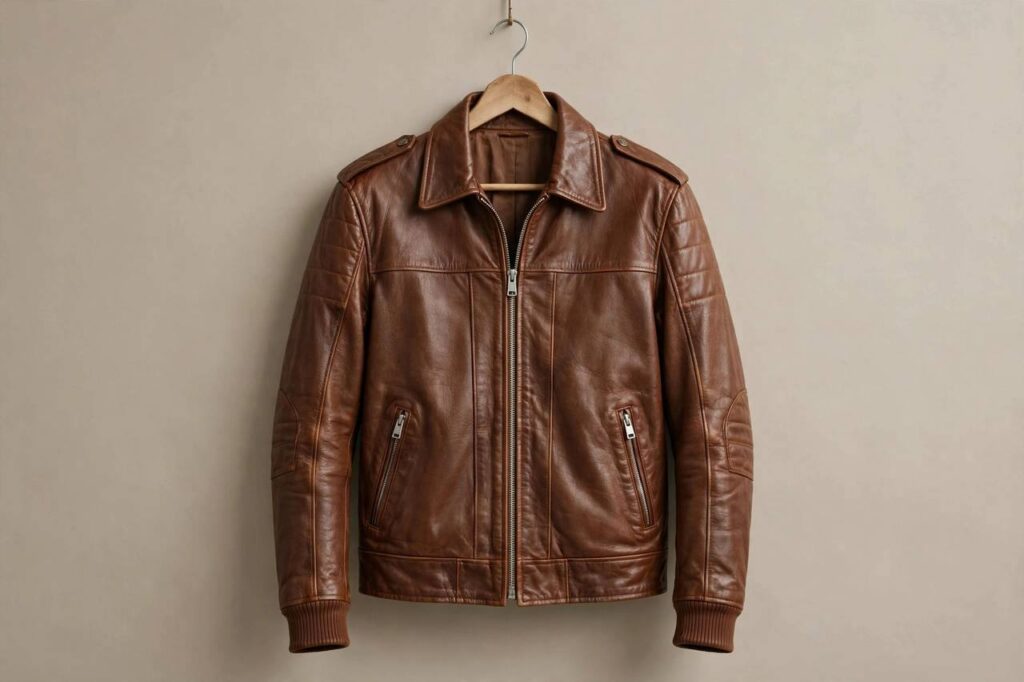
A good leather jacket is not a purchase; it is a relationship. Treated well, it molds to you, softens beautifully, and looks better at year ten than it did at year one — developing that rich patina no new jacket can fake. Treated badly, it dries, cracks, and ends up in the back of the closet looking tired and sad. Learning how to take care of a leather jacket is really about understanding what leather is: skin, long removed from the animal but still behaving like it. It needs moisture, it hates being soaked, it suffers in dry heat, and it rewards gentle, consistent attention far more than dramatic rescue missions.
I have owned leather jackets for over a decade — lambskin, cowhide, goatskin — and I have made just about every mistake in this guide so you do not have to. The routine I will share takes perhaps thirty minutes a season, plus a few habits that become second nature. That is the entire price of a jacket that lasts decades instead of years.
How to Take Care of a Leather Jacket: Know Your Leather First
Not all leather wants the same treatment, so step one is knowing what you own. Check the label or the product listing:
- Lambskin: buttery soft, lightweight, drapes beautifully — and the most delicate. Prone to scratches and water spots. Needs the gentlest products and the most careful handling. Worth it for the feel, demanding in return.
- Cowhide: thicker, sturdier, the workhorse. More forgiving of rain and wear, breaks in slowly, lasts essentially forever with basic care. Most motorcycle and heritage jackets are cowhide.
- Goatskin: the sweet spot for many — tougher than lambskin, more supple than cowhide, with a distinctive pebbled grain. Naturally water-resistant to a degree.
- Suede and nubuck: the fuzzy, napped finishes. Beautiful, and an entirely different care regime — no standard conditioners, ever. They need suede-specific sprays and brushes.
If you are unsure, treat it as the more delicate option until you confirm. And whatever you own, test every product on a hidden spot first — inside the hem or under the collar. Leather dyes and finishes vary, and a conditioner that is perfect for one jacket can darken another.
The Seasonal Routine: Clean, Condition, Protect
Think of leather care the way you think of skincare: a simple routine, done regularly, beats an intensive rescue once a year. Two to four times a year (more for daily-wear jackets, less for occasional ones), run through these three steps:
1. Clean gently
Wipe the jacket down with a soft, slightly damp cloth to remove dust and surface grime. For actual dirt or spots, use a cleaner made specifically for leather — saddle soap is the traditional choice, or a modern pH-balanced leather cleaner. Work in small sections with light pressure, following the grain. Never soak the leather, never use household cleaners, and never — I cannot stress this enough — put a leather jacket in a washing machine.
2. Condition while it is clean
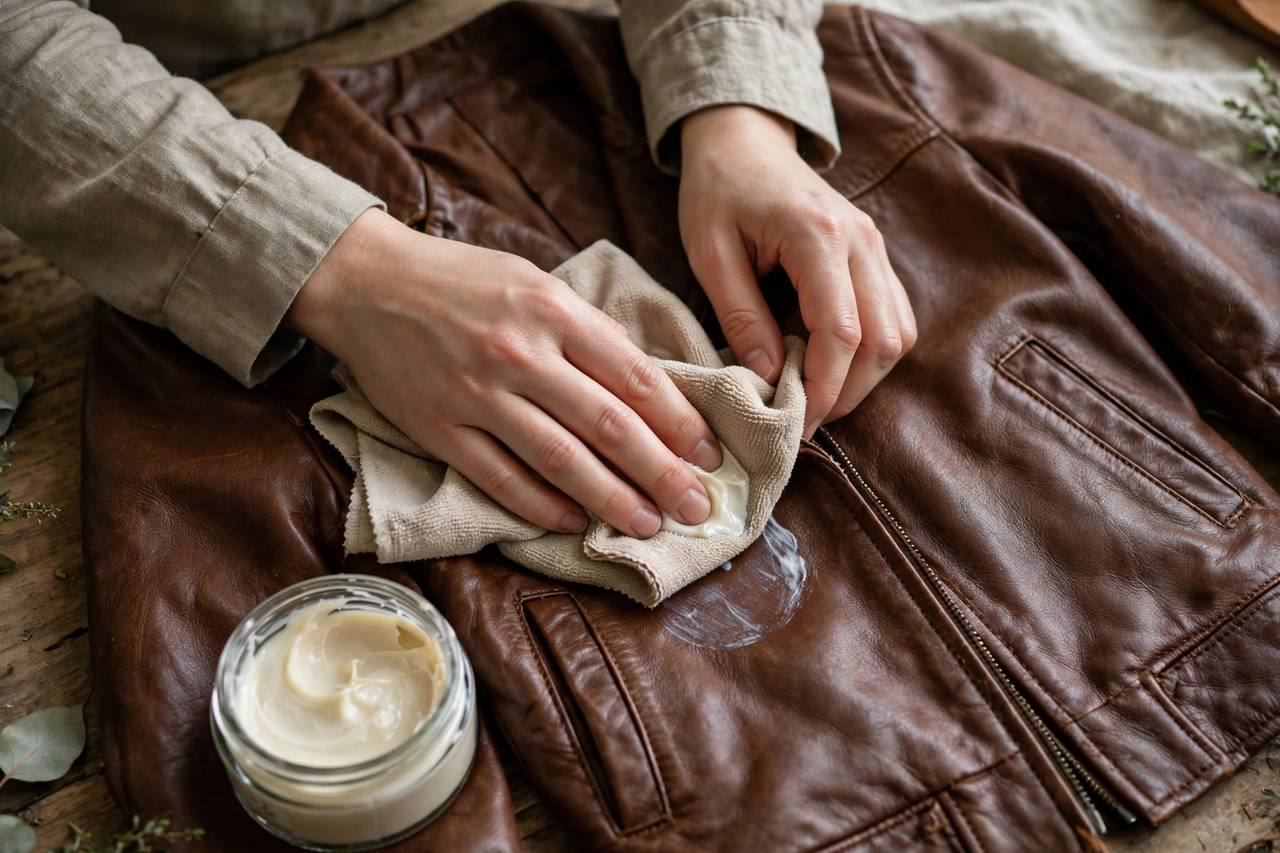
Conditioning replaces the natural oils leather slowly loses. Apply a thin, even layer of leather conditioner with a soft cloth, working it in with small circular motions. Less is more — you can always add a second light coat, but over-conditioning leaves the leather sticky and attracts dirt. Let it absorb for 15-30 minutes, then buff off any excess with a clean dry cloth. The jacket should feel supple, not greasy.
Product choice matters: use a conditioner matched to your leather type and finish. Smooth leather gets cream or lotion conditioners; suede and nubuck get nothing oil-based — they need dedicated suede protector sprays instead. When in doubt, the manufacturer’s recommendation for your specific jacket beats any general advice, including mine.
3. Protect against the elements
After conditioning, a water and stain repellent designed for leather adds a meaningful layer of defense — especially for lambskin and suede. Spray lightly and evenly from about 20 cm away, let it dry completely, and reapply every few months for jackets that see rain. This step is what stands between your jacket and a surprise downpour.
Rain, Stains, and Scratches: Handling Real Life
Caught in the rain? Do not panic — and do not apply heat. Shake off excess water, stuff the sleeves and body loosely with dry towels or newspaper to hold the shape, and let it dry slowly at room temperature, away from radiators, hair dryers, and direct sun. Heat is what causes the stiffness and cracking people blame on rain. Once fully dry, condition it — water strips oils, and conditioning restores them.
Stains: blot (never rub) fresh spills immediately with a clean dry cloth. For grease spots, sprinkle cornstarch or talcum powder on the area, leave it overnight to draw out the oil, then brush off gently. For anything beyond surface marks — ink, dye transfer from jeans, deep stains — consider a professional leather cleaner before you experiment. Home remedies on expensive leather are how small problems become permanent ones.
Scratches: light surface scratches on smooth leather often disappear with a little conditioner and gentle buffing — the oils darken the scratch to match. Deeper scratches can sometimes be minimized with leather balm, but set expectations honestly: character marks are part of a leather jacket’s story. My oldest cowhide jacket is covered in them, and I would not trade its look for a pristine new one.
Salt lines (for those in winter climates): wipe with a cloth dampened with a weak vinegar-water solution, then condition after drying. Road salt is genuinely damaging if left sitting.
How to Store a Leather Jacket Properly
Storage is where slow damage happens — the kind you only notice a year later. The rules are simple:
- Use a wide, padded hanger. Wire hangers create shoulder dimples that never fully come out. The hanger should support the jacket’s natural shoulder line.
- Give it air. Store in a cool, dry place with airflow. Never in plastic — leather needs to breathe, and trapped moisture invites mold and mildew. A breathable garment bag is fine for dust protection.
- Keep it out of direct sunlight for long periods. UV fades and dries leather steadily.
- Do not fold it for storage. Folds become creases, creases become cracks. If you must travel with it, roll rather than fold, and hang it immediately on arrival.
- Condition before long storage. A jacket going away for the summer should be cleaned and conditioned first — it will emerge in far better shape.
The Mistakes That Ruin Leather Jackets
I have seen every one of these, some on my own jackets:
- Heat-drying after rain. Radiator, hair dryer, direct sun — all of them cook the moisture out unevenly and leave leather stiff and cracked. Room temperature, always.
- Household cleaners. All-purpose sprays, dish soap, alcohol wipes — wrong pH, wrong chemistry, and they strip the finishes leather depends on.
- Over-conditioning. More is not better. Greasy, sticky leather attracts every speck of dirt in the room.
- Using the wrong product for the finish. Standard conditioner on suede is a disaster — it mats the nap permanently. Match the product to the leather.
- Ignoring small problems. A tiny dry patch becomes a crack. A loose thread becomes a torn seam. Leather rewards early intervention.
- Wearing it in a downpour regularly. Occasional rain is fine with proper drying. Habitual soaking is not — no amount of conditioner fully compensates.

Breaking In a New Leather Jacket
A new leather jacket — especially cowhide — can feel stiff and almost armor-like at first. That is normal, and the break-in is part of the pleasure. The fastest way to break one in is simply to wear it: body heat and movement do the work over a few weeks. Flex the arms, wear it on walks, let it learn your shape.
What speeds things along: a light conditioning right at the start (new jackets are often a little dry from storage and shipping), and wearing it in light rain once or twice — then drying properly at room temperature as described above. What does not help: artificial shortcuts like beating it, soaking it, or applying heavy oils meant for boots. Patience produces a better result than force. Within a month of regular wear, the shoulders will have settled, the sleeves will move with you, and the jacket will start looking like yours instead of like a product.
Frequently Asked Questions
How to take care of a leather jacket at home?
Follow the seasonal clean-condition-protect routine: wipe down with a damp cloth, clean with a leather-specific cleaner, apply a thin layer of conditioner matched to your leather type, and finish with a water-repellent spray. Store on a padded hanger in a cool, ventilated spot. The whole routine takes about 30 minutes, two to four times a year.
How often should you condition a leather jacket?
Two to four times a year for most jackets — more often for daily-wear jackets or dry climates, less for occasional wear. The leather itself tells you: if it looks dull, feels dry or stiff, it is asking for conditioner. Always test products on a hidden spot first, and use a light hand.
Can you wear a leather jacket in the rain?
Yes, occasionally — especially cowhide and goatskin, which handle moisture reasonably. Shake off water afterward and dry slowly at room temperature away from heat, then condition once dry. Do not make a habit of soaking it, and consider a water-repellent spray for regular rainy-season wear. Suede should avoid rain whenever possible.
How do you get wrinkles out of a leather jacket?
Hang it in a steamy bathroom (not in direct shower spray) — the gentle steam relaxes minor wrinkles. For stubborn creases, a garment steamer held at a distance works; never press a hot iron directly on leather. Prevention matters more: store on a proper hanger and never fold the jacket.
Does leather conditioner darken leather?
It can, temporarily or permanently depending on the leather and product — oils naturally deepen color. This is why the hidden-spot test matters. On most mid-tone and dark jackets the effect is a richer, more even tone that most owners prefer. On very light or white leather, choose a conditioner specifically formulated to minimize darkening.
How to take care of a leather jacket is not complicated — it is just consistent. Clean it gently, feed it occasionally, keep it dry and breathing, and fix small problems while they are small. Do that, and your jacket will do what good leather does: grow more beautiful the longer you own it. Mine certainly has.