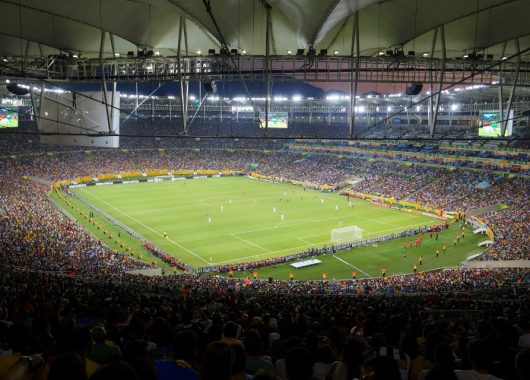
How Does World Cup Qualification Work? Full Explainer


Every four years, the planet’s biggest sporting event seems to just… appear. One day there is no World Cup, the next day 48 teams are in the groups and everyone is arguing about the draw. But behind that apparent magic is a grueling, years-long gauntlet that most fans never see. How does World Cup qualification work? In short: FIFA’s six continental confederations each run their own qualifying tournaments over roughly two to three years, national teams play home-and-away matches (or tournament-style groups), and the top finishers earn one of the World Cup’s berths — with a few final spots decided by intercontinental playoffs. More than 200 national teams start the journey. Fewer than a quarter finish it.
I love this part of the football calendar precisely because the World Cup itself gets all the glory. Qualification is where the real drama lives: tiny island nations dreaming impossible dreams, continental giants stumbling, and playoff nights that end in either ecstasy or national mourning. Let us break down exactly how the whole machine works, using the expanded 48-team format as our guide.
How Does World Cup Qualification Work? The Big Picture
FIFA divides the world into six confederations, and each one gets a slice of the World Cup’s berths based broadly on footballing strength and history. Each confederation then designs its own qualifying competition — the formats differ wildly, which is part of the charm. A team in South America plays a completely different qualification than a team in Oceania.
The qualification cycle typically runs for about two to three years before the tournament, played during FIFA’s international breaks — those windows in the club calendar when players report for national duty. Teams accumulate results over many matchdays, and the grind favors consistency over brilliance. One bad night can be survived; a bad year cannot.
Three teams skip the whole ordeal: the host nation(s), who qualify automatically. Everyone else — including the defending champions, who lost their automatic berth decades ago — must earn their place like everybody else.
The 48-Team Format: What Changed
The World Cup expanded from 32 to 48 teams starting with the 2026 tournament (hosted across the USA, Canada, and Mexico), and the qualification picture changed with it. Here is how the 48 berths break down by confederation:
- AFC (Asia): 8 direct berths + 1 playoff spot
- CAF (Africa): 9 direct berths + 1 playoff spot
- CONCACAF (North/Central America & Caribbean): 3 direct berths + 2 playoff spots (plus 3 automatic host berths for 2026)
- CONMEBOL (South America): 6 direct berths + 1 playoff spot
- OFC (Oceania): 1 direct berth + 1 playoff spot
- UEFA (Europe): 16 direct berths
- Intercontinental playoffs: 6 teams compete for the final 2 berths
The expansion roughly doubled the joy and halved the heartbreak — more nations than ever get to experience a World Cup, and several countries qualified for the first time under the new format. If you want the full picture of how the tournament itself is structured once teams arrive, I have broken down how the World Cup works — the groups, the knockout rounds, and what happens when teams finish level on points.
Confederation by Confederation: Six Different Gauntlets
UEFA (Europe): the group-stage grinder
Europe gets the most berths (16) and runs the most straightforward system: teams are drawn into qualifying groups, play each other home and away, and the group winners qualify directly. The runners-up (plus a few others, depending on the cycle’s exact format) go into playoffs for the remaining spots. With so many strong teams and so few forgiving fixtures, European qualification is famously ruthless — genuine contenders miss out every single cycle. There is no easy group in UEFA, only groups that look easy until they are not.
CONMEBOL (South America): the marathon
South America runs my favorite format in world football: all ten teams in a single round-robin league, home and away, eighteen matches each. No groups, no seeding luck, no hiding. Over two years, everyone plays everyone, and the table does not lie. The top six qualify directly and the seventh goes to the intercontinental playoff. It is the purest test in international football — and the reason South American teams arrive at World Cups so battle-hardened.
CAF (Africa): groups then playoffs
Africa’s 54 entrants are whittled down through group stages, with group winners advancing and playoffs deciding the final berths. The depth of African football has exploded in recent decades, which makes CAF qualification genuinely treacherous: established powers regularly fall to nations with a golden generation and nothing to lose. Nine direct berths under the expanded format was a landmark for the continent.
AFC (Asia): multiple rounds, rising stakes
Asia runs a multi-round system that starts with the continent’s smallest nations in preliminary playoffs and builds through group stages to a final round where the top teams qualify directly. Eight direct berths represented a huge expansion for Asia, and the final-round groups — where teams like Japan, South Korea, Australia, and Saudi Arabia collide with ambitious challengers — produce some of the cycle’s best football.
CONCACAF: the octagonal and beyond
North and Central America and the Caribbean run their qualifiers in rounds, historically culminating in “the Hex” (six teams) and more recently an eight-team final round. With three host nations qualifying automatically for 2026, the region’s remaining direct berths were fiercely contested. CONCACAF is famous for its hostile away days — altitude in Mexico, heat and humidity in Central America, and artificial turf in Canada.
OFC (Oceania): the long road through the playoff
Oceania’s small membership means its champion has traditionally needed to survive an intercontinental playoff to reach the World Cup — a brutal final boss after winning the region. The expanded format granted OFC a direct berth for the first time, a historic moment for Pacific football, with an additional playoff spot on top.
The Intercontinental Playoffs: Football’s Final Boss
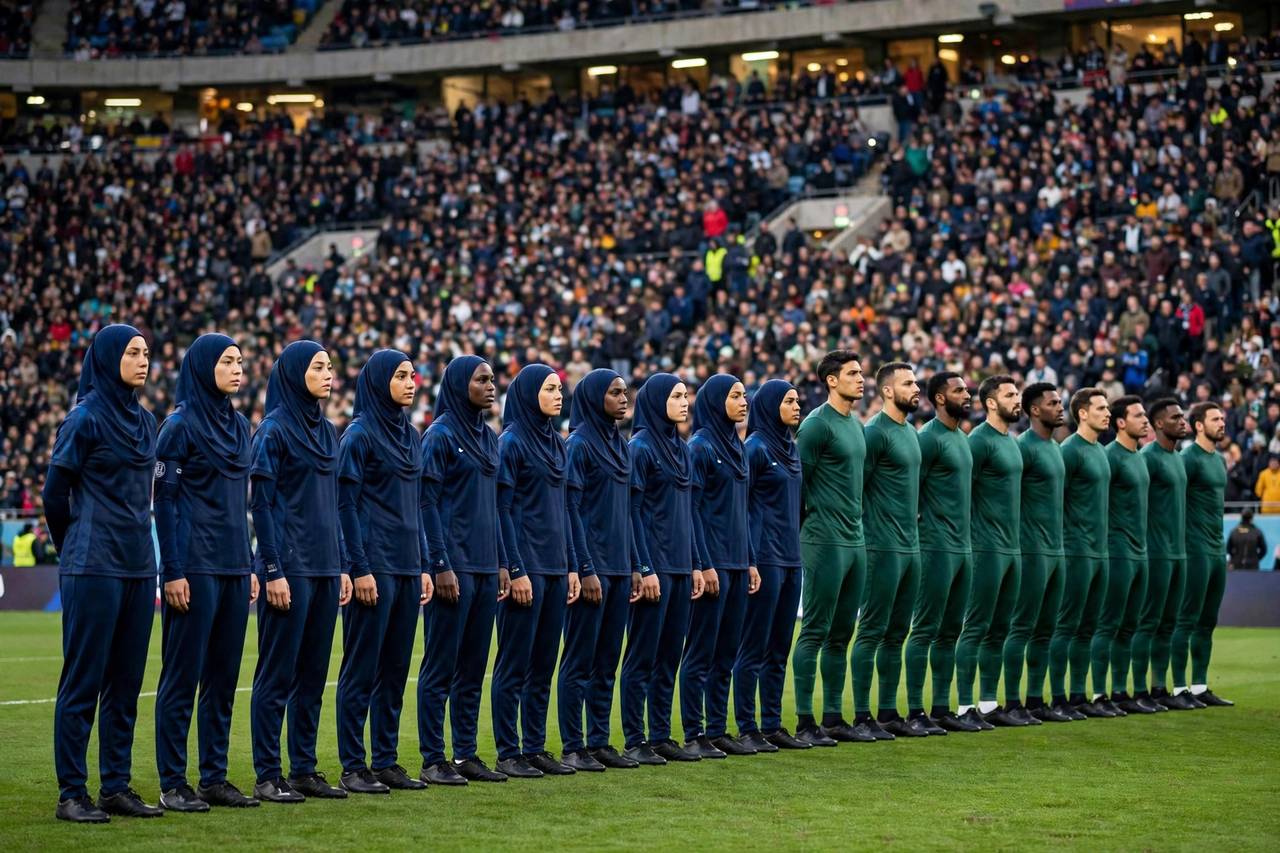
After all six confederations finish, six playoff teams — one each from AFC, CAF, CONMEBOL, and OFC, plus two from CONCACAF — contest the last two World Cup berths in a mini-tournament. These are single-elimination pressure cookers, often held at a neutral venue, where years of work come down to 90 (or 120) minutes.
The playoffs produce the most emotionally extreme football on the planet. For a smaller nation, winning a playoff is the greatest achievement in its sporting history. For the favorite that loses, it is a national trauma that gets discussed for decades. If you ever want to understand what the sport means to a country, watch an intercontinental playoff — not the final, the playoff.
Seeding, Draws, and the Politics of the Groups
Qualification groups are not drawn at random — well, not entirely. FIFA uses its world rankings to seed teams into pots, so the strongest teams are spread across groups rather than clustered together. The ranking formula weighs results, opponent strength, and match importance, which is why teams obsess over friendly results and Nations League performance: every point shapes their qualifying draw.
This is also where the quiet gamesmanship lives. Teams schedule friendlies strategically, some nations maneuver to host playoff legs second, and the draw ceremonies themselves — with their pots, balls, and elaborate television production — are major events. Once the groups are set, you can also dig into how World Cup groups are decided to understand the seeding mechanics that shape the tournament draw itself.
Why Giants Fail to Qualify (It Happens More Than You Think)
One of the cruel beauties of qualification is that reputation buys nothing. Italy — four-time world champions — missed consecutive World Cups. The Netherlands have missed tournaments. The United States missed 2018. How does it happen?
- The format is unforgiving. In a short playoff or a tight group, two bad nights can erase two good years.
- Generational transitions hurt. When a golden generation ages out and the next one is not ready, there is a valley — and qualification does not wait for valleys to pass.
- Away games are genuinely hard. Travel, climate, altitude, hostile crowds, unfamiliar pitches. Home advantage in international football is enormous.
- Smaller nations have improved. Better coaching, more players in top leagues, smarter tactics. The gap between the top 20 and the next 40 has narrowed dramatically.
- Pressure compounds. Once a big team wobbles, every subsequent match becomes a crisis. Players tighten up, managers get cautious, and the spiral feeds itself.
This is why qualification veterans will tell you the hardest team to beat is a desperate one with nothing to lose and a home crowd behind it.
The Timeline: When It All Happens
A typical qualification cycle looks like this: the early preliminary rounds for smaller nations begin roughly three years before the World Cup. The main group stages run across about 18 months of international breaks. Playoffs conclude roughly six to eight months before the tournament, and the final tournament draw follows. From the first preliminary match to the last playoff whistle, the road to the World Cup is one of the longest competitions in all of sports — which is exactly why reaching the tournament means so much.
Frequently Asked Questions
How does World Cup qualification work?
FIFA’s six continental confederations each run their own qualifying tournaments over two to three years. Teams play group-stage matches or round-robin leagues during international breaks, and the top finishers earn direct berths. A few remaining spots are decided by playoffs, including intercontinental playoffs between confederations. Host nations qualify automatically.
How many teams qualify for the World Cup?
48 teams qualify under the expanded format used from 2026 onward: 46 through direct confederation berths and 2 more through the intercontinental playoffs, plus the host nation(s), who qualify automatically and are counted within their confederation’s allocation.
Do defending champions have to qualify for the World Cup?
Yes. Since 2006, the defending champions no longer receive an automatic berth and must go through qualification like everyone else. Only the host nation (or host nations) qualify automatically.
What is the intercontinental playoff?
It is a final mini-tournament where six teams — one each from Asia, Africa, South America, and Oceania, plus two from North/Central America and the Caribbean — compete for the last two World Cup berths. The matches are single-elimination and famously dramatic, as years of qualifying come down to one night.
Why do some strong teams fail to qualify?
Qualification formats are unforgiving — a short playoff or tight group can punish two bad results harshly. Generational transitions, difficult away fixtures (altitude, climate, hostile crowds), the steady improvement of smaller nations, and compounding pressure all contribute. Reputation counts for nothing once the matches begin.
How does World Cup qualification work? It is a three-year, six-tournament, 200-team obstacle course where most of the field is eliminated long before the opening ceremony. And honestly, that is what makes the World Cup the World Cup. Anyone can stage a tournament. Only football makes you survive qualification to earn the right to play in it.