How to Make Crispy French Fries at Home: Double-Fry Method

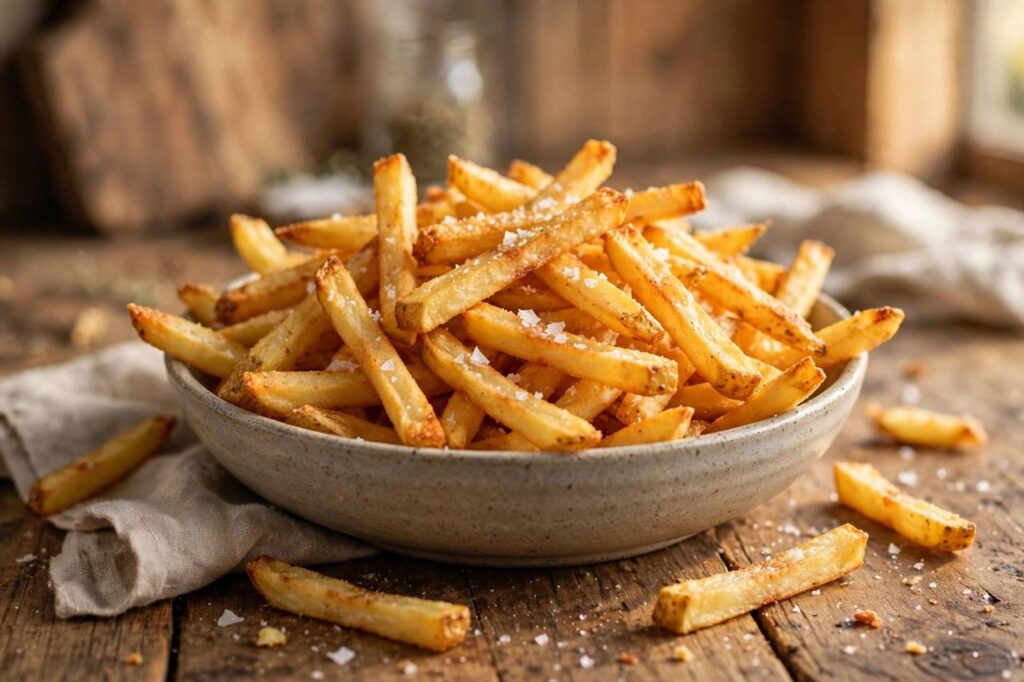
Soggy homemade fries are a heartbreak I’ve lived through — limp, pale sticks that taste like disappointment. But once you understand how to make crispy french fries at home, the secret turns out to be simple: it’s not about the oil temperature alone, it’s about what you do before the potato ever hits the heat. I’ve tested every method in my kitchen over the years — single fry, oven, air fryer — and the double-fry method wins every single time. Here’s the full science, made practical, plus the no-oil alternative for when you don’t want a pot of hot oil on the stove.
The enemy of crispiness is starch and water. A raw potato is about 80% water, and its surface is coated in starch that turns gummy instead of crisp. Every step below exists to solve one of those two problems. Understand that, and you can improvise with confidence forever.
Picking the Right Potato (It Matters More Than You Think)
Not all potatoes fry equally. Russets are the fry potato — high starch, low moisture, fluffy interior, and they crisp aggressively. That’s what restaurants use, and it’s what you should buy. Yukon Golds work in a pinch and taste buttery, but their higher moisture means slightly less shattering crispness. Waxy potatoes (red potatoes, fingerlings) are the worst choice for fries — they stay dense and never get that fluffy-crisp contrast. Buy russets. This one decision does half the work.
Cut them evenly — about 1/4 to 1/3 inch thick. Uneven cuts are the silent killer of homemade fries: thin pieces burn while thick ones stay raw inside. A sharp knife and thirty extra seconds of attention beat any gadget here.
Step 1: Remove the Starch (The Step Everyone Skips)
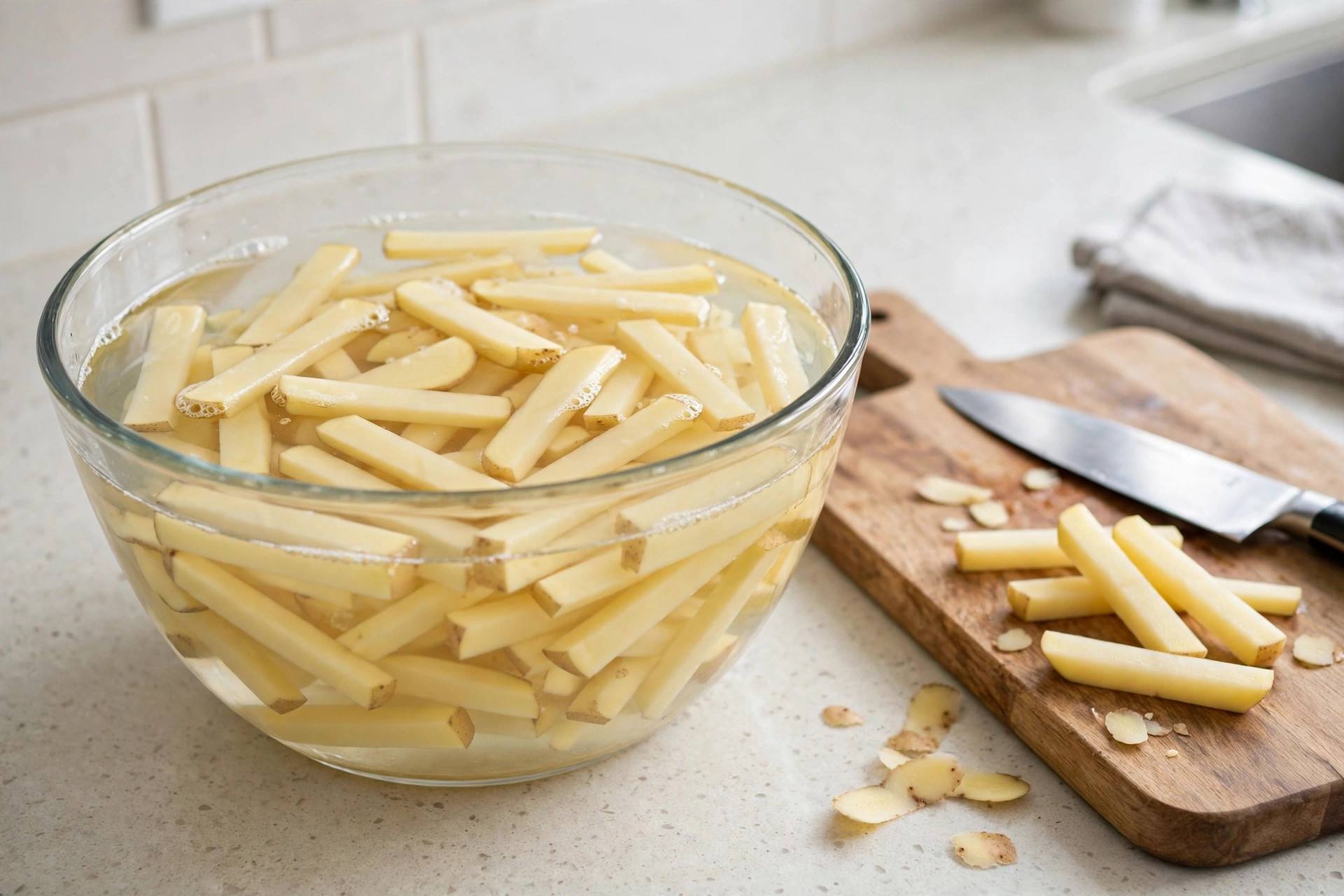
After cutting, soak the fries in cold water for at least 30 minutes — an hour is better, and overnight in the fridge is the gold standard. You’ll see the water turn cloudy; that’s surface starch leaving the potato. This single step is the difference between fries that crisp and fries that steam themselves soggy.
After soaking, drain and dry them thoroughly — I mean thoroughly. Spread them on a clean kitchen towel, pat them dry, let them air-dry for a few minutes. Water on the surface becomes steam in hot oil, and steam is the enemy of crisp. Wet fries also cause dangerous oil splatter, so this step is about safety as much as texture.
Step 2: The First Fry — Cooking the Inside (Low and Slow)
Here’s the double-fry science: the two fries serve two different purposes. Fry one cooks the interior. Heat your oil to 300–325°F (150–165°C) — lower than you’d expect. Fry in small batches for 5–6 minutes until the fries are soft, pale, and cooked through but with zero color. They’ll look underdone. That’s correct.
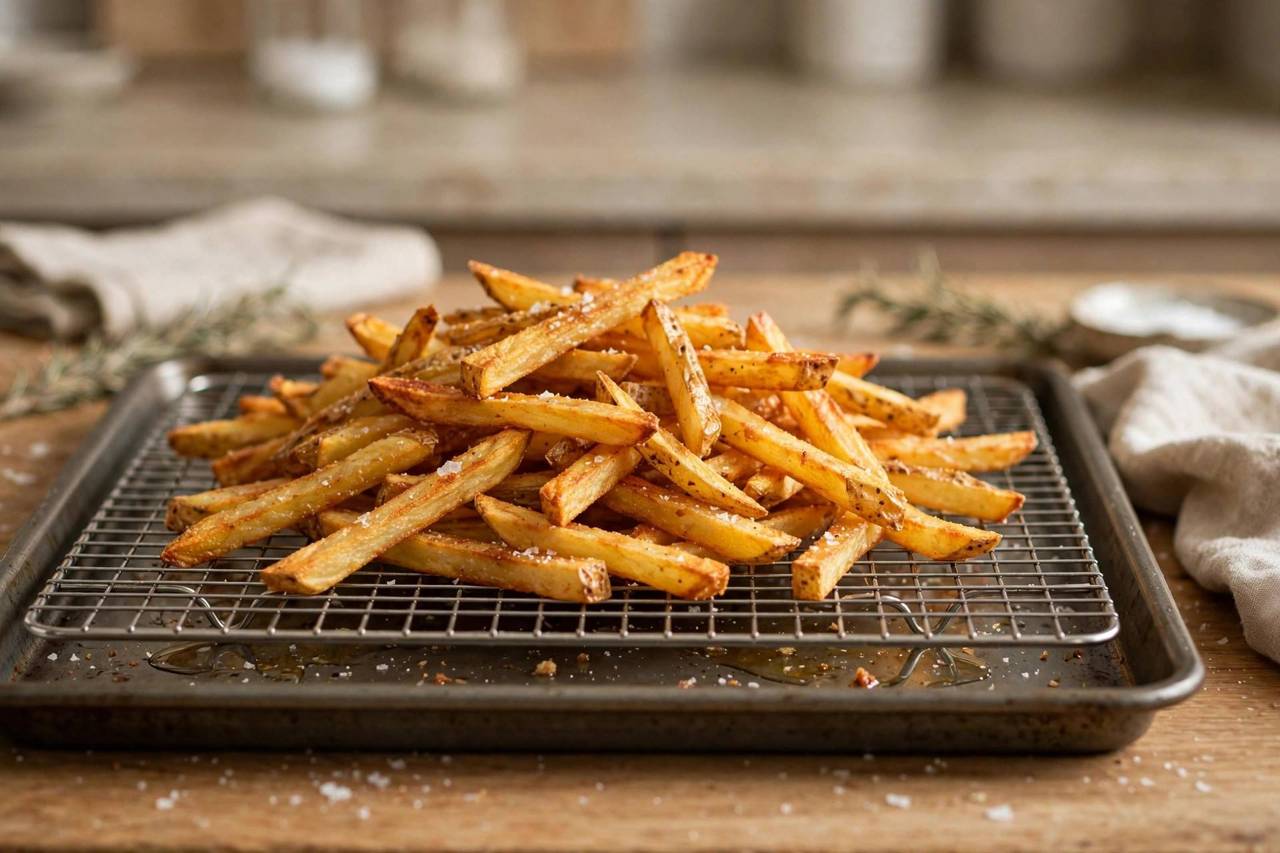
Remove them to a wire rack (not paper towels — the rack keeps air circulating so they don’t steam underneath) and let them cool for at least 15–20 minutes. You can even refrigerate them at this stage for up to a few hours, which is exactly what restaurants do — the par-cooked fries rest, their surfaces dry further, and the interior sets. This resting step is the quiet secret of restaurant fries.
Step 3: The Second Fry — The Crisp (Hot and Fast)
Fry two is all about the crust. Crank the oil to 375–400°F (190–200°C) and fry the rested potatoes for 2–3 minutes until deep golden brown. The high heat does two things: it drives off remaining surface moisture instantly, and it triggers the Maillard reaction — the browning chemistry that creates flavor and crunch — before the interior has time to overcook.
Why does this beat a single fry? In a single high-heat fry, the outside browns before the inside cooks, so you get dark-but-raw fries — or you lower the heat and get cooked-but-soggy ones. The double fry separates the jobs: cook the inside gently, crisp the outside violently. Drain on the wire rack, salt immediately while the surface oil is still tacky (salt won’t stick to cooled fries), and serve within minutes. Fries wait for no one.
Oil choice: Use a neutral oil with a high smoke point — peanut, canola, or vegetable. Olive oil’s smoke point is too low and its flavor too strong. And don’t crowd the pot: too many fries at once drops the oil temperature, and temperature recovery is where sogginess is born. Small batches, always.
The Air-Fryer Alternative (No-Oil Crispy Fries)
No interest in a pot of hot oil? The air fryer gets you about 80% of the way there, which is honestly excellent. The method adapts: soak and dry the potatoes exactly the same (starch removal still matters), then toss the dried fries with just 1–2 teaspoons of oil and a pinch of salt. Air fry at 380°F (193°C) for 15–20 minutes, shaking the basket every 5 minutes for even browning.
The texture difference: air-fried fries are crisp but drier and less shatteringly crunchy than double-fried — there’s no oil bath to drive the Maillard reaction as aggressively. The fix is surface area: thinner cuts crisp better in the air fryer. And don’t skip the soak; it’s even more important here since you can’t rely on abundant hot oil to compensate.
Troubleshooting: What Went Wrong
- Soggy despite double-frying: You crowded the pot (oil temp crashed) or didn’t dry after soaking. Both are fixable next batch.
- Dark outside, raw inside: Second fry too hot or first fry too short. The interior wasn’t cooked before the crust formed.
- Sticking together: Too many fries at once, or you skipped the soak and surface starch glued them.
- Salt won’t stick: You salted too late. Salt within 30 seconds of leaving the oil.
- Greasy fries: Oil wasn’t hot enough. Greasy fries are under-heated fries — the oil seeps in instead of flashing off. Use a thermometer; guessing oil temperature is the number one home-fry mistake.
How to Make Crispy French Fries at Home in the Oven
Feeding a crowd? The oven method scales where the fryer doesn’t. The principles stay the same — starch removal, dryness, high heat — but the technique adapts. After soaking and thoroughly drying, toss the fries with 2–3 tablespoons of oil (enough to coat, not pool) and spread them in a single layer on a preheated baking sheet. The preheated sheet is the trick most recipes skip: it starts crisping the bottoms immediately instead of letting them steam.
Roast at 450°F (230°C) for 25–35 minutes, flipping once halfway. Don’t crowd the pan — use two sheets if needed, because crowded oven fries steam exactly like crowded fryer fries. They won’t shatter like double-fried, but a hot oven with good spacing produces genuinely crisp, golden fries with a fraction of the oil and none of the stovetop vigilance. For weeknight practicality, this is the method I actually use most.
Two oven-specific tips: parchment, not foil — fries stick to foil but release from parchment. And season after, not before — salt draws moisture, so salting before roasting works against crispness. Salt the moment they leave the oven, same as frying.
Seasoning and Serving: Beyond Salt
Plain salt is classic, but the seasoning window — those thirty seconds when the fries are hot and the surface oil is tacky — is your chance to get creative. Vinegar salt (malt vinegar powder) gives chip-shop authenticity. Smoked paprika and garlic powder turn fries into a side dish with presence. Parmesan and herbs — toss hot fries with finely grated parmesan, chopped rosemary, and cracked pepper — is the restaurant move that costs almost nothing at home.
Sauces deserve the same thought. Beyond ketchup: garlic aioli (mayo, grated garlic, lemon), comeback sauce, or a simple malt vinegar dip. Serve in a paper-lined basket or a bowl lined with a clean towel — fries served on a flat plate steam underneath and go limp from the bottom up. And serve immediately. Fries have a five-minute prime window; everything after is decline. Time the rest of the meal around the fries, not the other way around.
Make-Ahead Fries for Parties
Here’s the entertaining secret restaurants already know: the double-fry method is designed for making ahead. Do the first fry (and the rest) hours before guests arrive — the par-cooked fries hold beautifully at room temperature for up to two hours, or refrigerated for a day. When it’s time to eat, the second fry takes three minutes.
This means hot, shattering fries for twelve people with zero last-minute stress — you do the messy, time-consuming work in the afternoon and the dramatic finish à la minute. Keep the second-fry oil at temperature between batches, salt each batch immediately, and serve in waves rather than letting finished batches sit. Your guests will think you have a fryer brigade. You have a wire rack and a plan.
Frequently Asked Questions
How do you make french fries crispy at home?
Soak cut potatoes in cold water 30+ minutes to remove starch, dry thoroughly, then double-fry: first at 300–325°F until cooked through but pale, rest, then at 375–400°F until golden. Salt immediately.
Why are my homemade fries soggy?
The usual culprits: skipping the starch-removing soak, not drying the potatoes, overcrowding the pot (which crashes oil temperature), or single-frying instead of double-frying. Fix the soak and the batch size first.
What is the best potato for french fries?
Russets — high starch and low moisture give the fluffy interior and crisp exterior. Yukon Golds are a decent backup. Avoid waxy potatoes like reds, which stay dense.
Can you make crispy fries without a deep fryer?
Yes — an air fryer with the same soak-and-dry prep, tossed in 1–2 teaspoons of oil at 380°F for 15–20 minutes, gets about 80% of the crispness. You can also shallow-fry in a heavy skillet with an inch of oil using the double-fry temperatures.
What oil is best for frying french fries?
Neutral oils with high smoke points: peanut, canola, or vegetable oil. Avoid olive oil (low smoke point, strong flavor) and butter (burns).
Should you soak fries before frying?
Yes — it’s the most skipped and most impactful step. Soaking in cold water for at least 30 minutes removes surface starch that would otherwise turn gummy instead of crisp.
That’s how to make crispy french fries at home: right potato, soak the starch out, dry completely, fry twice. It sounds like a lot of steps until you’ve done it once — then it’s just the way you make fries, and restaurant fries become something you get when you’re feeling lazy.