What Is Pickleball? Rules, Gear, and How to Start

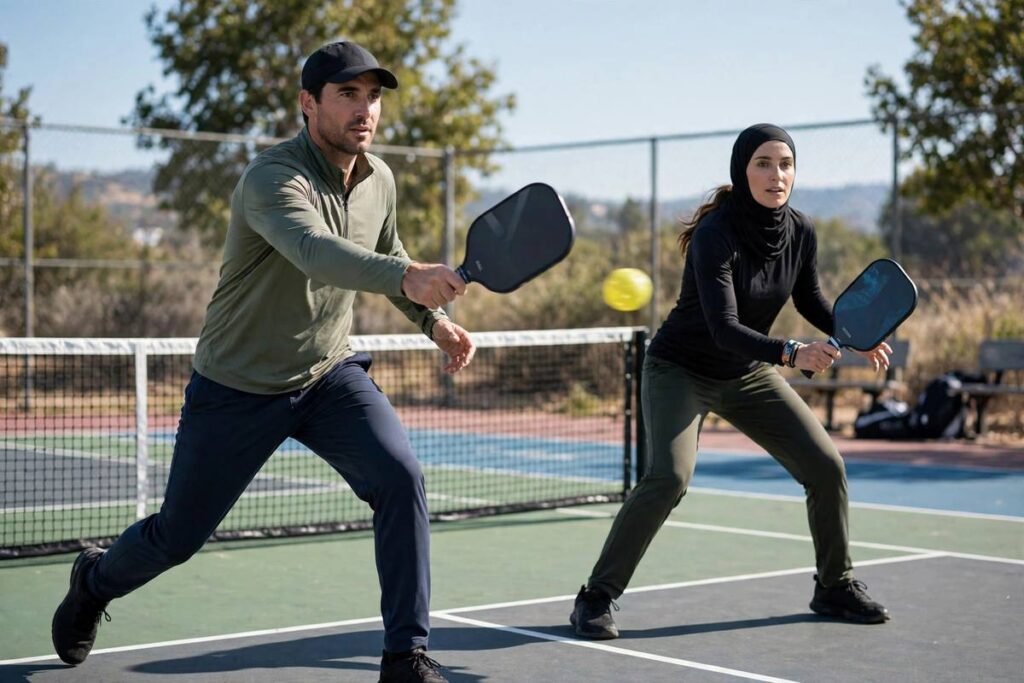
It is the fastest-growing sport in America, it has a ridiculous name, and your local tennis courts are probably being converted into its courts as you read this. What is pickleball? It is a paddle sport that blends tennis, badminton, and table tennis, played on a small court with a plastic ball full of holes — easy enough that most beginners play a real game in their first hour, and deep enough that professional tours now fill arenas. As a coach, I have watched dozens of adults go from “I am not athletic” to playing three times a week within a month. Here is what the sport actually is, how the rules work, and how to start.
What Is Pickleball, Exactly?
Pickleball is played on a court 20 feet wide and 44 feet long — roughly a third the size of a tennis court, the same dimensions as a doubles badminton court. Players use solid paddles (bigger than table-tennis paddles, smaller than tennis rackets) to hit a perforated plastic ball over a net that sits 36 inches high at the sidelines and 34 inches in the center. Games are usually doubles, played to 11 points, win by 2.
The sport was invented in 1965 on Bainbridge Island, Washington, when three dads — Joel Pritchard, Bill Bell, and Barney McCallum — improvised a game for their bored kids using ping-pong paddles, a plastic ball, and a lowered badminton net. The name’s origin is disputed: one story says it comes from the “pickle boat” in rowing (a crew of leftover oarsmen, like the game’s mashup of sports); the family insists it was named after Pickles, their dog. Either way, the silly name stuck, and for decades the sport grew quietly — until the 2020s, when participation exploded into the millions and it became America’s fastest-growing sport several years running.
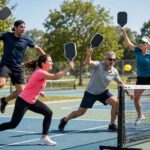
Why did it take off? The small court is the whole secret. You do not need to sprint, you do not need a huge swing, and rallies start happening almost immediately — even for people who have never held a racket. It is social by design (doubles means constant conversation), cheap to try (many parks lend paddles free), and genuinely intergenerational: it is normal to see a 25-year-old and a 70-year-old as doubles partners, both competitive.
The Basic Rules
You only need a handful of rules to play your first game. Everything else can wait.
The serve. Serves are underhand, from behind the baseline, hit diagonally into the opposite service box. Only one serve attempt (no second serves like tennis). The serve must clear the non-volley zone — more on that in a moment.
The double-bounce rule. This is the rule beginners forget most. After the serve, the receiving side must let the ball bounce once before returning it, and then the serving side must also let the return bounce once before playing it. After those two bounces, volleys (hitting the ball out of the air) are allowed. The rule exists to prevent serve-and-volley domination and to keep rallies long.
Scoring. Only the serving side can score points. If the serving side wins a rally, they score and keep serving (switching service courts). If they lose the rally, the serve passes to the other side — with one wrinkle: in doubles, each partner gets a turn serving except at the very start of the game. Games go to 11, win by 2. The scoring call (“4-2-1”) announces server score, receiver score, then which server — a rhythm you will pick up within one game.
Faults. You lose the rally if you hit the ball out of bounds, into the net without it crossing, volley before the double bounce is satisfied, or step into the non-volley zone to volley. That last one deserves its own section, because it is the sport’s signature rule.
The Kitchen: Pickleball’s Signature Rule
The non-volley zone — universally called “the kitchen” — is the 7-foot area on each side of the net. The rule is simple: you may not volley the ball while standing in the kitchen, and your momentum may not carry you into it after a volley. You can stand in the kitchen to hit a ball that has bounced there (that is how most “dink” rallies work), you just cannot smash it out of the air from that position.
This one rule shapes the entire sport. Without it, tall players would camp at the net and smash everything — the game would be all power, no chess. With it, the area near the net becomes a zone of soft, precise “dink” shots: gentle arcs that land just over the net in the opponent’s kitchen, forcing them to hit upward. High-level pickleball is largely a dinking duel punctuated by sudden attacks when someone leaves a ball too high. As a coach, I tell beginners: whoever controls the kitchen usually controls the game. Learn the soft game early and you will beat players with better athleticism for years.
What Gear You Actually Need
Less than you think. Here is the honest breakdown.
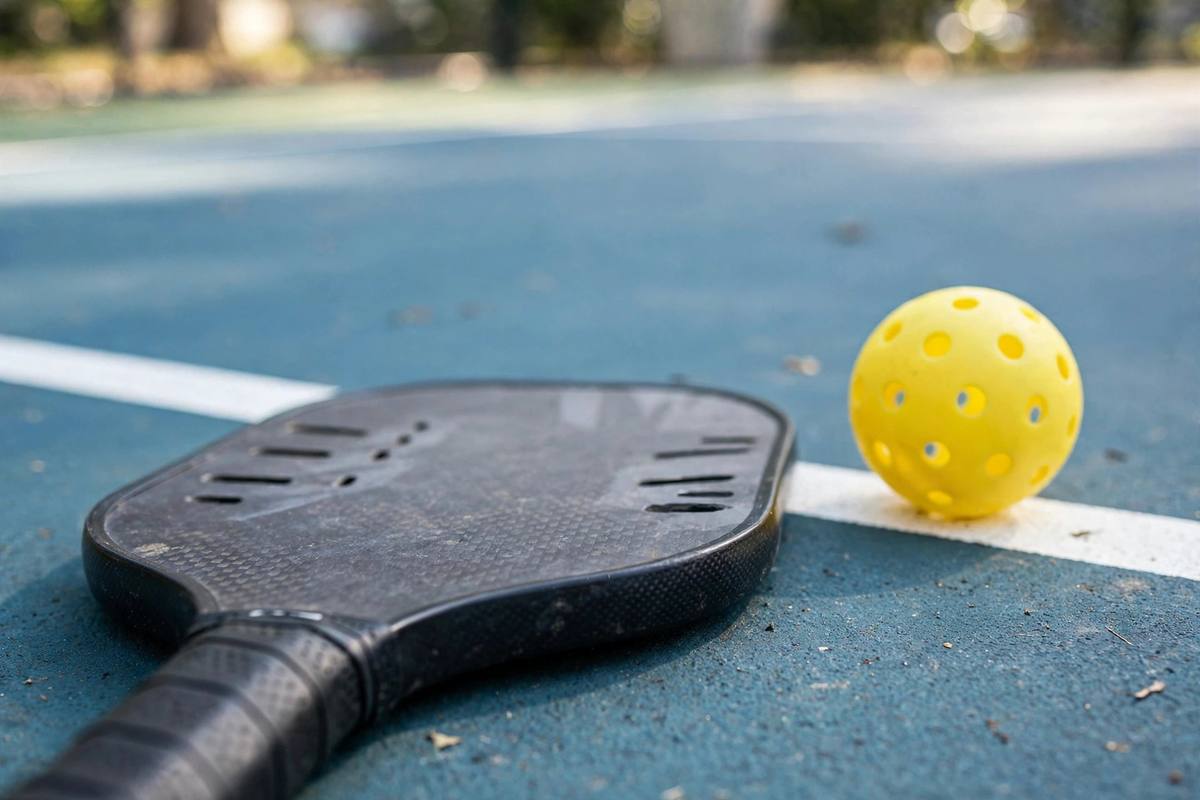
A paddle. This is the one purchase that matters. Beginner paddles run $30–$60 and are perfectly fine — look for a comfortable grip and a weight around 7.5–8 ounces. Expensive paddles offer marginal gains until your technique is solid; I have seen beginners with $200 paddles lose to veterans with borrowed ones. Upgrade when you can feel what the cheap paddle is not doing for you, not before.
Balls. Indoor and outdoor balls differ: outdoor balls are harder with smaller holes (they need to fight wind), indoor balls are softer with larger holes. Use the right one for the surface — an indoor ball outdoors will crack within a session. Balls are cheap; buy a half-dozen.
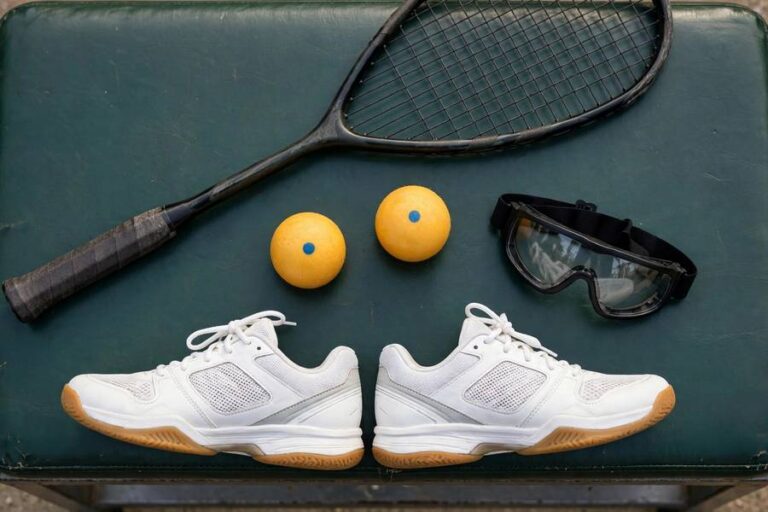
Court shoes. Running shoes are designed for forward motion; court sports are all lateral cuts. Proper court shoes — tennis, volleyball, or pickleball-specific — protect your ankles and knees. This is the piece of gear most beginners skip and most regret skipping. As a coach, I would rather you play in a $30 paddle and good shoes than the reverse.
The rest is optional. Athletic clothing you can move in, water, sunscreen for outdoor play. Nets are portable and cheap if your park does not have dedicated courts — many players carry a net in their trunk and set up on any flat surface.
Pickleball vs. Tennis: An Honest Comparison
The comparison is inevitable, so let us make it directly. Court size: pickleball’s court is about a third of tennis’s, which means dramatically less running — the single biggest reason older adults and beginners prefer it. Learning curve: most people rally in pickleball within an hour; tennis takes weeks of lessons before rallies feel natural. Serve: underhand in pickleball (easy, consistent) versus overhand in tennis (a genuine skill to develop). Strategy: tennis rewards power and court coverage; pickleball rewards placement, patience, and the soft game at the kitchen line.
None of this makes one sport “better.” Tennis offers a bigger athletic canvas — more speed, more spin, more physical demand. Pickleball offers faster fun and a lower barrier. Plenty of people play both; the skills transfer surprisingly well, especially footwork and court awareness. If you already play tennis, expect your first month of pickleball to be humbling in one specific way: your power game will lose to patient dinkers until you learn the kitchen. Every tennis convert goes through it.
For scoring structure, the two sports share DNA — which is why reading up on how tennis scoring works will feel familiar, even though pickleball’s serve-only scoring is its own system.
How to Start Playing This Week
Here is the part I give every new player as a coach: do not overthink the entry. The sport is designed for low-friction starts.
Step one: find a court. Search your city parks department site or an app like Places2Play — most areas now have dedicated outdoor courts, and many community centers run indoor sessions. Tennis courts with blended lines work fine; the pickleball lines are usually a different color.
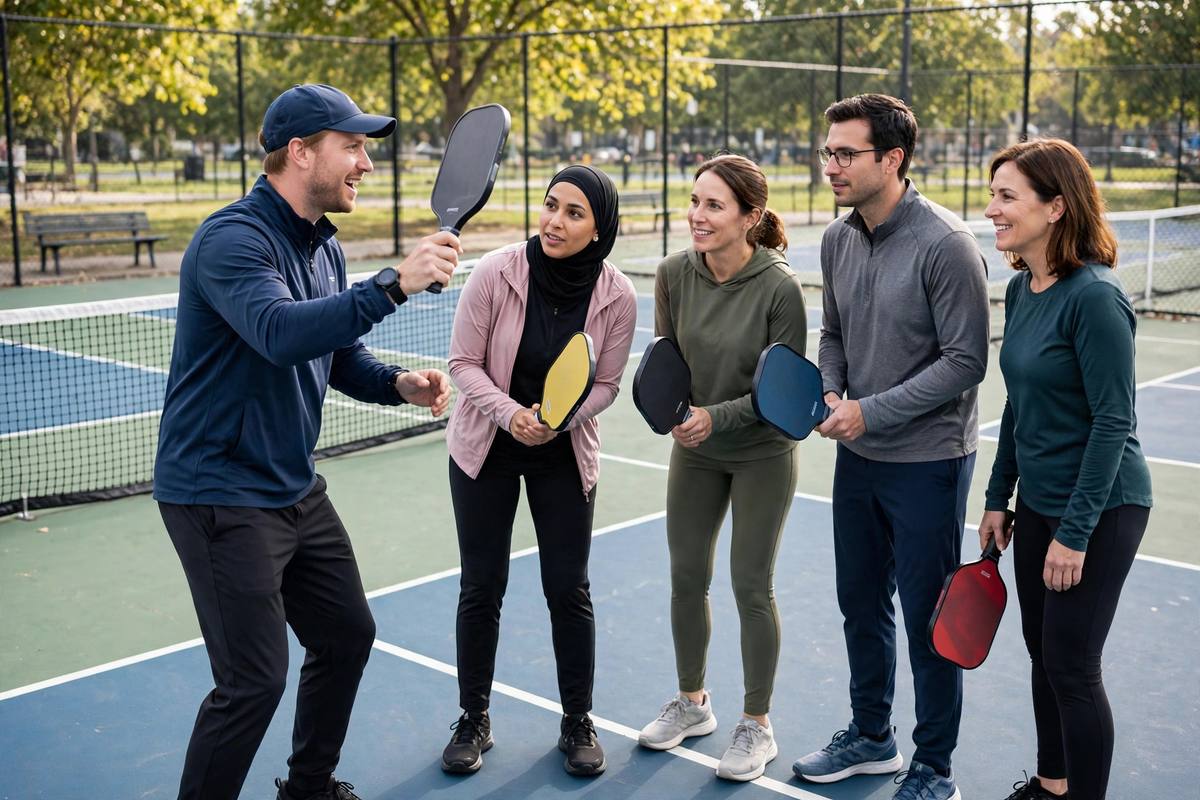
Step two: show up to an open play session. This is the culture’s best feature. Most pickleball venues run “open play” where you put your paddle in a queue and rotate into games with whoever is there. It sounds intimidating; in practice, pickleball players are famously welcoming to beginners — the sport’s growth depends on it. Tell people you are new. They will teach you the scoring call within ten minutes.
Step three: drill the boring stuff early. Fifteen minutes of dinking practice (soft shots back and forth at the kitchen line) with a partner will improve your game more than any number of competitive rallies. Add third-shot drops — the soft shot from the baseline that gets you to the net — and you will have the two shots that separate beginners from intermediate players.
Step four: learn the etiquette. Call the score before every serve. Do not walk across someone else’s court mid-rally — wait for a break and go around. Return stray balls promptly. If you are the stronger player in a mixed game, hit to the stronger opponent and keep it fun; nobody invites the crusher back. Like any racket sport, the unwritten rules matter as much as the written ones — squash players will recognize the type immediately.
Frequently Asked Questions
What is pickleball in simple terms?
Pickleball is a paddle sport combining elements of tennis, badminton, and table tennis, played on a small court with a perforated plastic ball. Games go to 11 points, most play is doubles, and beginners can usually play a real game within their first hour.
Why is it called pickleball?
The origin is disputed. One story traces it to the “pickle boat” in rowing (a crew of leftover oarsmen, like the game’s mashup of sports); the inventors’ family says it was named after their dog, Pickles. Both stories date to the sport’s 1965 invention.
What is the kitchen in pickleball?
The kitchen is the 7-foot non-volley zone on each side of the net. You cannot hit the ball out of the air while standing in it (or let your momentum carry you in after a volley), though you may stand in it to play balls that have bounced. The rule creates the sport’s signature soft “dinking” game.
Is pickleball easier than tennis?
To start, yes — dramatically. The smaller court means less running, the underhand serve is easy to learn, and most beginners rally within an hour. High-level pickleball is still highly skilled, but the entry barrier is among the lowest of any racket sport.
What equipment do I need to start pickleball?
A paddle ($30–$60 is fine to start), the right balls for your surface (indoor vs. outdoor), and court shoes with lateral support. Many parks lend paddles for free, so you can try the sport before buying anything.