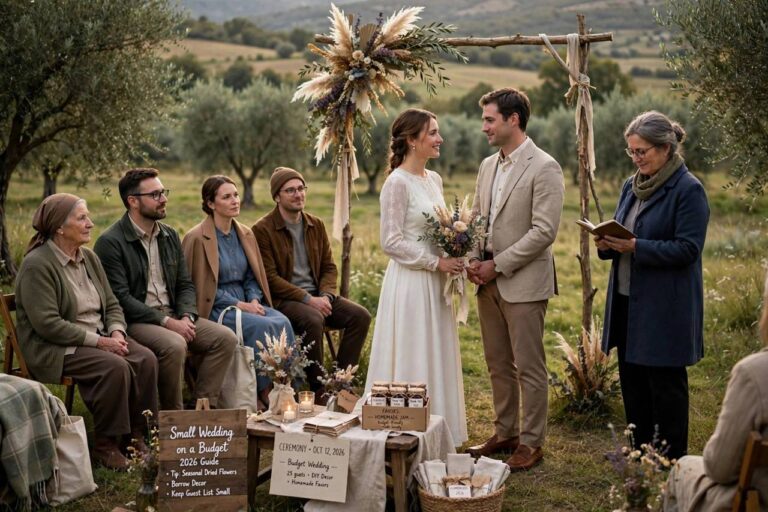
Wedding Seating Chart Etiquette: Rules for a Drama-Free Reception

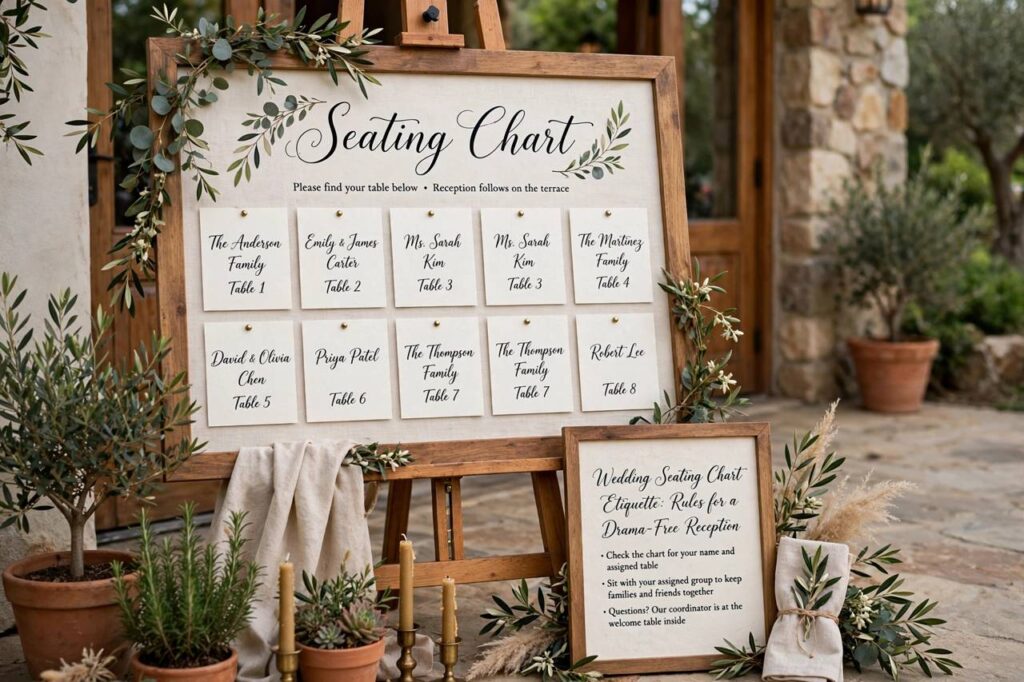
Every couple I have worked with hits the same wall about three weeks before the wedding: the seating chart. On paper it looks like a simple puzzle — guests, tables, done. In practice it is a delicate exercise in diplomacy, family politics, and logistics, and it is where wedding seating chart etiquette matters most. I have arranged charts for weddings of forty guests and four hundred, and the same principles hold: be thoughtful, be consistent, and never let perfection get in the way of a room full of people who came to celebrate you.
The Golden Rule of Wedding Seating Chart Etiquette
Seat people with people they will enjoy. That sounds obvious, but it is the principle every other rule serves. A seating chart is not about honoring hierarchy or displaying family alliances — it is about making sure every guest spends dinner with someone whose company they like. Every decision below flows from that one idea: your college friends together, your parents’ friends together, your grandparents near the dance floor where it is quieter, never an island of strangers who share nothing but a table number.
The corollary: you cannot please everyone, so stop trying. Some guest will grumble no matter what you do. Your obligation is a good-faith effort to make sensible, kind choices — not to engineer the social life of every attendee. Couples who accept this early finish their charts in an evening; couples who chase universal approval are still shuffling names the night before the wedding.
Wedding Seating Chart Etiquette: Head Table vs. Sweetheart Table
One of the first decisions, and one with genuine etiquette weight: do you sit with your wedding party at a head table, or alone together at a sweetheart table? Both are completely proper. A head table honors your closest people by putting them beside you; a sweetheart table gives you two a private pocket of calm in a hectic day — and, practically, lets your wedding party sit with their own dates instead of being split up.
My honest recommendation, after years of watching both: if your bridal party members mostly brought dates, choose the sweetheart table. Nothing deflates a wedding party member like spending dinner away from their partner while single at a table of other people’s dates. If your party is largely single and the group is tight, a head table is wonderful. There is no wrong answer here — only the one that suits your particular group.
Where do parents sit? Traditionally the couple’s parents sit at tables closest to the head or sweetheart table, along with grandparents and the officiant. Divorced parents who do not get along should sit at separate tables — etiquette sides firmly with your parents’ comfort over appearances here. Nobody is impressed by a photo of two people seething at opposite ends of table one.
Plus-Ones, Children, and the Tricky Cases
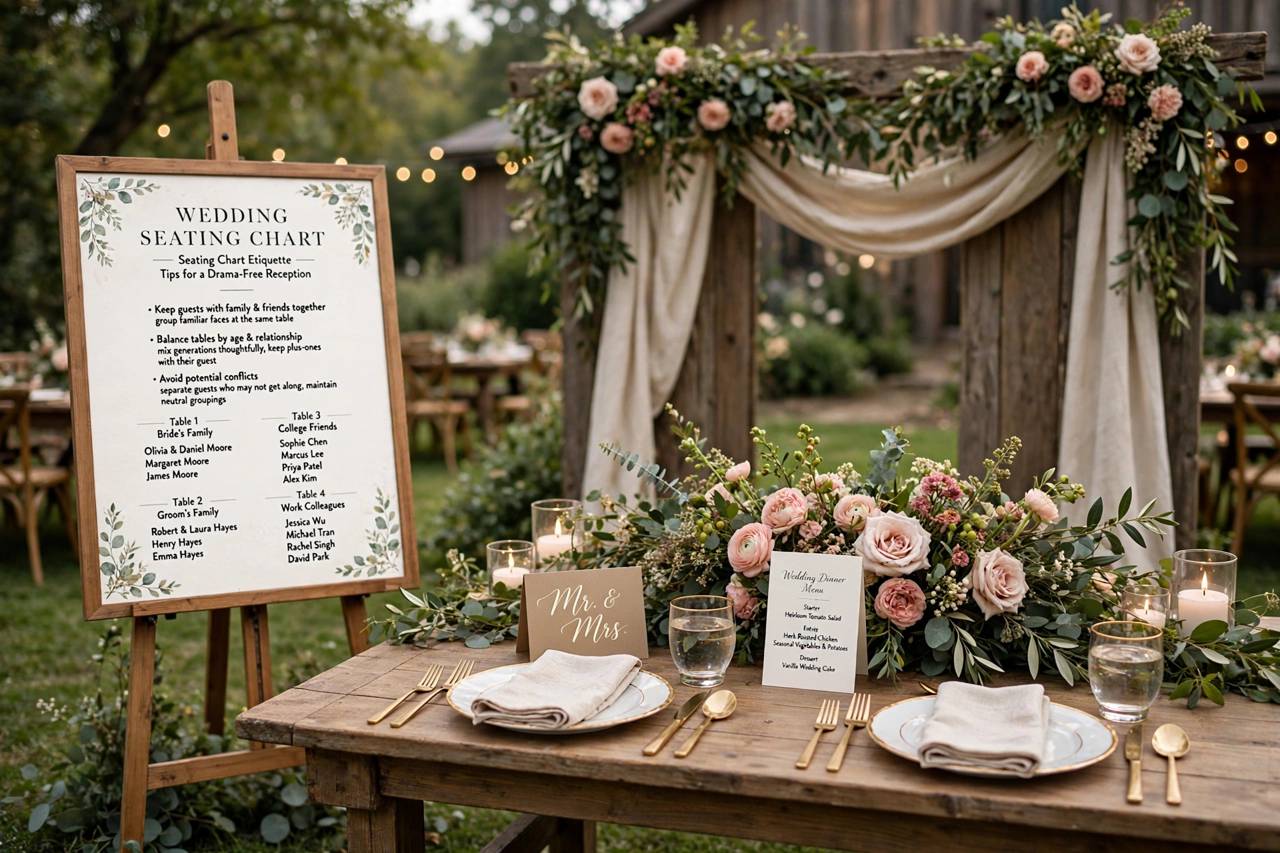
The plus-one question has firm etiquette: anyone in a serious relationship, engaged, or married gets their partner invited by name, and partners sit together — always. Splitting established couples is the single fastest way to offend guests, and there is no table-shape justification that makes it acceptable. For genuinely single guests, use your judgment: close friends traveling alone appreciate a plus-one, while local acquaintances are fine seated with mutual friends.
Children are a venue-by-venue call. If kids are invited, seat families together and consider a kids’ table for the older ones — children over about eight often have more fun together than wedged between adults making small talk. If children are not invited, be consistent and kind: no exceptions for the flower girl’s siblings that other parents do not get, and communicate the policy early so nobody is surprised.
A few other delicate situations and how etiquette handles them: exes of the couple attend only if you are genuinely comfortable, and they sit far from each other. Recently bereaved guests do well seated with their warmest friends, not with the couple’s rowdiest table. And guests with mobility needs get seats with easy access to restrooms and exits, near the front if they want to see the speeches — this is one detail that costs you nothing and means everything to them.
Wedding Seating Chart Etiquette for Table Shapes and Sizes
The practical side of etiquette is geometry. Round tables of eight to ten are the classic choice because everyone can converse; long banquet tables work beautifully for family-style dinners but make it hard for guests at opposite ends to talk. Whatever you choose, fill tables sensibly: eight guests at a ten-person table feels sparse and a little sad, while eleven at a ten-person table feels cramped. Ask your venue for the exact comfortable capacity — ‘seats ten’ on a floor plan often means ‘fits ten elbows’ in reality.
Keep groups intact where it matters. Work colleagues together, college friends together, neighbors together — but do not be afraid to split a large friend group across two adjacent tables if one table cannot hold them. Two tables of six, placed side by side, beat one table of ten plus two stranded guests. And resist the urge to use the chart to ‘fix’ relationships: seating feuding relatives together in hopes they will reconcile is not matchmaking, it is a gamble with your dinner hour.
For more ways to present the final chart, these wedding seating chart ideas cover display styles from framed calligraphy boards to escort-card walls — worth a look once your assignments are settled. And if you are still in the early planning phase, a solid wedding planning checklist will keep the seating chart from sneaking up on you at the last minute.
Timing: When to Finalize the Chart
Start the chart when RSVPs start arriving, not before — early assignments are fiction until you know who is actually coming. Build a draft with your must-sit-together groups and your must-separate pairs, then fill in around them. The final version should be locked about one week before the wedding, when you give the headcount to your caterer.
Then — and this is the part couples resist — leave three or four seats of slack in the plan. Someone’s flight gets cancelled, a guest arrives with an unexpected plus-one, a chair breaks. Venues handle these small shifts gracefully as long as you have not packed every table to capacity. Build your chart like a good host: firm enough to be organized, loose enough to absorb the unexpected.
Escort Cards, Place Cards, or a Big Board?
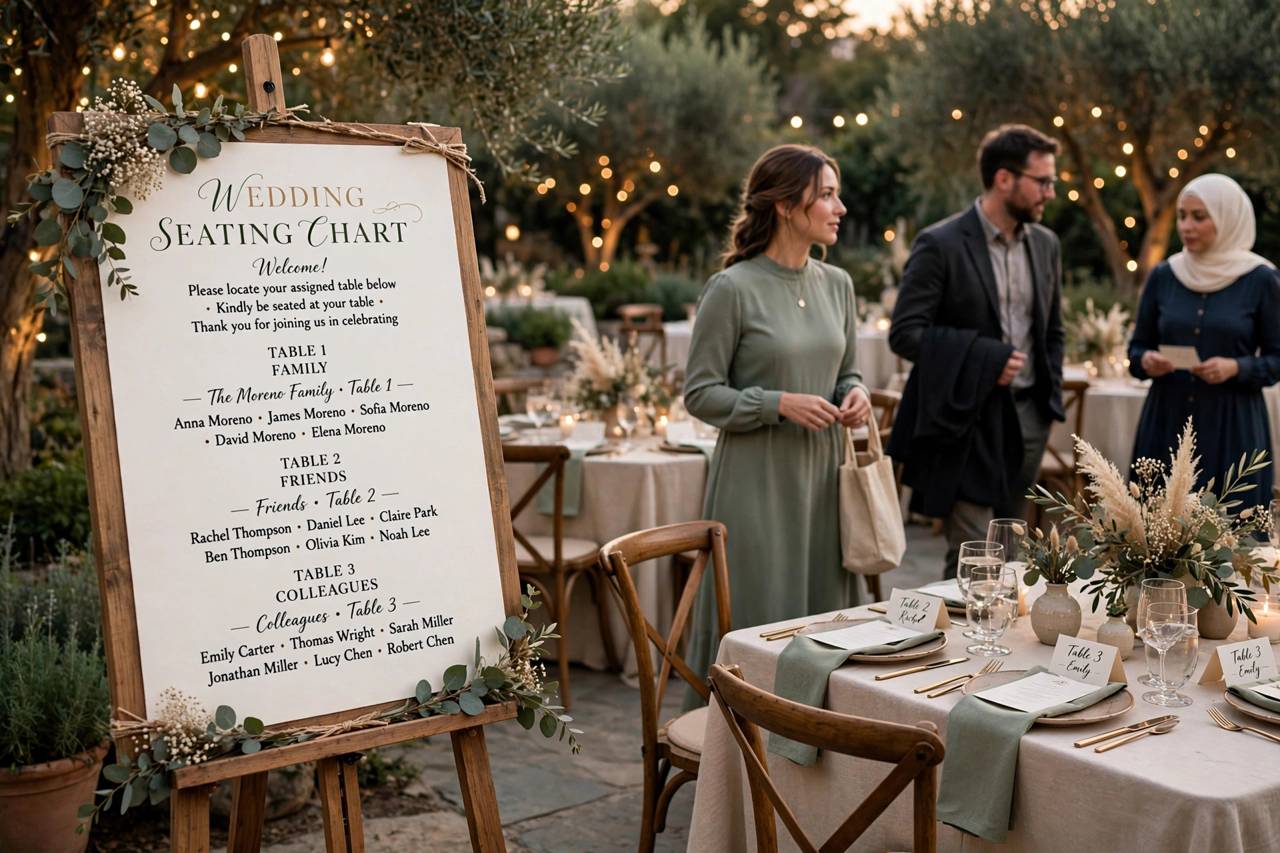
Once the assignments are done, you need to tell guests where to sit, and the format you choose sets the tone. A single large display board or framed chart at the entrance is the most popular option: guests scan for their name, note the table number, and walk in. It photographs beautifully and doubles as decor. Escort cards — small tented cards arranged alphabetically on a table — work well for weddings under about 150 guests, because the alphabetical sort makes finding a name fast even in a crowd.
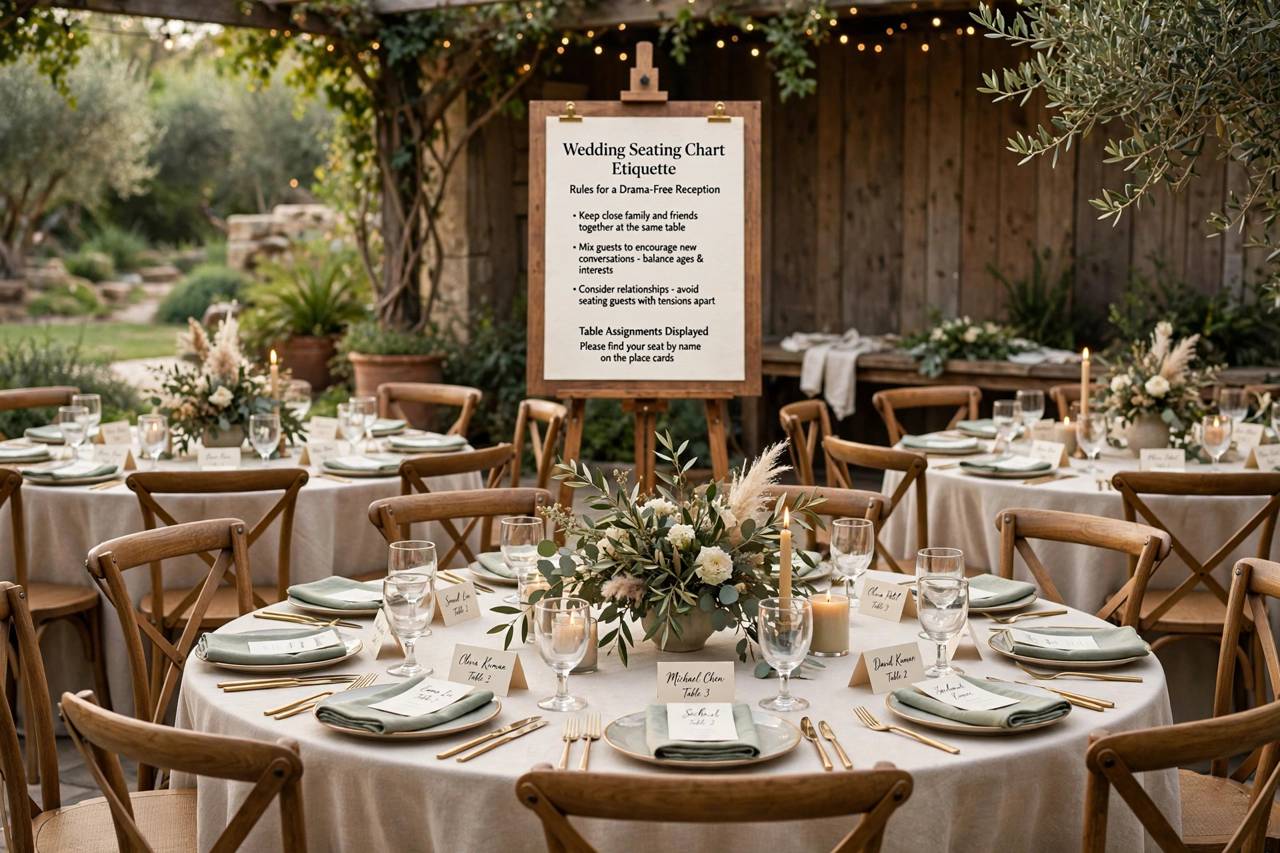
Place cards, which sit at each seat, are a step beyond: use them when you are assigning specific chairs rather than just tables, such as for the head table, the parents’ tables, or any table where you want certain people side by side. You can also combine formats — a board for table assignments plus place cards at the two or three tables where exact seats matter. Whichever you choose, alphabetize by last name, print the text large enough to read from a step back, and double-check every spelling against your RSVP list. A misspelled name on a beautiful card still stings.
The Mistakes I See Most Often
The singles table. Grouping every unattached guest together feels thoughtful and reads as a zoo exhibit. Scatter single guests among tables of their friends instead — they will have a far better evening.
The vendors’ afterthought. Your photographer, videographer, and planner are working through dinner. Etiquette says feed them a proper hot meal, seated at a vendor table out of the main sightlines but not exiled to a hallway. Confirm meal counts with your caterer.
The couple who never eats. You will be pulled in twelve directions during dinner. Ask your planner or a trusted bridesmaid to guard your plates — literally stand between you and well-wishers for fifteen minutes. I say this at every wedding I coordinate, and the couples who listen are always grateful.
Announcing assignments badly. The chart itself can be perfect and still fail if guests cannot find it. Place the display where the flow of arriving guests naturally passes it, in lighting good enough to read names, with cards or a board large enough that no one needs to squint. A beautiful chart nobody can read is just decoration.
Frequently Asked Questions
Is a seating chart required, or can guests choose their own seats?
Not required, but strongly recommended for plated dinners. Open seating works for casual cocktail-style receptions, but for a served meal it creates confusion, split groups, and awkward leftover chairs. A chart takes an evening of your time and saves an hour of guest chaos.
Do I have to invite plus-ones for every single guest?
No. Etiquette requires partners for anyone married, engaged, or in a serious relationship — those guests are a social unit. For truly single guests, plus-ones are a kindness, not an obligation. Prioritize guests traveling from out of town, who will know few people at the wedding.
Where should divorced parents sit?
At separate tables, each with their own comfortable group. Your wedding day is not the venue for forced reconciliation, and no guest expects you to stage one. Seat each parent near the people they enjoy most, and let them relax.
Should the wedding party sit with their dates?
Ideally, yes — which is one reason sweetheart tables are popular. If you choose a head table, seat dates together at a nearby table rather than scattering them among strangers. Nobody should spend your wedding dinner as the only outsider at a table of insiders.
How do I handle last-minute RSVP changes?
Keep a few flexible seats in your plan and finalize the chart a week out. For day-of surprises, have your planner or coordinator handle reseating quietly — guests should never see you rearranging place cards. A calm, invisible fix preserves the evening for everyone.