How to Build a Capsule Wardrobe: The Chic Guide to Doing More With Less

Darling, let me tell you something the fashion industry does not want you to know: the most stylish women I know own the fewest clothes. Learning how to build a capsule wardrobe is not about deprivation — it is about liberation. Imagine opening your closet every morning and loving everything in it. No decision fatigue, no “I have nothing to wear” while staring at forty options. Just a curated collection of pieces that work together, every single time.
A capsule wardrobe is a small, intentional collection of versatile clothing — typically 25 to 40 pieces per season — that you can mix and match into dozens of outfits. It is the antidote to fast-fashion chaos, and honestly? It is the chicest thing you can do for your style. Let me walk you through it, step by step.
What Exactly Is a Capsule Wardrobe?
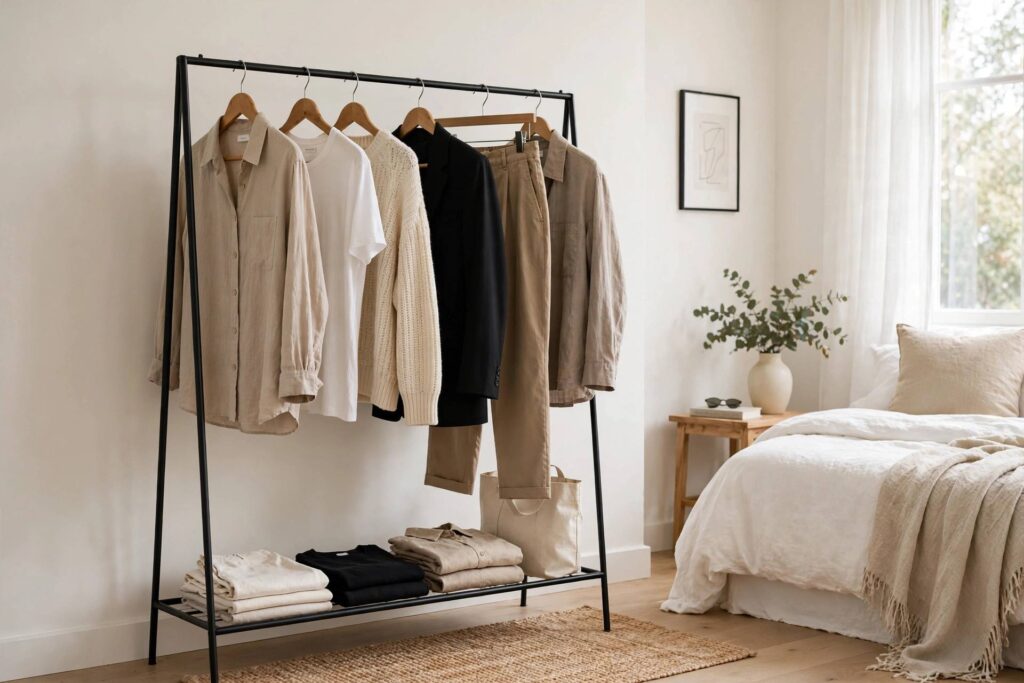
The concept is beautifully simple: instead of owning mountains of clothes you rarely wear, you curate a tight edit of high-quality, versatile pieces in a cohesive color palette. Every top works with every bottom. Every layer works over every dress. Getting dressed becomes effortless because the hard work — the editing — is already done.
A traditional capsule refreshes seasonally (think 3 months at a time), but I prefer a more flexible approach: a core of year-round essentials plus a small seasonal rotation. The number is not sacred. Some women thrive with 25 pieces; others need 40. What matters is intentionality — every piece earns its place.
Why a Capsule Wardrobe Works So Well
- You always look pulled together. When everything coordinates, “effortless” becomes your default.
- You save serious money. Fewer, better pieces beat constant cheap purchases that fall apart.
- Mornings become calm. Decision fatigue is real, and a capsule eliminates it.
- Your style gets sharper. Editing forces you to discover what you actually love wearing.
- It is kinder to the planet. Buying less and wearing more is the most sustainable fashion choice there is.
How to Build a Capsule Wardrobe, Step 1: The Honest Closet Audit
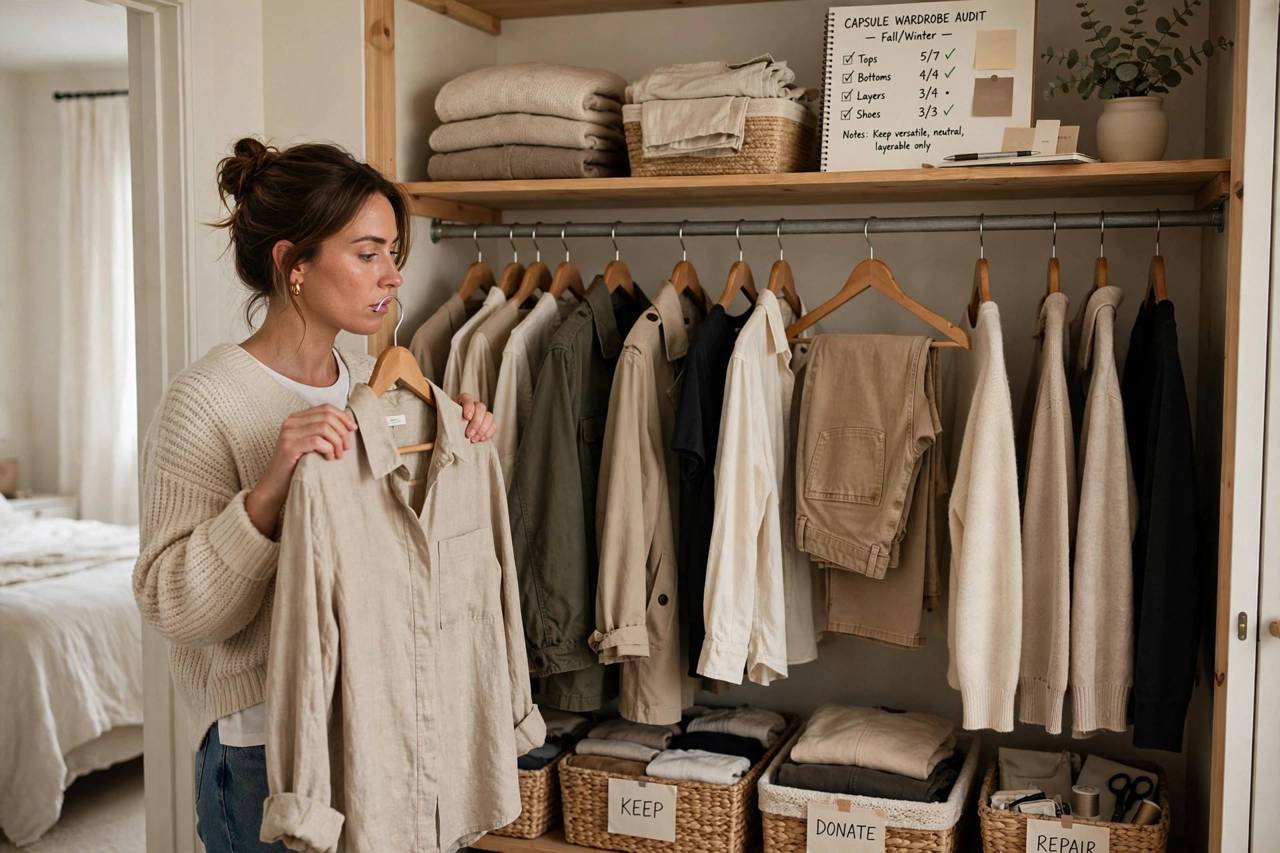
Before buying a single thing, we edit. Take everything out of your closet — yes, everything — and try the “love, like, lose” method. Be ruthless but honest:
- Love: Pieces you reach for constantly, that fit beautifully and make you feel amazing. These stay.
- Like: Fine, but not favorites. Keep only if they fill a genuine gap.
- Lose: Anything that does not fit, is damaged, you have not worn in a year, or makes you feel “meh.” Donate, sell, or recycle.
Pay attention to patterns in your “love” pile. Do you gravitate toward certain colors, fabrics, silhouettes? That is your personal style speaking — listen to it. This is the foundation of your capsule.
Step 2: Define Your Color Palette
This is where the magic happens. A cohesive palette is what makes 30 pieces feel like 100 outfits. Choose:
- 2–3 neutrals as your base: black, white, navy, gray, beige, camel. Pick the ones that flatter your skin tone.
- 1–2 accent colors you love: olive, burgundy, blush, cobalt — whatever makes your heart sing.
- Optional: 1 pattern family — stripes or a subtle print that plays well with your neutrals.
My personal formula? Black, white, and camel as neutrals, with burgundy as my accent. Everything mixes. When in doubt, lean neutral — neutrals are the hardest-working pieces in any wardrobe.
Step 3: The Essential Pieces
Here is my tried-and-true checklist of capsule foundations. Adapt it to your lifestyle and climate — a work-from-home creative needs different pieces than a corporate litigator.
Tops (8–10)
- 2–3 quality basic tees (white, black, neutral)
- 2 blouses or button-downs (one white, one in your accent or a stripe)
- 2 sweaters or knits (a crewneck and a cardigan or turtleneck)
- 1–2 elevated tops for evenings out
Bottoms (5–7)
- Dark-wash jeans that fit like a dream
- Black trousers or tailored pants
- 1 skirt (midi is endlessly versatile)
- Tailored shorts or light trousers for warm weather
Layers and Dresses (5–7)
- A blazer that sharpens everything
- A classic trench or wool coat (season dependent)
- A denim or leather jacket
- 1–2 dresses: one day dress, one that dresses up
Shoes and Accessories (5–8)
- White sneakers, black ankle boots, one elegant flat or heel
- A structured handbag, a silk scarf, simple jewelry
Notice what is missing? Trend pieces. Your capsule is built on classics; trends come in as one or two small seasonal accents — a bag, a scarf, a pair of earrings — never as foundation pieces.
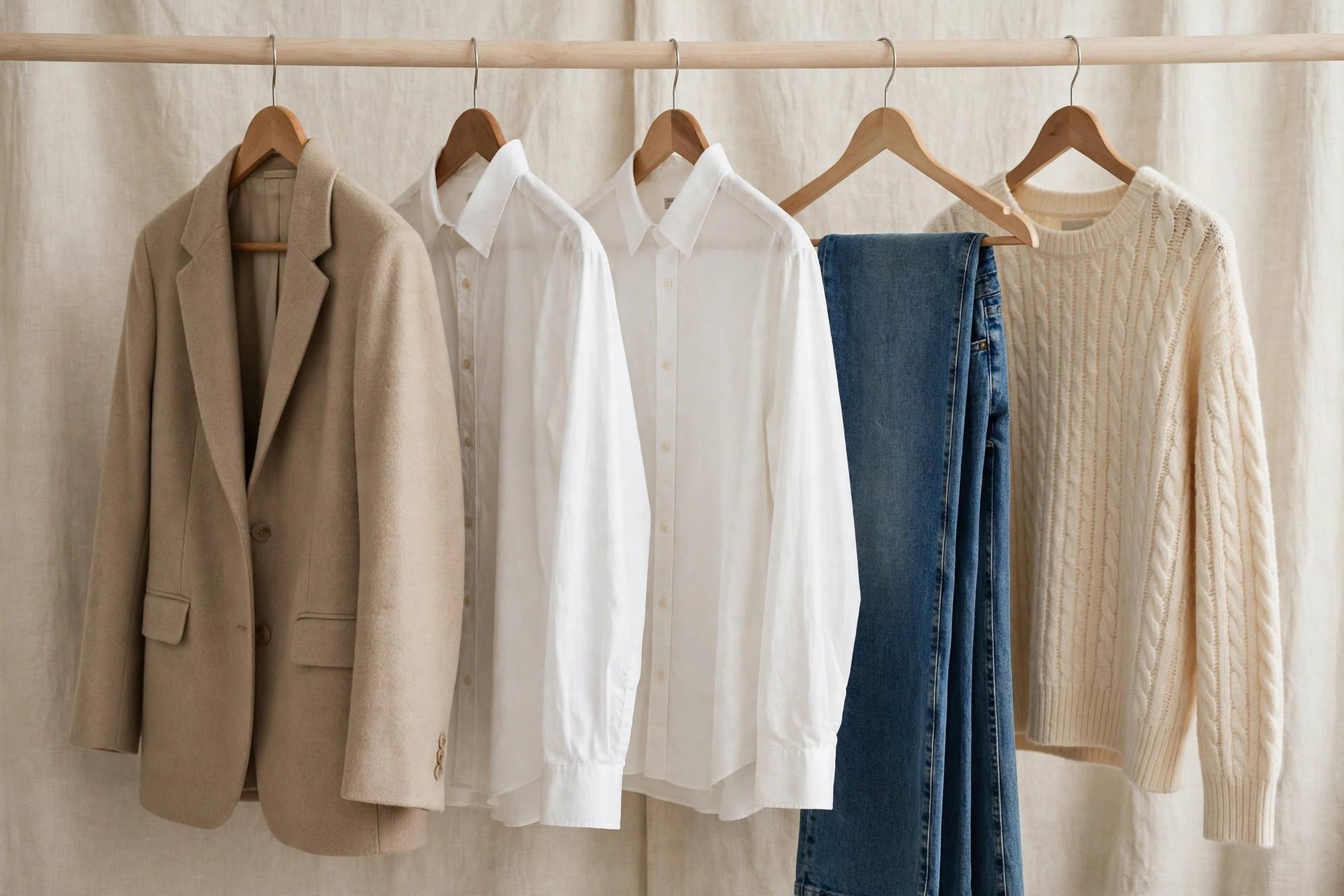
Step 4: Master the Styling Formulas
A capsule only works if you know how to wear it. Memorize these five formulas and you will never stare blankly at your closet again:
- The uniform: great jeans + white tee + blazer + ankle boots. Works for 80% of life.
- Monochrome: one color head to toe (all black, all camel). Instantly chic, zero effort.
- The third piece: any simple outfit + one layer (blazer, scarf, jacket). The third piece is what makes an outfit look intentional.
- Dress up, dress down: the same midi dress with sneakers for day, heels and jewelry for night.
- Texture mixing: silk with denim, knit with leather. Texture adds richness when your palette is neutral.
Pro tip from years of doing this: lay out outfits the night before for your first two weeks. It trains your eye, and soon the combinations become second nature.
Step 5: Shop Strategically (the Fun Part)
Once you know your gaps, shop with a list — never browse aimlessly. My rules for capsule shopping:
- Quality over quantity, always. One perfect blazer beats three mediocre ones. Check seams, fabric weight, and lining.
- The “three outfits” test: if a piece does not work in at least three outfits with what you own, it does not come home.
- Fit is everything. Budget for tailoring. A $40 hem can make a $60 dress look like $600.
- Sleep on it. If you are not still thinking about it tomorrow, you did not want it.
- One in, one out. Maintain your capsule by removing something when you add something.
Seasonal Transitions Without the Overwhelm
When seasons change, do a mini-audit: store off-season pieces (clean, in breathable bags), pull out the new season’s edit, and reassess gaps. Most of your core — jeans, blazers, tees, boots — works year-round. You are typically only swapping 8 to 12 seasonal pieces. This 30-minute ritual, done four times a year, keeps your wardrobe forever fresh.
Mistakes to Avoid
- Copying someone else’s capsule exactly. Her lifestyle is not yours. Adapt every list.
- Going too minimal too fast. Start by editing, not purging everything. You can tighten over time.
- Ignoring your actual life. If you never attend galas, you do not need three gowns. Dress for the life you have.
- Buying cheap “basics.” Basics get the most wear, so they deserve the best quality you can afford.
- Forgetting underpinnings. Great outfits need good foundations — proper undergarments and well-kept shoes matter enormously.
Capsules for Different Lifestyles
There is no universal capsule – the right edit depends entirely on how you actually spend your days. Let me sketch three common versions so you can see how the framework flexes.
The creative professional working from home might build around beautiful knits, dark jeans, relaxed blazers, and one pair of boots she adores, with a single silk blouse for video calls that need polish. Comfort leads, but nothing looks sloppy.
The corporate dresser needs more structure: tailored trousers in black and navy, crisp shirts, two blazers, a sheath dress, closed-toe heels and polished flats. Her capsule leans formal, with weekend pieces – great denim, sneakers, soft knits – kept deliberately separate so work and rest feel distinct.
The busy parent prioritizes washability and movement: stretch denim, machine-washable tops, a great sneaker, a crossbody bag that survives playgrounds, and one “nice” outfit for dinners out. Her luxury is a perfect trench that makes the school run feel chic.
Notice that all three follow the same rules – cohesive palette, versatile pieces, everything mixes – but the contents are completely different. That is the beauty of it: the capsule is a method, not a uniform. Build for your real calendar, not an imaginary one, and revisit each season as your life shifts.
One last piece of advice, and I mean this: give your capsule a month before judging it. The first week feels strange – you will reach for things that are not there. By week three, something clicks. Getting dressed becomes a two-minute pleasure instead of a fifteen-minute negotiation. That is when you will wonder why you ever did it any other way. Style, it turns out, was never about having more – it was about choosing well.
FAQ
How many pieces should be in a capsule wardrobe?
Most capsules range from 25 to 40 pieces per season, not counting underwear, workout gear, or sleepwear. Start wherever feels comfortable — you can always tighten your edit over time. The goal is a wardrobe where everything works together, not a specific number.
How do I build a capsule wardrobe on a budget?
Start by shopping your own closet — most women already own 60% of a capsule. Then fill gaps slowly with quality secondhand finds, end-of-season sales, and one investment piece at a time. A capsule actually saves money because you stop impulse-buying clothes that do not coordinate.
Can a capsule wardrobe work for different dress codes?
Absolutely. The key is choosing versatile pieces and using the “third piece” rule. A blazer over jeans works for smart-casual; the same blazer over tailored trousers works for business. Add or remove polish with shoes and accessories rather than owning separate wardrobes.
What colors work best for a capsule wardrobe?
Neutrals — black, white, navy, gray, beige, camel — form the hardest-working base because they all mix together. Add one or two accent colors you love for personality. Choose neutrals that flatter your skin tone; the “right” palette is the one you reach for happily.
How often should I update my capsule wardrobe?
Do a light review each season (about 30 minutes): store off-season items, check for worn-out pieces, and note any gaps. Most core pieces last for years. Only replace what is genuinely worn out or no longer fits your lifestyle — that is the whole point.