How to Start Journaling for Beginners: A Warm, Guilt-Free Guide

Let us start with something important: you do not need beautiful handwriting, profound thoughts, or an hour of free time to keep a journal. If you have ever bought a gorgeous notebook, written in it for three days, and then felt guilty every time you saw it on your shelf — you are exactly who this guide is for. Learning how to start journaling for beginners is not about discipline or literary talent. It is about building one small, kind habit: a few honest minutes with yourself, on paper.
I am Olivia, and I have journaled badly, brilliantly, and everything in between for over a decade. I have filled notebooks during hard seasons and abandoned them during busy ones, and I am here to tell you that the “right way” to journal is simply the way you will actually do. This guide will walk you through why it works, how to choose your tools, seven beginner-friendly methods to try, and — most importantly — how to build the habit without the guilt.

How to Start Journaling for Beginners: Forget Everything You Think You Know
Most people fail at journaling before they begin, because they are picturing the wrong thing. They imagine a leather-bound diary, nightly entries in complete sentences, deep reflections worthy of publication. No wonder it feels intimidating.
Here is what journaling actually looks like for most people who stick with it: messy, short, inconsistent, and enormously helpful anyway. Bullet points count. Half-sentences count. Writing “I am too tired to write” and closing the notebook counts — you showed up, and showing up is the entire game.
The research backs this up. Psychologist James Pennebaker’s expressive-writing studies found that even 15 minutes of writing about emotional experiences, a few times a week, produced measurable benefits for mood and even immune function. The participants were not writing beautifully. They were writing honestly. That is the only standard that matters.
So let us officially retire the rules. There is no required length, no required frequency, no required format. There is only you, a page, and a few minutes. Everything below is a menu, not a mandate.
Why Journaling Works (The Gentle Science)
It helps to know why something works — motivation sticks better when the mechanism makes sense. Here is the short version:
It externalizes the mental loop. Anxious thoughts gain power by circling in your head. Writing them down moves them somewhere finite — a page has edges; your mind at 2 a.m. does not. Researchers call this “offloading,” and it measurably frees up working memory.
It creates distance. Reading your own words back engages a slightly more objective part of your brain. Problems that felt enormous in your head often look manageable on paper. You become, briefly, your own compassionate witness.
It reveals patterns. After a few weeks, entries start rhyming. The Sunday-night dread. The energy dip after certain meetings. The things that reliably lift you. Your journal becomes a personal dataset — insight you cannot get from memory alone, because memory edits.
It marks time kindly. Flipping back through old entries is one of the most underrated pleasures in life. You see how far you have come, remember things you would have lost, and — often — realize the thing you were so worried about worked out fine.
Choose Your Tools: Pen, App, or Both
The best journaling tool is the one you will actually reach for. Let us compare honestly:
Paper notebooks. The classic for a reason. Writing by hand is slower, which forces a different kind of thinking — studies suggest it aids memory and emotional processing. There is no battery, no notification, no temptation to check email. Downsides: not searchable, not backed up, and some people find their hand cramps or their handwriting embarrasses them. (Nobody will read it. Write ugly.)
Apps and digital journals. Searchable, backed up, always with you, and you can type faster than you write. Many apps offer prompts, mood tracking, and photo attachments. Downsides: the phone is also where distractions live, and typing can feel less “real” to some people. If you go digital, consider an app with minimal design — the fewer features, the fewer excuses to fiddle instead of write.
My honest advice: start with whatever is closest right now. A spare notebook, a notes app, the back of an envelope. Fancy supplies are a form of procrastination dressed as preparation. You can upgrade later, once the habit exists. The habit is the product; the notebook is packaging.
7 Beginner-Friendly Journaling Methods (Pick One)
You do not need to master all of these. Read through, notice which one makes you think “oh, I could do that,” and start there.
1. The five-minute dump. Set a timer for five minutes. Write whatever is in your head, in any order, without stopping. When the timer rings, you are done. This is the lowest-barrier method that exists, and it is genuinely effective.
2. Three lines a day. Just three lines: one thing that happened, one thing you felt, one thing you are grateful for. Takes two minutes. On hard days, the gratitude line can be as small as “warm socks.” Small counts.
3. Morning pages. From Julia Cameron’s The Artist’s Way: three longhand pages, first thing, stream-of-consciousness. It is a bigger commitment, but devotees swear it clears mental static like nothing else. Try it for a week before judging.
4. The prompted entry. If blank pages paralyze you, borrow someone else’s questions: “What do I need right now?” “What am I avoiding?” “What would I tell a friend in my situation?” Prompts are training wheels, and training wheels are honorable.
5. The gratitude journal. Three specific gratitudes a day. Specificity matters — “my sister’s text that made me laugh on the bus” beats “family.” Research links this practice to improved mood and even better sleep.
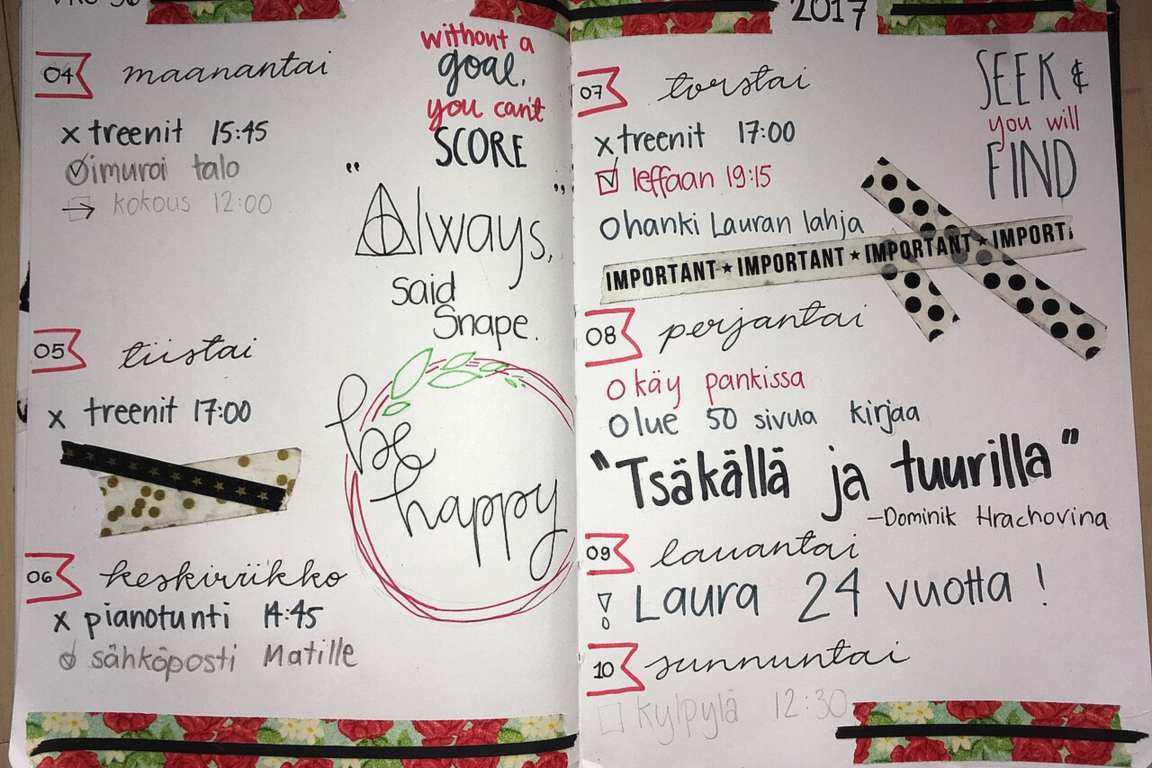
6. The one-line-a-day journal. Literally one line per day, often in a five-year diary format where you see the same date across years. Minimal effort, magical long-term payoff.
7. The unsent letter. Write to the person, situation, or past self you need to address — with no intention of sending. This is the method therapists recommend most for processing difficult emotions, and it stays private forever.
Building the Habit Without the Guilt
Here is where most beginners stumble, and it is never about the writing. It is about the story they tell themselves when they miss a day. So let us rewrite that story in advance:
Attach it to something you already do. Habit research is clear: new habits stick best when anchored to existing ones. Journal with your morning coffee, right after brushing your teeth, or in the last five minutes before sleep. If you are building a calmer start to the day, journaling pairs beautifully with a thoughtful morning routine — the two habits reinforce each other.
Lower the bar until it is laughable. Commit to one sentence. Not one page — one sentence. You will usually write more, but the commitment is tiny enough that “I don’t have time” stops working as an excuse. Tiny commitments survive busy weeks; ambitious ones do not.
Miss a day? Nothing happened. This is the most important paragraph in this guide. Skipping days does not ruin journaling. There is no streak to protect, no teacher checking your homework. The notebook does not judge you; it is paper. Pick it up again whenever. The people who journal for years are not the ones who never missed a day — they are the ones who always came back.
Make it pleasant. Light a candle. Use the pen you like. Sit in the cozy chair. This is not about aesthetic Instagram journals (though if that delights you, enjoy) — it is about giving your brain a small reward signal. Habits wrapped in pleasure stick; habits wrapped in obligation do not. There is even a whole philosophy of cozy intentional living — the hygge lifestyle — that pairs wonderfully with an evening journaling ritual.
Review occasionally, gently. Once a month, flip back through your entries. Not to judge your past self, but to notice: what kept coming up? What changed? What do you want more of? This is where journaling quietly becomes self-knowledge.

What to Do When You “Have Nothing to Write”
Everyone hits this wall, usually in week two. Here is your emergency kit:
Write about the wall itself: “I have nothing to write and that is annoying because…” — you will be surprised how fast that turns into something real. Describe your surroundings in detail. List ten things you can hear. Write about what you wish were different. Copy out a quote you like and argue with it.
And remember: “nothing to write” is often a feeling, not a fact. Underneath it is usually something you do not quite want to look at yet. You do not have to look at it today. Write about the weather instead. The page does not mind. It will be there tomorrow, patient as ever, when you are ready.
FAQ
How do I start journaling if I have never done it before?
Start absurdly small: one sentence a day, in any notebook or app, about anything. Pick one method from this guide (the five-minute dump or three-lines-a-day are easiest), attach it to an existing habit like morning coffee, and give yourself permission to be messy and inconsistent.
What should I write about in a journal?
Anything honest: what happened today, how you feel, what you are worried about, what you are grateful for, decisions you are weighing. If you are stuck, use prompts like “What do I need right now?” or “What would I tell a friend in my situation?”
Is it better to journal in the morning or at night?
Neither is objectively better — it depends on your goal. Morning journaling clears mental static and sets intentions; evening journaling processes the day and aids reflection. Try both for a week each and keep the one you actually do.
How long should a journal entry be?
As long as it needs to be. Research shows benefits from as little as 15 minutes a few times a week, but even one sentence counts toward building the habit. Length is far less important than honesty and regularity.
Will anyone read my journal?
Only if you show them. Your journal is private by default — many people find that writing “for no audience” is exactly what makes it freeing. If privacy worries you, use a lockable app or keep your notebook somewhere only you access.