What Is Generative AI? A Friendly Guide to How It Works

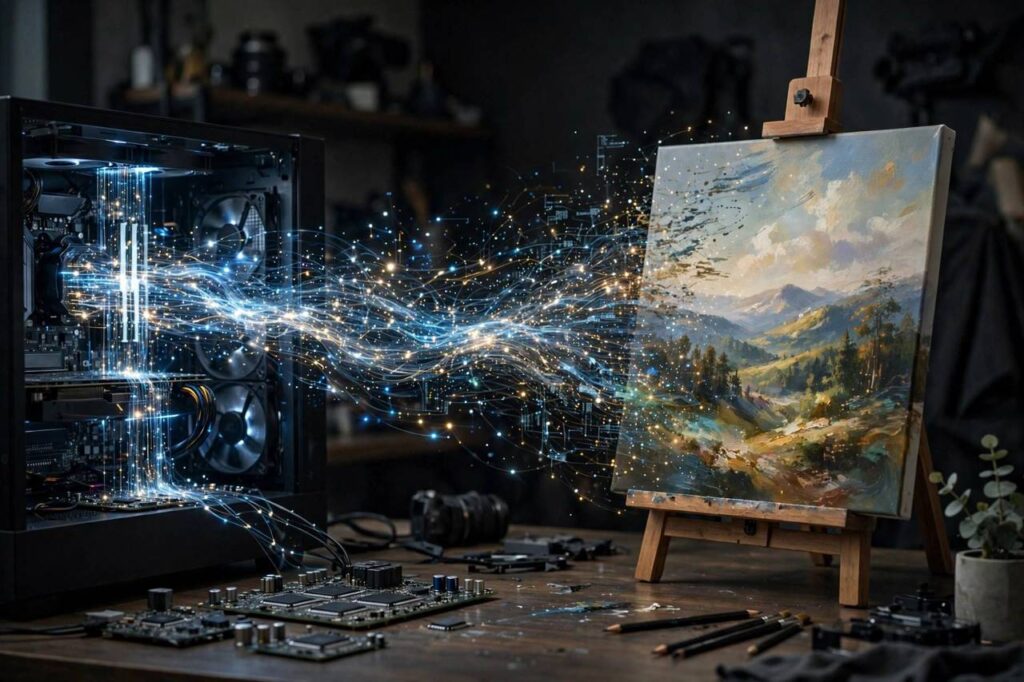
You have seen the headlines: AI writing essays, painting portraits, composing music, even coding apps from a single sentence. It is natural to wonder what is actually going on behind the curtain. So what is generative AI? Simply put, generative AI is a type of artificial intelligence that creates new content — text, images, audio, video, or code — rather than just analyzing or classifying existing data. Where older AI answered questions about the world, generative AI makes things that did not exist before.
Here is the part that matters for you: you do not need to be a programmer to understand it or use it. I will explain how generative AI actually works (no math degree required), the main types you will run into, what it is genuinely good at, where it still stumbles, and how to start using it well today. Think of this as the friendly tour I wish someone had given me when I first heard the term.
What Is Generative AI, Exactly?
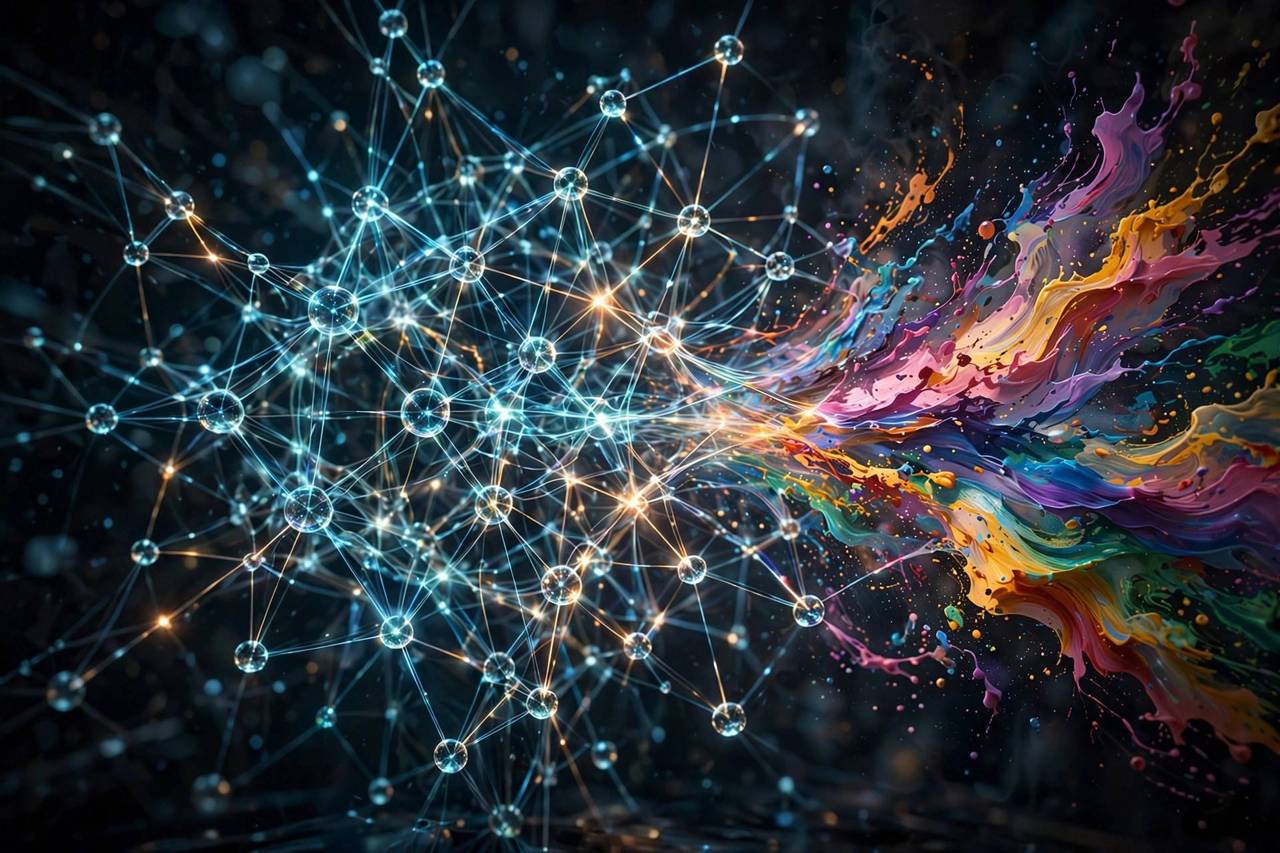
Every AI system learns patterns from data. The “generative” part means the system learned those patterns so deeply that it can produce brand-new examples that follow them. A traditional spam filter looks at an email and decides “spam” or “not spam” — that is discriminative AI, sorting things into buckets. A generative model looks at millions of emails and learns to write a convincing new one from scratch.
The breakthrough behind the current wave is a model architecture called the transformer, introduced in a 2017 research paper. Transformers are exceptionally good at understanding context — which words relate to which other words in a long passage. That ability to handle context is what lets modern systems write coherent essays, hold multi-turn conversations, and generate images that actually match a detailed description.
You have already used generative AI whether you know it or not. The autocomplete finishing your sentences in Gmail, the “magic eraser” removing strangers from your photos, the voice that reads your audiobook aloud — all generative. The difference now is that the tools have become so capable that they crossed from “neat trick” into “genuinely useful coworker.”
How Generative AI Actually Works (Without the Math)
Imagine teaching someone to cook by letting them taste ten thousand dishes. They would never see a recipe, but eventually they would develop an instinct: this flavor goes with that one, this texture follows that step. Generative AI learns the same way — by consuming enormous amounts of content and building a statistical instinct for “what comes next.”
For text models (called large language models, or LLMs), training works like the world’s most intense game of fill-in-the-blank. The model sees billions of sentences with words hidden, guesses the missing words, and adjusts itself every time it is wrong. After enough rounds, it develops a remarkably good sense of language — grammar, facts, reasoning patterns, even tone and style.
Image models learn differently but rhymingly. Many use a process called diffusion: training starts with a clear image, noise is gradually added until it is pure static, and the model learns to reverse the process — turning static back into a coherent picture. When you type “a watercolor fox in a snowy forest,” the model starts from noise and sculpts it, step by step, toward something matching your description. If you are curious about the details, this guide to how AI image generators work goes deeper.
One honest caveat: these models do not “understand” the way you do. They are extraordinarily sophisticated pattern-matchers. That distinction matters, because it explains both their superpowers and their mistakes — which we will get to.
The Main Types of Generative AI
Generative AI is not one tool; it is a family. Here are the members you will actually encounter:
Text generators. The chatbots and writing assistants — ChatGPT, Claude, Gemini and their cousins. They draft emails, summarize documents, brainstorm ideas, explain concepts, and write code. This is the type most people meet first, and it remains the most versatile.
Image generators. Tools like Midjourney, DALL-E, and Stable Diffusion create images from text descriptions. Marketers use them for mockups, authors for book covers, hobbyists for pure fun. Quality has leapt from “melting faces” to “wait, that is not a photograph?” in about two years.
Audio and voice generators. These clone voices, narrate text naturally, compose music, and clean up recordings. Podcasters use them to fix flubbed words without re-recording; filmmakers use them for dubbing.
Video generators. The newest sibling. Describe a scene, get a short video clip. Still rough around the edges — hands remain a nemesis — but improving fast enough that stock footage companies are nervous.
Code generators. Tools like GitHub Copilot suggest code as developers type. They are trained on public code repositories and act like a tireless pair-programmer. Experienced developers report genuine productivity gains; beginners get a patient tutor that never sleeps.

What Generative AI Is Genuinely Good At
Let us be concrete about where these tools earn their keep:
First drafts of anything. The blank page is the enemy of all creative work. Generative AI is an exceptional first-draft machine — outline the blog post, sketch the email, storyboard the presentation. You bring the judgment; it brings the momentum.
Summarization and translation. Feed it a 40-page report, get the three paragraphs that matter. Paste in a contract clause, get it in plain English. Paste in Spanish, get English. This is unglamorous, enormously useful work.
Brainstorming at scale. Need twenty headline ideas, ten gift suggestions, or five ways to phrase a difficult message? The model will produce them in seconds. Most will be mediocre; two will be genuinely good. That is a fine trade.
Personalized tutoring. Ask it to explain photosynthesis “like I am twelve,” then “like I am a biology undergrad,” and it adapts. A tutor with infinite patience that adjusts to your level is something previous generations could not buy at any price.
Creative exploration. Writers use it to test plot twists. Designers use it to explore visual directions before committing. If you want to experiment with AI art yourself, start with these beginner-friendly AI art generators — most have free tiers.
The Honest Limitations (Read This Part)
I would be doing you a disservice if I only sang praises. Here is where generative AI still stumbles:
It hallucinates. Models sometimes state false things with total confidence — invented citations, wrong dates, plausible-sounding nonsense. This is not lying; it is the pattern-matcher producing a statistically likely sentence that happens to be wrong. Never treat AI output as verified fact. Check anything important.
It has a knowledge cutoff. Most models were trained on data up to a certain date. Ask about last week’s events and you may get confident fiction. Many newer tools can browse the web, which helps, but the base model itself is frozen in time.
It can be biased. Models learn from human-created content, which contains human biases. They can reflect stereotypes or produce skewed results. Responsible providers work to reduce this, but it is an ongoing challenge, not a solved problem.
It lacks true understanding and accountability. A model can write a convincing legal letter without knowing the law, or medical text without knowing medicine. The output reads authoritative; the comprehension is not there. For high-stakes decisions, a qualified human must stay in the loop. Always.
Copyright and ownership are murky. Models trained on public web content raise real questions: who owns AI-generated work? Can training on copyrighted material be infringement? Courts and lawmakers are still working this out, and the rules differ by country.
How to Start Using Generative AI Well Today
Ready to try it? A few hard-won tips from someone who uses these tools daily:
Be specific in your prompts. “Write a marketing email” gets you generic mush. “Write a 150-word marketing email for a neighborhood bakery’s new sourdough loaf, warm tone, aimed at busy parents” gets you something usable. Context is the difference between a toy and a tool.
Iterate like a conversation. Your first prompt is a starting point, not a final exam. “Make it shorter.” “More formal.” “Give me three versions.” The models shine in back-and-forth — treat it like briefing a smart intern.
Give it a role. “Act as a patient math tutor” or “You are an editor who hates jargon” dramatically improves output. Roles focus the model’s vast pattern-library on the style you need.
Verify important claims. I said it before; it bears repeating. If the output matters — facts you will publish, numbers you will present, advice you will act on — check it against a reliable source.
Keep sensitive data out. Do not paste passwords, private client data, or unreleased company information into public AI tools. Assume anything you type could be seen by someone else, because in many cases it can be.

What Generative AI Means for Work and Creativity
The honest answer: it is a tool, and like every powerful tool, its impact depends on the hands holding it. Writers who use AI to brainstorm produce more; writers who use it to replace thinking produce mush. Designers who use it to explore directions work faster; designers who ship raw AI output produce sameness.
The pattern from every previous creative technology — the camera, the synthesizer, Photoshop — is the same: the tool does not replace the craftsperson; it changes what craft looks like. Judgment, taste, and domain knowledge become more valuable, not less, because they are what separate good AI-assisted work from the flood of mediocre output.
My advice: learn the tools now, while the learning curve is still gentle. The people who thrive will not be the ones who fear generative AI or the ones who trust it blindly — they will be the ones who understand what it is, what it is not, and how to aim it well.
FAQ
What is generative AI in simple terms?
Generative AI is artificial intelligence that creates new content — text, images, music, video, or code — by learning patterns from huge amounts of existing data and then producing original examples that follow those patterns.
What is the difference between generative AI and regular AI?
Regular (discriminative) AI sorts and predicts: is this email spam, is this tumor malignant, will this customer churn. Generative AI creates: it writes the email, draws the picture, composes the song. Same family, opposite direction.
Is generative AI free to use?
Many tools offer free tiers — ChatGPT, Claude, Gemini, and several image generators all have free versions with generous limits. Paid plans (typically around $20/month) unlock faster responses, newer models, and higher usage caps.
Can generative AI replace human workers?
It can automate specific tasks, especially drafting, summarizing, and brainstorming. But it still needs human judgment for accuracy, taste, accountability, and anything high-stakes. The realistic near-term picture is AI-assisted workers, not AI-replaced ones.
How do I know if content was made by generative AI?
It is getting harder. AI text detectors exist but are unreliable. Some platforms now label AI-generated content, and some generators embed invisible watermarks. The practical approach: evaluate content on its accuracy and quality, regardless of origin.