Best Paint Colors for Small Rooms (Make Any Space Feel Bigger)

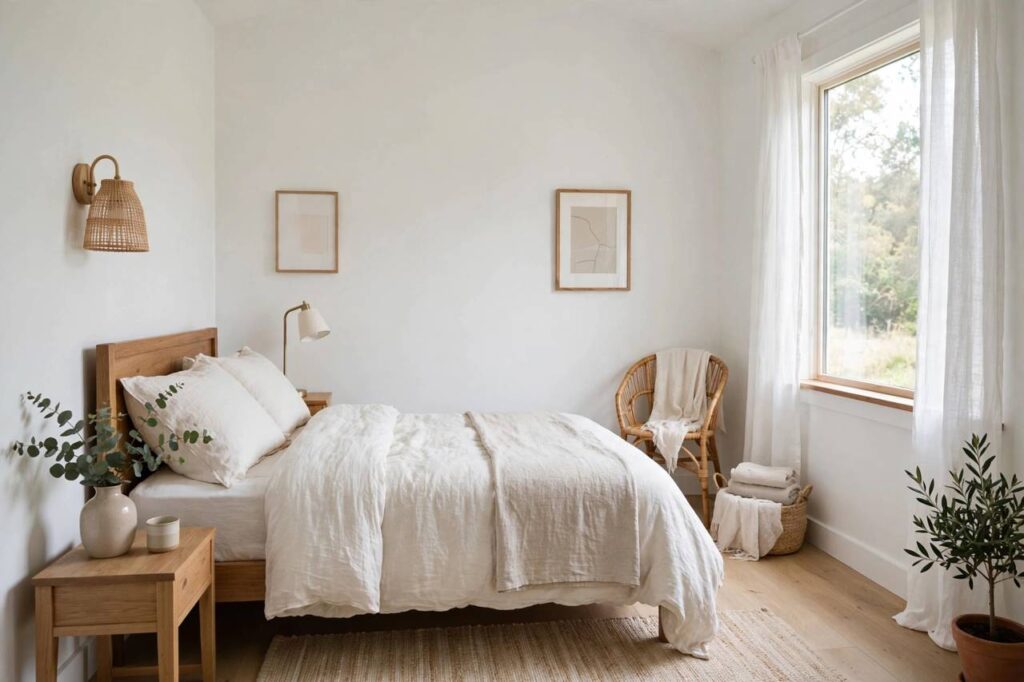
Here’s the thing about small rooms: choosing the best paint colors for small rooms can make them feel twice as big, and the wrong choice can make them feel like a closet. I’ve painted enough small bedrooms, bathrooms, and home offices to know that color choice isn’t just decoration — it’s practically architecture.
Forget the old rule that small rooms must be white. That’s lazy advice. The best paint colors for small rooms include lights, darks, and bolds — what matters is HOW you use them. Let me show you.
How Paint Color Actually Affects Room Size Perception
Before the color picks, understand the mechanics. It’s not magic — it’s how your eyes work:
- Light colors reflect more light, which makes walls feel farther away. That’s the classic “white makes rooms bigger” effect, and it’s real.
- Dark colors absorb light, which can make walls recede visually — a dark wall can actually feel farther away than a medium one, creating depth. This is why the “dark colors always shrink rooms” rule is wrong.
- Low contrast expands space. When walls, trim, and ceiling are similar tones, your eye doesn’t stop at boundaries — the room reads as one continuous space. High contrast (dark walls, bright white trim) chops the room into pieces visually.
- Cool colors recede; warm colors advance. Blues and greens tend to make walls feel farther; reds and oranges bring them closer. Useful when you want a specific wall to “disappear.”
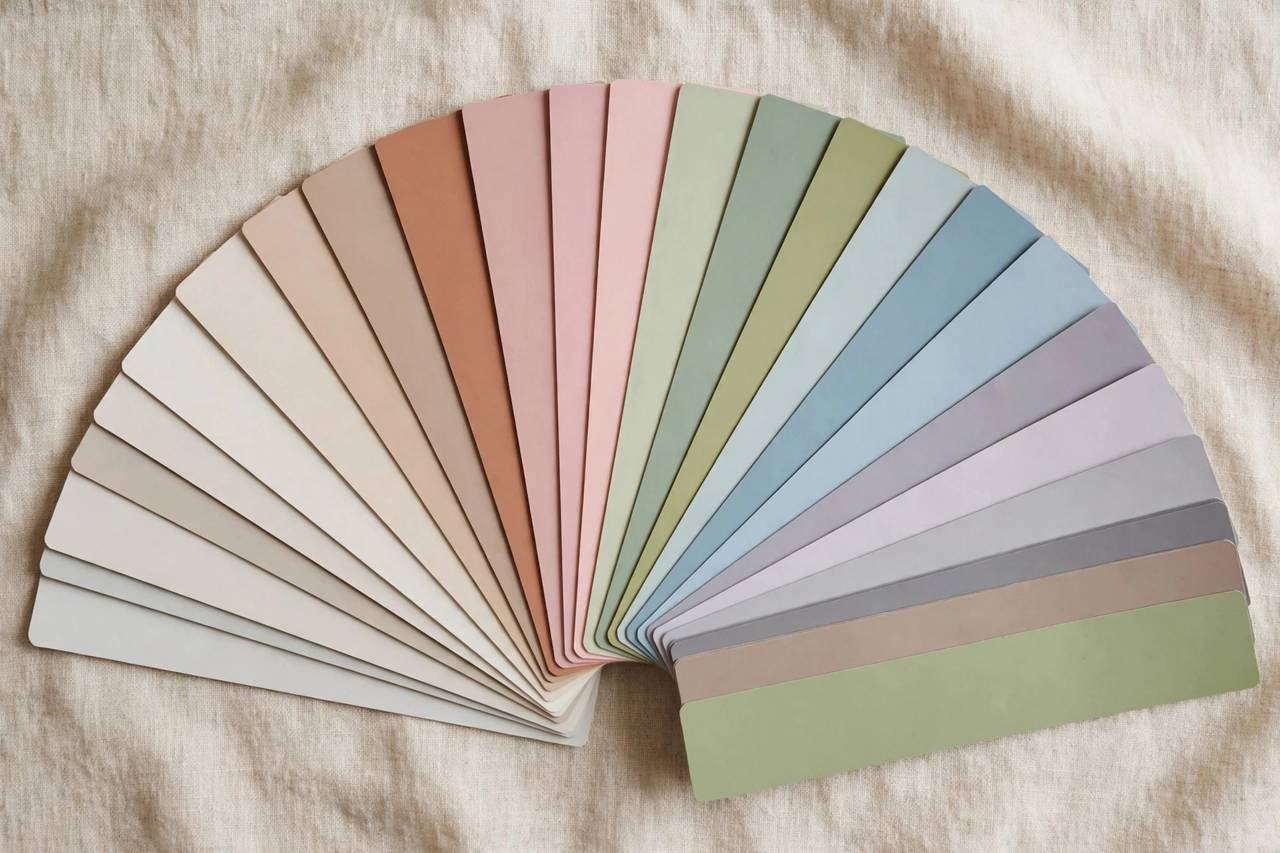
The Best Paint Colors for Small Rooms: My Top Picks
Soft White (Not Stark White)
Plain bright white can feel sterile and actually highlight every shadow and corner — which emphasizes the room’s boundaries. Instead, choose a soft, warm white with a hint of cream or gray. It reflects plenty of light while feeling welcoming rather than clinical. Paint the trim the same color (in a higher sheen) for that seamless, boundary-blurring effect.
Pale Gray
The modern neutral that replaced beige. Light grays with warm undertones feel sophisticated and spacious; they work with everything and make small rooms feel calm and open. Avoid grays with blue undertones in north-facing rooms — they can feel cold and dreary without warm light.
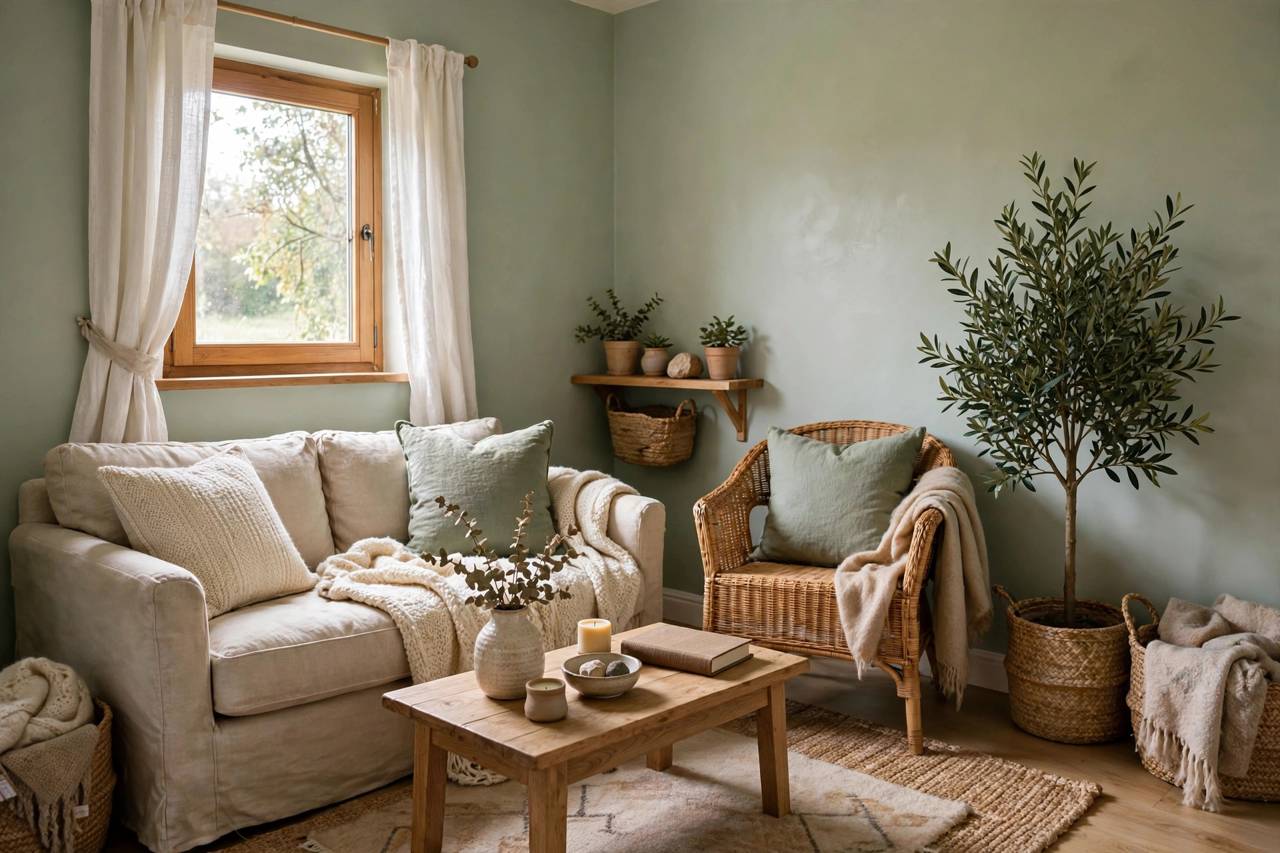
Soft Sage Green
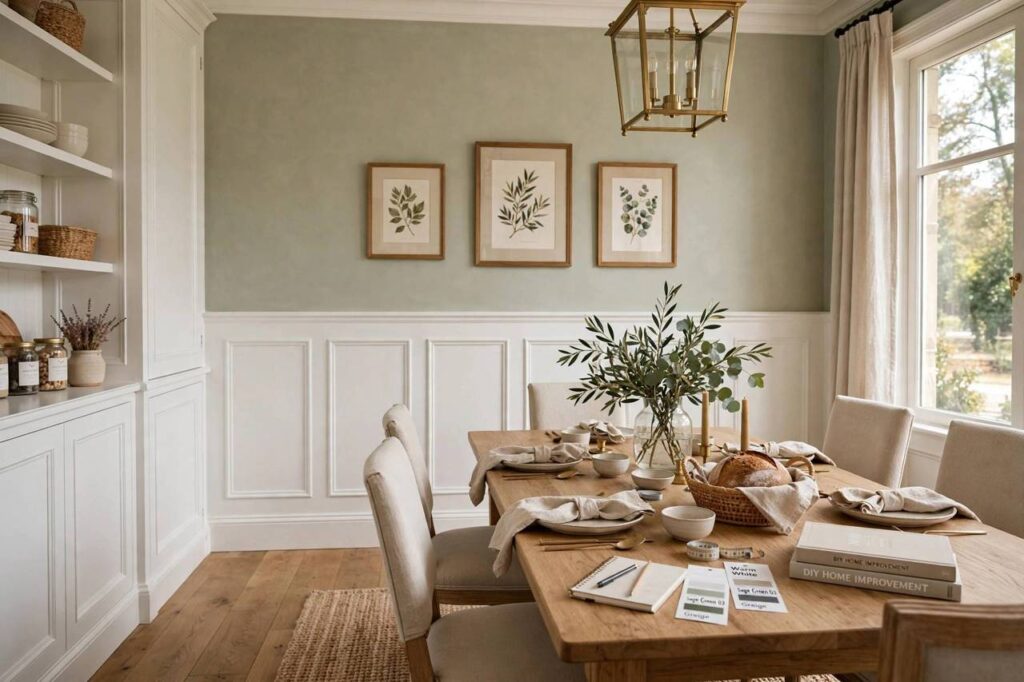
My personal favorite for small bedrooms and offices. Sage is restful, works beautifully with wood tones and white trim, and has enough color to feel intentional without overwhelming. It’s the color equivalent of a deep breath.
Pale Blue
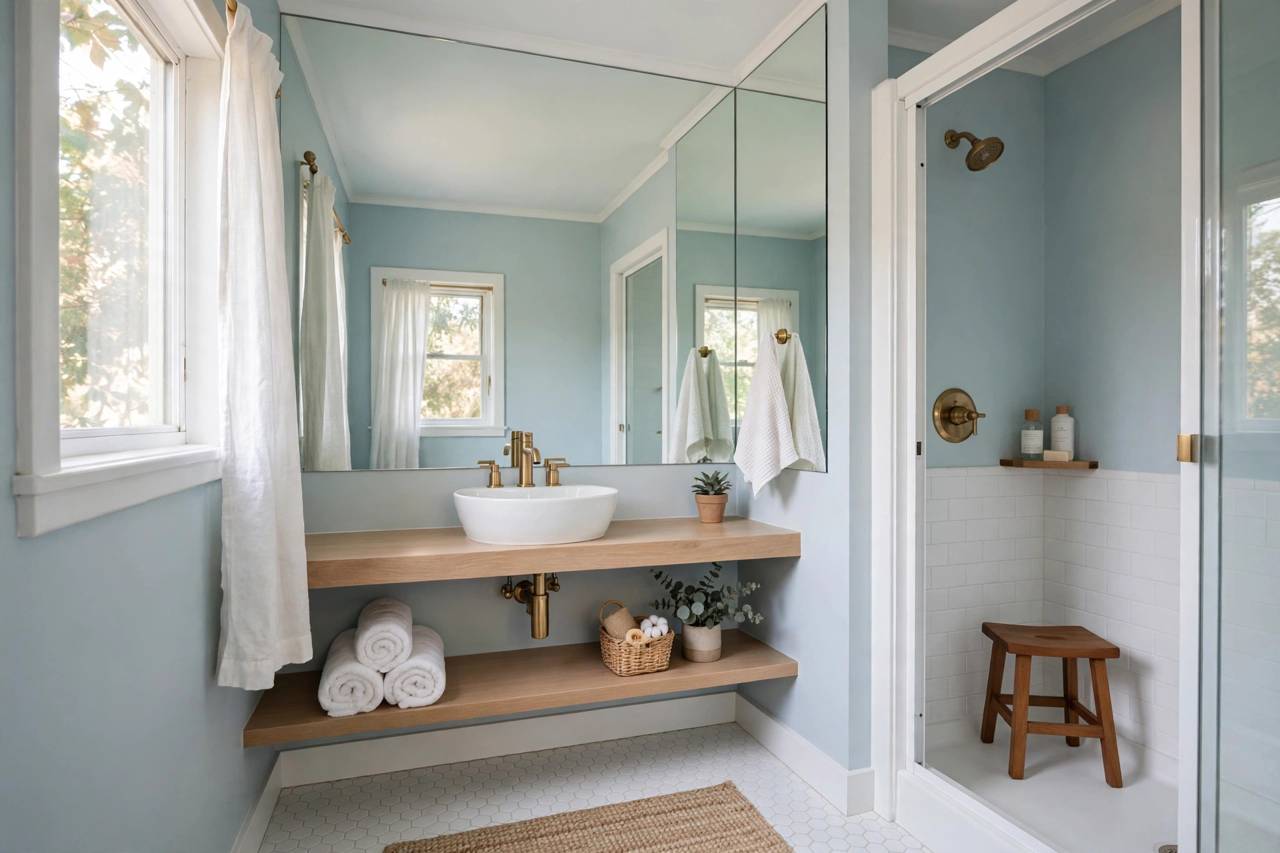
Light blues recede visually — walls genuinely feel farther away. Perfect for small bathrooms and bedrooms. Stick to soft, muted blues rather than icy ones, which can feel cold in small doses.
Warm Greige
The beige-gray hybrid that goes with everything. Greige warms up a small room without darkening it, hides minor wall imperfections better than white, and provides a beautiful backdrop for colorful furniture and art.
Bold Dark Colors (Yes, Really)
Here’s where I break the rules with confidence: a small room painted in a rich, dark color — deep navy, charcoal, forest green — can feel incredibly cozy and, paradoxically, larger. Dark walls blur the corners (especially in a room with limited natural light), creating an intimate, enveloping feel where boundaries disappear into shadow. The key: keep the ceiling light, use good lighting, and commit fully — one dark accent wall in a small room often looks choppier than all four walls dark.
Color Strategies by Room
- Small bedroom: Soft, restful colors — sage, pale blue, warm white. The bedroom should lower your heart rate. Pair your color choice with the ideas in this guide on how to make your bedroom cozy for a space you’ll love waking up in.
- Small bathroom: Pale blue, soft white, or light gray. Bathrooms have hard surfaces that bounce light around — light colors amplify this beautifully. A dark moody bathroom can also be stunning if the lighting is right.
- Small home office: Colors that promote focus without sterility — soft green, warm gray, muted blue. Avoid high-energy reds and oranges; they’re distracting in a workspace.
- Small living room: Warm neutrals — greige, warm white, soft beige. These make gathering spaces feel welcoming and work with any furniture you already own.
- Small kitchen: Light, clean colors — soft white, pale gray, very light sage. Kitchens have a lot of visual clutter (appliances, items on counters); calm wall colors keep the space from feeling chaotic.
Pro Painting Tips for Small Rooms
- Paint the ceiling. A bright white ceiling lifts the room visually. In a very small room, consider painting the ceiling the same color as the walls — it eliminates the visual “lid” and makes the space feel taller and more continuous.
- Match your trim. Painting trim the same color as walls (in satin or semi-gloss) removes the visual stops that chop up a small room. The space flows instead of fragmenting.
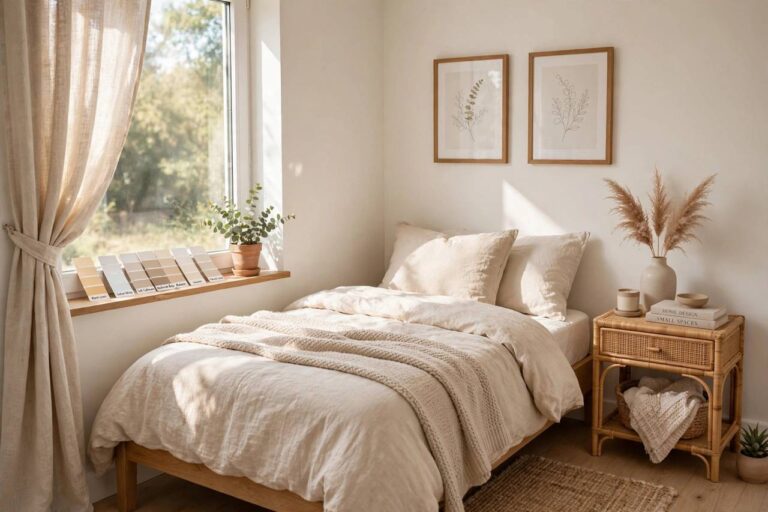
- Test before you commit. Paint large swatches (at least 2×2 feet) on multiple walls and live with them for two days. Colors shift dramatically between morning and evening light. Those tiny paint chips lie.
- Consider the finish. Flat/matte hides wall imperfections but marks easily. Eggshell is the sweet spot for most small rooms — soft sheen, washable, forgiving. Reserve semi-gloss for trim and bathrooms.
- Don’t forget the fifth wall. The ceiling is a design surface too. In a small powder room or bedroom, a soft color on the ceiling adds character without shrinking the space.
- One room, one color. In small spaces, color changes at doorways chop the home into visual fragments. Flowing one palette through adjacent small rooms makes the whole home feel larger.
Colors to Use Carefully in Small Rooms
I’m not saying never — I’m saying know what you’re doing:
- Bright, saturated colors (fire-engine red, electric yellow) overwhelm small spaces fast. If you love them, use them as accents — a door, a piece of furniture, artwork — not four walls.
- High-contrast combinations (dark walls with bright white trim and ceiling) define every boundary sharply, which emphasizes exactly how small the room is. If you want contrast, keep it subtle.
- Cool grays in north-facing rooms. Without warm sunlight, blue-gray walls can feel like a refrigerator. Warm up the undertone or add warm lighting.
The Lighting Factor (Don’t Skip This)
Here’s what most paint guides won’t tell you: lighting matters as much as color. A perfect paint color under bad lighting still looks bad. In small rooms:
- Maximize natural light — sheer curtains instead of heavy drapes, clean windows, mirrors opposite windows to bounce light.
- Layer your lighting — overhead plus lamps at different heights eliminates the shadows that make rooms feel smaller.
- Choose warm bulbs (2700-3000K) for living spaces — they make colors glow instead of washing out.
- Light the corners — dark corners visually shrink a room. A small lamp or even LED strips in a dark corner pushes the walls outward.
Get the color right AND the light right, and people will walk into your small room and ask how you made it feel so spacious. That’s when you smile and say it was always this big.
Painting a Small Room: The Right Order
Small rooms are actually easier to paint than big ones — less wall, less time. But the compact space means every mistake is visible, so work clean:
- Prep thoroughly. Fill holes, sand smooth, caulk gaps around trim. In a small room, flaws are inches from your face — prep matters more here than anywhere.
- Ceiling first, then walls, then trim. This order means drips land on surfaces you haven’t painted yet. Always.
- Cut in before rolling. Use a quality angled brush to cut in around trim, ceiling, and corners, then roll the walls while the cut-in is still wet — this blends the textures so brush marks disappear.
- Work in sections. Roll one wall at a time, maintaining a wet edge. In small rooms this is easy — you can do a whole wall before anything dries.
- Two coats, minimum. One coat always looks patchy, no matter what the can promises. Two thin coats give uniform color and durability.
- Remove tape while the paint is slightly tacky. Pull at a 45-degree angle for the crispest lines. Waiting until fully dry risks peeling paint with the tape.
Ventilate well — open windows, run a fan. And give the room a full day to cure before hanging things back up. Fresh paint looks done before it actually is; patience in the last 24 hours protects all the work you just did.
When to Call a Painter Instead
DIY painting is satisfying and economical, but call a pro when: ceilings are high or vaulted (ladders plus paint equals risk), walls need significant repair (skim-coating is a skill), you’re painting kitchen cabinets (factory finishes need spraying), or the room has lead paint (test kits are cheap; disturbing lead paint without proper precautions is dangerous). A good painter also earns their fee on intricate trim work and bold color changes that need perfect coverage. Know your limits — that’s not quitting, that’s wisdom.
FAQ
What are the best paint colors for small rooms to look bigger?
Soft whites, pale grays, light sage greens, pale blues, and warm greiges all make small rooms feel larger by reflecting light and reducing visual boundaries. Painting trim the same color as walls amplifies the effect.
Do dark colors make small rooms look smaller?
Not necessarily — it’s a myth that dark always shrinks. Rich dark colors can blur corners and create depth, making a small room feel cozy and intimate rather than cramped. The key is good lighting, a light ceiling, and committing to all walls rather than one accent wall.
Should the ceiling be white in a small room?
Usually yes — a bright ceiling lifts the space visually. But painting the ceiling the same color as the walls is a legitimate pro trick that eliminates the visual “lid” and can make a small room feel taller and more continuous.
What paint finish is best for small rooms?
Eggshell is the sweet spot — soft sheen, washable, and forgiving of minor wall imperfections. Flat hides flaws best but marks easily; semi-gloss is great for trim and bathrooms but highlights every bump on walls.
How do I test paint colors for a small room?
Paint large test swatches (at least 2×2 feet) on at least two walls, and observe them at different times of day for two days. Colors shift dramatically with changing light. Never choose from a tiny chip alone — it’s the most common and most avoidable painting mistake.
Keep Reading
- Small Apartment Wall Decor Ideas That Make Tiny Rooms Feel Bigger
- How to Make a Small Apartment Feel Bigger: 12 Designer Tricks
- How to Paint a Room Like a Pro: The Complete Step-by-Step Guide