Ask ten people when AI was invented and you’ll get five different dates. 1956 is the most common answer — that’s when the Dartmouth workshop coined the term “artificial intelligence.” But the ideas behind AI are centuries older, and working AI systems existed before the name did. The question sounds simple; the answer depends entirely on what you mean by “invented.”
I’m going to give you the dates that actually matter, explain why each one claims the title, and tell you which I’d pick if forced. No hand-waving — just the timeline and what each milestone really established. For the broader story of how the field evolved after its birth, see my history of artificial intelligence.
In This Guide
- The Short Answer (If You’re in a Hurry)
- Candidate 1: The Ancient Dream (Antiquity–1700s)
- Candidate 2: The Logic Foundations (1840s–1930s)
- Candidate 3: The First Neural Model (1943)
- Candidate 4: The Name Is Born (1956)
- Candidate 5: The First Working Programs (1950s)
- So Which Date Wins?
- Why the Date Matters Less Than You Think
- Frequently Asked Questions
The Short Answer (If You’re in a Hurry)
1956 — the Dartmouth Summer Research Project on Artificial Intelligence, where John McCarthy coined the term and the field officially began. If you need one date for a quiz or a presentation, use this one. Everyone in the field accepts it as the founding moment.
But if you want the real answer: the intellectual foundations were laid in the 1930s-40s, the first working AI programs ran in the early 1950s, and the dream of artificial minds is thousands of years old. The rest of this guide is for those who want more than the quiz answer.
Candidate 1: The Ancient Dream (Antiquity–1700s)
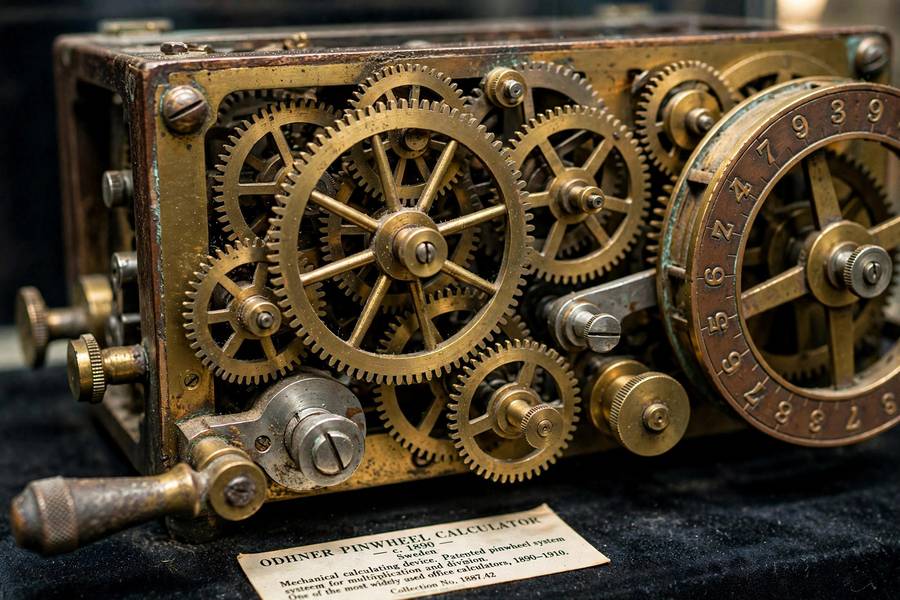
Humans have imagined artificial beings for millennia. Greek myths featured Talos, a giant bronze automaton guarding Crete, and Hephaestus’s mechanical servants. In the 1200s, Ramon Llull designed paper machines for generating logical combinations — an early attempt to mechanize reasoning itself.
The 1700s brought actual automata: Jacques de Vaucanson’s digesting duck (1739), which flapped its wings and appeared to eat and digest grain, and the famous chess-playing “Turk” (1770), which turned out to be a hoax with a human hidden inside. These weren’t AI — but they reveal how long the desire for artificial intelligence predates the technology.
Does the dream count as invention? I’d say no. Wanting something isn’t inventing it. But the dream explains why, when the math finally arrived, people recognized immediately what it could become.
Candidate 2: The Logic Foundations (1840s–1930s)
AI needed a formal way to describe thought before anyone could mechanize it. The milestones:
1847–1854: Boole’s algebra. George Boole showed that logical reasoning could be expressed as mathematics — true/false operations that machines could eventually perform. Every digital computer, and therefore every AI system, runs on Boolean logic.
1936: Turing’s machine. Alan Turing described a theoretical device that could compute anything computable. More importantly for AI, he framed the question of machine intelligence in formal terms. His 1950 paper “Computing Machinery and Intelligence” proposed the imitation game — now called the Turing test — as a practical way to think about machine minds.
1930s–40s: Gödel, Church, and the limits. Kurt Gödel and Alonzo Church established what formal systems can’t do — results that still shape debates about whether machines can truly think.
These thinkers didn’t build AI. They built the possibility space AI would occupy. Without Turing’s formulation, there is no AI — just very fast calculators.
Candidate 3: The First Neural Model (1943)
In 1943, Warren McCulloch (a neurophysiologist) and Walter Pitts (a logician) published “A Logical Calculus of the Ideas Immanent in Nervous Activity” — the first mathematical model of a neuron. They showed that networks of simple neuron-like units could, in principle, compute any logical function.
This is arguably the true technical birth of AI: the first demonstration that brain-like computation could be formalized. Every neural network running today — including the large language models behind ChatGPT — descends conceptually from McCulloch and Pitts. If you want to understand what those modern models actually are, read my explainer on what a large language model is.
Why isn’t 1943 the standard answer? Because McCulloch and Pitts modeled neurons, but nobody called it “artificial intelligence,” and no general research program followed immediately. It was a seed that took a decade to sprout.
Candidate 4: The Name Is Born (1956)
The Dartmouth Summer Research Project on Artificial Intelligence ran for about two months in the summer of 1956 at Dartmouth College. John McCarthy chose the name “artificial intelligence” for the proposal — partly, he later admitted, to avoid association with cybernetics and to stake out fresh territory.
The attendees were a who’s-who of future AI legends: McCarthy, Marvin Minsky, Claude Shannon, Nathaniel Rochester. The proposal was breathtakingly optimistic — it suggested that “every aspect of learning or any other feature of intelligence can in principle be so precisely described that a machine can be made to simulate it,” and that significant progress could be made in a single summer.
The summer didn’t deliver on that optimism. But Dartmouth matters enormously: it named the field, gathered its founders, and launched AI as a self-conscious research program. Before Dartmouth, there were scattered ideas. After Dartmouth, there was a field — with conferences, journals, funding, and a shared identity.
This is why 1956 wins the official title. Invention isn’t just an idea; it’s the moment an idea becomes an enterprise.
Candidate 5: The First Working Programs (1950s)
If “invented” means “first actually built,” the 1950s have strong claims:
1951: The first neural network machine. Marvin Minsky (as a Princeton graduate student) built SNARC, a machine with 40 neurons made from vacuum tubes that learned to navigate a maze. It worked — barely — and it’s arguably the first learning machine ever built.
1952: Checkers learns. Arthur Samuel at IBM wrote a checkers program that improved by playing against itself — the first clear example of machine learning, and the origin of the term “machine learning” itself (which Samuel coined in 1959).
1955–56: The Logic Theorist. Allen Newell and Herbert Simon’s program proved mathematical theorems — 38 of the first 52 theorems in Principia Mathematica, and found a more elegant proof for one of them than Russell and Whitehead had. Many consider this the first true AI program.
1957: The perceptron. Frank Rosenblatt’s learning machine for visual patterns (covered in my deep learning history piece) brought neural networks into the spotlight.
Any of these could claim “first working AI.” The Logic Theorist is my pick for the strongest candidate — it did something recognizably intelligent (proving theorems) rather than just learning a narrow pattern.
So Which Date Wins?
My honest ranking:
- 1956 — the field’s official birth. Use this one publicly.
- 1943 — the technical birth (McCulloch-Pitts neuron).
- 1950 — Turing’s paper reframed the question.
- 1955 — the first real AI program (Logic Theorist).
The right answer depends on the question behind the question. “When was the field founded?” → 1956. “When did the core ideas appear?” → 1936–1943. “When did machines first do something intelligent?” → 1955. Anyone who gives you a single date without qualification is selling you simplicity the history doesn’t support.
Why the Date Matters Less Than You Think
Here’s the contrarian take: the birth date of AI is trivia. What matters is the pattern — decades of foundations, a naming moment, cycles of boom and bust, and the slow accumulation that made the current boom possible. AI wasn’t invented; it was assembled, piece by piece, over the better part of a century.
That assembly is still happening. When someone tells you AI was “invented” recently, they’re usually trying to make it sound either newer (to hype it) or older (to normalize it). The truth — a century-long construction project — is more interesting than either story.
So: 1956 for the quiz, 1943 for the engineers, antiquity for the philosophers. Pick your date, but know the whole timeline — it’s the difference between reciting history and understanding it.

Frequently Asked Questions
The field of AI was officially founded in 1956 at the Dartmouth workshop where the term “artificial intelligence” was coined. Key foundations came earlier: the McCulloch-Pitts neuron model (1943), Turing’s work (1936-1950), and the first working AI programs (1951-1956).
John McCarthy coined the term and organized the 1956 Dartmouth workshop, making him the most common answer. But AI’s foundations involve Alan Turing, McCulloch and Pitts, Marvin Minsky, Allen Newell, Herbert Simon, and many others — it was a collective invention.
The Logic Theorist (1955-56) by Allen Newell and Herbert Simon is widely considered the first true AI program — it proved mathematical theorems. Arthur Samuel’s checkers program (1952) was the first program that learned from experience.
John McCarthy gathered leading researchers for a summer project on “artificial intelligence” — the first use of the term. While it didn’t achieve its wildly optimistic goals, it founded AI as a formal field of research with its own identity, conferences, and funding.
As a named field, yes — dating from 1956. But modern AI systems (deep learning, large language models) are built on techniques and scale that only became practical in the 2010s. The ideas are old; the capability is new.