What Is a Layover Flight? Connections, Stopovers & Luggage Rules


If you have ever booked a cheap flight and noticed the itinerary had you landing in some city you never intended to visit, you have already met the layover. So what is a layover flight, exactly? In the simplest terms, it is a flight with a scheduled stop where you change planes before reaching your final destination. But that simple definition hides a lot of useful detail: how long is too long, what happens to your bags, whether you can leave the airport, and the difference between a layover, a stopover, and a plain old connection. I fly with layovers constantly, and once you understand the mechanics, you can actually use them to your advantage.
Most of the world’s cheapest long-haul tickets include at least one layover. Airlines route passengers through their hub cities because it lets them fill planes efficiently, and the savings get passed on to you. A nonstop flight from New York to Bangkok is wonderful and expensive. A one-stop flight through Doha or Dubai with a two-hour layover can cost hundreds less. The layover is the trade: time for money. The trick is knowing how much time is safe, how much is miserable, and how much turns into a free bonus city.
What Is a Layover Flight, Exactly?
A layover flight is any flight where your journey includes a planned intermediate stop and a change of aircraft. You check in once at your origin, board your first plane, land in the connecting city, walk (or run) to your next gate, and board the second plane to your destination. The time between landing and the next departure is the layover itself, and it can be anywhere from forty-five minutes to twenty hours.
Short layovers, under two hours, are about efficiency. You stay airside, follow the signs for transfers, and get to your gate. Medium layovers of three to six hours give you breathing room for a proper meal and a stretch. Long layovers, roughly eight hours or more, are where things get interesting: some airlines and airports let you leave and explore the city. And then there are overnight layovers, which need a plan for sleep, because nobody makes good decisions at three in the morning in an unfamiliar terminal.
One thing to know: the term layover gets used loosely. Airlines and booking sites sometimes say “stop” or “connection” for the same thing. What matters is not the word but the mechanics, which is where the real distinctions come in.
Layover vs. Stopover vs. Connection: What’s the Difference?
A connection is the general term for any flight with a plane change. A layover is a short connection, usually under twenty-four hours for international flights and under four hours for domestic ones. The defining feature of a layover is that your bags are checked through to your final destination and you do not collect them mid-journey.
A stopover is a deliberate long break in the middle of your trip, often twenty-four hours or more, where you stay in the connecting city. Some airlines actively sell stopovers as a perk. Icelandair built a whole marketing campaign around free Iceland stopovers, and several Middle Eastern and Asian carriers offer hotel-included stopover programs. A stopover turns one trip into two destinations for the price of one ticket.
Why does the distinction matter? Because it changes your rights and your planning. On a short layover, you are transiting and your luggage goes straight through. On a stopover, you will usually need to collect your bags and recheck them. On self-transfers, which we will get to, none of the normal protections apply at all.
Minimum Connection Times: The Numbers That Matter
Airports and airlines set minimum connection times, the shortest gap they will sell you between flights, and these are the numbers that decide whether your itinerary is realistic. As a rough guide: domestic-to-domestic connections are usually fine at sixty to ninety minutes. International connections generally need two hours or more, because you may have to clear immigration, collect and recheck bags, and go through security again.
Some airports are harder than others. London Heathrow, Paris Charles de Gaulle, and New York’s JFK involve terminal changes, long walks, and sometimes bus rides between gates. If your layover is in one of these, give yourself an extra hour beyond the minimum. Small, efficient hubs like Singapore Changi, Amsterdam Schiphol, or Doha’s Hamad International are much easier to navigate, and a ninety-minute connection there is usually relaxed.
My personal rule: never book the shortest possible connection when the next flight is the last one of the day, when you are flying in winter weather, or when the connection is on separate tickets. A missed connection with no later flight means an unplanned hotel night, and the savings from the cheap ticket disappear fast. This is also why timing matters when you book. Booking flights at the right time often gives you better itineraries with comfortable connections, not just lower prices.
What Happens to Your Luggage During a Layover?
On a normal single-ticket layover, your checked bags are tagged to your final destination and transferred automatically between planes. You do not see them until baggage claim at the end. This is the biggest advantage of booking everything on one ticket: the airline handles the transfer, and if your first flight is delayed and you miss the connection, the airline rebooks you.
The exception is the United States and a few other countries, where international arrivals must collect their bags, clear customs, and recheck them even when continuing on the same ticket. If your layover is your first landing in the US, expect this. The process is usually straightforward and well-signed, but add thirty to sixty minutes to your plans.
The real danger zone is the self-transfer: two separate tickets you stitched together yourself, common with budget airlines. On a self-transfer you must collect your bags at the intermediate airport and check in again for the second flight, exactly like starting a new trip. Worse, if your first flight is late, the second airline owes you nothing. Self-transfers can be dramatically cheaper, and I use them, but only with long gaps between flights, carry-on luggage only, and travel insurance that covers missed connections. Finding cheap flights sometimes surfaces these itineraries, so always check whether you are looking at one protected ticket or two separate ones.
How to Survive (and Enjoy) a Long Layover
A long layover does not have to be dead time. First, check whether you can leave the airport. Many countries allow visa-free transit for short periods, and some airports run free city tours for transit passengers. Singapore and Seoul both do this well. If you can get out for six hours, a city that was never on your itinerary suddenly becomes a day trip.
If you are staying inside, make the terminal work for you. Walk the full length of it for exercise after a long flight. Find the quiet corners, which are usually near the far gates. Eat a real meal instead of airport snack food. And if your layover is six hours or longer, consider day-pass access to a lounge: hot showers, real food, quiet seating, and fast wifi turn a grueling wait into something almost pleasant. Learning how airport lounges work before a long layover is one of the best uses of ten minutes of trip research.
Pack a layover kit in your carry-on: a change of shirt, a toothbrush, a phone charger, and anything you need to freshen up. Arriving at your destination feeling human instead of wrecked is worth the small bag space.
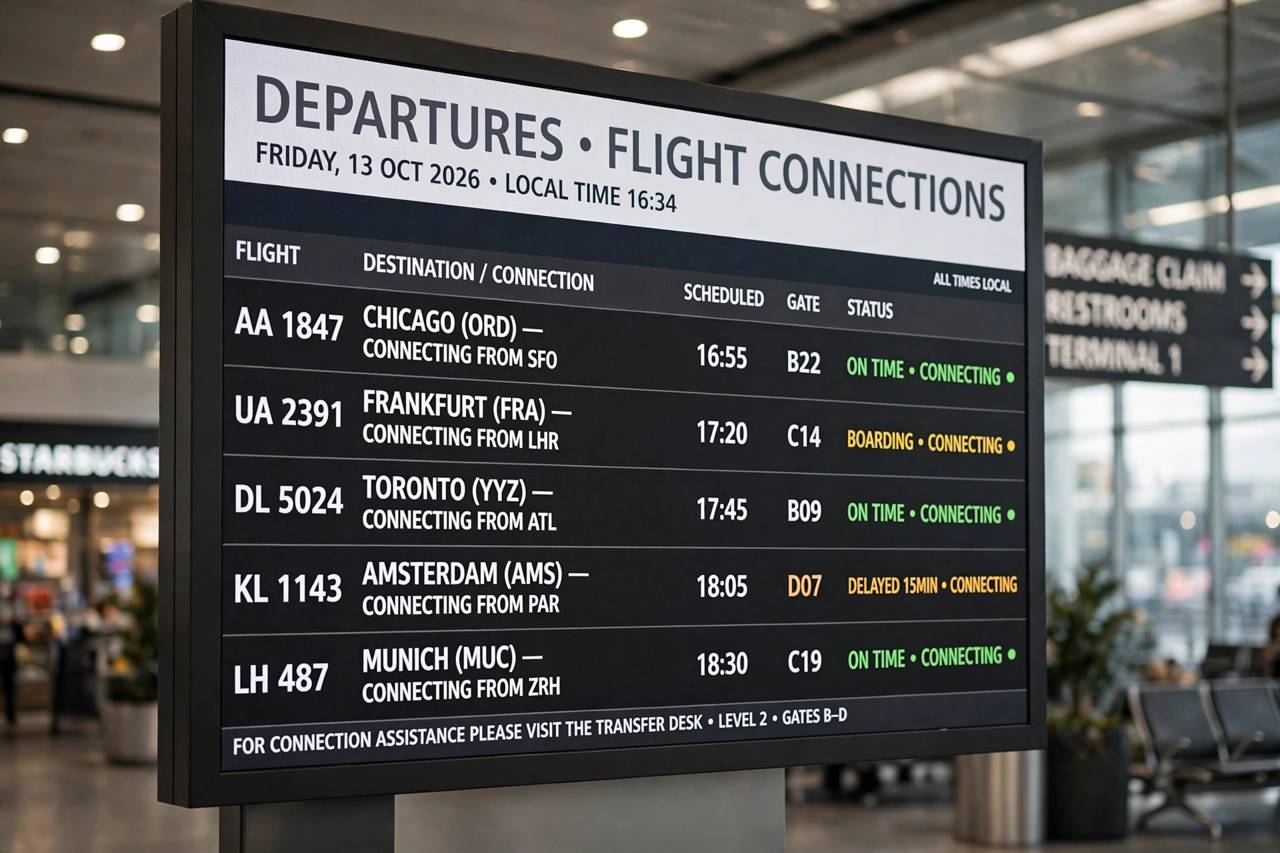
Turning a Long Layover Into a Bonus Stop
Here is the mindset shift that changes everything about layovers: a long layover is not waiting time. It is a free mini-trip hiding inside your itinerary. When you start choosing flights partly for their layovers, travel gets richer and often cheaper at the same time.
The key is knowing which layovers are convertible. As a rule of thumb, you need at least seven to eight hours between flights to leave the airport comfortably, accounting for immigration, travel into the city, and the mandatory early return. Six hours is the absolute minimum and only works in cities where the airport is close to the center and transit is fast. Anything under six hours, stay airside and enjoy the terminal.
Before you plan an exit, check three things. First, entry requirements: many countries allow visa-free transit for short stays, but some do not, and the rules depend on your nationality. Check the official immigration source, not a forum. Second, luggage: on a single-ticket layover your checked bags go straight through, so you explore with just your carry-on. On a self-transfer, you will be hauling everything. Third, the return: be back at the airport two hours before an international departure, no exceptions. The city will still be there next time. Your flight will not wait.
Some airlines make this deliberately easy with stopover programs. Certain carriers in Iceland, the Middle East, and Asia actively encourage multi-day stopovers, sometimes including discounted hotels. If your route passes through one of these hubs, check whether the airline offers a stopover option when you book. It can turn a connection into a two-for-one trip for little or no extra fare.
Even without leaving the airport, long layovers have an art to them. The best airport terminals are destinations in themselves: gardens, art installations, swimming pools, and genuinely good food exist airside in the world’s best hubs. Research your layover airport the way you would research a neighborhood. A ten-hour layover in a great airport with a lounge pass and a plan beats a three-hour sprint through a chaotic one every time.
Frequently Asked Questions (FAQ)
Do I need to recheck my bags during a layover?
Usually no. On a single-ticket itinerary, bags are checked through to your final destination automatically. The main exceptions are first arrival in the US, where you clear customs and recheck, and self-transfers on separate tickets, where you handle everything yourself.
Can I leave the airport during a layover?
Often yes, if your layover is long enough and you meet the country’s entry requirements. Check visa rules for transit passengers in advance, keep your boarding pass for the onward flight, and be back at the airport at least two hours before departure for international flights.
How short is too short for a layover?
Under sixty minutes domestically or under two hours internationally is risky, especially at large airports or when the next flight is the last of the day. The airline’s minimum connection time is the absolute floor, not a comfortable recommendation.
What happens if I miss my connecting flight?
If both flights are on one ticket, the airline rebooks you on the next available flight at no charge. If you booked separate tickets, the second airline has no obligation to help, which is why self-transfers need generous gaps and good travel insurance.
Are layovers cheaper than direct flights?
Almost always, yes. Connecting flights are frequently much cheaper than nonstops on the same route, because airlines compete on price through their hubs. The trade-off is time and a small amount of added risk.
The Bottom Line
A layover flight is simply a journey with a planned plane change in the middle, and it is the reason budget long-haul travel exists. Book sensible connection times, keep everything on one ticket when it matters, know your baggage rules, and a long layover can even become a bonus stop. The layover is not the enemy of a good trip. A rushed, poorly planned one is.