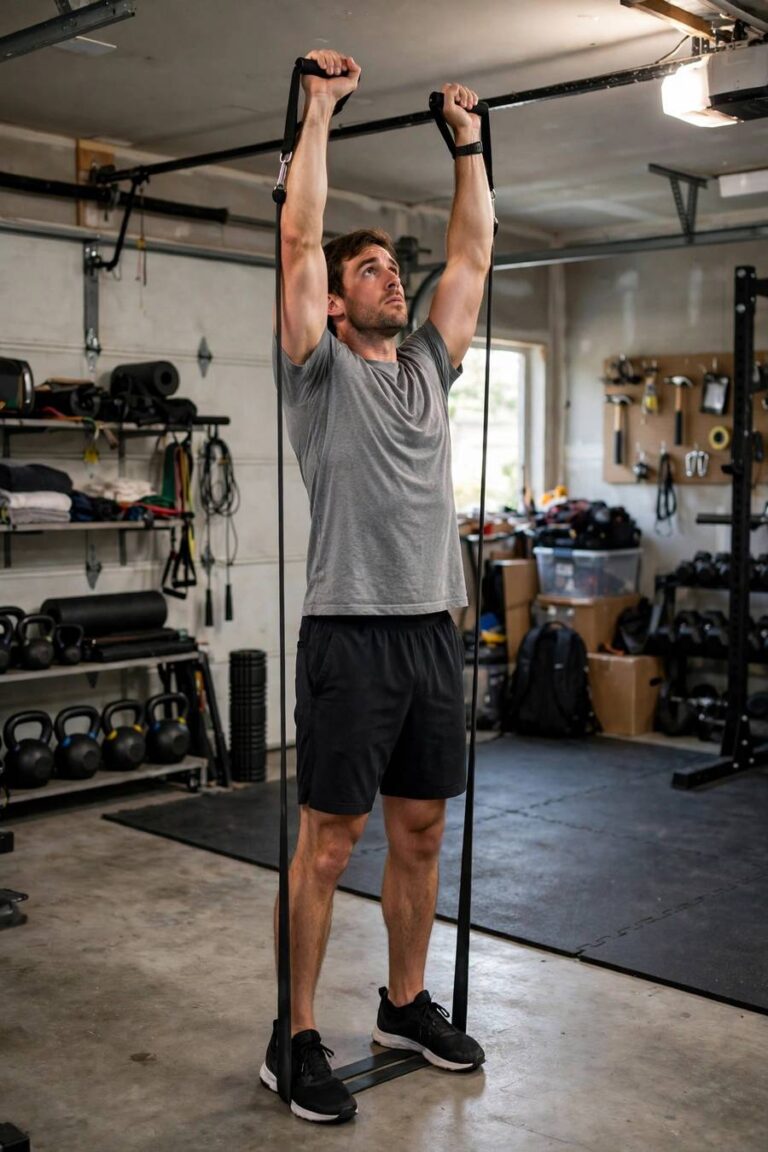
Shoulder Warm-Up Exercises: The 6-Move Routine I Give Every Client


I have watched more lifters get hurt in the first ten minutes of a workout than in the heaviest set of the day. The story is always the same: they walk in, load the bar, and start pressing with stone-cold shoulders. Six weeks later they are sitting in my office asking why their front delt aches every time they reach overhead. The answer is boring and unsexy: they never warmed up. Your shoulder is the most mobile joint in your body, which also makes it the most vulnerable. A proper shoulder warm-up does not need to be long or complicated, but it does need to happen every single time you train upper body. In this guide I will show you the exact warm-up sequence I use with my own clients, how long it should take, and the two band exercises that have saved more shoulders than anything else I know. If you are building your pressing strength, pair this routine with a solid plan like my strength training for runners program approach to balanced programming, and check my breakdown of the best shoulder exercises for what comes after the warm-up.
Why Your Shoulders Deserve a Real Warm-Up
The shoulder is a ball-and-socket joint with an absurd range of motion, held together by the rotator cuff, a group of four small muscles that most people never train directly. When you press, pull, or even do push-ups with cold tissue, those small stabilizers lag behind the big prime movers like the deltoids and pecs. The result is the humeral head riding slightly out of position, grinding against structures it should glide past. Do that a few hundred times and you get impingement, tendinopathy, or a labrum issue that sidelines you for months. A warm-up raises tissue temperature, increases blood flow to the cuff, and rehearses the movement patterns you are about to load. I tell my clients to think of it as turning the lights on before you start working in the room. Five to eight minutes of targeted work buys you insurance on every pressing session for the rest of your lifting life.
There is also a performance angle most people miss. A good warm-up activates the lower traps and serratus anterior, the muscles that keep your shoulder blades glued down and back during pressing. When those fire properly, your pressing groove feels smoother and you can usually handle slightly more weight with better form. I have seen clients add 5 to 10 pounds to their overhead press within a month just by warming up properly, because their shoulders finally move the way they are supposed to.

How Long a Shoulder Warm-Up Should Take
Five to eight minutes. That is the honest answer for most people, most of the time. If you are under 30, injury-free, and training in a warm gym, five minutes of focused work is enough. If you are over 40, coming back from a shoulder issue, or training in a cold garage in January, take the full eight to ten minutes. The warm-up should leave you feeling loose and warm, with a light pump in the shoulders and upper back, but never fatigued. If your arms feel tired before your first work set, you did too much. I program warm-ups as part of the session, not as optional homework, because the moment something feels optional, people skip it. Set a timer for six minutes the first few times until the sequence becomes automatic.
The 6-Move Shoulder Warm-Up I Give Every Client
Here is the exact sequence I run through before any pressing or overhead work. Do each move for the prescribed reps, moving at a controlled pace, and rest only as long as it takes to transition between exercises.
1. Arm circles, 20 each direction
Start small and gradually make the circles bigger. This is about getting synovial fluid moving in the joint, not about stretching. Keep your core braced so the movement comes from the shoulder, not from swaying your torso.
2. Band pull-aparts, 15 reps
Hold a light resistance band at shoulder height with straight arms and pull it apart until it touches your chest, squeezing your shoulder blades together. This wakes up the rear delts and mid-traps, the exact muscles that keep your shoulders healthy under a barbell.
3. Wall slides, 10 reps
Stand with your back, head, and arms against a wall, arms in a goalpost position. Slide your arms up overhead while keeping contact with the wall, then back down. If you cannot keep contact, your thoracic spine needs the mobility work, which is useful information.
4. Scapular push-ups, 12 reps
Get in a push-up position and, keeping your arms straight, let your chest sink between your shoulder blades, then push the floor away to protract. This trains the serratus anterior, the muscle that keeps your shoulder blades stable when you press.
5. Light dumbbell external rotations, 12 per side
Lie on your side with a very light dumbbell, elbow pinned to your ribs, and rotate the weight up. The rotator cuff responds best to light loads and high control. If you are grabbing anything over 10 pounds for this, it is too heavy.
6. Empty-bar or light overhead presses, 15 reps
Finish with the exact movement pattern you are about to train, using just the bar or very light dumbbells. This is rehearsal, not a set. Move smoothly, own every inch of the range of motion, and then start your working sets.

Band Pull-Aparts and Face Pulls: The Money Moves
If I could only keep two warm-up exercises for the rest of my career, it would be band pull-aparts and face pulls. Both train the muscles on the back of the shoulder that counteract all the pressing most programs overemphasize. Most lifters press twice as much as they pull, and their posture shows it: shoulders rolled forward, upper back rounded. Pull-aparts and face pulls directly fight that pattern. For face pulls, set a cable or band at eye height, pull the rope toward your forehead with your elbows high, and externally rotate at the end so your knuckles face the ceiling. Two to three sets of 15 to 20 reps as part of your warm-up, and your shoulders will thank you within weeks. These are also staples in my best arm exercises programming because healthy shoulders let you train arms harder.
Warm-Up Mistakes That Wreck Shoulders
The biggest mistake is static stretching cold shoulders. Hanging off a doorway stretch or cranking your arm across your body before you are warm does nothing for performance and can temporarily weaken the muscles you are about to use. Save static stretching for after the session. The second mistake is warming up the wrong thing: I see people do leg swings and hip circles before a bench press session, then wonder why their shoulders feel creaky. Match the warm-up to the workout. The third mistake is rushing. Doing 30 sloppy arm circles while scrolling your phone is not a warm-up, it is a ritual. Slow down, feel the muscles working, and treat these six minutes like they matter, because they do.
When to Warm Up Longer
Extend the warm-up to ten minutes when you are returning from any shoulder injury, when the gym is cold, or when your working sets involve heavy overhead pressing above 80 percent of your max. Older lifters should also default to the longer end; tissue elasticity decreases with age, and the extra minutes pay for themselves. On the flip side, if you are doing a light pump session or machine work with moderate loads, five minutes is plenty. The warm-up should scale with the demands of the session, just like everything else in training.
Bottom line: warm up your shoulders every time you train upper body, keep it to five to eight minutes, prioritize the cuff and upper back, and never static-stretch cold. Do this consistently and shoulder pain becomes something that happens to other people.

Five to eight minutes for most lifters. Take the full eight to ten if you are over 40, returning from injury, or training in a cold environment. The warm-up should leave you loose and warm, never fatigued.
No. Static stretching cold muscles can temporarily reduce strength and does not prevent injury. Do dynamic moves like arm circles, band pull-aparts, and wall slides before training, and save static stretching for after.
Band pull-aparts, face pulls, wall slides, scapular push-ups, light external rotations, and empty-bar presses. These target the rotator cuff and upper back, the muscles that keep shoulders healthy under load.
Yes. Push-ups load the shoulder joint significantly, especially the anterior delt and rotator cuff. Two to three minutes of arm circles, scapular push-ups, and band pull-aparts is enough before bodyweight pressing.
Clicking without pain is usually tendons moving over bone or gas bubbles in the joint and is harmless. If clicking comes with pain, pinching, or weakness, see a professional before continuing to train through it.