Everyone loves a most expensive luxury cars in the world list — but most of them are just copied spec sheets. I’ve worked on several of the cars on this list, stood next to the others, and I’ll give you something better than prices: context. What you’re actually paying for at each level, where the money goes, and the point where price stops buying luxury and starts buying exclusivity.
Prices are approximate base MSRPs before options — and on these cars, options routinely add 30–50%.
Contents
- How to Read This List
- The Ultra Luxury Tier
- The Hypercar Tier
- The Coachbuilt Tier
- Full List: Ranked by Price
- Where the Money Actually Goes
- Depreciation: The Hidden Price
- What I Would Actually Buy
How to Read This List
A quick note on what “expensive” means here. I’m ranking by manufacturer base price for production or limited-production cars you could theoretically order — not auction records for classics (a 1962 Ferrari 250 GTO sold for $70 million, but that’s collectibles, not cars you buy new).
I’m also separating three tiers, because a $500,000 Phantom and a $3 million Bugatti aren’t really competing — they’re different purchases for different buyers, like comparing a penthouse to a private island.
The Ultra Luxury Tier
This is the top of the “real car” market — vehicles bought to be driven (or chauffeured in) regularly.
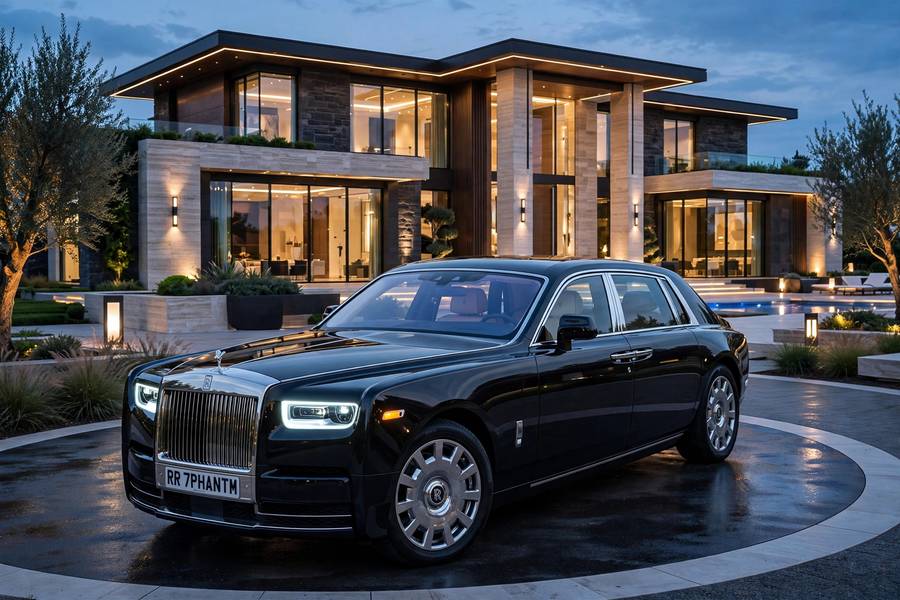
Rolls-Royce Phantom — ~$500,000+. The benchmark. V12, magic-carpet ride, the quietest cabin on earth. A well-optioned Phantom easily exceeds $650,000. It’s the most expensive sedan in regular production, and nothing else offers its combination of isolation and presence.
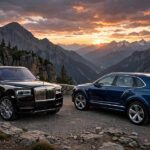
Rolls-Royce Cullinan — ~$400,000+. The SUV equivalent — same powertrain philosophy, same cabin standards, with a tailgate. The most expensive production SUV.
Rolls-Royce Spectre — ~$420,000+. The electric coupe — Rolls’ future. Silent running suits the brand perfectly; electric power might be the most Rolls-Royce powertrain ever made. No engine vibration, instant torque, zero noise.
Bentley Mulliner Batur — ~$2,000,000. Technically a limited-run coupe (18 units), straddling the line into the next tier. Hand-built by Mulliner, W12-powered, every surface bespoke. The most expensive new Bentley ever.
Ferrari Purosangue — ~$400,000+. Ferrari’s controversial SUV — V12, four doors, four seats. Expensive, dramatic, and sold out far into the future. More performance statement than luxury statement, but the price qualifies it.
Lamborghini Revuelto — ~$600,000+. The V12 hybrid flagship. Not a luxury car in the traditional sense — it’s a theater of speed — but at this price it belongs on any expensive-cars list.
The Hypercar Tier
This is where cars become engineering moonshots — limited production, extreme performance, and prices that reflect R&D amortized over dozens of units, not thousands.
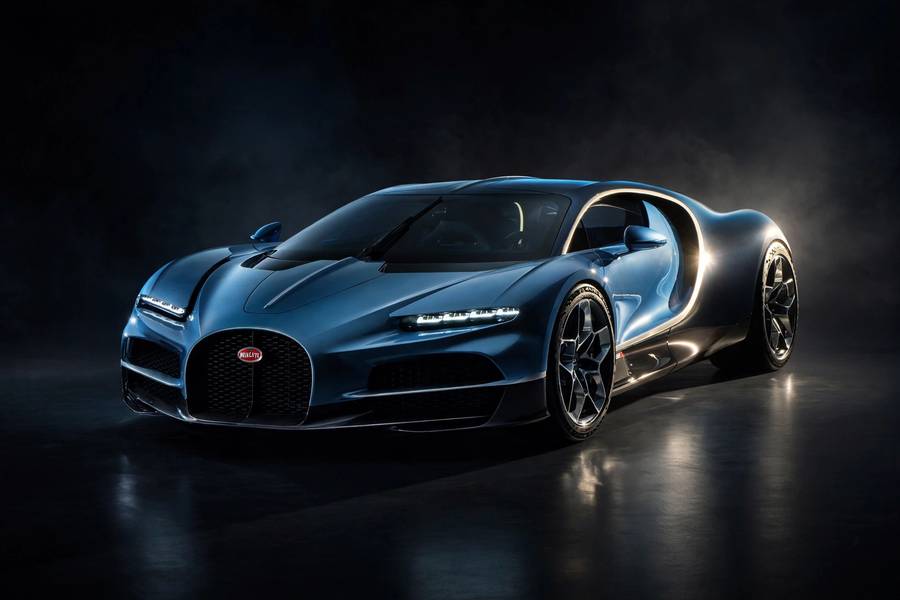
Bugatti Tourbillon — ~$3,800,000. The Chiron’s successor: a naturally-aspirated V16 hybrid making 1,800 hp, with a mechanical instrument cluster built by Swiss watchmakers. Bugatti doesn’t do screens — the Tourbillon’s gauges are a mechanical masterpiece designed to outlast the car’s electronics by a century. From a mechanic’s perspective, it’s the most obsessively engineered car ever made.
Pagani Utopia — ~$2,500,000. Horacio Pagani’s third act. AMG V12, manual gearbox option (in 2026!), and detailing that makes Swiss watches look mass-produced. Every bolt is titanium, every surface is considered. Paganis are built like art that happens to do 220 mph.
Koenigsegg Jesko — ~$3,000,000. Christian von Koenigsegg’s 1,600-hp track weapon with a 9-speed transmission that shifts in milliseconds and a 5.0L twin-turbo V8 of his own design. The engineering independence — Koenigsegg makes its own engines, gearboxes, even turbos — is unmatched.
Rimac Nevera — ~$2,400,000. The electric hypercar that reset expectations: 1,914 hp, 0-60 in 1.74 seconds, and the technology base for Bugatti’s electric future. Proves electric can be exotic, not just fast.
Hennessey Venom F5 — ~$2,700,000. Texas-built, 1,817-hp twin-turbo V8, targeting 300+ mph. The American entry — less refined than the Europeans, more raw. A different philosophy of expensive.
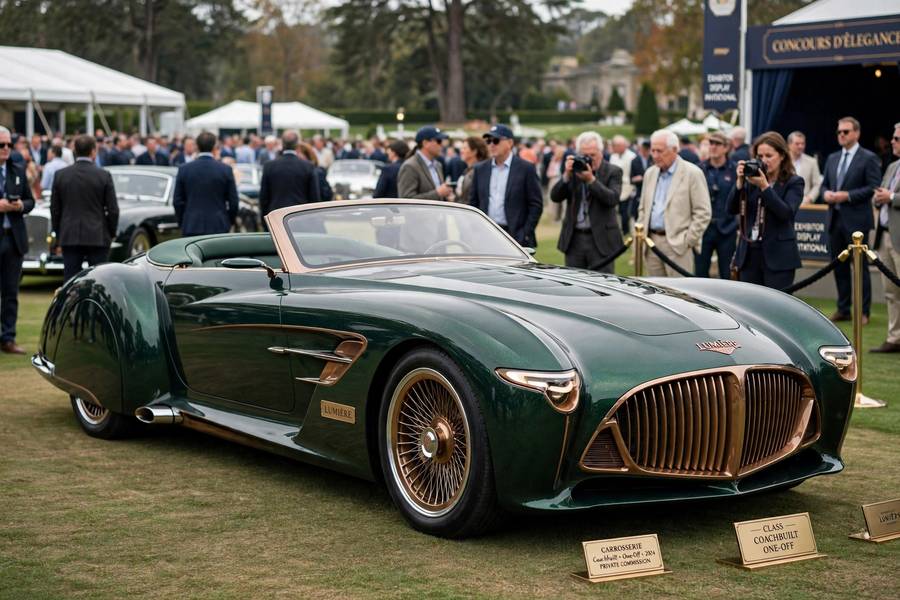
The Coachbuilt Tier
Above hypercars sits coachbuilding — one-off or few-off cars built to a single client’s specification. This is where price detaches from anything rational.
Rolls-Royce Boat Tail — ~$28,000,000. Three units built. A Phantom-based convertible with a rear deck that opens like butterfly wings to reveal a champagne service set. The most expensive new car ever sold. Each took years to build.
Rolls-Royce Droptail — ~$30,000,000+. Four units, each with a removable carbon-fiber hardtop and the most complex woodwork ever put in a car (1,600+ pieces in one commission). The current peak of automotive extravagance.
Bugatti La Voiture Noire — ~$18,700,000. One unit. A tribute to the lost Type 57 SC Atlantic, with six exhaust tips and bodywork that’s essentially sculpture.
These aren’t cars — they’re commissions, closer to superyachts than automobiles. They’ll never see a shop like mine. They live in climate-controlled collections and appear at concours events.
Full List: Ranked by Price
| Rank | Car | Approx. Price |
|---|---|---|
| 1 | Rolls-Royce Droptail | $30,000,000+ |
| 2 | Rolls-Royce Boat Tail | $28,000,000 |
| 3 | Bugatti La Voiture Noire | $18,700,000 |
| 4 | Bugatti Tourbillon | $3,800,000 |
| 5 | Koenigsegg Jesko | $3,000,000 |
| 6 | Hennessey Venom F5 | $2,700,000 |
| 7 | Pagani Utopia | $2,500,000 |
| 8 | Rimac Nevera | $2,400,000 |
| 9 | Bentley Mulliner Batur | $2,000,000 |
| 10 | Lamborghini Revuelto | $600,000+ |
| 11 | Rolls-Royce Phantom | $500,000+ |
| 12 | Rolls-Royce Spectre | $420,000+ |
| 13 | Ferrari Purosangue | $400,000+ |
| 14 | Rolls-Royce Cullinan | $400,000+ |
Where the Money Actually Goes
People assume it’s all markup. At the top tiers, surprisingly little of it is:
- Labor hours. A Phantom takes ~450 hours to build; a standard luxury car takes ~30. A Pagani takes thousands. You’re paying for human time at artisan rates.
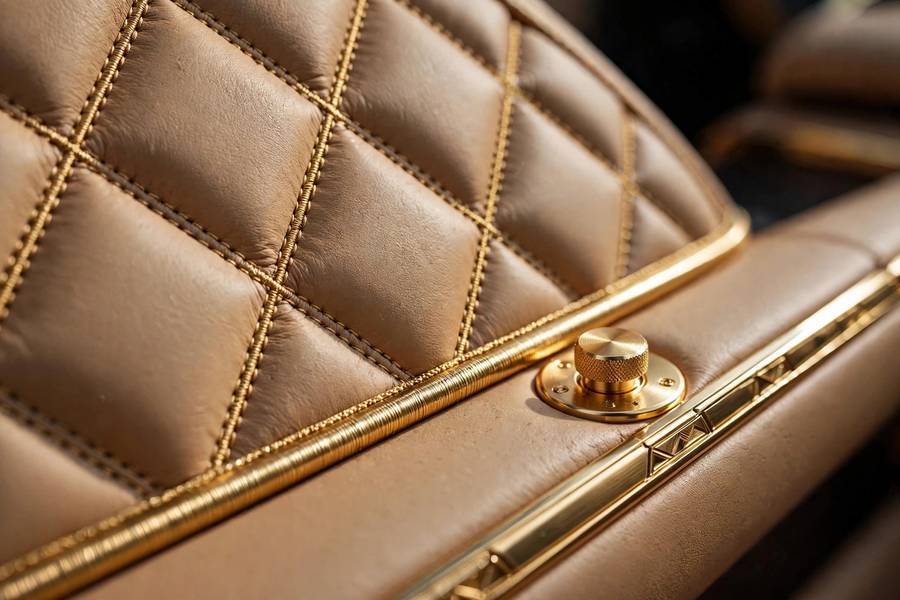
- Materials. Semi-aniline hides from bulls raised without barbed wire (seriously — fewer skin blemishes), book-matched veneers from single trees, titanium hardware. The raw materials cost more than entire normal cars.
- Low-volume amortization. Bugatti’s V16 R&D spread over a few hundred cars means each car carries enormous development cost. Toyota spreads Camry R&D over millions.
- Bespoke engineering. Coachbuilt cars are essentially prototypes — one-off tooling, testing, and certification for a single vehicle.
- Exclusivity premium. At some point you’re paying for rarity itself. That’s real value to the buyer, even if it’s not “car” value.
The markup is highest in the middle — the $150,000–$300,000 range, where badge premium exceeds the engineering delta. At the very top, the costs are more honest than people think.
Depreciation: The Hidden Price
The cruel irony of expensive cars: the more you pay, the more you can lose.
- Ultra-luxury sedans/SUVs: 40–55% depreciation in 5 years is normal. A $500,000 Phantom is often under $280,000 at year five.
- Hypercars: More variable. Limited production helps — Chiron values held remarkably well. But “limited” only protects value if demand exceeds supply at resale, which isn’t guaranteed.
- Coachbuilt one-offs: Essentially never resold publicly; value is whatever the next billionaire agrees to.
The smart money in this segment buys used ultra-luxury (someone else ate the depreciation) or holds hypercars long-term. Buying a new Phantom as an “investment” is how you donate $200,000 to the concept of depreciation.
What I Would Actually Buy
If someone handed me the budget and said “pick one” — mechanic’s choice, not investor’s choice:
Under $500K: A 3-year-old Phantom. All of the experience, half the price, depreciation curve flattened. The ultimate used-car value in the luxury world.
$500K–$1M: Honestly, I’d still buy the used Phantom and keep the change. Or a new Bentley Flying Spur Speed — the best driver’s ultra-luxury sedan.
Unlimited: The Pagani Utopia with the manual. Not the fastest, not the most luxurious — but the most human machine on this list. A manual V12 hypercar built like a watch, in an era of autonomous pods. That’s worth $2.5 million in a way nothing else here is.
But that’s fantasy. The real takeaway for normal budgets: the luxury experience trickles down. A $70,000 Genesis or a used LS 500 delivers 70% of the Phantom’s serenity at 15% of the price. The last 30% costs $400,000 — which tells you everything about the economics of ultimate luxury.
For the complete luxury-car picture, see most luxurious cars, and for the eternal debate at the top of the mainstream luxury market, my Rolls Royce vs Bentley comparison breaks down the two brands head to head. Curious about the drivetrains underneath these machines? AWD vs 4WD explained covers the mechanicals.
Frequently Asked Questions
The Rolls-Royce Droptail at ~$30 million — a four-unit coachbuilt roadster. Among production cars, the Bugatti Tourbillon (~$3.8M) leads, followed by the Koenigsegg Jesko (~$3M) and Pagani Utopia (~$2.5M).
The Droptail (~$30M, 4 units) and Boat Tail (~$28M, 3 units) — both coachbuilt one-off commissions. In regular production, the Phantom starts around $500,000 before options.
Hundreds of hand-build hours, exotic materials, R&D amortized over tiny production runs, and bespoke engineering. At the top tiers the costs are surprisingly honest — the biggest markups are actually in the $150K–$300K badge-premium range.
Ultra-luxury sedans and SUVs typically lose 40–55% in five years — terrible investments. Limited hypercars hold better due to scarcity. The best value is buying 3–4 year old ultra-luxury after someone else absorbed the depreciation.
The Rolls-Royce Cullinan at ~$400,000+ base price — the most expensive production SUV. The Ferrari Purosangue (~$400,000+) is its closest price rival.