
How to Get More YouTube Views: What Actually Works


I’ve watched enough “YouTube gurus” to know that most view-getting advice is either outdated, obvious, or quietly selling you a course. So let me give you the real version — the stuff that actually moves the needle, based on how the platform genuinely works in 2026.
Here’s the uncomfortable truth first: there’s no hack. No tag trick, no posting time, no secret setting doubles your views. What works is a boring, repeatable system: make videos people click, keep them watching, and publish consistently enough for the algorithm to figure out who your audience is.
The good news? Most creators fail at the basics. Nail the fundamentals below and you’re already ahead of most channels your size.
Table of Contents
- How the YouTube Algorithm Really Works
- Titles: The 50% of Success Nobody Respects
- Thumbnails: Your Video’s Movie Poster
- The First 30 Seconds Decide Everything
- Retention: The Metric That Matters Most
- Packaging: Title + Thumbnail as One Unit
- Consistency and Niching Down
- Using Shorts Without Wrecking Your Channel
- Analytics Worth Watching (and Ignoring)
- What Doesn’t Work Anymore
- Frequently Asked Questions

How the YouTube Algorithm Really Works
Forget everything about “gaming” the algorithm. YouTube’s system has one job: keep viewers on YouTube as long as possible. It promotes videos that do that job well.
The algorithm tracks two things above all:
- Click-through rate (CTR) — of the people shown your video, how many click? This measures your packaging (title + thumbnail).
- Watch time and retention — of the people who click, how long do they stay? This measures your content.
When both are strong, YouTube shows your video to more people — first your subscribers, then lookalike audiences, then browse and suggested. Every view milestone unlocks a bigger test audience. That’s the whole game. Everything below is just tactics for winning those two metrics.
Titles: The 50% of Success Nobody Respects
Creators spend 10 hours filming and 30 seconds on the title. Flip that ratio. The title is half your video’s success, because nobody watches what they don’t click.
What works:
- Promise a specific outcome or answer. “I Tested 5 Budget Microphones” beats “Microphone Video #3.”
- Create an information gap. Give enough to intrigue, not enough to satisfy. “The Editing Trick That Doubled My Views” makes you need to know the trick.
- Front-load the interesting words. Most viewers read the first 40 characters on mobile.
- Match the video. Clickbait that doesn’t deliver murders your retention — and retention is everything.
Study titles in your niche like a scientist. Which ones get views? What patterns repeat? Steal the structure, not the content.
Thumbnails: Your Video’s Movie Poster
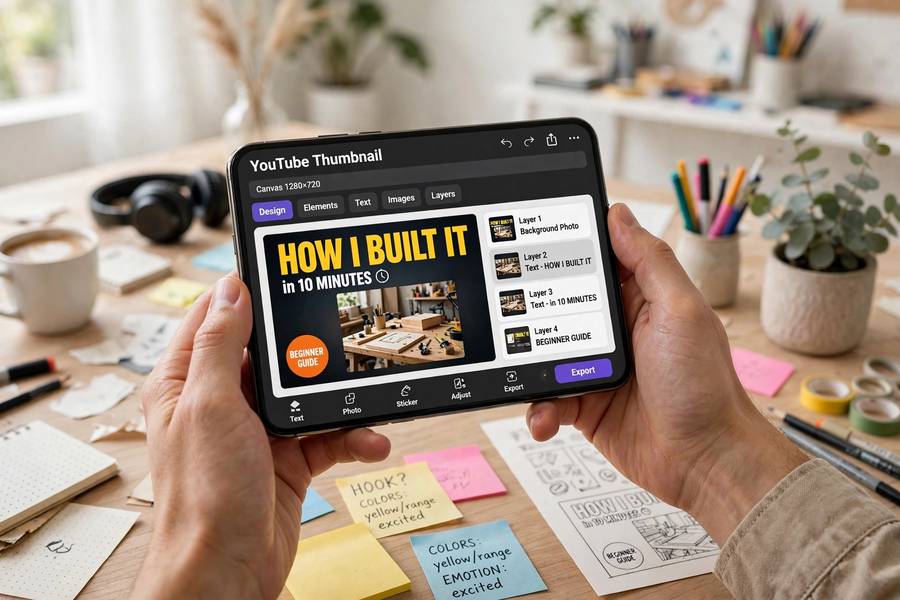
Your thumbnail and title work as a unit — together they’re your video’s packaging. The thumbnail’s job is to stop the scroll.
Rules that actually work:
- 3 elements max. A face with emotion, 2–4 big words, and a clear focal object. Cluttered thumbnails get ignored.
- High contrast. Your thumbnail is the size of a postage stamp on mobile. If it doesn’t read at tiny size, it doesn’t work.
- Faces work. Expressive human faces consistently outperform abstract designs. It’s biology — we’re wired to look at faces.
- Don’t repeat the title. The thumbnail and title sit next to each other. If both say the same thing, you’re wasting half your packaging.
2–3 thumbnail options and pick the strongest. This 20-minute habit is one of the highest-ROI activities in all of YouTube.
The First 30 Seconds Decide Everything
YouTube measures exactly when viewers leave. A huge chunk leaves in the first 30 seconds — and those early exits tank your video’s chances.
Kill the intro. No animated logo, no “hey guys welcome back to my channel,” no 45-second life update. Open with the promise: what this video delivers and why it matters, in under 15 seconds. Then deliver it.
Think of it like a movie trailer — how movies are made to hook audiences applies here too. Trailers don’t start with credits; they start with the most exciting moment. Do the same. And if you’re scripting your videos, the principles in how to write a screenplay — structure, pacing, payoff — transfer directly to YouTube storytelling.
Retention: The Metric That Matters Most
Retention — the percentage of your video people actually watch — is the closest thing to an algorithm cheat code that exists. A 10-minute video with 60% retention will crush a 10-minute video with 30% retention, every time.
How to hold attention:
- Cut ruthlessly. Every second should earn its place. If a sentence doesn’t add value, it’s gone.
- Vary the visuals. Change angle, add b-roll, show graphics — a static talking head for 10 minutes is a retention killer.
- Open loops. Tease what’s coming later (“and at the end I’ll show you the mistake that cost me $500”). Viewers stay to close loops.
- Pace to the platform. YouTube rewards energy. Speak 10% faster than feels natural, cut pauses, keep momentum.
Study your retention graphs. Where do viewers drop? That’s your most honest feedback — fix those moments and your next video performs better. The same fundamentals show up in these filmmaking tips — pacing, visual variety, and respecting the audience’s attention apply to every camera pointed at anything.
Packaging: Title + Thumbnail as One Unit
Here’s an advanced move most small creators miss: design your title and thumbnail together, before you film. They should tell one story across two elements — the thumbnail creates curiosity visually, the title adds the specific promise.
Example: thumbnail shows you looking shocked at a chart going up + title “I Tried Posting Daily for 30 Days.” Neither element repeats the other. Together they’re irresistible to the right viewer.
This is also why remaking packaging on old videos works. If a video has good retention but low CTR, the content is fine — the packaging failed. New title and thumbnail can revive a dead video overnight.
Consistency and Niching Down
The algorithm needs to know who to show your videos to. If you post cooking videos, then gaming, then vlogs, YouTube can’t build you an audience — every video starts from zero.
Niche down until it hurts a little. “Tech” is not a niche. “Budget filmmaking gear for beginners” is. You can broaden later once the algorithm knows your people. Learning filmmaking tips taught me the same lesson about focus — constraints make better work.
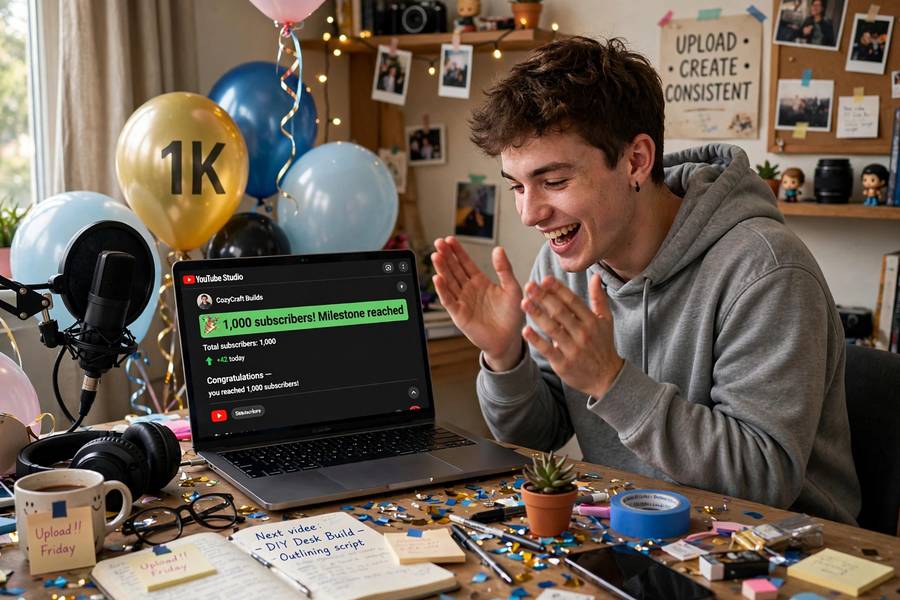
Publish on a schedule you can sustain for a year. Weekly beats daily-if-you-burn-out-in-a-month. The algorithm rewards consistency over intensity. A channel posting every Tuesday for a year will beat a channel that posts daily for six weeks then vanishes.
Using Shorts Without Wrecking Your Channel
Shorts are YouTube’s growth rocket — they can bring thousands of subscribers fast. But Shorts viewers rarely convert to long-form viewers, so use them strategically:
- Repurpose, don’t duplicate. Turn long-form highlights into Shorts that funnel viewers to the full video.
- Keep branding consistent. Same niche, same style — random viral Shorts build an audience that doesn’t care about your real content.
- Don’t panic about the algorithm split. YouTube now separates Shorts and long-form analytics. Judge each format on its own terms.
Analytics Worth Watching (and Ignoring)
Watch: CTR (are people clicking?), average view duration and retention graphs (are they staying?), traffic sources (where do views come from?), and returning vs. new viewers (are you building loyalty or just reach?).
Ignore: subscriber count day-to-day (it lags and misleads), total views without context, and anyone else’s numbers. Your only competition is your last video.
The single most useful habit: after every upload, spend 15 minutes in analytics asking “why?” Why did this CTR beat my average? Why did retention dip at 2:14? The answers compound.
What Doesn’t Work Anymore
Let’s clear the graveyard:
- Tag stuffing. Tags barely matter. Write a few accurate ones and move on.
- Sub4sub and engagement pods. Fake engagement teaches the algorithm to show your videos to people who don’t care. It’s actively harmful.
- Posting time optimization. It matters maybe 2%. Just publish consistently.
- Buying views. Against terms of service, destroys your analytics, and teaches the algorithm wrong lessons about your audience.
- “The algorithm hates small channels.” It doesn’t hate you — it just hasn’t figured out your audience yet. That’s what consistency solves.
Frequently Asked Questions
Most new channels get 10–200 views per video for the first few months. That’s normal. Growth compounds — channels that publish consistently for 6–12 months typically see a breakout video that changes everything.
2–10% is the normal range; 4–6% is solid for most niches. Below 2% usually means your packaging needs work. Above 10% with low impressions often means YouTube is only showing it to your most loyal fans.
As often as you can sustain without quality dropping — for most creators, that’s once a week. Consistency for a year beats an intense month followed by burnout every time.
Shorts grow subscriber counts fast but convert poorly to long-form viewers. Use them as a discovery tool that funnels people to your main content, not as your whole strategy.
No. Bought views violate YouTube’s terms, wreck your analytics, and teach the algorithm to promote your videos to bots instead of real viewers. It’s one of the few things that can genuinely harm a channel.
As long as the topic needs — no longer. The algorithm cares about retention percentage and total watch time, not raw length. A tight 8-minute video beats a padded 20-minute one every time.