How to Do a Proper Push Up: Form, Variations & Plan


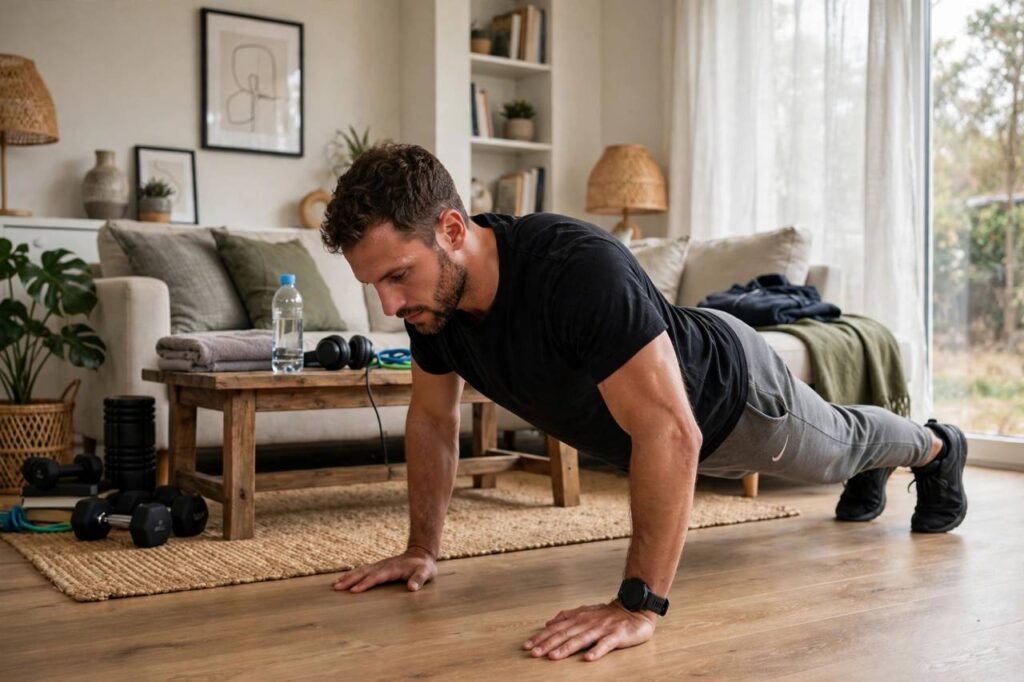
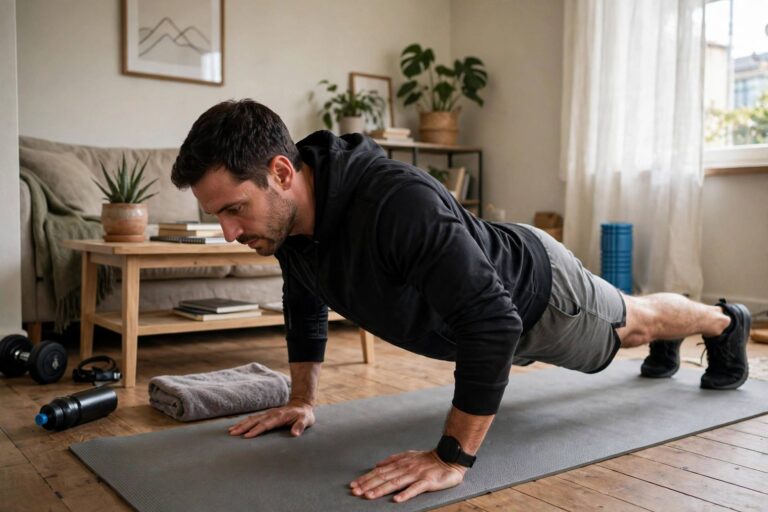
The push-up is the most honest exercise in fitness. No equipment, no gym, no excuses, just you versus gravity. And yet most people do them wrong: sagging hips, flared elbows, half reps that would not count anywhere. A proper push-up builds your chest, shoulders, triceps, and core in one efficient movement. This guide on how to do a proper push up will teach you perfect form from the ground up, fix the mistakes holding you back, and give you a plan to go from zero to twenty clean reps.
Why the Push-Up Deserves Your Respect
Strip away the fitness industry noise and the push-up remains undefeated for upper-body training you can do anywhere. One movement trains the chest, front shoulders, triceps, and the entire core as a stabilizer. It teaches full-body tension, the skill behind every big lift. It scales from absolute beginner to elite athlete. And it is a genuine benchmark: twenty strict push-ups tells you more about someone’s fitness than most gym machines.
But only if the form is real. Ten perfect push-ups beat fifty sloppy ones every time, for strength, for safety, and for results. Let us build yours correctly from rep one.
How to Do a Proper Push Up: Step by Step
Step 1: Set your hands. Place hands slightly wider than shoulder-width, fingers spread, middle fingers pointing forward. Your hands should be under your shoulders or just outside them when viewed from above.
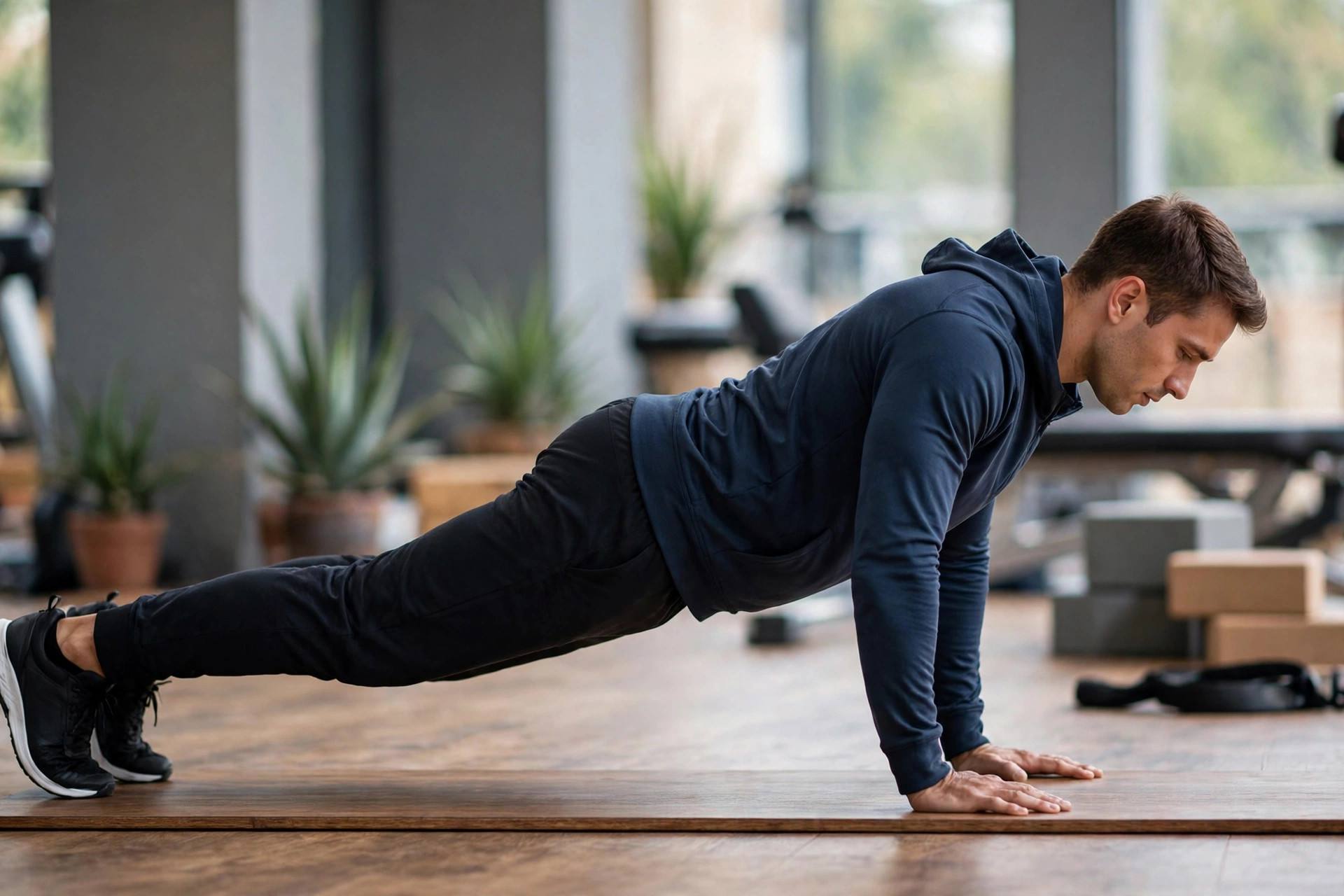
Step 2: Build the plank. Extend your legs back, feet together or slightly apart. Squeeze your glutes hard and brace your abs like someone is about to poke your stomach. Your body should form one straight line from head to heels. No sagging hips, no piked butt.
Step 3: Set your shoulder blades. Before you move, pull your shoulder blades slightly down and back, away from your ears. This protects the shoulders and engages the right muscles.
Step 4: Lower with control. Bend your elbows to lower your chest toward the floor, keeping elbows at roughly 45 degrees from your torso, not flared to 90. Take 2-3 seconds on the way down. Your chest should nearly touch the floor, or at least come within a fist’s height.
Step 5: Push the floor away. Press up explosively, thinking about pushing the ground away rather than lifting yourself. Keep that straight body line. Exhale on the way up.
Step 6: Lock out without hyperextending. Finish with arms straight but elbows soft, not jammed. That is one rep. Reset your tension and go again.
The full-body tightness is the secret most people miss. A proper push-up is a moving plank. If your midsection is loose, your hips sag and your lower back takes the load. Squeeze everything, every rep.
5 Form Mistakes That Kill Your Progress
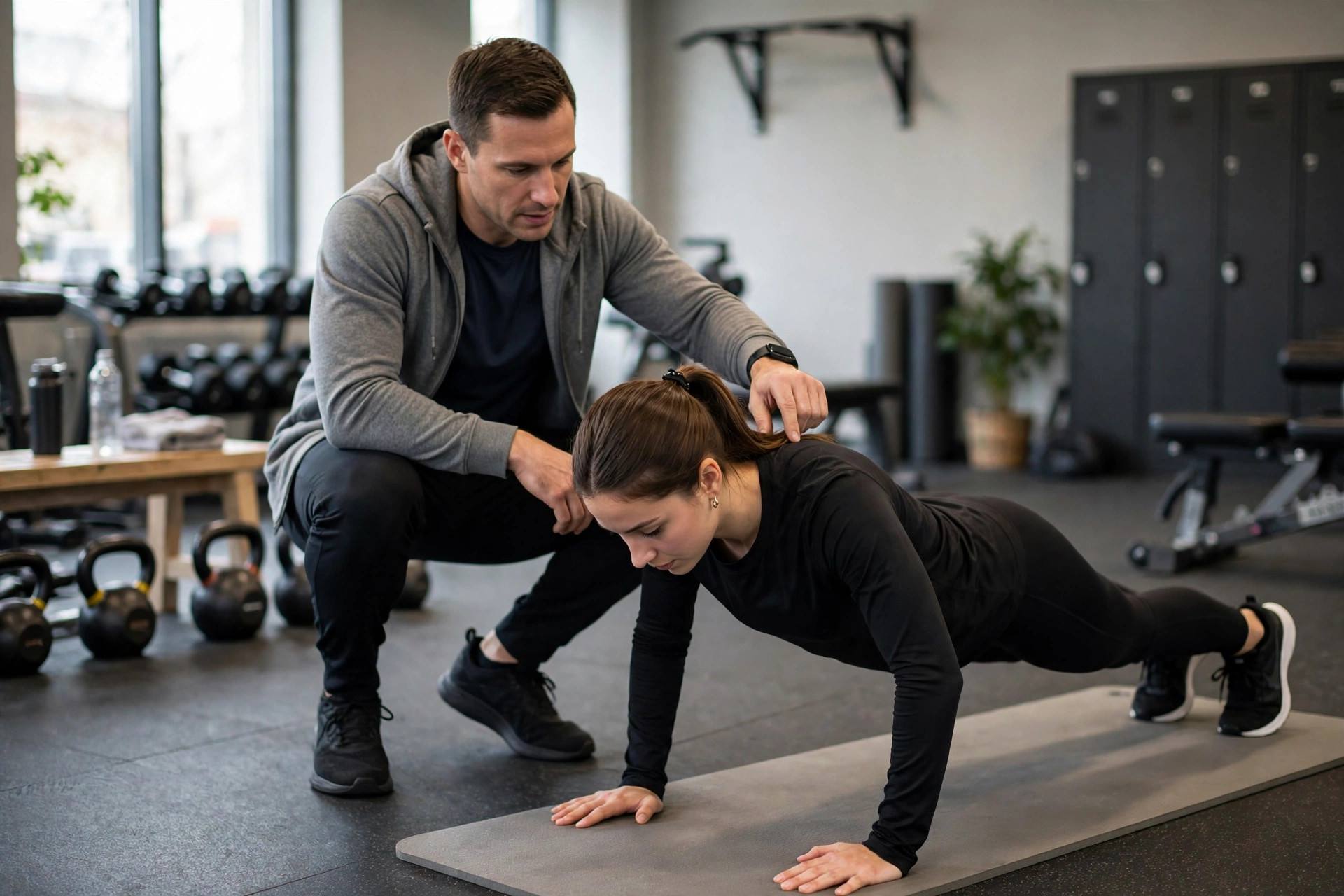
Sagging hips. The classic. Your core disengages and your lower back arches. Fix: squeeze glutes and abs harder, and if you cannot hold the line, regress to knee or incline push-ups. There is no shame in the regression; there is only shame in ugly reps.
Flared elbows. Elbows at 90 degrees stresses the shoulders and weakens the push. Tuck to about 45 degrees, like an arrow, not a T.
Half reps. Bouncing through a two-inch range of motion builds a two-inch range of strength. Chest to near-floor, full lockout, every time.
Head drooping or craning. Your neck should stay neutral, in line with your spine. Pick a spot on the floor a foot ahead and look there.
Rushing. Speed hides weakness. Control the lowering phase for a full 2-3 seconds. You will feel muscles you did not know were involved.
Want a visual reference for the whole movement? Our guide on how to do push-ups breaks down the exercise with additional cues.
Push-Up Variations for Every Level
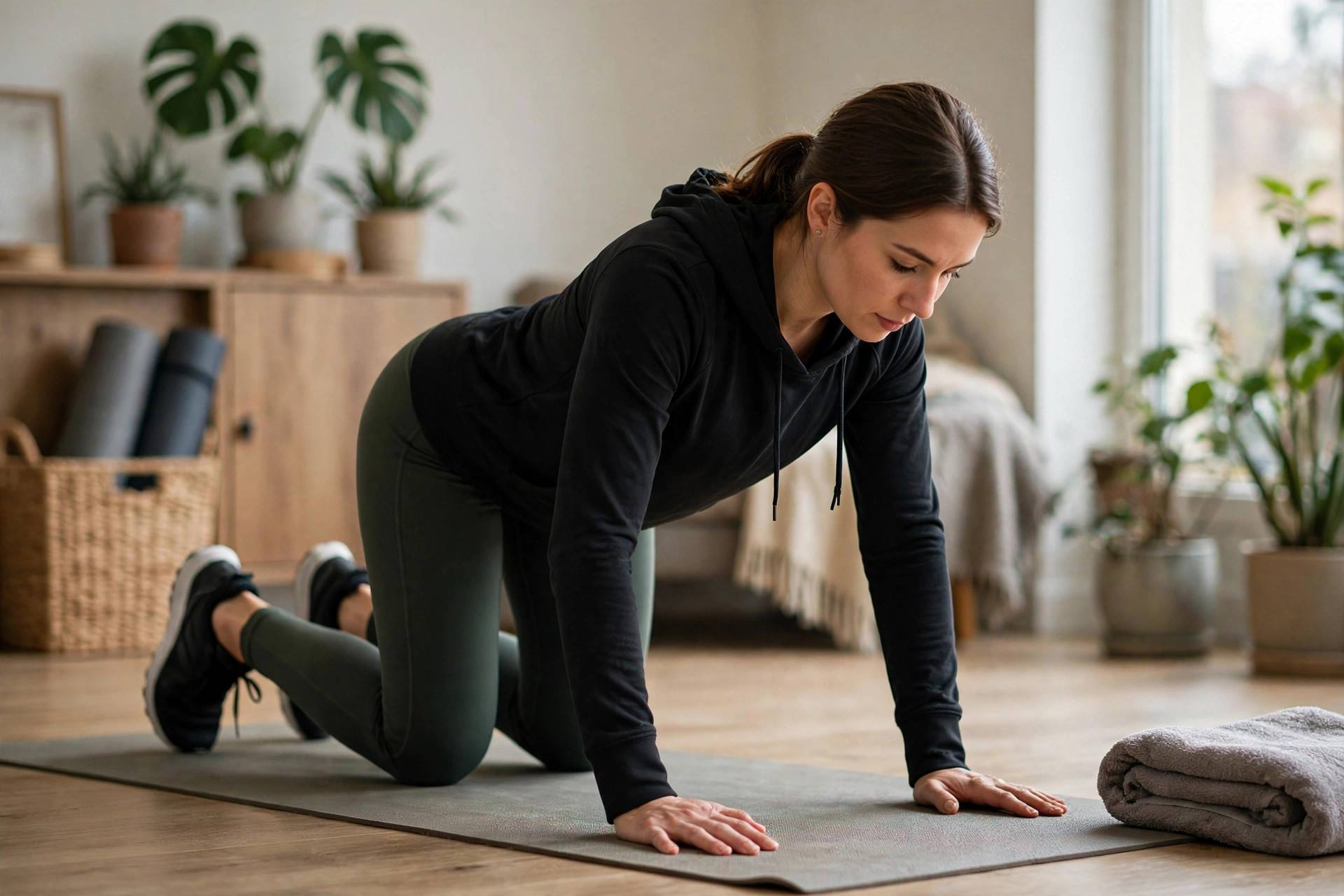
Start here (beginner): Wall push-ups, then incline push-ups with hands on a bench or sturdy table, then knee push-ups. Master 15 clean reps at each stage before progressing. This is not a demotion; it is a ladder.
Standard push-up: the full version described above. Own 20 strict reps before chasing variations.
Level up (intermediate): Close-grip (diamond) push-ups for triceps, wide push-ups for chest emphasis, decline push-ups with feet elevated for upper chest and shoulders, and slow-tempo push-ups (5 seconds down) for brutal time under tension.
Advanced: Archer push-ups, pseudo-planche push-ups (hands turned back by your hips), and eventually single-arm progressions. These are serious strength builders that rival weighted bench pressing.
Push-ups pair perfectly with other equipment-free training. Our bodyweight exercises guide builds a complete no-gym routine around them.
What Muscles Do Push-Ups Work?
Primary movers: the pectoralis major (chest), anterior deltoids (front shoulders), and triceps. Stabilizers: the entire core, rectus abdominis, obliques, plus the glutes, quads, and even the lats and serratus anterior keeping your shoulder blades honest. That is why push-ups feel like a full-body exercise when done right: they nearly are.
Different variations shift emphasis. Close-grip hammers triceps, wide grip biases the chest, decline targets the upper chest and shoulders. Rotate variations to develop the whole pressing musculature evenly.
The 4-Week Push-Up Training Plan
Train push-ups 3 days per week with at least one rest day between. Test your max strict reps on day one.
If your max is 0-5: do incline push-ups. Week 1: 3 sets of 8. Week 2: 4 sets of 8. Week 3: 3 sets of 12. Week 4: test standard push-ups from the floor.
If your max is 6-15: standard push-ups. Week 1: 4 sets of 60% of max. Week 2: 5 sets of 60%. Week 3: 4 sets of 75%. Week 4: retest max. Most people add 5-10 reps.
If your max is 16+: add variations. Replace one session weekly with decline or close-grip push-ups, and add a finisher: as many strict reps as possible in 2 minutes. Chase 40+.
Recover like you mean it: protein, sleep, and no maxing out daily. Strength is built between sessions, not during them. For building the rest of your physique at home, see how to build muscle at home.
How Many Push-Ups Should You Be Able to Do?
Benchmarks, strict form, no time limit: beginners 5-10, intermediate 20-30, advanced 40-50+, elite 75+. By age, general fitness guidelines suggest adult men aim for 20-30 and adult women 10-20 as solid baselines, but these are rough markers, not verdicts. Wherever you start, the plan above moves you forward. The only bad number is the one you stop trying to improve.
Programming Push-Ups Into Your Training Week
Push-ups work best as part of a balanced routine, not a daily max-out ritual. Here is how to slot them in.
The full-body days approach. If you train 3 days weekly, do push-ups every session: 4-5 sets, stopping 2-3 reps short of failure. Pair with squats or lunges, rows (inverted rows if no equipment), and core work. This covers everything with minimal gear.
The push/pull split. On push days, combine push-ups with overhead pressing (pike push-ups work without weights) and dips between chairs. On pull days, do rows and curls. Alternate across 4 training days. Balanced pushing and pulling keeps shoulders healthy.
Greasing the groove. An advanced technique for breaking plateaus: do multiple submaximal sets spread through the day, never near failure. If your max is 20, do sets of 10 every hour or two. High frequency, low fatigue, remarkable strength gains over 3-4 weeks. Then rest a few days and retest.
What about daily push-ups? Daily max-effort push-ups beat up shoulders and elbows without enough recovery to adapt. But daily easy sets, half your max, work fine for most people and build the habit beautifully. Intensity and volume are the dials; turn one up and the other down.
Fueling and Recovery for Push-Up Progress
Strength adapts between workouts, not during them. Protein: aim for roughly 0.7-1 gram per pound of bodyweight daily, spread across meals. You cannot build what you do not feed. Sleep: 7-9 hours; growth hormone does its best work while you are out cold. Rest days: muscles need 48 hours before the same intense stimulus. Soreness is information, not a badge; train through mild soreness, rest through sharp pain.
Warm up before every session: arm circles, band pull-aparts if you have a band, and a set of easy incline push-ups. Two minutes of preparation prevents weeks of tendonitis rehab. Train smart and the reps will come.
One last programming note: track your numbers. A simple log, date, sets, reps, variation, turns vague effort into visible progress, and visible progress is the most powerful motivator in fitness. Review monthly, celebrate the trend, and adjust the plan when progress stalls for two weeks. The push-up rewards the patient and the consistent above all else.
Key Takeaways
A proper push-up: hands under shoulders, body in a straight plank line, glutes and abs braced, elbows at 45 degrees, chest to near-floor with a controlled 2-3 second descent, explosive press to full lockout. Fix sagging hips, flared elbows, half reps, and rushing. Progress from wall to incline to knee to standard, then attack variations. Train 3 days weekly, recover well, and chase strict reps, not sloppy ones. Ten perfect push-ups beat fifty bad ones, today and always.
FAQ
What is the proper form for a push-up?
Hands slightly wider than shoulders, body in a straight line from head to heels, core and glutes braced, elbows at 45 degrees, lower chest to near the floor over 2-3 seconds, then press up to full lockout.
How many push-ups should a beginner do?
Start with 3 sets of as many good reps as you can do, using incline or knee variations if needed. Even 5 clean reps per set is a fine start; add reps weekly.
Do push-ups build muscle?
Yes, especially for beginners and intermediates. They build the chest, shoulders, and triceps effectively. Progress to harder variations (decline, diamond, archer) to keep building as you get stronger.
Why do my wrists hurt during push-ups?
Usually limited wrist mobility or too much volume too soon. Try push-up handles or fists on a mat to keep wrists neutral, warm up wrists beforehand, and build volume gradually.
Are knee push-ups effective?
Absolutely. They train the same muscles through the same movement pattern with less load, making them the ideal progression step toward full push-ups. Master 15 clean knee push-ups, then move to the floor.