

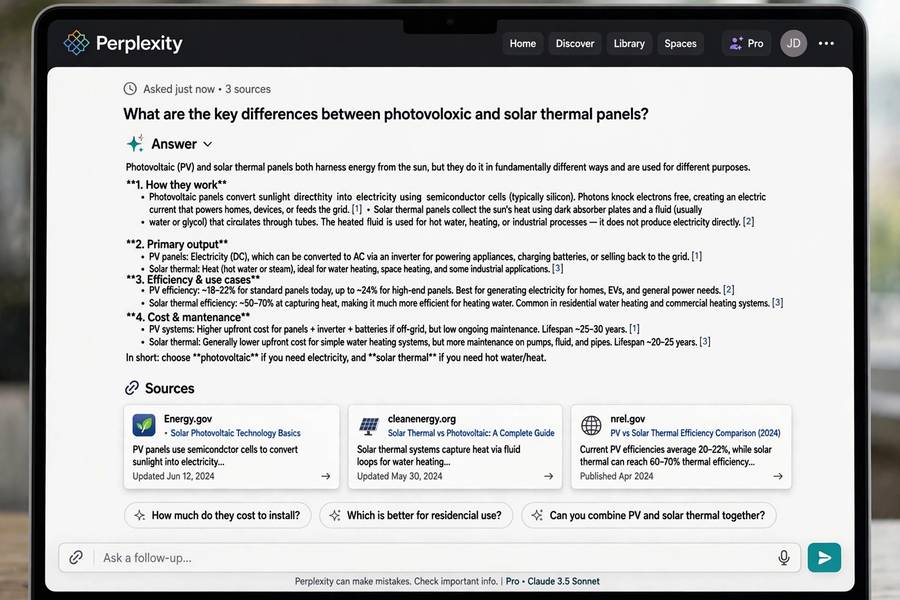
Perplexity became the poster child of AI search — the startup that made “answer engine” a category, growing from curiosity to serious Google-challenger conversation in record time. But what does it actually DO differently? Under the hood, it’s a particular philosophy of search: retrieval-first, citation-obsessed, conversational — with design choices that distinguish it from both traditional search and chatbot hybrids.
This guide explains how it works: the pipeline, the distinctive features, and where it fits in the landscape. For the general concept, see what AI search is.
Table of Contents
- Perplexity in One Paragraph
- The Core Pipeline: How Answers Are Built
- The Retrieval Layer: What’s Different
- The Synthesis Layer: Model Choices
- Citations: The Signature Feature
- Focus Modes: Searching With Intent
- Pro Search: The Deep Research Mode
- Conversational Threads
- How It Differs From Alternatives
- Limitations and Criticisms
- Getting More Out of It: Query Craft That Actually Helps
- Frequently Asked Questions
Perplexity in One Paragraph
Perplexity is an AI-powered answer engine: you ask questions in natural language, and it retrieves relevant web sources, synthesizes them into a direct answer using large language models, and presents the answer with inline citations you can verify. It combines traditional search infrastructure (finding sources) with LLM synthesis (answering from them), wrapped in a conversational interface with follow-up threading. The defining philosophy: answers you can check, not just answers.
The Core Pipeline: How Answers Are Built
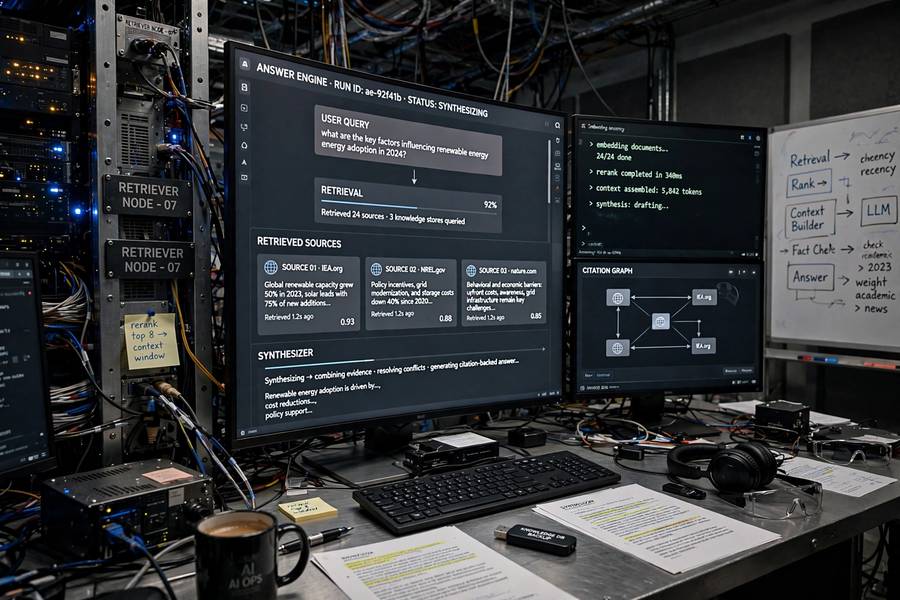
The journey from question to answer:
-
Query understanding. Your natural-language question is parsed — intent, entities, what you’re really asking. Ambiguous queries may trigger clarifying behavior or multi-angle retrieval.
-
Multi-source retrieval. The system searches its index (web sources, and depending on settings, academic papers, forums, news) — typically retrieving more sources than it will directly cite, casting a wide net.
-
Relevance filtering. Retrieved sources are assessed for relevance and quality — the system selects the subset worth synthesizing from. This curation step significantly affects answer quality.
-
Synthesis. An LLM reads the selected sources and generates the answer — structured, direct, in natural language. The model is instructed to ground claims in the sources.
-
Citation attachment. Claims are linked to their supporting sources — inline citations, the signature feature. Each citation should (in principle) let you verify the specific claim.
-
Follow-up generation. Related questions are suggested, and the conversation thread maintains context for refinements.
The pipeline is the standard AI search architecture — Perplexity’s differentiation is in execution quality and product design, not fundamental novelty.
The Retrieval Layer: What’s Different
What distinguishes the retrieval:
Source diversity. Beyond general web — academic papers, news, forums (Reddit/Quora), social media, depending on focus settings. The breadth matters for question types where the best answers live outside mainstream web content.
Freshness emphasis. Real-time web access as a core feature, not an add-on — important for current events, recent developments, anything where training knowledge is stale.
The index question. Perplexity’s index depth versus Google’s decades-deep crawl — the honest assessment is that Google’s index is broader, especially for obscure/long-tail content. Perplexity compensates with better synthesis of what it does retrieve.
Retrieval transparency. Showing which sources were consulted (not just cited) — a transparency level beyond most competitors. You see the raw material, not just the product.
The Synthesis Layer: Model Choices
Perplexity’s interesting architectural choice: model optionality.
Multiple models. Users (especially paid tiers) can choose which LLM powers synthesis — different models for different needs (speed vs depth vs capability). This is unusual — most AI search products hide the model.
Why it matters: different models have different strengths. A fast model for quick questions, a frontier model for hard ones. The choice lets users optimize per query — sophisticated, though most users won’t bother.
The default experience: well-chosen defaults mean most users never touch the setting. But its existence signals a philosophy — transparency about the machinery, user agency over the pipeline.
The synthesis quality depends on the model selected, but also on the retrieval feeding it — the pipeline principle holds: great model, poor retrieval = poor answer. Perplexity’s product quality comes from both halves working.
Citations: The Signature Feature
The feature that defined the category:
Inline citations. Claims linked to sources at the sentence or paragraph level — click to verify. This is the verification contract made concrete.
Why it matters: it changes the trust dynamic. Instead of “trust the AI,” it’s “check the AI” — the citations are an invitation to verify, and the product is designed around that invitation.
The reality check: citations don’t always fully support claims — the mismatch problem affects Perplexity like everyone. But the CITATION DENSITY and prominence exceed competitors, making verification easier and more natural.
The behavioral effect: users who see citations click them (sometimes), developing verification habits. The product design nudges toward healthy skepticism — a genuinely good influence on information consumption.
The standard it set: citations are now table stakes for AI search — Perplexity made them expected. That’s a lasting contribution regardless of the company’s fate.

Focus Modes: Searching With Intent
A distinctive feature: scoped search modes.
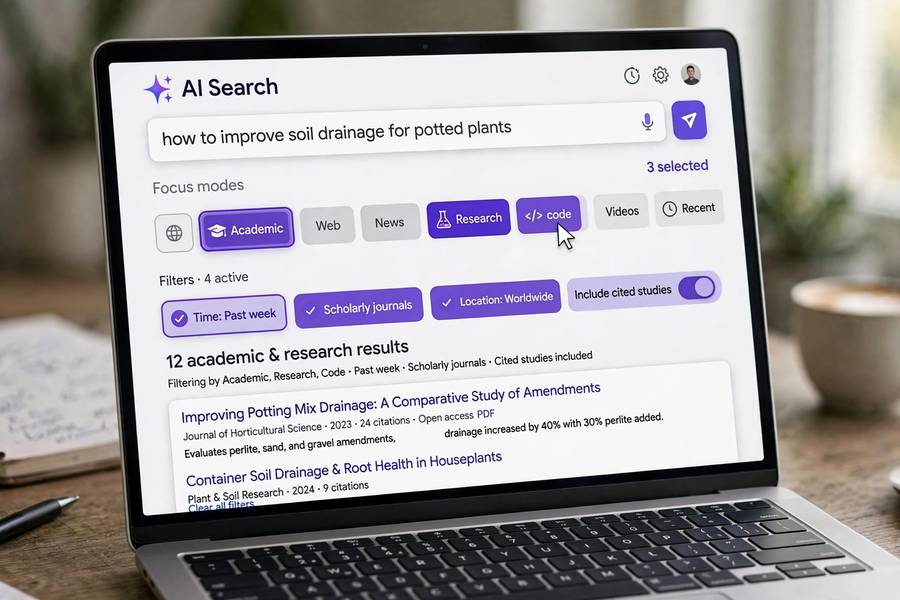
What they are: options to restrict retrieval to specific source types — academic papers, news, forums, web, social. “Focus” the search on the most relevant corpus for your question.
Why it matters: different questions need different sources. A scientific question wants papers, not blogs. A product question wants reviews and forums, not press releases. Focus modes let you direct retrieval intelligently.
The UX insight: it gives users control over the retrieval layer — unusual transparency into (and agency over) the pipeline. Most search hides these choices; Perplexity exposes them.
Practical use: default (web) for general questions; academic for research; news for current events; forums for experiential questions (“is this product actually good?”). The mode selection becomes part of asking well.
Pro Search: The Deep Research Mode
The power feature for hard questions:
What it does: multi-step retrieval and reasoning — the system breaks complex questions into sub-questions, retrieves for each, synthesizes iteratively. Deeper than single-pass search.
When to use it: research questions, complex comparisons, topics needing comprehensive coverage. The “I need a real brief, not a quick answer” mode.
The trade-off: slower (multiple retrieval-synthesis cycles take time) and often paywalled (the compute costs real money). Worth it for important questions; overkill for quick ones.
What it represents: the direction of AI search — from single-shot answers to agentic research. Pro Search is an early version of AI doing extended investigation autonomously.
Conversational Threads
The interaction model:
Threaded follow-ups. Each search starts a thread; follow-up questions maintain context. “What about the risks?” inherits the topic — no restating.
Thread as research artifact. The thread becomes a documented investigation — question, answer, sources, refinements. Shareable, reviewable, more valuable than isolated queries.
Branching. Explore tangents without losing the main thread — the conversation structure supports real research workflows, not just Q&A.
The comparison: more structured than chatbot free-chat, more conversational than traditional search. A middle path that suits investigatory work particularly well.
How It Differs From Alternatives
Vs traditional search (Google): answers instead of links, synthesis instead of self-service, citations instead of snippets. Less breadth, more convenience. The trade-off is verification burden vs research labor.
Vs AI modes in search: more dedicated — the entire product is the answer engine, not a layer atop link lists. Often deeper synthesis, less index breadth.
Vs chatbot hybrids: more retrieval-grounded by default — the product starts from search, not conversation. Better for factual questions; less free-form than chat.
The positioning: the “research assistant” slot — more rigorous than chat, more convenient than traditional search. It’s a distinct position, not just a feature difference.
Limitations and Criticisms
Honest assessment:
Hallucination risk persists. Grounded or not, the synthesis can misread sources, blend contradictions, or overstate. Citations mitigate (you can check) but don’t eliminate.
Index depth. Google’s crawl is deeper for obscure content. Perplexity’s retrieval is good but not index-leading.
The business model question. Like all AI search — how does it make money at scale? Subscriptions work for power users; the mass-market economics are unproven.
Content ecosystem concerns. Publishers argue answer engines extract value from their content without sending traffic — the existential question for the web content economy. Perplexity’s citations send SOME traffic, but far less than link lists. This tension is unresolved industry-wide.
Over-reliance risk. Beautiful, cited answers encourage trust — but verification remains the user’s job, and most won’t do it consistently.
The balanced view: an excellent tool with real limitations, in a category with unsolved economics and ecosystem questions. Use it well (verify important claims), understand its position, and watch how the space evolves.
Getting More Out of It: Query Craft That Actually Helps
Perplexity rewards good asking more than most tools admit. A few techniques that measurably improve results:
Set the focus mode before you ask. Academic for science, news for current events, forums for lived experience (“is this product actually good?”). The mode is half the answer quality — most users leave it on default and complain about generic results.
Follow up instead of restarting. Threads preserve context, and each refinement compounds. Five follow-ups in one thread beat five fresh queries.
Interrogate specific claims. When an answer matters, ask it to re-verify a single figure against its source. This catches the citation-mismatch problem where it lives.
Click the suggested follow-ups. They’re often the question you should have asked — the product thinking one step ahead of you.
Cross-check occasionally. Perplexity’s retrieval is good but not index-leading; a second engine on important questions is cheap insurance.
Frequently Asked Questions
It parses your natural-language question, retrieves relevant sources from its index (web, academic, news, forums), has an LLM synthesize a direct answer from those sources, and presents it with inline citations for verification — all in a conversational thread supporting follow-ups.
Options to restrict retrieval to specific source types — academic papers, news, forums, web, social. Different questions need different sources; focus modes let you direct retrieval intelligently, giving unusual transparency and control over the search pipeline.
A deep-research mode that breaks complex questions into sub-questions, retrieves for each, and synthesizes iteratively — multi-step agentic investigation rather than single-pass answers. Slower and often paywalled, but much deeper. Best for important research questions.
Treat them as well-sourced briefs to verify, not authorities. The inline citations are the key feature — click through on important claims. Hallucination risk persists (misread sources, blended contradictions), so verification effort should match the stakes.
Perplexity gives synthesized answers with citations instead of link lists — less research labor, more convenience, but narrower index breadth and a verification burden. Google offers the broadest index and transparent source selection. They’re complements: Perplexity for synthesis, Google for verification and depth.