
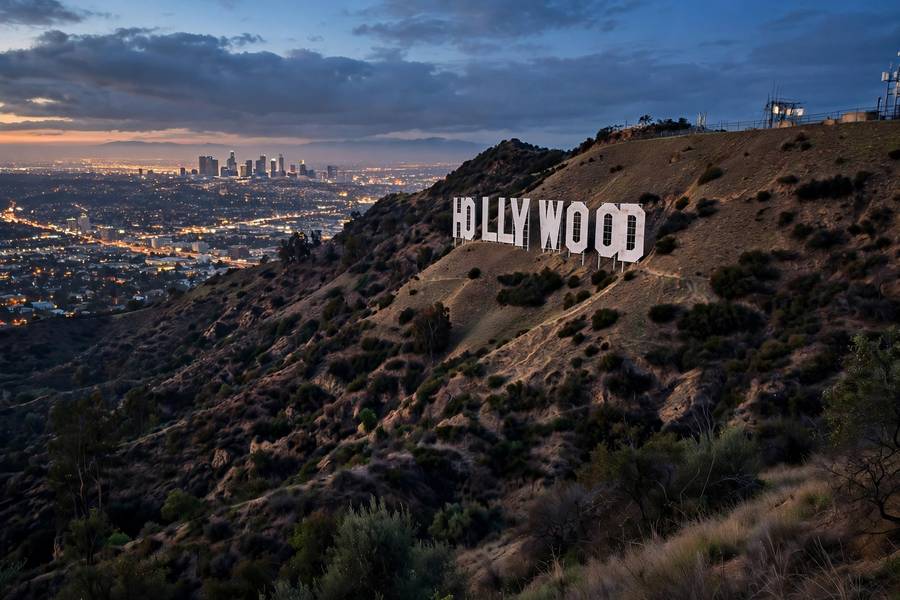
People picture Hollywood as a place — the sign, the Walk of Fame, the palm trees. But Hollywood is really a system: a few thousand people, a few dozen companies, and a set of financial rituals that decide what gets made, who gets famous, and where billions of dollars go. I’ve covered this industry for years, and the gap between the fantasy and the machinery never stops being interesting. So how does Hollywood work? At its core, it’s a hits-driven business where studios and streamers fund expensive gambles, talent and guilds supply the labor, and a handful of gatekeepers decide which stories reach the screen.
Table of Contents
- How Does Hollywood Work, Really?
- The Studios, the Streamers, and the Money
- The Greenlight Machine: How Projects Get Approved
- The Talent Pipeline: From Unknown to Bankable
- Release Windows: How a Movie Actually Makes Money
- The Guilds and Unions: Labor’s Counterweight
- Where the Power Is Moving Now
- Frequently Asked Questions

How Does Hollywood Work, Really?
Start with the fundamental economics, because everything else follows: Hollywood is a hits business with brutal math. A major studio film can cost $200 million to produce and another $150 million to market. It needs to earn roughly two-and-a-half times its production budget theatrically to break even — which means a $200 million film needs something like $500 million at the box office just to not lose money.
Most films don’t get there. The industry survives because the hits are enormous — a single billion-dollar franchise entry can cover a studio’s misses for years. This is why everything is a franchise, a sequel, or based on something with a built-in audience: originality is a risk, and risk is expensive.
The second fundamental: Hollywood doesn’t sell movies. It sells the possibility of movies. Development — the years-long process of buying scripts, attaching talent, and assembling packages — is an industry unto itself, and most of what gets developed never gets made. For every film you see, dozens died in development. The town runs on projects that exist only as PDFs and promises.
The third: it’s a relationship business wearing a corporate suit. Deals happen because people trust each other, or owe each other, or fear each other. The org charts are real, but the actual decisions get made in the spaces between them — the lunch, the phone call, the “we should do something together” that turns into a greenlight eighteen months later.
The Studios, the Streamers, and the Money
The power structure has two layers now — the legacy studios and the streamers — and they’re converging fast.
The legacy studios — Disney, Warner Bros., Universal, Paramount, Sony — own the century-old machinery: production facilities, distribution networks, libraries of intellectual property. Their business model was theatrical releases plus downstream windows (home video, then cable, then streaming). That model is wobbling but not dead; the theatrical window still generates the cultural events that make everything else valuable.
The streamers — Netflix, Amazon, Apple, Disney+, Max — changed the money. Instead of selling tickets, they sell subscriptions, which means their math is different: a film’s value is measured in subscriber acquisition and retention, not box office. This let them greenlight projects theaters would never support — mid-budget dramas, international productions, auteur passion projects. It also made them the town’s biggest employers almost overnight.
The money flows: Studios finance productions (sometimes alone, often with co-financiers and tax incentives), spend massively on marketing, and collect revenue across windows. Talent gets paid upfront fees plus “participation” — a share of profits, defined by contracts so creative that “Hollywood accounting” (the art of making profitable films look unprofitable on paper) is a running joke with real lawsuits behind it.
Understanding how movies are made at the production level is one thing; this is the level above it — the financial weather system that determines whether the production happens at all.
The Greenlight Machine: How Projects Get Approved
Nothing in Hollywood is more mythologized — or more mundane — than the greenlight. Here’s how a project actually moves from idea to approved production:
Step 1: The material. It starts with intellectual property — a script, a book, a comic, a podcast, a true story, a remake of something that worked before. Original screenplays from unknown writers are the hardest sell in the business; pre-existing IP with an audience is the easiest. This single fact explains most of what you see in theaters.
Step 2: The package. A producer attaches elements: a director, a star, maybe a co-financier. Each attachment increases the project’s value. A script is a lottery ticket; a script with a bankable star attached is a lottery ticket someone might actually buy. Agencies “package” their clients together — star, director, writer from the same agency — which is efficient and, critics argue, self-serving.
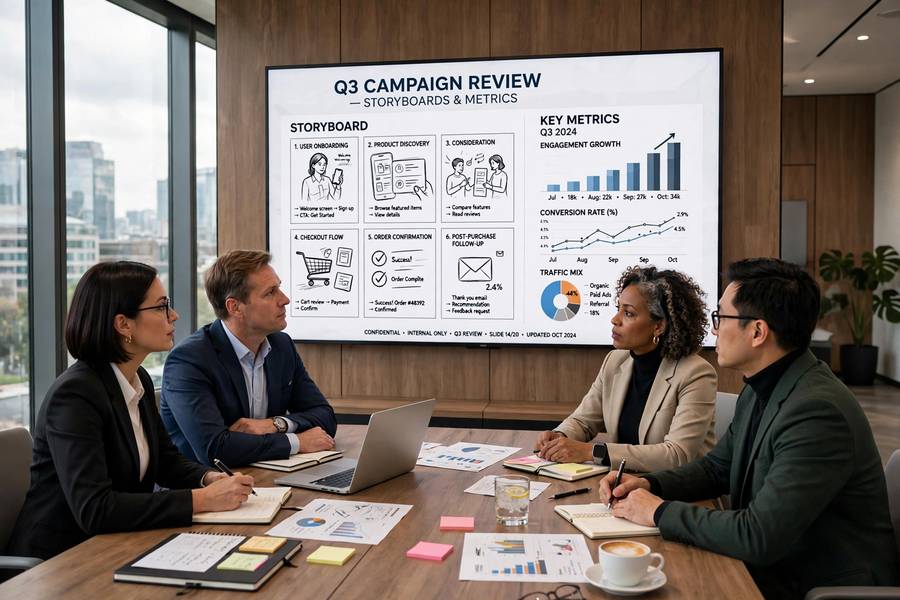
Step 3: The internal sell. The producer or studio executive champions the project through layers of approval: creative executives, the head of production, marketing (can we sell this?), finance (what does it cost?), and ultimately the studio chief or greenlight committee. Each layer can kill it. Most projects die here — quietly, in conference rooms.
Step 4: The greenlight. Formal approval with a budget and a start date. This is rarer than it sounds — studios greenlight a fraction of what they develop. And even greenlit films can be un-greenlit; until cameras roll, everything is provisional.
If you’re a writer trying to break in, our guide on how to write a screenplay covers the craft; this is the business reality the craft has to survive.
The Talent Pipeline: From Unknown to Bankable
How does a person become a Hollywood somebody? The pipeline has stages, and each one is a filter:
Training and early work. Acting classes, theater, student films, commercials — the unglamorous foundation. Nobody skips this, though some sprint through it faster.
Representation. Getting an agent — the licensed dealmaker who can actually submit you for professional work. Then, usually, a manager for career strategy. The team assembles before the career does.
The credits ladder. Guest spots, co-star roles, indie films, recurring TV parts — each credit makes the next one easier. Casting directors work from lists; getting on the list is the whole early-career game.
The breakout. One role that lands — the scene-stealer, the indie darling, the viral performance. Breakouts are unpredictable by nature; the industry spends enormous energy trying to manufacture them and mostly fails. They happen when preparation meets a role that fits like a key in a lock.
Bankability. The promised land: your name on a poster moves the financial needle. True bankability — the ability to greenlight a project by attaching yourself — belongs to maybe a few dozen people on earth. Everyone else is, to varying degrees, replaceable. The town never lets you forget it.
The maintenance. Staying bankable is harder than getting there. Careers are managed like portfolios: franchise work for money, prestige work for credibility, celebrity endorsements for income diversification. One flop doesn’t end you; a pattern does.
The pipeline leaks at every stage — most people who start don’t finish. That’s not a bug; it’s the design. The system needs far more aspirants than it has jobs, because the competition is what keeps labor cheap and the talent pool deep.
Release Windows: How a Movie Actually Makes Money
A film’s revenue doesn’t come from one place — it cascades through “windows,” each one a separate payday:
Theatrical. The box office — still the prestige window, still the cultural event-maker. Studios typically keep about half of domestic ticket sales (less internationally). A big opening weekend sets the narrative for everything after.
Premium VOD / digital rental. The collapsed window — films now hit home platforms in weeks, not months. Accelerated by the pandemic, never reversed.
Streaming licensing. Studios license films to streamers (or put them on their own platforms). For streamers, the film’s value is subscriber engagement; for licensors, it’s a fat check.
Television and cable. The old downstream — still real money, especially internationally, though shrinking.
The windowing system is why release strategy is a chess game: each window’s timing affects the others, and the sequence is negotiated years in advance. The streamers blew up the traditional sequence by collapsing windows — and the industry is still arguing about what the new normal should be.
The practical takeaway: when you hear a film “made” $500 million, that number went through a gauntlet of splits, fees, and participations before anyone saw profit. The gross is the headline; the net is the story.
The Guilds and Unions: Labor’s Counterweight
Hollywood is one of the most unionized industries in America, and the guilds are the reason the talent pipeline doesn’t run on pure exploitation:
SAG-AFTRA (actors), the WGA (writers), and the DGA (directors) are the big three “above-the-line” guilds. They set minimum pay rates, residuals (payments for reuse), working conditions, and — crucially — pension and health benefits. IATSE covers the below-the-line crews: the camera operators, grips, editors, and craftspeople who physically make the productions.
The guilds negotiate collectively with the studios (represented by the AMPTP) every few years, and those negotiations periodically explode — the 2023 dual WGA/SAG-AFTRA strikes shut the industry down for months, the first joint strike in over sixty years. The issues: streaming residuals (the old formulas didn’t fit the new economics), AI protections, and minimum staffing.
Why this matters for understanding Hollywood: the guilds are the industry’s immune system. Every protection actors and writers take for granted — the minimums, the residuals, the turnaround times — was won in a fight. The strikes aren’t interruptions of the business; they’re part of how the business works. Labor peace is always temporary, always negotiated, always about to expire.
For anyone entering the industry, the practical filmmaking tips always include the same advice: join the guild as soon as you’re eligible. The protections are worth more than the dues, every time.
Where the Power Is Moving Now
Hollywood’s power map is being redrawn in real time. Here’s where it’s going:
To the streamers, now the town’s biggest employers. To international markets, where the growth actually is. To creators with direct audiences, who hold leverage the old system never gave them. The greenlight still matters — but who gets to hold it, and who can bypass it entirely, is changing faster than the mythology can keep up.

Frequently Asked Questions
Hollywood is a hits-driven business: studios and streamers fund expensive productions, most of which underperform, while a few massive hits cover the losses. Revenue cascades through release windows — theatrical, digital, streaming, TV, and merchandise — with each window a separate payday.
A producer assembles a package (script plus attached director, stars, and financing), then sells it through layers of studio approval — creative executives, marketing, finance, and the studio chief. Most developed projects die in this process; only a fraction ever get formal approval.
Studio chiefs and streamer executives control greenlights; top agents package talent; and IP owners hold growing leverage in the franchise era. True “bankable” stars who can greenlight projects by attaching themselves number only a few dozen worldwide.
Guilds like SAG-AFTRA, the WGA, and the DGA set minimum pay, residuals, working conditions, and benefits for their members, negotiating collectively with studios. IATSE covers below-the-line crews. Their contracts are renegotiated every few years, periodically through strikes.
Yes, but the power map is shifting. Streamers are now the biggest employers, international markets drive growth, and creators with direct audiences hold new leverage. Theatrical releases still create the cultural moments that streaming struggles to replicate.
Economics: with $200M+ production budgets plus marketing, studios need predictable returns, and pre-existing IP with a built-in audience is the safest bet. Originality is a financial risk the current system is structured to avoid.