

I’m Jonathan. I’ve built and advised companies on both sides of this divide, and here’s what I’ve learned: B2B vs B2C isn’t just a label — it’s a completely different way of running a business. Different customers, different sales, different marketing, different math. Picking the wrong model for your strengths is one of the most common reasons good products fail.
Whether you’re starting something, investing, or just trying to understand business news, this distinction matters. Let’s make it concrete.
One scope note: this guide is the comparison — the differences, the examples, the sales and marketing contrasts, and which model fits your strengths. The B2C model itself — its definition, business models, marketing playbook, and unit economics — gets the full treatment in our companion guide, what is B2C. If B2C is what you came to learn about, start there; if you’re choosing between models, you’re in the right place.
In This Guide
- What B2B and B2C Mean
- The 7 Key Differences
- Examples of Each
- B2B Marketing vs B2C Marketing
- Pricing and Sales Cycles Compared
- Which Model Fits You?
- Companies That Do Both
- Frequently Asked Questions

What B2B and B2C Mean
B2B (business-to-business): a company selling products or services to other businesses. Salesforce selling software to a bank. A wholesaler selling restaurant supplies to restaurants. A manufacturer selling components to an automaker.
B2C (business-to-consumer): a company selling directly to individual consumers — Nike selling shoes to you, Netflix selling subscriptions to households. For what B2C means in detail — the models, the marketing, the unit economics — see what is B2C.
The distinction is about the customer, not the product. Steel can be B2B (sold to manufacturers) while a steel water bottle is B2C. Software can be either — or both. What changes is everything about how you sell it.
If you’re new to business concepts generally, my explainer on what a startup is is useful background — most startups pick one of these two models in their first year, and the choice shapes everything after.
The 7 Key Differences
1. Who decides. In B2C, one person decides — often emotionally, often in minutes. In B2B, a committee decides: the end user, their manager, procurement, finance, IT security, legal. I’ve seen B2B deals need sign-off from seven people who all have veto power.
2. Sales cycle length. B2C: minutes to days. You see an ad, you buy the shoes. B2B: weeks to eighteen months. Enterprise software deals routinely take 6–12 months from first call to signed contract.
3. Purchase motivation. Consumers buy on desire, identity, convenience, and emotion — then justify with logic. Businesses buy on ROI, risk reduction, and efficiency — then justify with spreadsheets. Your B2B pitch deck needs numbers; your B2C ad needs feelings.
4. Transaction size and volume. B2B: fewer customers, much larger deals. Losing one enterprise client can cost you six figures in annual revenue. B2C: thousands or millions of customers, small individual purchases. Losing one customer is a rounding error.
5. Relationship depth. B2B runs on relationships — account managers, quarterly reviews, multi-year contracts. B2C runs on brand and experience — most customers will never speak to a human at the company.
6. Marketing channels. B2C lives on social media, influencers, emotional advertising, and retail presence. B2B lives on LinkedIn, industry conferences, white papers, webinars, case studies, and outbound sales teams. The overlap is smaller than you’d think.
7. Price sensitivity. Consumers compare prices constantly and switch for $5. Businesses care about total cost and risk far more than sticker price — a $50,000 system that saves $200,000 is an easy yes, while a consumer agonizes over a $50 price difference between two headphones.
Examples of Each
Classic B2B: Salesforce, Adobe’s enterprise division, Cisco, McKinsey, Sysco (food distribution), Caterpillar, Workday, HubSpot’s enterprise tier.
Classic B2C: Apple (mostly), Coca-Cola, Zara, Spotify, Airbnb, Nike, Tesla’s consumer sales.
The interesting part is how many companies straddle the line. Amazon is B2C (retail) and B2B (AWS sells computing to businesses — and AWS makes most of Amazon’s profit). Microsoft sells Windows to you and Azure to enterprises. Understanding which side drives a company’s economics tells you a lot about its strategy.
B2B Marketing vs B2C Marketing
This is where the models feel most different day-to-day:
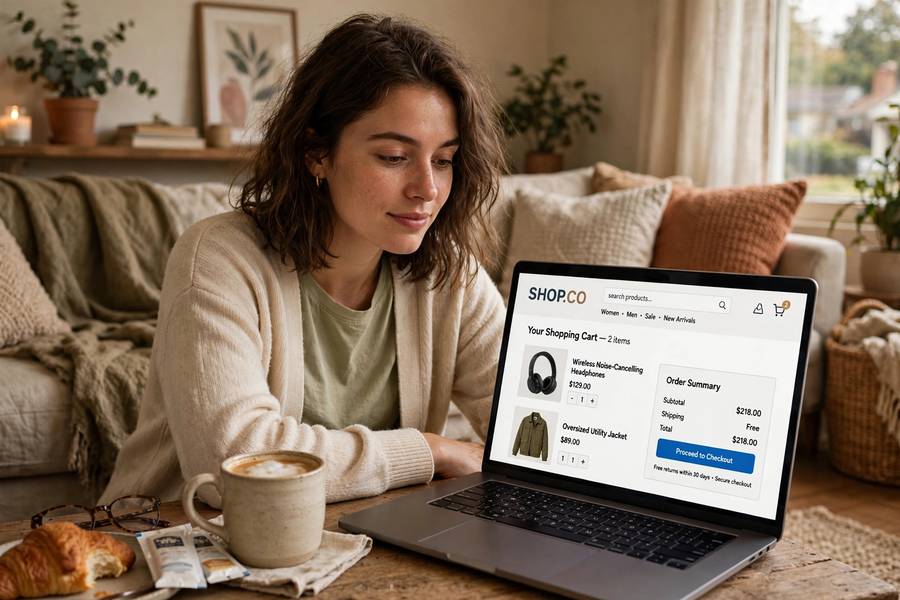
B2C marketing is about attention and emotion at scale. Viral campaigns, influencer partnerships, beautiful packaging, memorable slogans. Success metrics: brand awareness, conversion rate, customer acquisition cost, lifetime value. The funnel is wide and fast.
B2B marketing is about trust and education over time. Detailed case studies (“how we saved Client X $2M”), ROI calculators, product demos, free trials for teams, thought-leadership content. Success metrics: qualified leads, pipeline value, win rate, sales cycle length. The funnel is narrow and slow.
A B2C brand can win with one brilliant Super Bowl ad. A B2B company wins with eighteen months of consistent, useful touchpoints that make a buying committee feel safe choosing them. Different games entirely.
Your branding strategy flows directly from this choice — B2C brands are personalities; B2B brands are promises of reliability.
Pricing and Sales Cycles Compared
B2C pricing is transparent and fixed: the price tag is the price. Discounts are promotional and time-limited. The psychology is about perceived value vs. price — charm pricing ($9.99), anchoring, bundles.
B2B pricing is negotiated and opaque: list prices exist mainly as a starting point. Enterprise deals involve custom quotes, volume tiers, multi-year discounts, and procurement negotiations. I’ve seen identical software sell for 3x different prices to different customers based on deal size and negotiation.
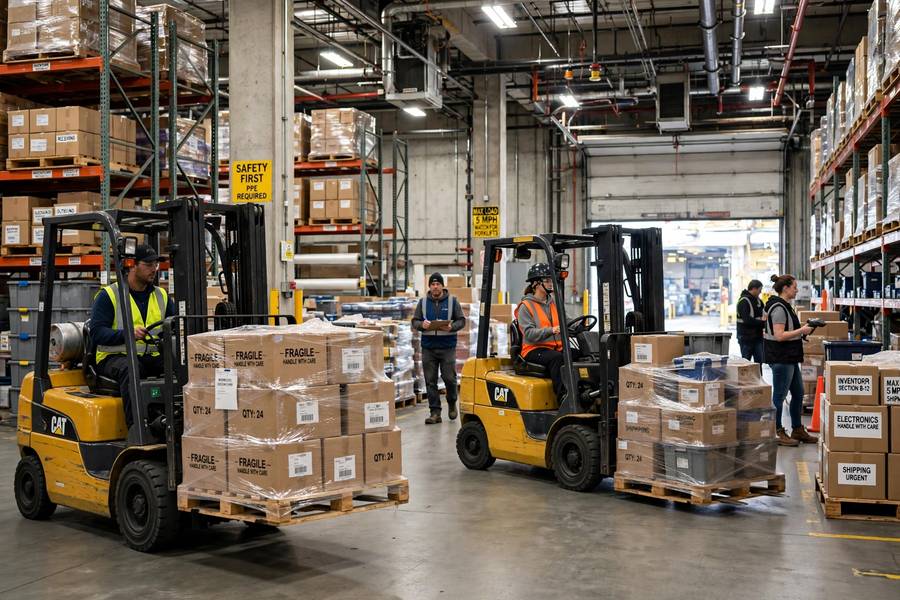
The sales cycle gap is the operational consequence: a B2C company can launch on Monday and have revenue on Friday. A B2B company launches in January and might close its first enterprise deal in October. This is why B2B startups need more funding — the revenue takes longer to arrive, so the runway must be longer.
Which Model Fits You?
If you’re choosing — as a founder, job-seeker, or investor — be honest about your strengths:
B2B suits you if: you’re patient, analytical, good at relationships, comfortable with complex sales, and energized by big wins rather than constant action. B2B rewards depth: deep product knowledge, deep client relationships, deep understanding of an industry.
B2C suits you if: you’re creative, fast-moving, intuitive about culture and trends, good at storytelling, and energized by scale — thousands of customers, viral moments, rapid feedback loops. B2C rewards breadth and speed.
The money question: B2B typically offers higher margins per customer and more predictable revenue (contracts, renewals), but slower growth and concentration risk. B2C offers faster growth potential and diversification, but thinner margins and constant competitive pressure. Neither is “better” — they’re different risk/reward profiles.
If you’re leaning toward starting something yourself, read my guide on how to become an entrepreneur — the B2B/B2C choice is one of the first strategic forks you’ll hit.
Companies That Do Both
The most interesting businesses operate both models, often with a wall between them:
- Amazon: B2C retail + B2B AWS and advertising
- Apple: B2C devices + B2B enterprise and education sales
- Google: B2C search/YouTube + B2B Cloud and Workspace
Running both requires essentially running two companies — different sales teams, different marketing, different metrics. Companies do it when the synergy (shared technology, shared brand) outweighs the complexity. For startups, my advice is blunt: pick one. Doing both badly is worse than doing one well.
B2B vs B2C comes down to who you’re serving and how they buy: businesses buy slowly, rationally, and in large amounts through relationships; consumers buy quickly, emotionally, and in small amounts through brands. Match the model to your strengths, build everything — marketing, sales, pricing — around how your customer actually decides, and you’ll avoid the most common strategic mistake in business.
Frequently Asked Questions
B2B (business-to-business) means selling to other companies; B2C (business-to-consumer) means selling to individual consumers. They differ in sales cycles (months vs minutes), decision-makers (committees vs individuals), purchase motivation (ROI vs emotion), deal sizes, and marketing channels.
B2B examples: Salesforce, Cisco, McKinsey, Sysco. B2C examples: Nike, Coca-Cola, Netflix, Spotify. Many large companies do both — Amazon runs B2C retail alongside B2B AWS, and Microsoft sells to consumers and enterprises.
Neither is inherently more profitable — they have different profiles. B2B typically offers higher margins per customer and predictable contract revenue but slower growth. B2C offers faster growth and customer diversification but thinner margins and intense competition. Profitability depends on execution, not the model.
B2C marketing focuses on emotion, attention, and scale — social media, influencers, memorable ads. B2B marketing focuses on trust and education over long cycles — case studies, ROI calculators, demos, webinars, and outbound sales. B2C wins with brilliant campaigns; B2B wins with consistent, useful touchpoints.
Yes — Amazon (retail + AWS), Apple (devices + enterprise sales), and Microsoft all operate both models. But running both means essentially running two companies with different sales teams, marketing, and metrics. For startups, focusing on one model is almost always the better strategy.