What Is the Largest Volcano in the World? It Depends How You Measure

Ask a classroom “what is the largest volcano in the world?” and you will get one confident answer: Mauna Loa. That answer was the standard one for years, and it is still right — under one definition of “largest.” Under another definition, it has been wrong since 2020, when researchers finished measuring a volcano most people have never heard of, hiding almost entirely under the Pacific Ocean.
This is the first thing I teach about superlatives in science: the answer is only as good as the measurement. “Largest” can mean the tallest from its base, the biggest by volume, or the largest one that is still active — and each of those questions has a different winner. This guide separates the three, with the numbers for each, so you can see exactly which crown belongs to which volcano.
The Short Answer
There are three honest answers. The largest active volcano in the world is Mauna Loa in Hawaii, as the United States Geological Survey states directly. The largest volcano by volume is Pūhāhonu, also in the Hawaiian chain — a mostly submerged giant whose volume was measured at about 150,000 cubic kilometers in a 2020 study, more than twice the volume of Mauna Loa. And the tallest from its base is again Mauna Loa, which rises about 17 kilometers from its base on the depressed seafloor to its summit. One name appears twice; the volume crown belongs to the volcano you cannot see.
Largest Active Volcano: Mauna Loa
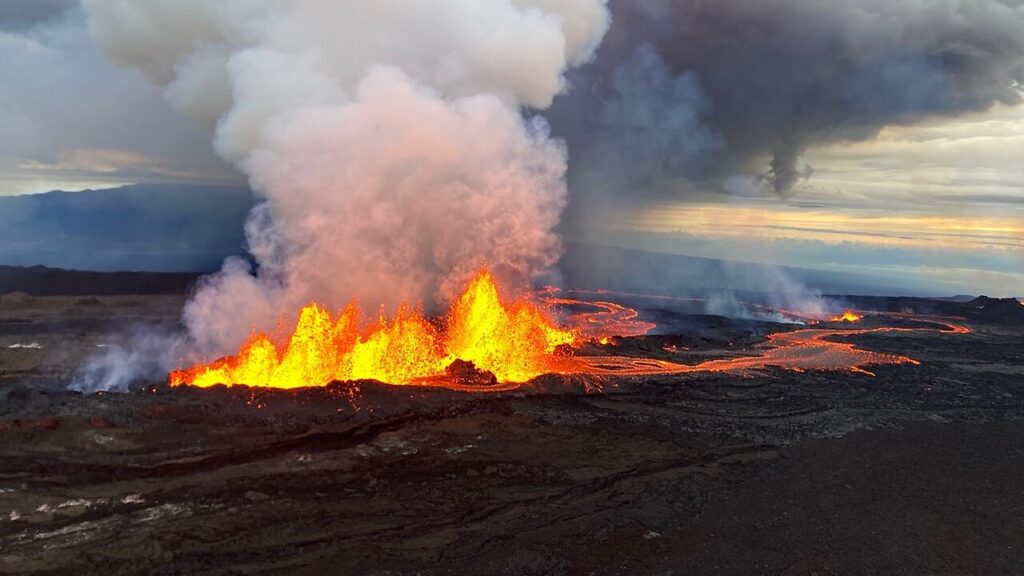
Mauna Loa, whose Hawaiian name means “Long Mountain,” is the volcano the USGS calls the largest active volcano on our planet. It is a shield volcano — and that single fact explains its record, because shield volcanoes grow wide instead of tall: their runny basalt lava spreads over great distances instead of piling into a steep cone, so a shield given enough time and lava becomes enormous in extent rather than in height.
How Big Is It, Really?
Start above water. Mauna Loa rises gradually to more than 4 kilometers (13,100 feet) above sea level — already a major mountain by any standard. But most of the volcano is underwater. Its long submarine flanks descend to the seafloor an additional 5 kilometers, and the seafloor itself is depressed by the volcano’s great mass another 8 kilometers. Add the three together and the summit stands about 17 kilometers (55,700 feet) above its base.
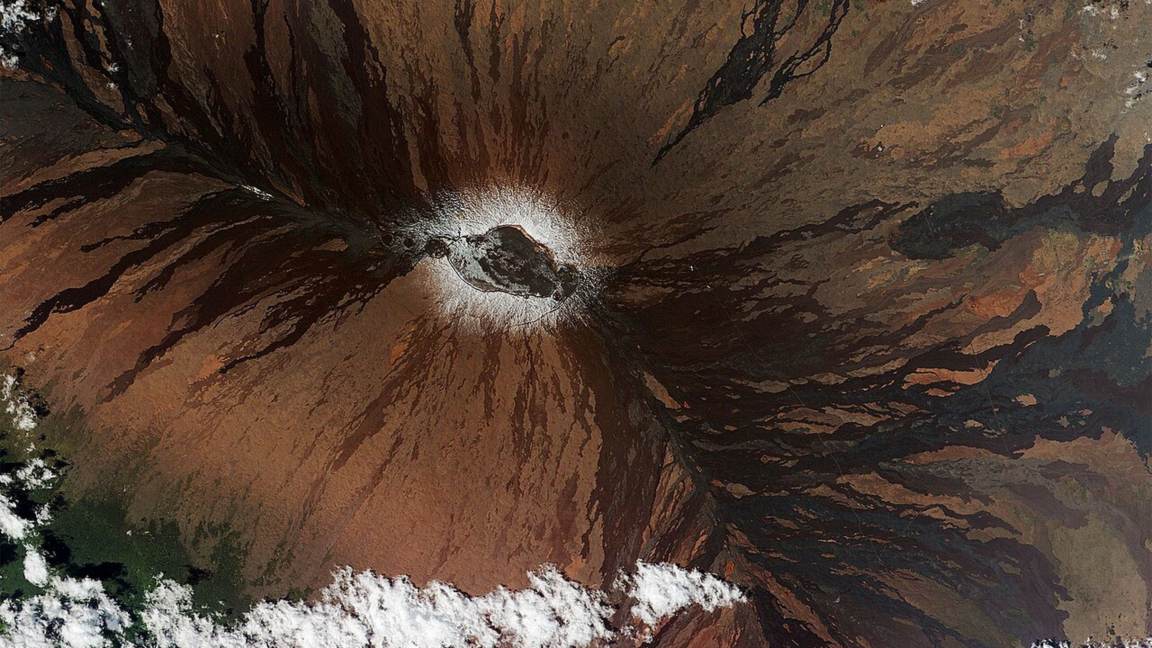
In length, the part above water alone extends for about 120 kilometers from the southern tip of the island to the summit caldera and on to the coast near Hilo. The enormous volcano covers half of the Island of Hawai’i, and by itself amounts to about 85 percent of the area of all the other Hawaiian Islands combined.
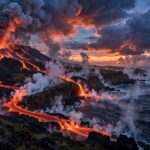
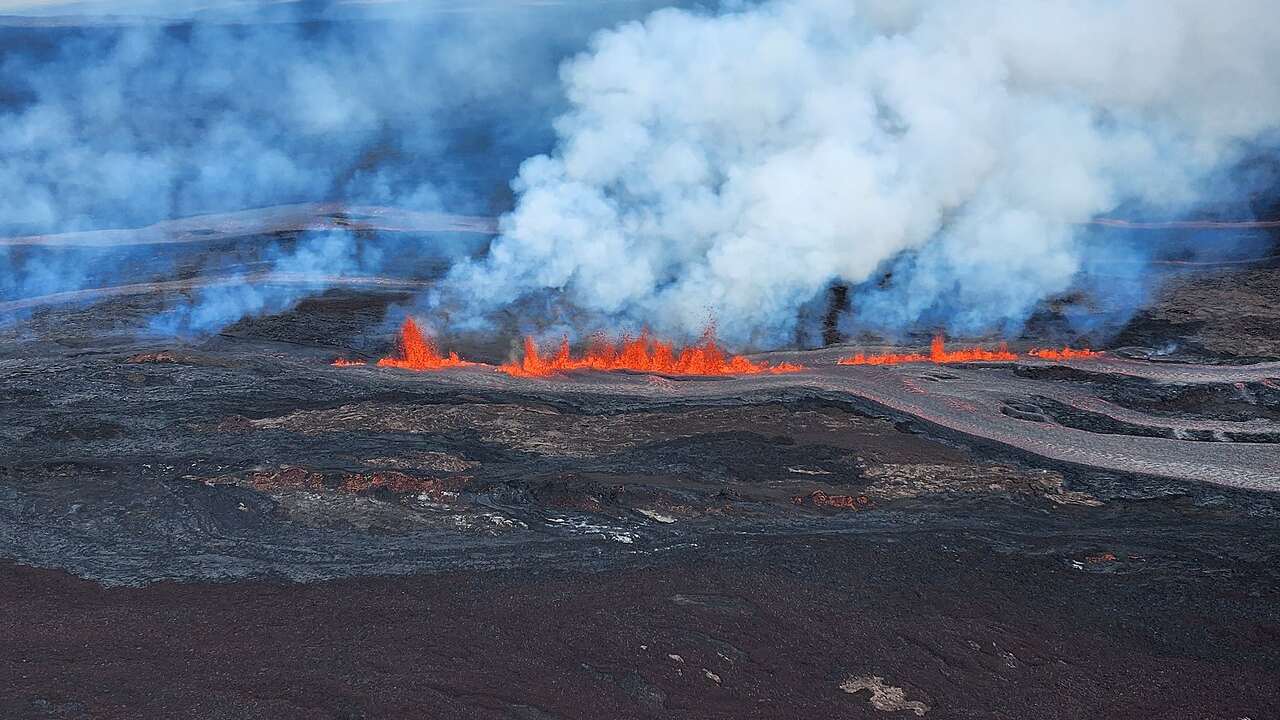
Size has not made it quiet. Mauna Loa is among Earth’s most active volcanoes, having erupted 34 times since its first well-documented historical eruption in 1843. It has produced large, voluminous flows of basalt that have reached the ocean eight times since 1868; during the 1984 eruption, a flow came within 7.2 kilometers of Hilo, the island’s largest population center, and in its most recent eruption, in 2022, flows came to within 1.7 miles of the Saddle Road highway.
Its recognized pattern is a summit eruption followed — within hours, days, or months — by a flank eruption: in 1926, for example, a brief summit eruption was followed by 14 days of eruption on the Southwest Rift Zone. The USGS is blunt about the future: Mauna Loa is certain to erupt again, and because it produces such large flows, the volcano is carefully monitored for signs of unrest. If you want to see what those eruptions look like as a process, our guide explains how Mauna Loa’s eruptions unfold step by step.
Is It Taller Than Everest?
Only under one measurement, and students deserve the honest version rather than the headline version. From its base to its summit, Mauna Loa spans about 17 kilometers — a greater vertical extent than Everest’s height above sea level. But that is not how mountain heights are normally quoted. Measured the standard way, from sea level, Mauna Loa’s summit is just over 4 kilometers up, and Everest stands far higher above the sea than that. So: tallest volcano from its base, yes. Taller than Everest as heights are usually counted, no. Both statements are true; the trick is never to merge them into one claim.
The 2020 Twist: Pūhāhonu, the Volcano Hiding Under the Sea
For decades, Mauna Loa held the volume title by default, because nobody had fully measured its neighbor. Pūhāhonu lies about 590 miles (952 kilometers) northwest of Honolulu, and almost none of it is visible: all that shows above the sea are two barren pinnacles — the Gardner Pinnacles — standing about 170 feet (52 meters) above sea level at their highest point. The name means “turtle rising for breath” in Hawaiian, which is exactly what the visible part looks like: a huge creature barely breaking the surface.
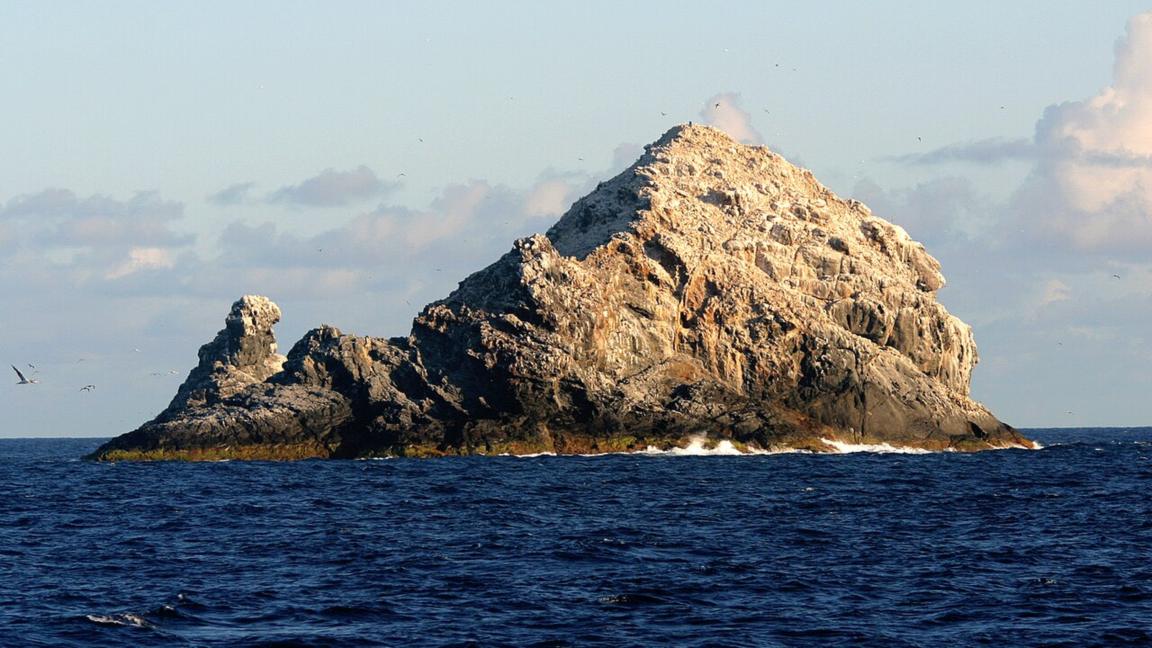
Beneath those pinnacles sits a monstrous mountain of ancient magma. Pūhāhonu is part of the long chain of undersea mountains and volcanoes that stretches from the Hawaiian Islands to the eastern edge of Russia — a chain of some 120 volcanoes, many of them long dead and buried beneath the waves, while the younger peaks that make up the Hawaiian Islands still tower over the land.
When scientists completed their survey of this one, published in 2020, Pūhāhonu’s volume came to about 150,000 cubic kilometers — more than twice the volume of Mauna Loa. The study carried a second surprise: the magma that built Pūhāhonu was measured at around 1,700°C, the hottest magma ever recorded on Earth. The crown changed hands for a simple reason — Mauna Loa had never shrunk; its rival had simply never been measured whole. Most of Pūhāhonu was always there, underwater and uncounted. “Largest” turned out to be a question about our instruments as much as about the volcanoes.
Why did the world’s largest volcano spend so long unrecognized? Because visibility is not size. Mauna Loa announces itself — half an island, a summit above the clouds, eruptions in the historical record. Pūhāhonu shows the ocean two small peaks and keeps the rest below. Any ranking of volcanoes is partly a ranking of what we have bothered to measure, and the 2020 study is a good reminder to hold superlatives with a little humility.
There is also a fair argument that volume is the most honest of the three rulers for volcanoes like these. Height rewards a volcano for where its base happens to sit — on a depressed seafloor, in Mauna Loa’s case, which flatters the measurement. Volume counts the whole structure the volcano actually built, above water and below it, which is why the 2020 result changed the answer rather than merely adjusting it. When students ask me which measurement they should quote, I tell them to quote the one their question is really about — and to say which one they chose. A superlative without its ruler is only half an answer.
Two Other Contenders
Tamu Massif, an immense volcanic feature on the floor of the Pacific, was once announced as a single volcano larger than any other — but later research questioned whether it is one volcano at all, so it keeps its place in this article as a disputed claimant, not a titleholder.
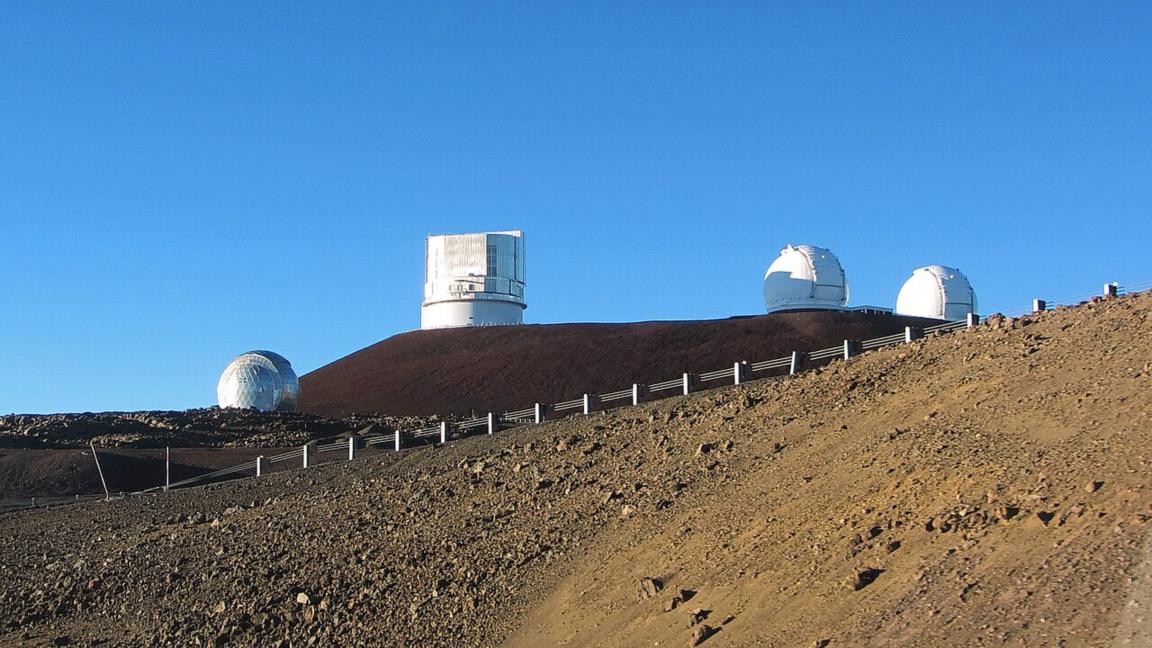
Mauna Kea, Mauna Loa’s dormant neighbor on the same island, is the famous contender in base-to-summit height discussions; it appears here without a figure, because the verified numbers in our sources belong to its active neighbor, and a contender mentioned honestly is worth more than a number borrowed from nowhere.
Notice what both contenders teach: in this topic, the argument is rarely about the mountain. It is about the definition, the measurement, and how much of the structure anyone has actually surveyed — which is why this article gives you the rulers first and the winners second.
Comparison Table
| Volcano | Active? | Height from base | Volume | Where |
|---|---|---|---|---|
| Mauna Loa | Yes — 34 eruptions since 1843, most recently 2022 | ~17 km (base to summit) | Less than half of Pūhāhonu’s | Island of Hawai’i, USA |
| Pūhāhonu | No — an ancient, mostly submerged volcano | Not the record it holds; almost all of it lies under the sea | ~150,000 km³ | ~590 miles northwest of Honolulu, Hawaii |
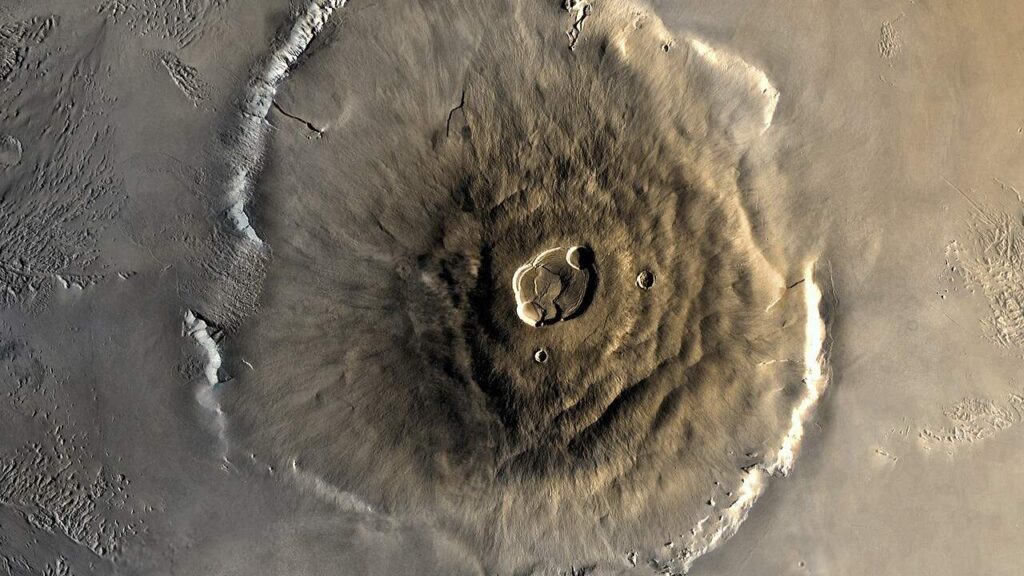
| Olympus Mons | See the Mars article | ~72,000 ft tall overall | — | Mars |
One row of that table belongs to another planet. The volcano that dwarfs both Hawaiian giants is not on Earth at all — it is the largest volcano in the solar system, and it gets its own article.
Frequently Asked Questions
Mauna Loa in Hawaii. The USGS states it directly: rising more than 4 kilometers above sea level, with its summit about 17 kilometers above its base, Mauna Loa is the largest active volcano on the planet — and it has erupted 34 times since 1843, most recently in 2022.
By volume and by base-to-summit extent, Mauna Loa is the larger structure — about 17 kilometers from base to summit. By the usual measure of height above sea level, Everest is far taller: Mauna Loa’s summit is just over 4 kilometers above the sea. The two claims use different rulers.
If “largest” means the largest active volcano, Mauna Loa, its most recent eruption was in 2022, when lava flows came within 1.7 miles of the Saddle Road highway. The largest volcano by volume, Pūhāhonu, is ancient and no longer erupts.
Most of it. Of its roughly 17 kilometers from base to summit, only a little over 4 kilometers stand above sea level. Below the surface, its submarine flanks descend another 5 kilometers to the seafloor, and the seafloor beneath it is pressed down a further 8 kilometers by the volcano’s mass. The island-sized mountain visitors see is the top fraction of the structure.
They did not measure wrongly; they measured incompletely. Pūhāhonu is almost entirely underwater, with only two small pinnacles above the surface, so its true volume was unknown until researchers surveyed the whole structure for the 2020 study. Mauna Loa was the largest volcano anyone had actually measured.