The Squash Tin Rule Explained: What ‘Down’ Means and Why It Exists

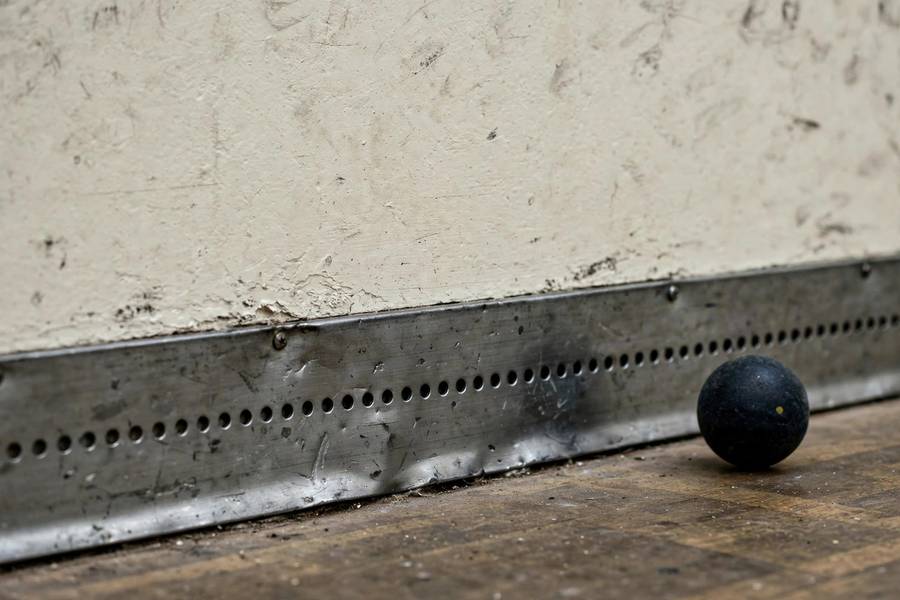
Every squash beginner has the same moment: they smash what feels like a perfect winner, the ball smacks into the bottom of the front wall with a deeply satisfying THWACK — and their opponent calmly says “down.” Welcome to the tin rule, the 19-inch strip of metal that has ended more would-be winners than any opponent ever has.
The tin rule is simple to state and surprisingly rich once you understand why it exists and how good players weaponize it. This guide covers what the tin is, what “down” means, why the rule exists, and how to use the tin line to your advantage instead of donating points to it. For the full rulebook context, see our basic squash rules.
In this guide:
- What the Tin Actually Is
- What “Down” Means in Practice
- Why the Tin Exists at All
- Tin Heights: Singles, Doubles and Juniors
- Playing the Tin: How Good Players Use It
- Judgment Calls: In, Out, or Down?
What the Tin Actually Is
The tin is the metal (traditionally tin-coated, hence the name) strip running along the bottom of the front wall, 19 inches (48 cm) high in the standard singles game. It’s the lowest legal target on the wall — anything striking the tin or below it is “down,” and the rally ends immediately.
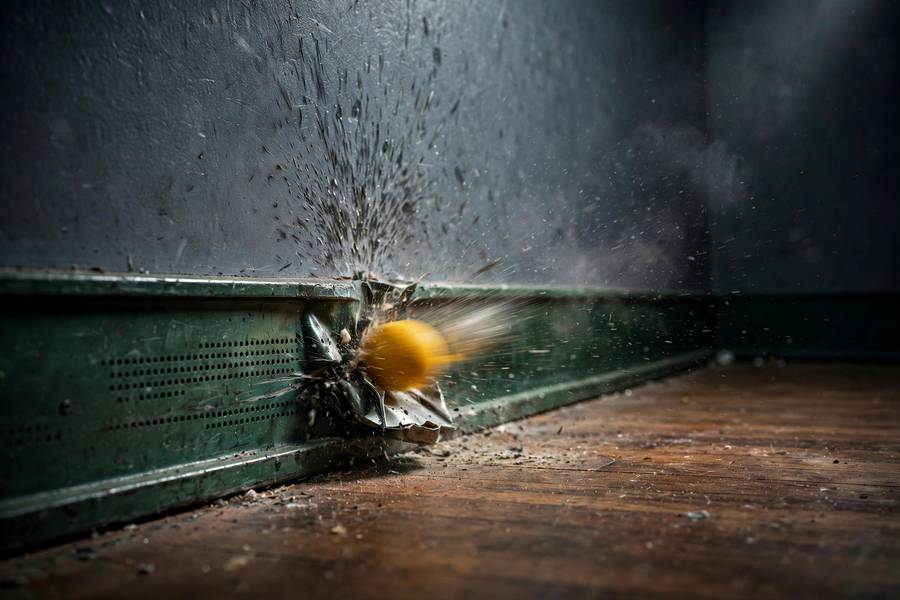
You’ll recognize it instantly: it’s the shinier, slightly different-sounding band at the bottom of the front wall, often with a distinct hollow metallic ring when the ball hits it. That sound is the most deflating noise in squash — every player knows exactly what it means before the word “down” is even spoken. Modern courts sometimes use a white board or tape line at the same height, but “tin” remains the universal term.

What “Down” Means in Practice
“Down” is the call when your shot hits the tin or anything below it. The rally is over, instantly and automatically — no appeal, no let, no discussion. It doesn’t matter how good the rest of the shot was, how hard you hit it, or how spectacular it looked. Down is down.
A few practical details: if the ball hits the tin on the way up from a bounce and then would have gone on to hit the wall legally — still down. The tin contact is what counts, not what might have happened after. If the ball hits the very top edge of the tin, it’s a judgment call, but the convention favors “down” — the benefit of the doubt goes to the tin, not the hitter. And if your shot hits the floor before reaching the front wall at all, that’s not “down,” it’s a separate fault (not up), but the result is identical: rally over.
Why the Tin Exists at All
The tin rule is a design choice that shapes the entire sport. Without a minimum height, players could just roll the ball along the floor at the base of the wall — unattackable, unwatchable, and the death of rallies. The tin forces every shot upward, which does three things:
- It keeps rallies alive. Shots must travel up and come down, giving the opponent time and a hittable ball. This is why squash produces those glorious 40-shot rallies.
- It rewards touch over brute force. The most devastating shots in squash — the drop shot, the kill — flirt with the tin deliberately. Power alone can’t beat the tin; precision can.
- It creates the sport’s signature risk-reward. Every attacking shot is a negotiation with those 19 inches. Go too safe and your opponent counter-attacks; go too fine and it’s down. That tension is the soul of squash tactics.
Compare it to tennis’s net: same concept, different geometry. Both are obstacles that punish low-percentage aggression and reward controlled attacking play. Squash just puts its obstacle on the wall instead of in the middle of the court.
Tin Heights: Singles, Doubles and Juniors
The 19-inch tin is the standard, but it varies:
- Doubles: 17 inches (43 cm). The lower tin on the wider doubles court opens up attacking angles and keeps the faster doubles game from becoming pure defense.
- Juniors: many junior programs use a lower tin or a marked line to let younger players experience attacking play without the frustration of constant “down” calls.
- Hardball (North American doubles): traditionally lower as well, suited to the harder, faster ball.
If you play at different clubs, glance at the tin height before your knock-up — two inches sounds trivial until your drop shots start dying on a higher tin than you’re used to. Court dimensions vary in other ways too; our guide to squash court dimensions covers the full picture.
Playing the Tin: How Good Players Use It
Advanced players don’t just avoid the tin — they use it. The drop shot is the art of hitting the ball so it lands just above the tin and dies in the front corner: unreturnable if executed, down if you’re an inch low. The kill (or “nick”) aims for the junction where the side wall meets the floor, with the ball barely clearing the tin on the way in. Both shots live on the edge of “down,” and that’s precisely what makes them winners — your opponent can’t reach them because they’re so low.
The training progression I give players: first, learn to hit safely above the tin with margin — a foot of clearance, every time. Then, gradually lower your targets as your touch improves. The players who try tin-kissing shots before they can hit a reliable drive just donate points. Earn the right to flirt with the tin by proving you can clear it first.
Defensively, the tin is your friend. When you’re under pressure, a high, deep shot that clears the tin by a mile resets the rally safely. There’s no style prize for low shots when you’re stretched — get the ball up, get it deep, live to fight the next shot. The tin only punishes ambition; it never punishes sensible defense.
Judgment Calls: In, Out, or Down?
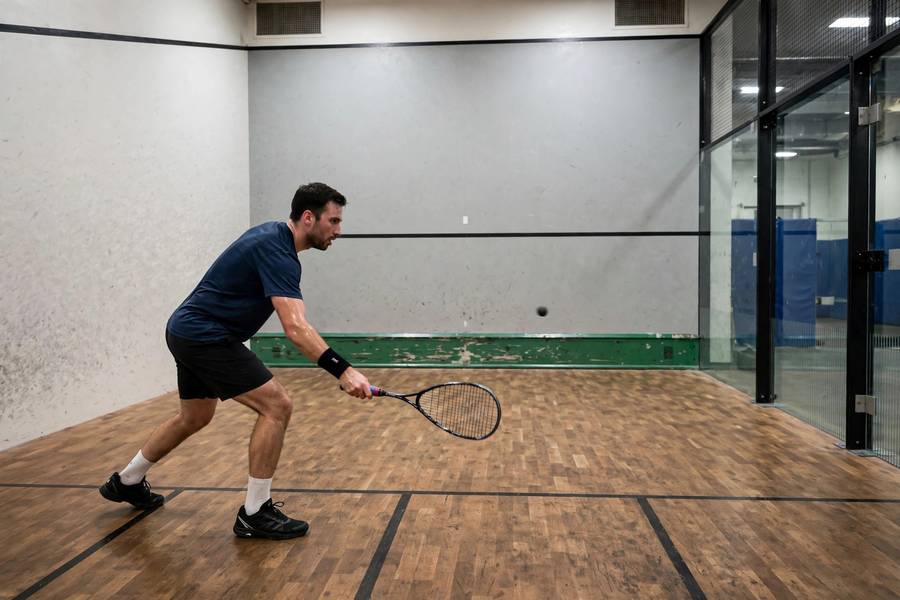
Most tin calls are obvious — the metallic THWACK settles it. The tricky ones:
- The top edge: ball grazes the very top of the tin. Convention says down, but in casual play most players replay the rally as a let if it’s genuinely unclear. In refereed matches, the ref’s call is final — and refs are trained to call it down.
- Tin vs floor first: if the ball hits the floor before the tin, it’s “not up” rather than “down” — same result, different call. Only pedants care, but now you’re informed.
- The dying ball: a soft shot that hits the wall legally above the tin but then dribbles down and touches the tin on the way down — that’s fine. The tin only matters at the moment of impact with the front wall.
- Calling your own: in unrefereed games, call “down” on yourself honestly when you hear that sound. Everyone heard it. Claiming otherwise is the fastest way to lose playing partners.
One drill I love for tin judgment: stand at the T and have a partner feed you balls, aiming to hit drop shots that land within a racket-length of the front wall. Count how many die in the nick versus how many go down. Your ratio tells you exactly where your attacking game stands — and watching it improve week to week is one of the most satisfying measurements in squash.
Respect the tin and it becomes the most exciting line on the court — the boundary between a winner and a wasted opportunity, negotiated anew on every attacking shot. And if you’re working on the leg strength and lunge depth that low attacking play demands, the programs in our strength training for runners build exactly the kind of lower-body power squash movement needs.
The tin is the 19-inch metal strip along the bottom of the front wall. Any shot hitting the tin or below it is ‘down’ — the rally ends immediately and the point goes to your opponent. The rule forces shots upward, keeping rallies alive.
19 inches (48 cm) in standard singles. Doubles uses a slightly lower 17-inch tin, and junior programs often use lower tins or marked lines to make attacking play more accessible for young players.
‘Down’ is the call when a shot hits the tin or below it on the front wall. The rally ends instantly with no appeal possible — it doesn’t matter how good the rest of the shot was.
Without a minimum height, players could roll the ball along the floor for unreturnable, unwatchable shots. The tin forces shots upward, which keeps rallies alive, rewards touch and precision, and creates the sport’s signature risk-reward on every attacking shot.
By convention it’s called ‘down’ — the benefit of the doubt goes to the tin. In casual play, genuinely unclear calls are often replayed as lets; in refereed matches, the referee’s decision is final.