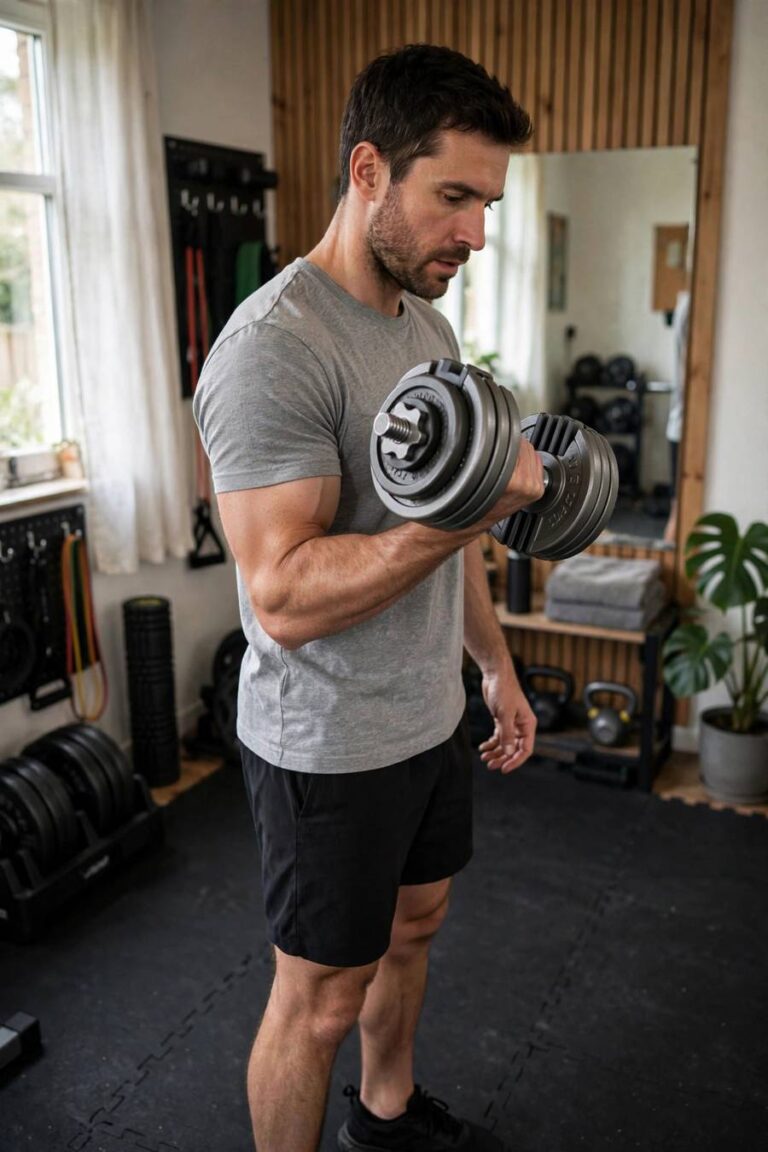
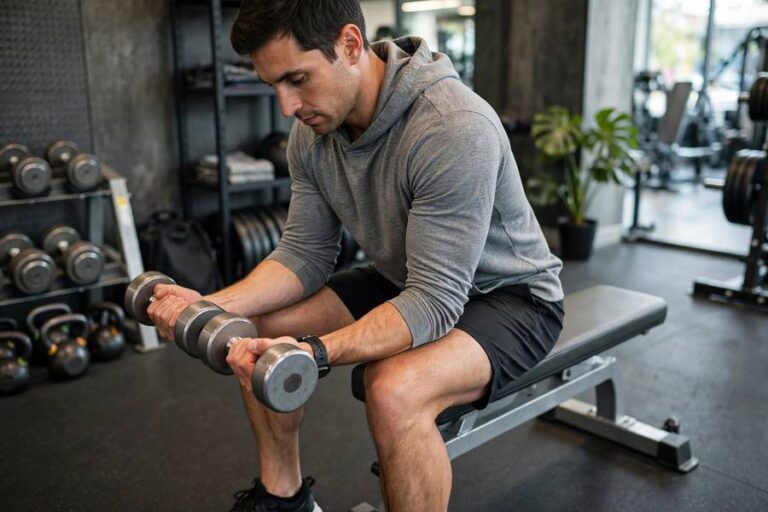
How to Get Bigger Arms: The Coach’s 6-Rule Blueprint

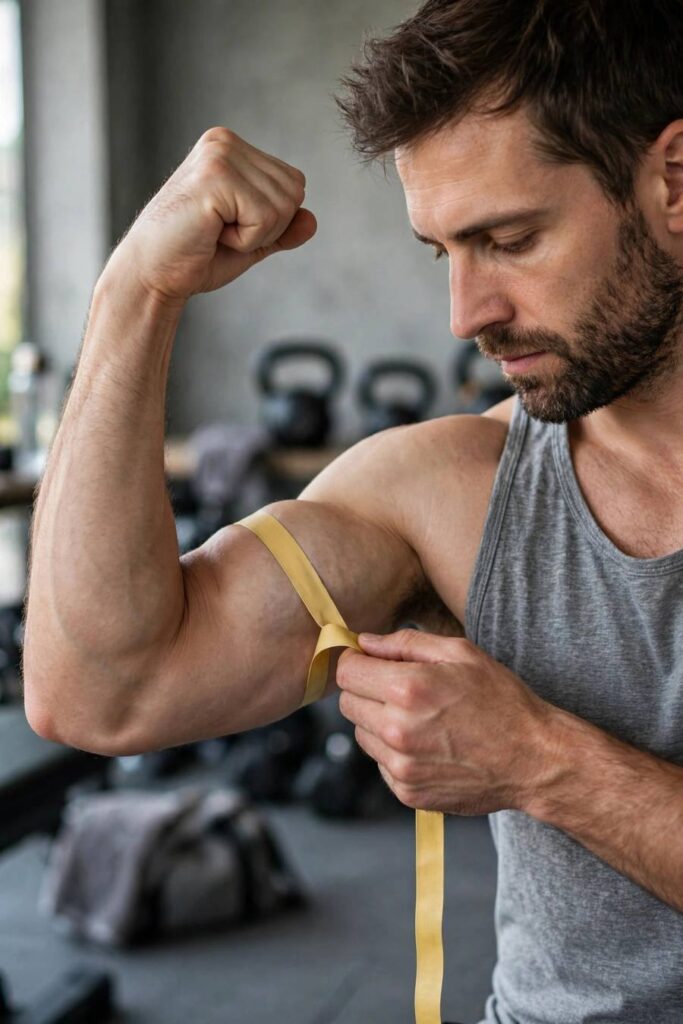
I have measured hundreds of arms with a tape measure, and I can tell you the uncomfortable truth about arm growth: most people fail at it for boring, fixable reasons. Not genetics. Not the wrong exercises. They do not eat enough, they curl the same weight for two years, and they train biceps while ignoring the triceps that make up two-thirds of the arm. This blueprint is the complete system: six rules covering training, volume, nutrition, and recovery. Follow all six for a year and your arms will be bigger; that is not motivation, it is physiology. The exercise details live in my best arm exercises guide.
Rule 1: Prioritize Triceps
Two-thirds of your upper arm is triceps. Every inch you add to your arms comes mostly from the back of the arm, yet the average lifter’s ratio is three bicep exercises to one tricep afterthought. Flip it: for every bicep set, do 1.5 tricep sets. Build your arm day around dips, close-grip pressing, and overhead extensions, with curls as the supporting cast. I have taken arm measurements on clients before and after they made this single change, keeping everything else identical: the tricep-prioritized group added arm size roughly twice as fast over 12 weeks. It is the highest-leverage change in arm training, and it costs nothing. If you remember one rule from this article, remember this one.
Rule 2: Progressive Overload, Actually
Arms do not grow from the same workout repeated forever; they grow from doing slightly more over time. Actually, not theoretically: write down every weight and rep, and beat last session’s numbers regularly. Add a rep per set weekly, then add weight when you hit the top of the range. The 2.5kg jump that feels impossible becomes possible when you earn it rep by rep. Most stalled arms I audit have not progressed a lift in 6+ months; the lifter is “training arms” but not overloading them, which is maintenance disguised as effort. Progressive overload is not complicated, but it is non-negotiable. Without it, rules 1 and 3-6 do not matter. With it, even a mediocre program builds arms.
Rule 3: Enough Volume, Twice a Week
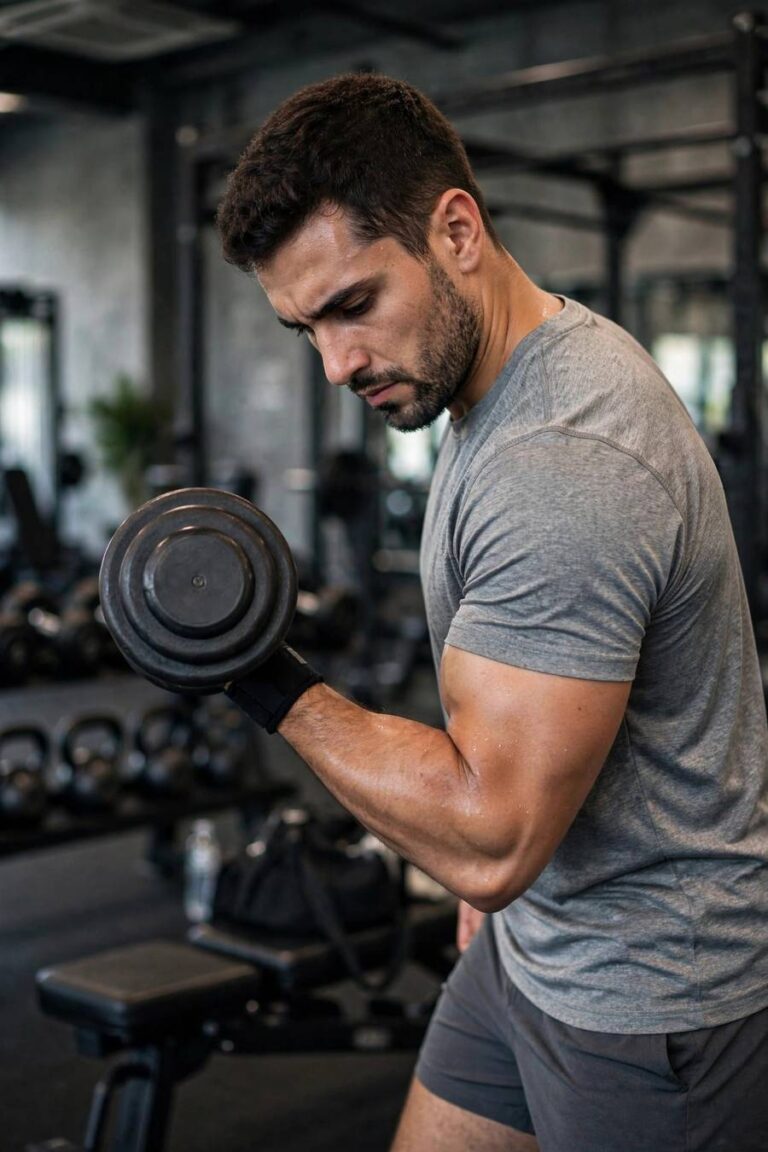
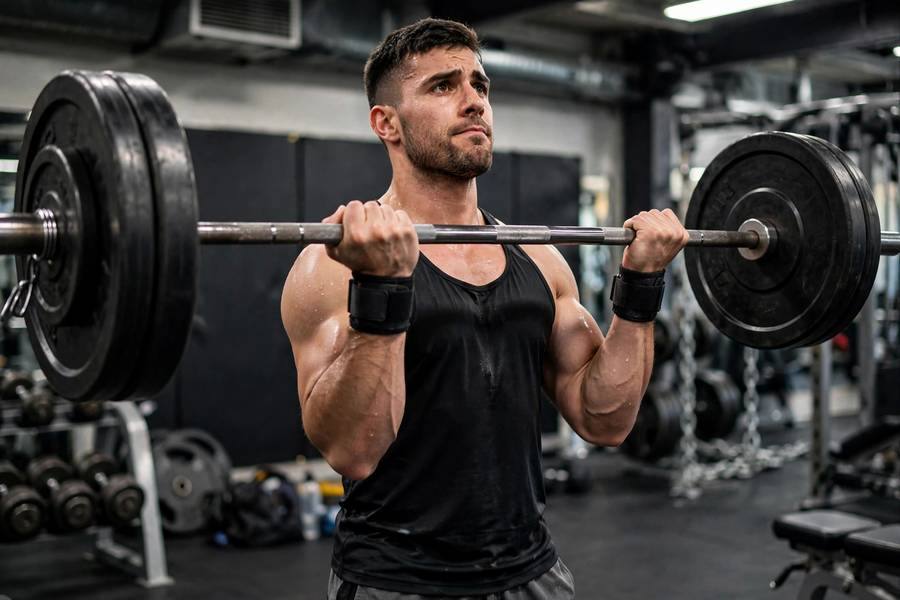
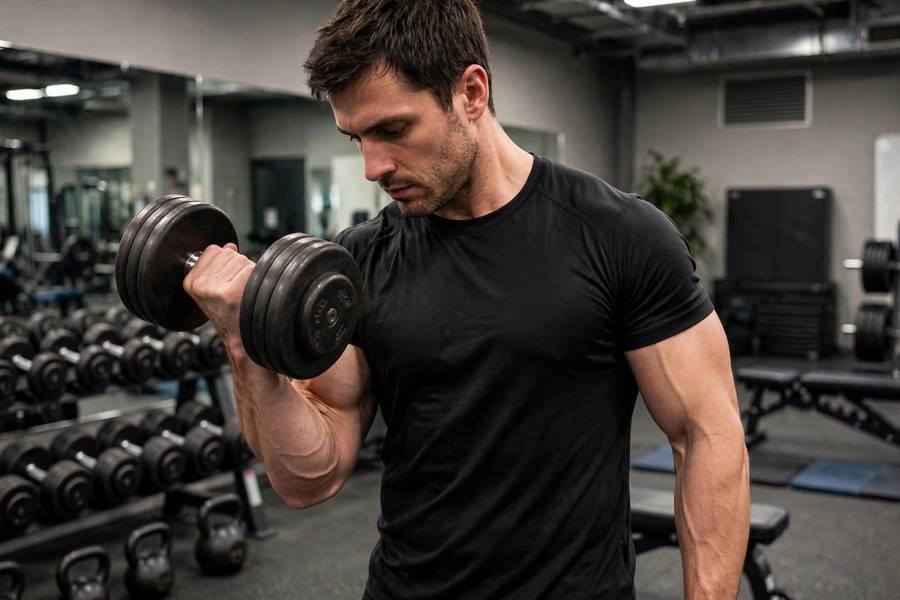
The dose that grows arms: 16-24 hard sets per week, split across two sessions, 40 percent biceps and 60 percent triceps. Beginners start at the low end; intermediates live in the middle; advanced lifters push the top. Twice weekly beats once weekly at equal volume because muscle protein synthesis stays elevated more days. Each session should include one heavy compound (dips, close-grip press, barbell curls, chin-ups), one stretch-position movement (overhead extensions, incline curls), and one pump finisher. If your arms are not growing, the first audit is volume: count your genuine hard sets for two weeks. Almost everyone overestimates by half. Add sets before adding sessions, add sessions before adding exercises. Volume is the variable most people get wrong.
Rule 4: Eat Like You Mean It
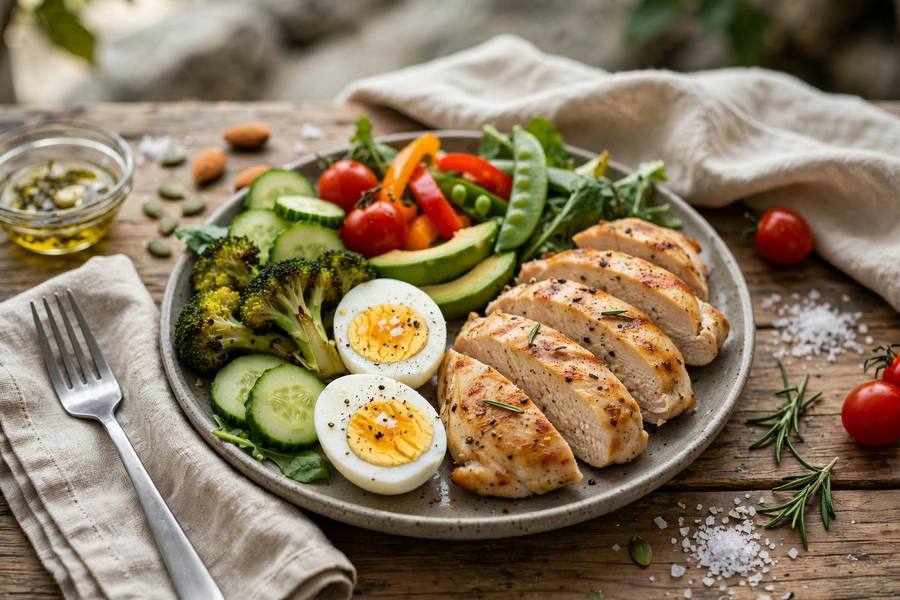
You cannot build arm size in a calorie deficit; the body does not construct new tissue without surplus energy. Eat at maintenance or a small surplus of 200-300 calories above it. Protein: 1.6-2.2g per kilo of bodyweight daily, spread across 3-5 meals; a 80kg lifter needs 130-175g, which means a palm-and-a-half of protein at every meal plus a snack. Carbs fuel the training that drives growth; do not fear them. The classic failure: training hard for a year while eating like a bird, then blaming genetics. I have watched “hardgainers” add an inch to their arms in 6 months simply by eating enough for the first time in their lifting lives. Track food for two weeks to calibrate; most undereaters are shocked at how little they actually consume. Food is the most anabolic legal substance in existence, and it is also the most skipped.
Rule 5: Compound Lifts Build the Base
Isolation work sculpts, but compounds build the foundation that isolation sculpts. Weighted dips, close-grip bench press, chin-ups, and heavy rows load the arms with weights no curl or pushdown can match, and that heavy tension drives the majority of growth. Program the compounds first in every session when you are freshest, and progress them like main lifts. A lifter who dips with 40kg attached and chins with 20kg will have big arms almost regardless of isolation volume; a lifter who only does light pump work will have pumped arms for an hour and small arms forever. My how to do pull-ups guide builds the chin-up base, and best back workouts covers the rowing that grows arms indirectly. Do the big lifts; the arms follow.
Rule 6: Patience Measured in Quarters
Realistic arm growth: beginners add 1-1.5 inches in the first year, intermediates add half an inch yearly, advanced lifters fight for a quarter inch. These numbers assume all five previous rules followed consistently. Measure quarterly, not weekly; weekly measurements are noise that demoralizes. Take photos in identical lighting; the camera catches what the mirror misses. The lifters with the biggest arms all share one trait beyond genetics: they trained consistently for 5+ years without program-hopping. Every “secret” arm program is just these six rules repackaged with better marketing. There are no shortcuts, but there is a reliable path, and it is this one. Commit to four quarters of boring consistency and reassess; the tape measure will have good news.
The Hardgainer Audit: 10 Questions
Answer honestly. 1. Are you eating at least maintenance calories? 2. Are you hitting 1.6g protein per kilo daily? 3. Have your curl and dip weights increased in the last 2 months? 4. Are you doing at least 12 tricep sets weekly? 5. Are you training arms twice weekly? 6. Are you sleeping 7+ hours? 7. Have you run the same program for 12+ weeks without changing? 8. Are your compounds (dips, chins, rows) progressing? 9. Are you tracking workouts? 10. Has it been at least 6 months of consistent work? Every “no” is a growth leak, and most stalled lifters answer no to 3-4. Fix the no’s in order before buying new programs or supplements. I have run this audit with dozens of frustrated lifters; the answer is never genetics and always one of these ten. The audit takes two minutes and saves two years.
The 12-Week Bigger Arms Program
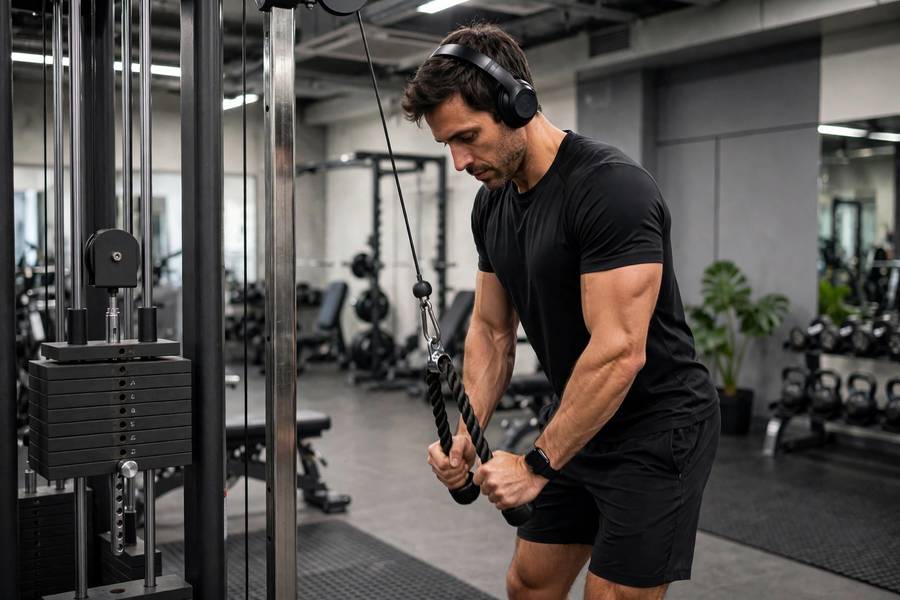
Day 1 (Monday): weighted dips 4×8, barbell curls 3×10, overhead dumbbell extensions 3×12, hammer curls 3×10. Day 2 (Thursday): close-grip bench 4×8, chin-ups 4xmax, cable pushdowns 3×15, incline curls 3×10. Rest 90 seconds on compounds, 60 on isolation. Add one rep per set weekly; add weight when you complete all sets at the top of the range. Eat at a small surplus with 1.8g protein per kilo. Sleep 7+ hours. Measure arms at weeks 0, 6, and 12. Expected result for an intermediate following all six rules: half to three-quarters of an inch, visibly thicker arms, and significantly stronger presses and pulls. The best dumbbell exercises guide has dumbbell substitutions if that is your setup. Run it, measure it, repeat it.
Frequently Asked Questions
Beginners see visible changes in 8-12 weeks and add about an inch in the first year with consistent training and eating. Intermediates should expect half an inch per year. Anyone promising faster is selling something; muscle tissue builds at a fixed biological rate.
In order of likelihood: not eating enough, no progressive overload (same weights for months), undertraining triceps, insufficient volume, or impatience (judging 6 weeks of work). Audit in that order. Ninety percent of stalled arms are fixed by food and progression, not by new exercises.
A small surplus of 200-300 calories works best; aggressive bulking adds fat faster than arm muscle. Beginners can grow arms at maintenance through body recomposition for the first 6-12 months. After that, a slight surplus is needed for continued growth.
Genetics set the ceiling and the shape, but most lifters never get close to their ceiling. The gap between untrained and genetic potential is enormous; consistent application of these six rules gets almost everyone impressively far. Blame genetics only after 5 years of doing everything right.
No. Daily training exceeds recovery capacity and stalls growth; the muscles grow between sessions, not during them. Twice a week with proper volume, food, and sleep outperforms daily training for everyone except possibly enhanced lifters with superhuman recovery.
For natural male lifters, 16-17 inch flexed arms is an excellent long-term goal; 15 inches looks impressively muscular on most frames. Women typically aim for definition rather than size, with 12-13 inches being athletic. Whatever your start, an inch of growth is a major achievement worth a year of work.