The 10 Best Strength Exercises for Runners (Coach’s Guide)

I have coached runners for years, and here is what I know for certain: the runners who stay healthy and get faster are the ones who lift. Not bodybuilder lifting, not random gym sessions, but targeted strength work that fixes the exact weaknesses running creates. Running is repetitive and one-sided; strength training is the correction.
These are my ten go-to exercises, the ones I program for everyone from 5K beginners to marathoners. For each you get the why, the how, and the sets and reps I actually use. This sits inside our bigger strength training for runners guide, which covers programming and scheduling.
Why Runners Need Strength Work at All
Running hammers the same tissues thousands of times per session while neglecting others. Glutes go sleepy, calves get overloaded, the core fatigues late in long runs, and imbalances between legs grow silently until something snaps. I see the same story every season: talented runner, zero strength work, injured by March.
Strength training fixes the imbalance equation. Stronger muscles absorb impact better, maintain form when fatigued, and produce more force per stride. Studies and my own coaching logs agree: runners who lift consistently get injured less and run more economically. It is the highest-return training most runners are not doing.
1. Bulgarian Split Squat: The King of Runner Exercises
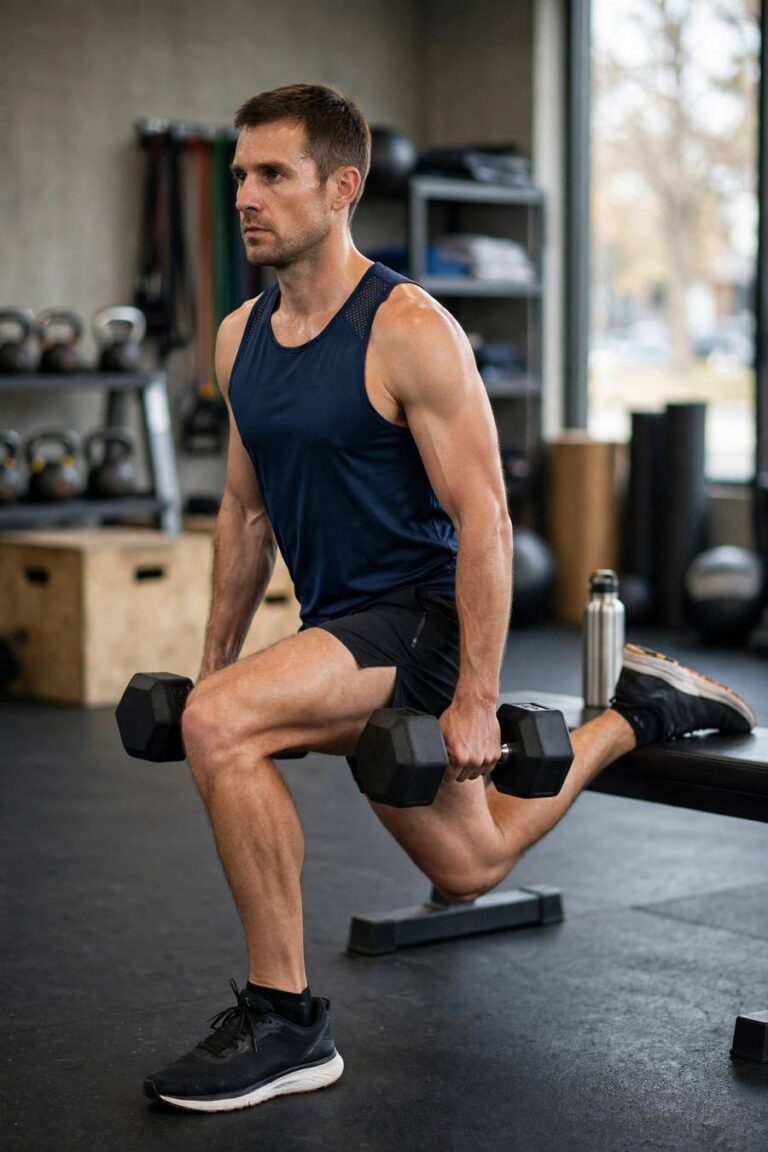
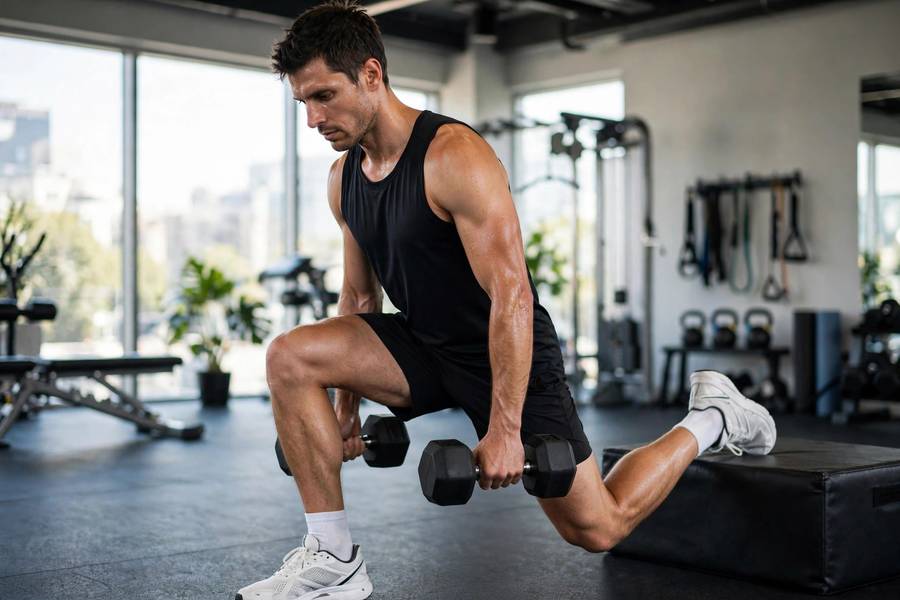
If I could only pick one exercise for runners, it is this. The Bulgarian split squat builds single-leg quad and glute strength in exactly the pattern running demands: one leg, hips stable, knee tracking over toes. Elevate the rear foot on a bench, lower until the front thigh is parallel, drive up through the heel.
Do 3 sets of 8 to 10 per leg, once or twice a week. Start with bodyweight until your balance is solid, then add dumbbells. Coaching cue I use constantly: keep the torso tall and the front knee behind the toes’ line of pressure. When runners master this, their hill running transforms within weeks.
2. Romanian Deadlift: Hamstrings and Glutes
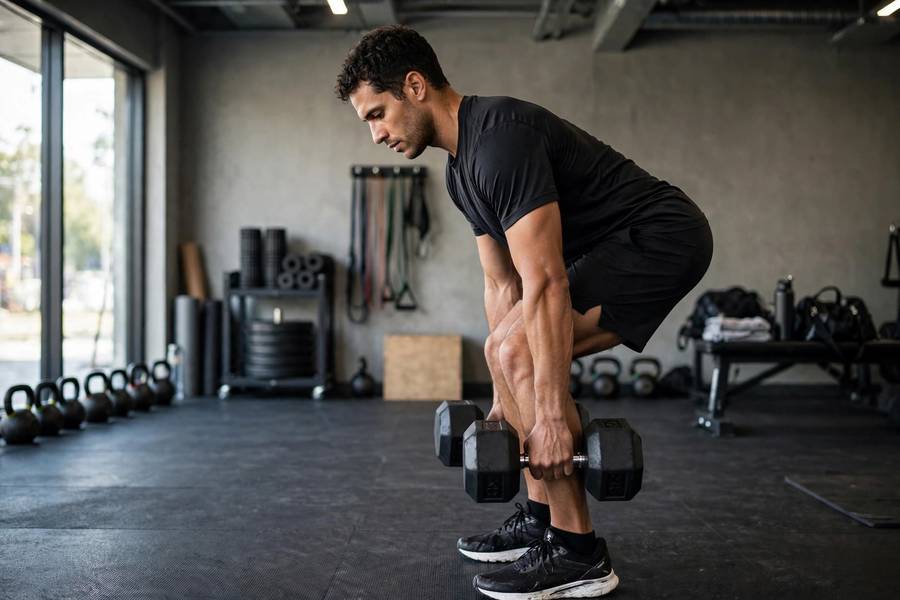
Runners are notoriously quad-dominant with weak posterior chains, and the Romanian deadlift is the fix. Hinge at the hips with a soft knee bend, lower the weight along your shins until you feel a deep hamstring stretch, then drive the hips forward. The back stays flat the entire time.
Program 3 sets of 8 to 12 with dumbbells or a barbell. I cue “push the floor away and squeeze the glutes” at the top. This exercise is injury insurance for hamstrings, which are the second most common running injury site after knees. Skip it and you are gambling.
3. Single-Leg Calf Raise: Armor for Your Lower Legs
Your calves absorb two to three times your bodyweight with every stride. The single-leg calf raise, done slowly off a step for full range of motion, builds the specific strength and tendon stiffness that protects against Achilles and calf issues.
Do 3 sets of 12 to 15 per leg, pausing two seconds at the top and lowering over three seconds. I progress runners from flat ground to a step, then to weighted. Boring? Absolutely. Effective? More than any gadget in the running store. Calf strength is the unglamorous foundation of durable running.

4. Glute Bridge and Hip Thrust: Wake Up the Glutes
Dead butt syndrome is real, and distance runners are prime victims. Hours of sitting plus thousands of strides with lazy glutes equals knees and backs doing work they were not designed for. The glute bridge fixes the mind-muscle connection; the hip thrust loads it heavy.
Start with 3 sets of 15 bodyweight glute bridges, squeezing hard at the top. Progress to barbell hip thrusts for 3 sets of 8 to 10. My cue: “crack a walnut between your cheeks at the top.” Runners laugh, then they feel their glutes for the first time in years, and their stride changes.
5. Step-Up: Functional Single-Leg Power
The step-up is running-specific strength in its purest form: drive one leg up onto a box, stand tall, lower with control. It builds the exact knee-drive power you need for hills and finishing kicks, with minimal spinal loading compared to barbell squats.
Use a box at knee height, 3 sets of 10 per leg, adding dumbbells as you progress. Key coaching point: drive through the heel of the working leg and do not push off the trailing foot. I use step-ups heavily in marathon programs because they build strength without the recovery cost of heavy bilateral lifts.
6. Pallof Press: Anti-Rotation Core Strength
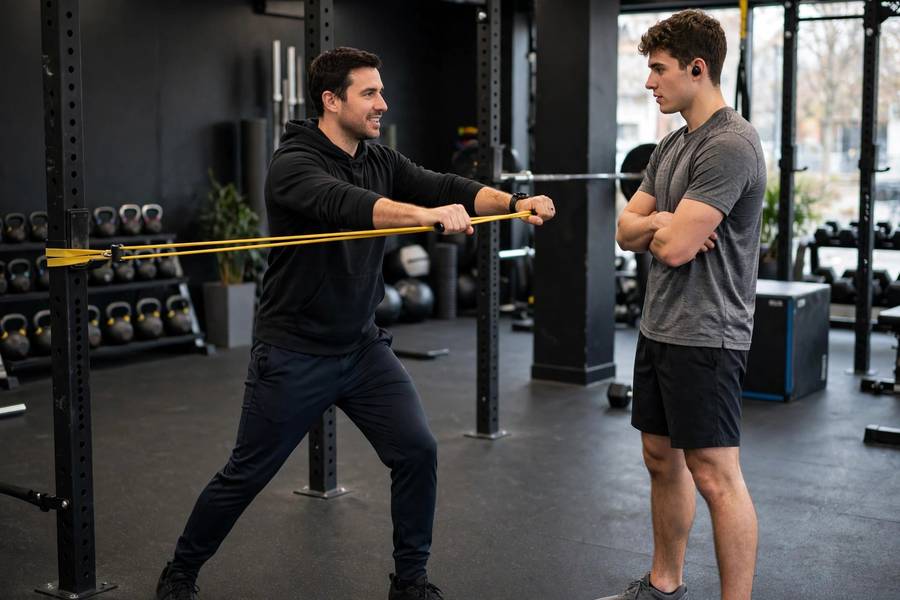
Running is a rotational sport: every stride twists your torso, and your core’s job is to control that rotation, not create it. The Pallof press trains exactly this. Stand sideways to a cable or band, press the handles straight out, and resist the pull for two seconds.
Do 3 sets of 10 per side. This is the core exercise I wish every runner did instead of endless crunches. A stable trunk means your arms and legs stop fighting each other, and your energy goes into forward motion. Pair it with the dedicated core strength routine for runners for full coverage.
7. Dead Bug: Deep Core Control
The dead bug looks easy and humbles everyone. Lie on your back, press your lower back into the floor, extend opposite arm and leg slowly without letting the back arch. It trains the deep core muscles that stabilize your pelvis during every footstrike.
Do 3 sets of 8 per side, moving slowly enough that it burns. I use this as a warm-up before every lifting session and as a daily five-minute habit for my runners. Pelvic stability is the difference between a smooth stride and an energy-leaking wobble, especially after mile 20.
8. Farmer’s Carry: Grip, Posture, and Grit
Pick up heavy dumbbells and walk. That is the whole exercise, and it is magnificent. The farmer’s carry builds grip strength, bulletproofs the upper back and traps, and teaches the tall posture that runners lose when they fatigue.
Carry for 3 sets of 40 meters with the heaviest dumbbells you can hold with good posture. Shoulders back, ribs down, walk like you own the gym. Late-race posture collapse is a form killer, and this is the most direct fix I know. Simple, brutal, effective.
9. Lateral Band Walk: Hip Stability Insurance
IT band issues and runner’s knee often trace back to weak hip abductors, especially the glute medius. The lateral band walk with a mini-band around the knees or ankles directly strengthens these stabilizers that keep your knees tracking straight.
Do 3 sets of 15 steps each direction, staying low in an athletic stance. I program these as pre-run activation: two minutes before you head out the door. It is the cheapest injury insurance in this entire list, and the runners who do it consistently are the ones who stop getting IT band flare-ups.
10. Box Jump: Power and Elasticity
Running fast requires elastic, powerful legs, and box jumps train the stretch-shortening cycle that makes strides springy. Jump onto a box, land soft and quiet with bent knees, step down. The landing matters more than the jump.
Do 4 sets of 5 with full recovery between sets, when fresh, never at the end of a hard session. I only program these for runners with a solid strength base, because plyometrics on weak legs is asking for trouble. Done right, they sharpen the top-end speed that strength alone cannot build.
How to Program These Into Your Week
You do not need all ten every session. I split them across two weekly sessions: Session A is Bulgarian split squats, Romanian deadlifts, calf raises, Pallof press, and dead bugs. Session B is step-ups, hip thrusts, farmer’s carries, lateral band walks, and box jumps. Two sessions, 45 minutes each, done.
Start with one session per week for the first month, then build to two. Keep lifting days away from hard running days at first. The full scheduling logic, including how to combine this with marathon training, lives in our strength training for runners guide, and do not neglect dedicated core strength work alongside it. Consistency beats intensity: two moderate sessions every week for a year will transform your running.
The top picks are Bulgarian split squats, Romanian deadlifts, single-leg calf raises, glute bridges or hip thrusts, step-ups, Pallof presses, dead bugs, farmer’s carries, lateral band walks, and box jumps.
Two sessions per week is the sweet spot for most runners. Beginners should start with one session weekly for the first month, then build to two.
Heavy bilateral lifts have value, but single-leg exercises transfer better to running and carry lower injury risk. Most runners get more from Bulgarian split squats and step-ups than from maximal barbell squats.
45 minutes is plenty. Focus on 4-5 quality exercises with good form rather than marathon gym sessions that compromise your running.
No. Running is catabolic and high-volume; two moderate strength sessions build resilience and power without meaningful bulk. Stronger runners are faster runners, not heavier ones.