How to Build Endurance Without Running: The Complete System

Running is the default endurance tool, but it is not mandatory, and for plenty of people it is the wrong tool. Bad knees, a hated treadmill, a stress fracture history, or simply boredom are all legitimate reasons to build your engine without pounding pavement. Here is what most people get wrong: they assume no running means no cardio, so they default to 20-minute elliptical sessions that never build anything. Your heart does not care what modality delivers the stimulus. It cares about duration, frequency, and intensity distribution. I have built serious endurance in clients who never ran a step, using the exact system in this guide, and several of them later returned to running fitter than when they left. In this guide I will rank the best non-running tools, give you a complete weekly template, and explain how to transfer it all back if you ever want to. The programming logic mirrors strength training for runners periodization, and swimmers should see swimming workouts for beginners for technique-first progressions.
Why Skip Running? Valid Reasons
Joint issues top the list: every running step loads your knees with 2 to 3 times your bodyweight, and for heavier trainees or those with arthritis, that math does not work yet. Injury rehab is second: stress fractures, Achilles issues, and shin splints all demand impact-free cardio while tissues heal. Third is preference, which people dismiss but should not; the best exercise is the one you will do for a year, and if you hate running, you will not do it for a year. Fourth is cross-training strategy: even dedicated runners benefit from non-running cardio to add volume without adding impact. Whatever your reason, the goal is identical to a runner’s: build the aerobic base with mostly-easy volume, then sharpen with intervals. The physiology is modality-independent.
The Big Four: Non-Running Endurance Tools
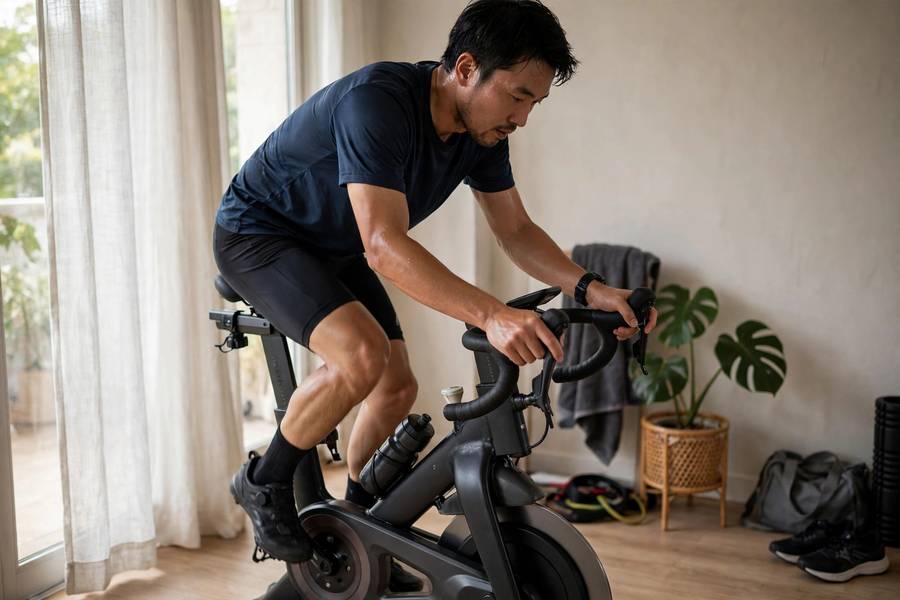
Cycling (stationary or road)
The king of non-running endurance. Enormous aerobic stimulus, near-zero impact, easy to dose precisely. Long rides of 90+ minutes build the same base as long runs. Keep cadence above 85 rpm and effort conversational for base work.
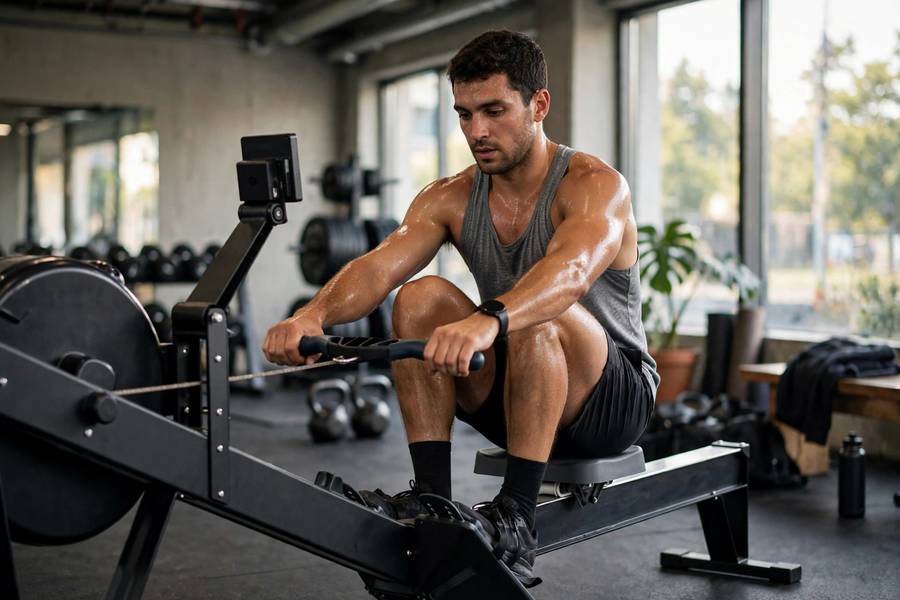
Rowing
Full-body, time-efficient, and humbling. Rowing uses 85 percent of your musculature per stroke, driving massive oxygen demand. Twenty to forty minutes at sustainable pace builds both engine and posterior-chain endurance. Learn technique first; bad rowing is just back pain with extra steps.
Swimming
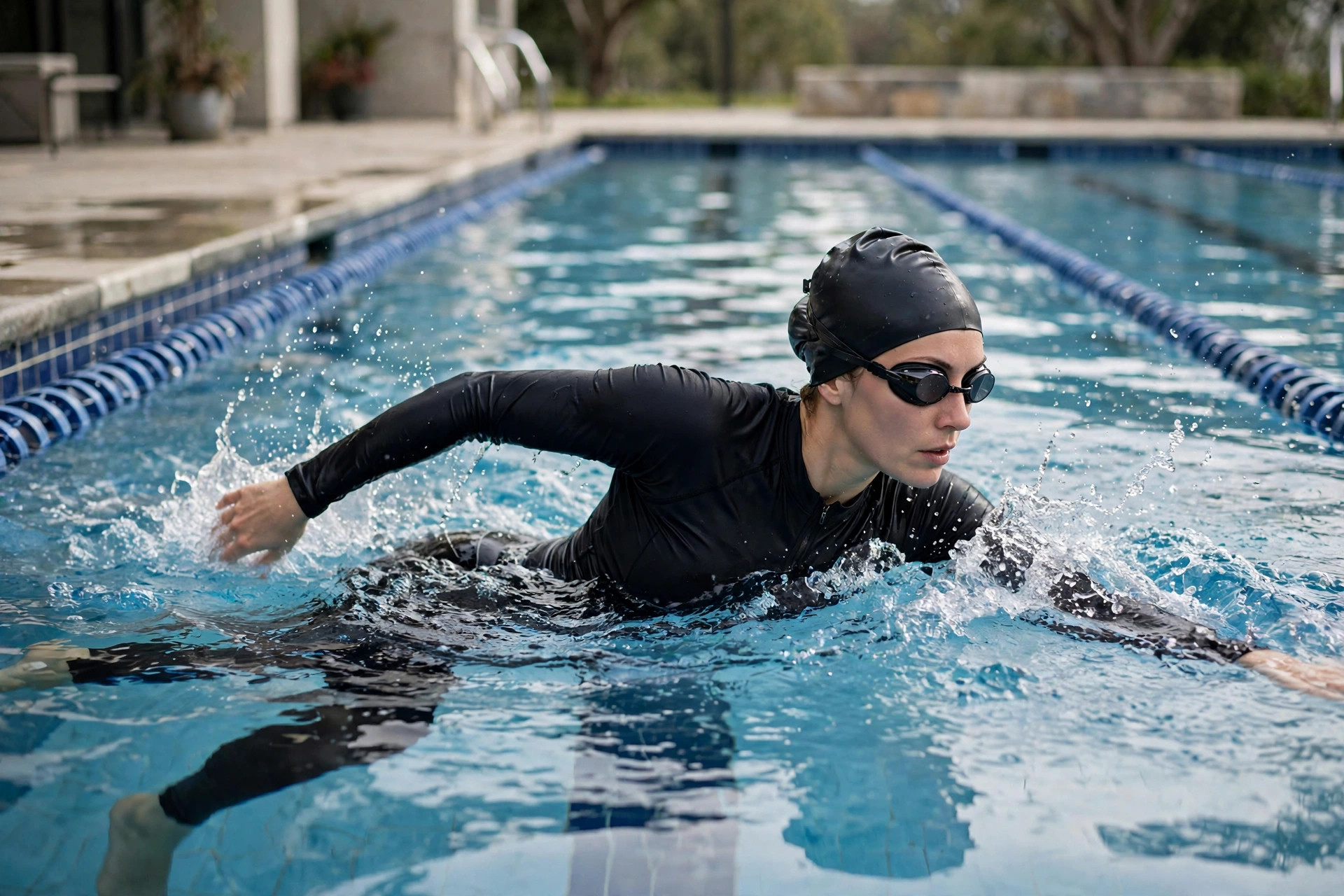
The kindest option for joints and uniquely demanding on breathing control. Technique is the limiter, so invest in lessons or drill-heavy sessions before chasing volume. Once efficient, 45-minute swims build elite-level aerobic fitness.
Incline walking
Walking at 10-15 percent incline at a brisk pace delivers a shockingly high heart rate with walking-level impact. My top recommendation for beginners and heavier trainees. Sixty minutes at incline is a legitimate endurance session, not a consolation prize.
Sample Week: Zero Running, Full Engine
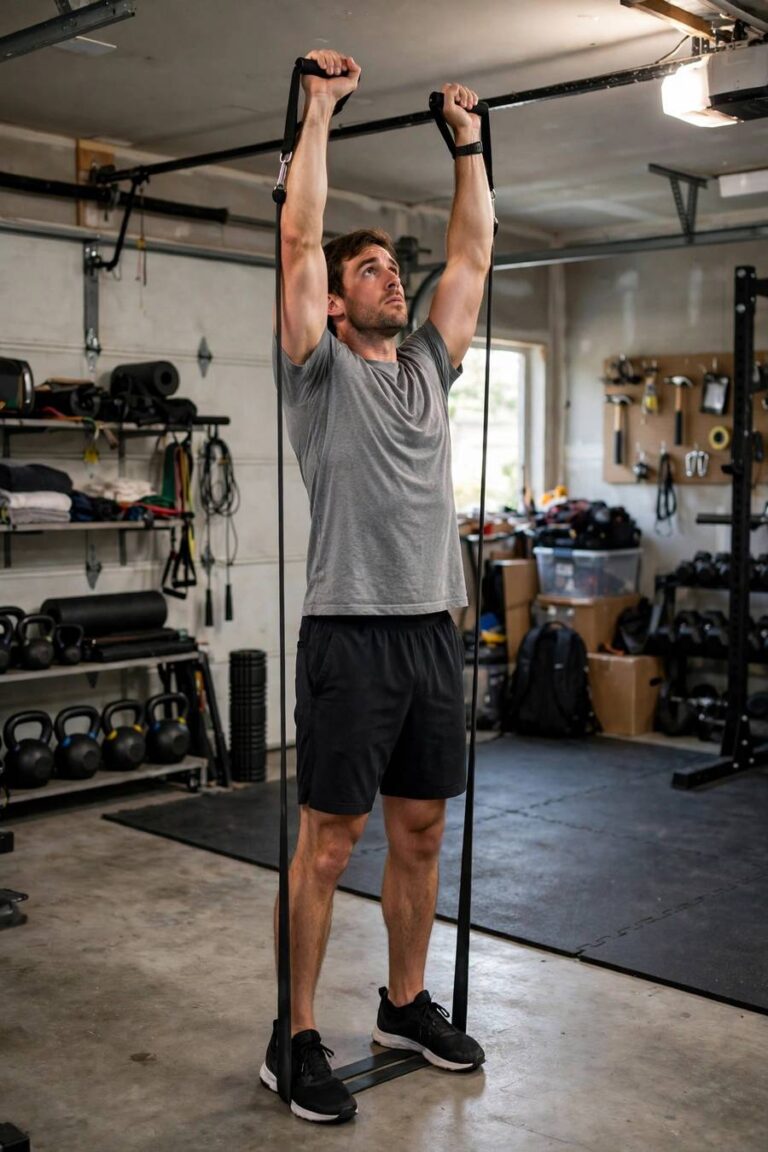
Monday: 45-minute easy ride or row (Zone 1, conversational). Tuesday: strength training full-body. Wednesday: interval session, your choice of modality: 6 x 2 minutes hard with 2 minutes easy. Thursday: 30-minute easy swim or incline walk. Friday: strength training full-body. Saturday: long session, 90 minutes easy, cycling or a mix. Sunday: off. Total: about 5 hours of cardio plus 2 strength sessions, zero running, full engine development. Follow the same 10-percent progression and down-week rules as runners; your cardiovascular system cannot tell the difference, and your joints will thank you for the variety. After 12 weeks of this, your resting heart rate, your pace at fixed heart rate on the bike, and your ability to sustain effort will all be transformed. benefits of resistance band training
Transferring Fitness Back to Running Later
Here is the beautiful part: aerobic fitness transfers across modalities at roughly 70 to 80 percent. The cyclist who builds a huge base for six months and then starts running will be aerobically fitter than the beginner runner, needing only 6 to 8 weeks of gradual impact introduction for the musculoskeletal system to catch up. If you return to running, start with run-walk intervals even though your engine feels ready for more; respect the chassis timeline. Within two months, your non-running base expresses itself fully as running fitness, and you will have skipped the injury-prone early phase that breaks most new runners. This is also why injured runners should cross-train aggressively during rehab: you can return fitter than you left.
Joint-Friendly Intensity: How Hard Can You Go?
Non-running modalities let you push intensity with less orthopedic risk, which tempts people to make everything hard. Do not. The 80/20 rule applies regardless of modality: 80 percent easy, 20 percent hard. Rowing and cycling intervals can spike heart rate alarmingly fast because of the muscle mass involved, so use perceived effort and the talk test rather than chasing numbers. One interval session per week is enough for the first three months. And do not neglect the long session just because it is on a bike; duration-dependent adaptations need duration, whatever the vehicle. Ninety easy minutes on a bike builds the same mitochondrial density as ninety easy minutes on foot.
Your engine does not know what your feet are doing. Build it with whatever tool keeps you consistent, and the fitness is yours regardless.
The Rower’s Technique Primer
Since rowing is the highest-skill tool on the list, here is the 60-second technique guide that prevents 90 percent of errors. The stroke sequence is legs, body, arms on the drive, and arms, body, legs on the recovery, in exactly that order. Common disaster: yanking with the arms first, which loads the lower back and produces no power. Drill it as legs-only rowing for 2 minutes (arms straight, body still), then legs-plus-body for 2 minutes, then full stroke. Damper setting is not resistance; set it between 3 and 5, which best simulates water. Target 24 to 28 strokes per minute for endurance work; higher rates just mean sloppier strokes. Ten minutes of technique drilling before your first real rowing session will save you weeks of bad habits and a sore back.
When to Choose Which Modality
Choose cycling when you want maximum volume with minimum soreness; it is the volume king. Choose rowing when time is short; 30 minutes of rowing delivers what 45 minutes of cycling does. Choose swimming when joints are the limiter or when you need active recovery that still trains the engine. Choose incline walking when starting from zero or returning from injury; it is the gentlest on-ramp that still counts. And rotate them: the athletes who thrive longest on non-running cardio are the ones who never let any single modality become a grind. Monday ride, Wednesday row, Saturday swim is a week that never gets boring, and a week that never gets boring gets repeated for years.
Strength Training for Non-Runners
Non-running cardio still needs the same structural support as running. Two full-body strength sessions per week: goblet squats, Romanian deadlifts, lunges, push-ups, rows, and core, 3 sets of 8-10. Cyclists need upper-body work to counter the hunched position; rowers need hip mobility to protect the lower back; swimmers need rotator-cuff care because shoulders do thousands of overhead reps. The injury profile changes with the modality but the prescription does not: lift twice, keep it simple, never skip it. Strength also improves economy in every modality, meaning less oxygen per watt or per stroke, which is free speed whether your vehicle has wheels, water, or floor.

Yes. Cycling, rowing, swimming, and incline walking build the identical aerobic adaptations as running, since the physiology is modality-independent. Your heart responds to duration and intensity, not to footstrikes.
Cycling for most people: huge aerobic stimulus, near-zero impact, easy to dose. Rowing is the most time-efficient full-body option; swimming is kindest to joints; incline walking is best for beginners.
Aerobic fitness transfers at roughly 70-80 percent across modalities. A cyclist returning to running needs 6-8 weeks of gradual impact introduction for tendons and bones, but the engine is already built.
Mirror a runner’s week: 3-4 easy sessions, one long 90-minute session, one interval day, two strength days, following 80/20 intensity distribution and 10-percent weekly progression.
Absolutely. Brisk walking at 10-15 percent incline drives heart rate into the aerobic training zone with minimal joint stress. Sixty minutes at incline is a legitimate endurance session.
Rowing is more time-efficient and full-body; cycling allows higher volume with less soreness. For pure engine building with limited time, row. For maximum weekly volume, cycle. Both build identical central adaptations.
Expect noticeable improvements in 4-6 weeks: lower resting heart rate, easier breathing at fixed efforts, faster recovery between intervals. Significant base fitness takes 12-16 weeks of consistent training, identical to running timelines, because the cardiovascular adaptations follow the same physiology regardless of modality.