


I’ve been to Thailand in the sticky furnace of April, when Bangkok feels like the inside of a laundry dryer, and I’ve been there in September, when the rain comes down in sheets so thick you can’t see across the street. I’ve also been there in January, when the air in Chiang Mai is cool enough for a sweater in the morning and the Andaman Sea is glass.
So when people ask me for the best time to visit Thailand, I don’t give them a one-word answer. The honest answer is: it depends on where you’re going, what you want to do, and how much you care about rain versus crowds versus prices. This guide covers all of it — month by month, region by region — so you can pick your window with confidence.
Table of Contents
- The Short Answer
- Thailand’s Three Seasons, Explained
- Best Time to Visit by Region
- Month-by-Month Breakdown
- Best Time for Diving and Festivals
- The Cheapest Time to Visit Thailand
- My Honest Take
The Short Answer
If you want the single safest bet: November through February. This is Thailand’s cool, dry season. Temperatures are comfortable, rain is rare, and the seas are calm. It’s also peak tourist season, which means higher prices and bigger crowds — but there’s a reason everyone goes then. The weather is genuinely the best.
That said, I’ve had wonderful trips in the shoulder months (March, October) and even in the rainy season, when the country is at its greenest and hotel rates drop by a third or more. Don’t rule those out.
Thailand’s Three Seasons, Explained
Thailand doesn’t do spring, summer, fall, winter. It does three seasons, and understanding them is the key to timing your trip.
Cool Season (November to February)
This is the sweet spot. Temperatures hover around 25–30°C (77–86°F) in most of the country, humidity drops, and rain is scarce. In the north — Chiang Mai, Chiang Rai, Pai — mornings can actually feel chilly, down to 15°C (59°F) or lower in the mountains. Pack a light jacket if you’re heading north; I learned this the hard way on a January morning in Pai, shivering in a t-shirt at a viewpoint.
The seas on both coasts are generally calm, which matters if you’re island-hopping or diving. This is also when Thailand hosts some of its best festivals, including Loy Krathong (usually November).
The trade-off: this is high season. Expect peak hotel prices, booked-out popular tours, and crowds at marquee spots like Maya Bay and the Grand Palace. Book accommodation well in advance, especially around Christmas, New Year’s, and Chinese New Year.
Hot Season (March to May)
April is the hottest month, and I’m not exaggerating when I say it can be brutal — 38–40°C (100–104°F) in Bangkok and the central plains, with humidity that makes it feel worse. The Thai New Year festival, Songkran (April 13–15), turns the whole country into a giant water fight, which is both the perfect response to the heat and an unforgettable cultural experience.
The islands are still gorgeous in March and early April — hot, but the sea is bathwater-warm and visibility for diving is excellent. By late April into May, the heat starts to break as the first rains arrive.
If you can handle heat, late March offers a sweet spot: dry weather, thinning crowds, and dropping prices.
Rainy Season (June to October)
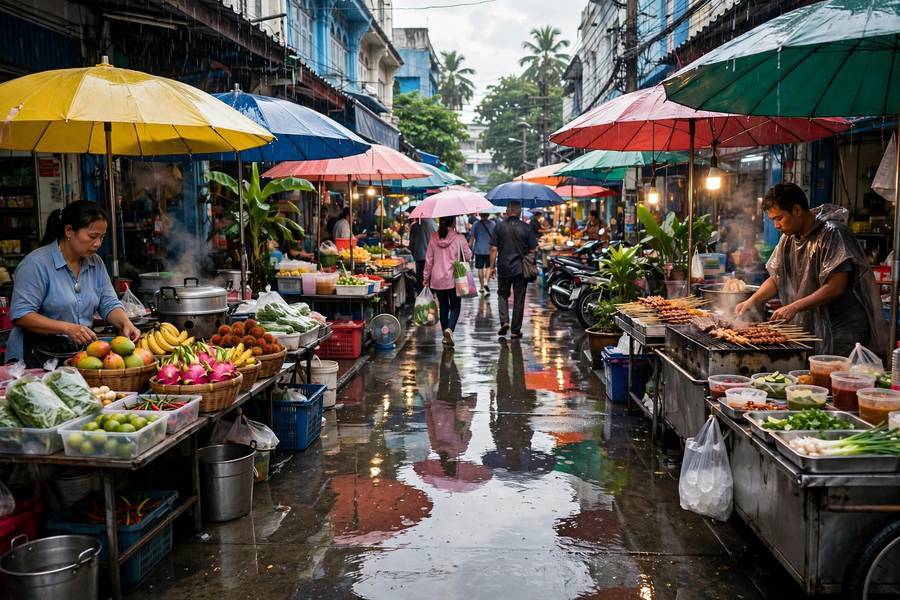
Also called the green season, and the name is earned — the countryside explodes into vivid green, waterfalls are at their most powerful, and everything feels alive. The rain usually comes in intense afternoon bursts rather than all-day drizzle, so you can still have plenty of dry hours. Mornings are often clear and beautiful.
But there are real caveats. September and October are the wettest months, and flooding can disrupt travel in some areas. The Andaman Sea coast (Phuket, Krabi, Koh Lanta) gets rougher seas, and some island ferry routes reduce service. The Gulf coast (Koh Samui, Koh Phangan, Koh Tao) has a different pattern — its rainiest stretch is October through December.
The upside is significant: hotel prices can drop 30–50%, crowds thin out dramatically, and you’ll have temples and beaches nearly to yourself. If your schedule is flexible and you don’t mind planning around rain, this is the budget traveler’s season. For packing advice that covers rainy-season realities, see my guide on what to pack for international travel.
Best Time to Visit by Region
Thailand’s regions don’t share the same weather, so “best time” shifts depending on your itinerary.
Bangkok and Central Thailand: November to February for comfort. Avoid April unless you love extreme heat (or Songkran — honestly, Songkran almost makes the heat worth it).
Northern Thailand (Chiang Mai, Chiang Rai, Pai): November to February is ideal — cool mornings, clear skies, perfect trekking weather. March to May brings the burning season, when agricultural fires create haze that can obscure mountain views and irritate lungs. I’d avoid March/April in the north for that reason alone.
Andaman Coast (Phuket, Krabi, Koh Phi Phi, Koh Lanta): November to April. The sea is calmest and clearest, and this is prime diving season. May to October brings rougher water and reduced boat services.
Gulf Coast (Koh Samui, Koh Phangan, Koh Tao): This coast runs on a shifted calendar — its driest months are roughly February through August, with the wettest period October to December. If you’re island-hopping in September/October, the Gulf side is often the safer bet.
Northeastern Thailand (Isaan): November to February. It’s the least-visited region, which is part of its charm — ancient Khmer temples, fantastic food, and almost no tourists.

Month-by-Month Breakdown
January: Peak season in full swing. Excellent weather everywhere except the far south’s Gulf coast, which can still be wet early in the month. Book ahead.
February: Arguably the single best month — great weather nationwide, crowds starting to thin after the holiday rush. My personal favorite.
March: Still dry and hot, building toward the furnace. Good diving, good island weather, fewer people. The north starts getting hazy late in the month.
April: Hottest month. Songkran (13–15) is the cultural highlight — join it in Chiang Mai for the full experience. Otherwise, stick to the islands and the sea.
May: Transition month. Heat breaks, afternoon storms begin. Prices drop. A decent budget window if you don’t mind some rain.
June: Rainy season proper begins, but it’s usually manageable — short bursts, green landscapes, low prices. The Gulf islands are still quite good.
July: Similar to June, with the added bonus of European summer holiday crowds being thinner here than in the Mediterranean. Good value month.
August: Wet on the Andaman side, but the Gulf coast (Samui, Phangan, Tao) is in its dry stretch — this is actually a solid month for those islands.
September: The wettest month for much of the country. I’d steer first-timers away, but experienced travelers can find deep discounts. Check out ecotourism examples if you want to use the green season for nature-focused travel.
October: Still wet, but the rains start retreating late in the month. Shoulder-season prices. The north begins its beautiful cool-down.
November: The turnaround. Rains end, cool breezes begin, Loy Krathong lights up the rivers. Crowds return but the weather is worth it.
December: Peak season — perfect weather, peak prices, peak crowds. If you’re going over the holidays, book months ahead. If you haven’t sorted your travel documents yet, start with how to apply for a passport sooner rather than later.
Best Time for Diving and Festivals
Diving: The Similan Islands (Andaman Sea) are only open mid-October to mid-May, with the best conditions December to April. Koh Tao on the Gulf side offers year-round diving, with the calmest conditions March to September.
Festivals worth timing a trip around:
– Songkran (April 13–15): Thai New Year water festival, nationwide.
– Loy Krathong / Yi Peng (November full moon): floating lanterns and krathongs; Chiang Mai’s Yi Peng is spectacular.
– Vegetarian Festival (September/October): Phuket’s intense and fascinating street festival.
– Chinese New Year (January/February): big celebrations in Bangkok’s Chinatown.
The Cheapest Time to Visit Thailand
May through October is the budget window — the heart of the rainy season. I’ve scored beachfront bungalows in Krabi for half their January price in July, and the rain that week amounted to one dramatic hour each afternoon.
For the absolute lowest prices, target May/June and September. Just avoid the Gulf coast in November/December (its local wet peak) and check ferry schedules for the Andaman islands in the deep rainy months.
A few money-saving notes: domestic flights within Thailand are cheap year-round if booked a few weeks out. And don’t forget that “low season” in Thailand still means 30°C and swimmable seas — it’s low season by Thai standards, which is still better beach weather than most places get in summer.
My Honest Take
If this is your first trip and you can choose freely: go in February. The weather is the best in the country, the holiday crowds have thinned, and everything — temples, islands, mountains, cities — is at its finest.
If you’re on a budget or hate crowds: go in June or July, stick to a flexible itinerary, and embrace the afternoon storms. Some of my favorite Thailand memories are from rainy-season trips — empty beaches, dramatic skies, and the smell of rain on hot pavement.
And if you’re a diver: December to April, Andaman side, no question.
Whenever you go, Thailand rewards travelers who stay flexible. The weather is one variable; the food, the people, and the sheer ease of traveling there are constants. Pick your month, pack light, and go.

Frequently Asked Questions
February is widely considered the best month: the cool dry season is in full effect nationwide, holiday crowds have thinned, and both coasts offer great beach weather. November through January are nearly as good.
Yes, with the right expectations. Rain usually falls in short afternoon bursts rather than all day, prices drop 30-50%, crowds vanish, and the countryside is at its greenest. September and October are the wettest months and the trickiest for island travel on the Andaman coast.
May, June, and September typically have the lowest airfares and hotel rates, coinciding with the rainy season. Booking 2-3 months ahead and traveling midweek can cut costs further.
It depends on the coast. The Andaman Sea side (Phuket, Krabi) is wettest May to October with rougher seas. The Gulf side (Koh Samui, Koh Phangan) runs on a shifted pattern, driest February to August and wettest October to December.
April is the hottest month, often 38-40°C in Bangkok and central Thailand. It’s manageable if you plan around it — beach destinations, air-conditioned breaks midday — and the Songkran water festival (April 13-15) is a once-in-a-lifetime cultural experience.
For December-January travel, book flights 3-4 months ahead and hotels 2-3 months ahead, especially for popular islands and boutique properties. For shoulder season, 4-6 weeks is usually plenty.