10 Best National Parks for Families (Kid-Tested Guide 2026)

Not all national parks are created equal when you’re traveling with kids — I learned this the hard way at a park where the ‘family trail’ was a 6-mile scree scramble and the nearest bathroom was a 40-minute drive. The best national parks for families share three things: easy wins (short trails, big payoffs), programs that engage kids (Junior Rangers, evening talks), and infrastructure that doesn’t punish parents (lodges, food, manageable drives).
This list is kid-tested — mine are 7 and 10, and they’ve done 30+ parks. These ten are the ones they’d go back to tomorrow, ranked by the only metric that matters: how much the kids talked about it afterward.
For the full camping and planning picture, see our best national parks in the USA hub and the camping guide.
1. Yellowstone: The Wildlife Safari
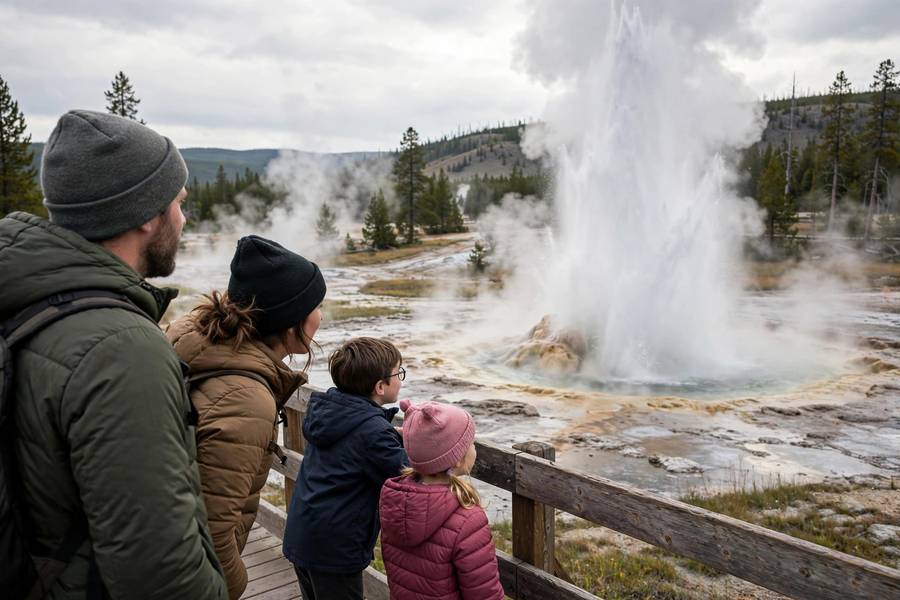
Yellowstone is the #1 family park in America, and it’s not close. Nowhere else can kids see bison traffic jams, erupting geysers, and rainbow-colored hot springs in a single day. The wildlife is the hook — wolves, bears, elk, bison — and the Lamar Valley at dawn is a genuine safari. My kids still talk about the bison that walked past our car like it owned the road (it did).
The Junior Ranger program here is excellent, and the geyser basins have boardwalk trails that are stroller-friendly and endlessly fascinating for kids. Old Faithful erupts roughly every 90 minutes — time it, grab ice cream, and let the anticipation build. The Mud Volcano area smells like rotten eggs and kids find this hilarious.
Logistics: stay inside the park if you can (Old Faithful Inn or Canyon Lodge — book 6–12 months ahead), because the park is enormous and gateway towns add an hour each way. Two full days minimum, three is better. Summer is crowded; September is the sweet spot (wildlife active, crowds gone, weather still good).
2. Yosemite: Waterfalls and Giant Trees
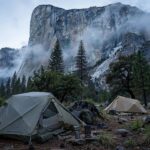
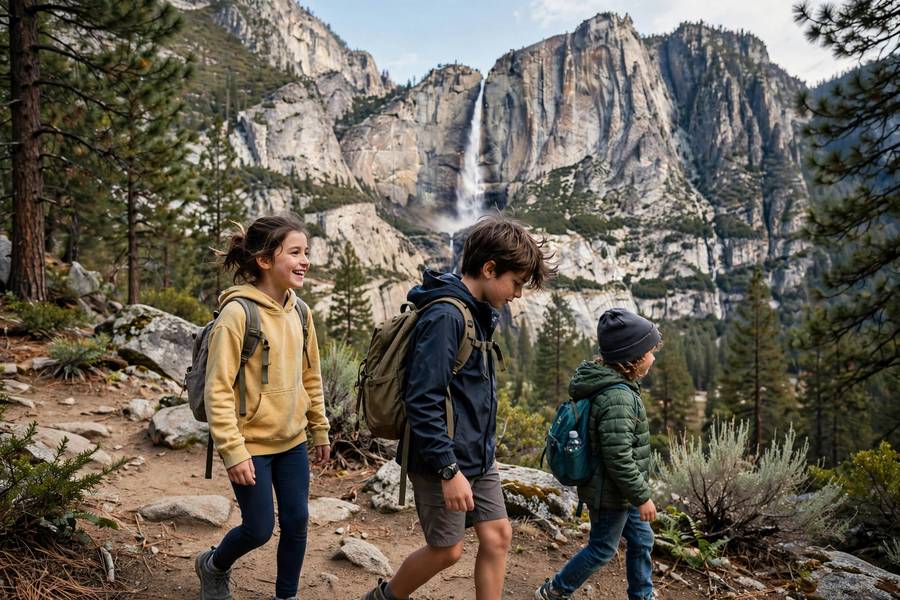
Yosemite Valley is nature’s greatest hits album — waterfalls you can hear from the parking lot, granite walls that make kids’ jaws drop, and meadows full of deer. The Lower Yosemite Fall trail is a 1-mile loop, paved, stroller-friendly, and ends at the base of a 320-foot waterfall. That’s the formula: maximum wow, minimum effort.
The Mariposa Grove of giant sequoias is the other essential stop — walking among 3,000-year-old trees gives kids a sense of deep time that no classroom can. The shuttle-accessible lower grove works for all ages; the upper grove (2 miles round trip) rewards bigger kids. The Junior Ranger program includes a sequoia-focused activity book.
Stay in the Valley (book the moment reservations open — they sell out in minutes) or in El Portal just outside. One warning: summer weekends are packed; arrive at trailheads before 9 a.m. or after 4 p.m. Spring (May–June) has the biggest waterfalls; fall has the fewest people.
3. Grand Canyon: The Big Ditch (Done Right)
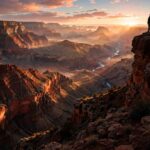
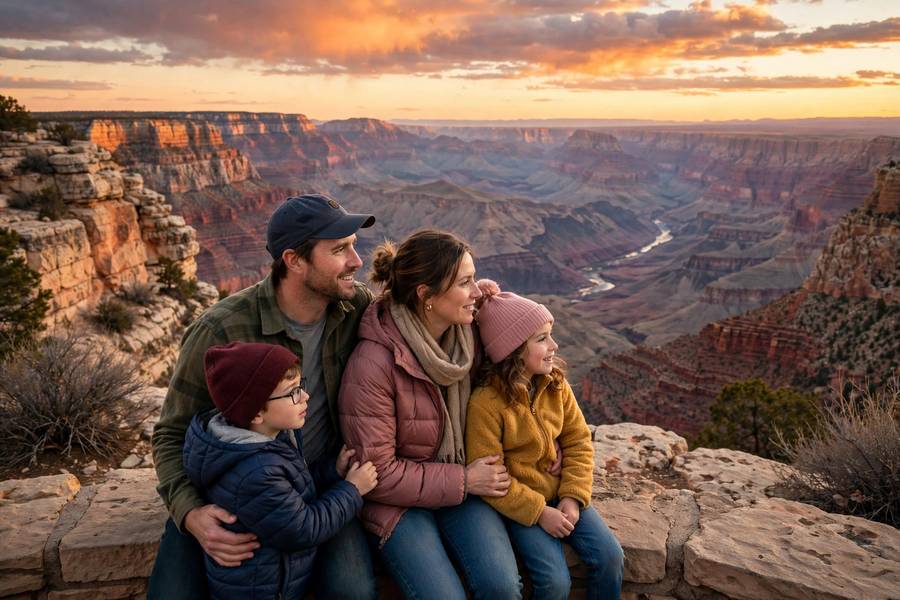
The Grand Canyon with kids is about the rim, not the canyon — the Bright Angel Trail’s first mile (paved, with resthouses) gives the full ‘I’m inside the canyon’ experience without the danger. The rim trail is flat, paved, and 13 miles of viewpoints; kids can handle 2–3 miles of it easily, with shuttle buses to skip boring stretches.
The Junior Ranger program is outstanding, and the Desert View Watchtower (Mary Colter’s 1932 masterpiece) fascinates kids who’ve never seen a building like it. The IMAX theater in Tusayan is a great rainy-day backup. And the sunrises — get the family up once for sunrise at Mather Point; the canyon lighting up is a core memory.
Safety is the real topic: the rim has no guardrails in many spots, and the drop is 5,000 feet. Establish the rule before arrival (stay behind the rock walls, hold hands near edges) and it’s a non-issue. Stay at Maswik or Yavapai Lodge inside the park; the South Rim is open year-round.
4–6. The Next Tier: Zion, Acadia, Great Smoky Mountains
Zion: the shuttle system means no parking stress, the Riverside Walk (2.2 miles, paved, along the Virgin River) is perfect for kids, and the Narrows (wading upstream between 1,000-foot walls) is the most adventurous family hike in the park system for kids 8+. The lodge inside the park is the move; book early.
Acadia: the most civilized park — carriage roads (45 miles, car-free, perfect for biking with kids), tide pools at Wonderland, and Cadillac Mountain (first sunrise in America, drive-up). Bar Harbor’s restaurants and ice cream shops mean nobody suffers. Fall foliage is spectacular; summer is busy but manageable.
Great Smoky Mountains: America’s most-visited park, and the most family-friendly — Cades Cove (11-mile wildlife loop, drive it at dawn), the synchronous fireflies (June lottery), waterfalls on short trails (Laurel Falls, 2.6 miles paved), and Gatlinburg/Pigeon Forge next door for the full tourist-trap experience kids secretly love. Free entry — the only major park without an entrance fee.
7–10. The Specialists: Arches, Olympic, Everglades, Cuyahoga Valley
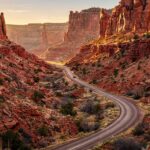
Arches: every kid’s favorite rock collection — Delicate Arch (3-mile hike for older kids), the Windows (drive-up, massive), and Balanced Rock (the photo). The formations look like a playground designed by aliens. Spring and fall only; summer is brutally hot. Pair with Canyonlands (30 minutes away) for a two-park trip.
Olympic: three parks in one — rainforest (Hoh), mountains (Hurricane Ridge), coast (Rialto Beach tide pools). Kids who get bored easily thrive here because the scenery changes completely every 30 minutes. The tide pools are the highlight — starfish, anemones, crabs, all touchable under ranger guidance.
Everglades: airboat rides, alligators from boardwalks (Anhinga Trail — guaranteed gator sightings), and the only subtropical wilderness in the system. Winter (dry season) is the time; summer is mosquito hell. The Junior Ranger program has a great wildlife focus.
Cuyahoga Valley: the underrated gem — between Cleveland and Akron, with Brandywine Falls (easy boardwalk), the Cuyahoga Valley Scenic Railroad (kids love trains), and zero crowds. Perfect for a first national park trip with small kids, or a weekend add-on.
Planning Tips: Timing, Lodging, and Sanity
Timing: summer is peak everywhere — crowds, heat, booked lodges. The shoulder seasons (April–May, September–October) are the family sweet spot: mild weather, active wildlife, available lodging, lower prices. The desert parks (Arches, Grand Canyon) are best in spring/fall; the mountain parks (Yosemite, Yellowstone) in summer/early fall.
Lodging: in-park lodges book 6–12 months ahead and are worth it — they eliminate the daily gateway-town commute (30–60 minutes each way) and put you at trailheads for dawn starts. The alternative: gateway town vacation rentals with kitchens (cooking breakfast and packing lunches saves $50+/day for a family).
The daily rhythm that works: up early (trailheads by 8:30), big activity in the morning, lunch and rest at midday (the heat/crowd peak), easy afternoon (visitor center, short walk, swimming), evening program or sunset viewpoint. Fighting the rhythm — sleeping in, then hiking at noon — is how family park trips go wrong.
What to Pack for National Parks with Kids
The park packing list is its own discipline: layers for everyone (mountain weather changes fast — the 30-degree day-to-night swing is normal in the Rockies and desert parks), twice the water you think you need (dehydration sneaks up on kids who are too excited to drink), sun protection (the UV at 8,000 feet is brutal — hats, SPF, sunglasses), and the entertainment kit for drives (audiobooks — the Harry Potter series has carried our family through 10,000 park miles).
The food strategy saves the trip: cooler with breakfast and lunch supplies (park restaurants are expensive and slow — a $60 family lunch that takes 90 minutes kills the day’s momentum), plus the emergency snack bag (granola bars, fruit, the bribe candy for the last mile of trail). A basic first-aid kit (blisters are the #1 kid injury on trails — moleskin, bandages, antiseptic) and a headlamp per kid (caves, evening programs, the walk back from sunset viewpoints).
Yellowstone (wildlife + boardwalks), Yosemite Valley (short waterfall trails), and Cuyahoga Valley (easy, uncrowded) are the top picks for kids under 7. Look for parks with paved trails, Junior Ranger programs, and in-park lodging — the formula that keeps small kids happy.
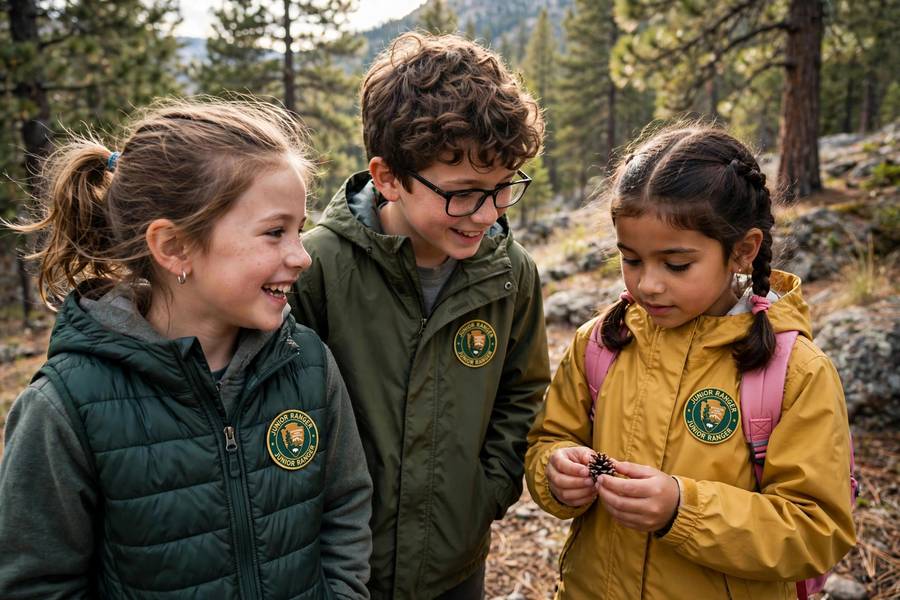
A free program at nearly every national park: kids complete an activity booklet (age-graded), attend a ranger program, and earn a badge in a swearing-in ceremony. It’s the single best kid-engagement tool in the park system — my kids plan trips around collecting badges.
Three full days minimum: one for the geyser basins/Old Faithful area, one for the Grand Canyon of Yellowstone and Hayden Valley, one for Lamar Valley wildlife and Mammoth Hot Springs. Four days lets you slow down. Less than two means skipping major areas.
The developed areas are: visitor centers, many boardwalks (Yellowstone’s geyser basins, Arches’ Windows), and paved trails (Yosemite’s Lower Fall, Smokies’ Sugarlands). Backcountry trails aren’t. A carrier beats a stroller for kids under 3 on any real trail.
April–May and September–October: lodging is 30–40% cheaper, crowds are thin, and weather is good in most parks. The desert parks are actually best in these windows. Summer is peak pricing everywhere; winter is cheapest but many parks have limited access.