How to Get Business Referrals (Turn Happy Customers Into Your Sales Team)


Referred customers close faster, spend more, stay longer, and refer others in turn. By every metric that matters — close rate, lifetime value, acquisition cost — referrals are the best customers a small business can get. And yet most founders treat referrals as happy accidents instead of what they should be: a system.
I’ve built referral engines for service businesses, retailers, and B2B firms. The mechanics are always the same: deliver something worth talking about, ask at the right moment, make referring effortless, and reward generously. Here’s the complete system. For the broader acquisition picture, see how to write a marketing plan — and our pillar guide on how to grow a small business.
Why Referrals Outperform Everything
The numbers tell the story. Referred prospects typically convert at 3–5x the rate of cold prospects — the trust transfers from the referrer to you before the first conversation. They also spend more (referred customers have higher lifetime values across industries) and churn less (the social connection to the referrer anchors them).
The economics are even better: referral acquisition cost is near zero. No ad spend, no agency fees — just the cost of delivering great service (which you’re doing anyway) plus whatever incentive you offer. Compare that to paid acquisition, where costs rise every year as platforms get more competitive.
And referrals compound. Each referred customer becomes a potential referrer, creating a self-reinforcing loop. Businesses with strong referral engines grow with decreasing marketing spend over time — the opposite of ad-dependent businesses, where growth requires ever-increasing budgets.
The strategic implication: a systematic referral program isn’t a nice addition to your marketing — for most small businesses, it should be the foundation. Build the referral engine first, then layer other channels on top.
The Timing of the Ask
When you ask matters more than how you ask. The best moments share one trait: the customer just experienced value.
Peak satisfaction moments: right after a successful project delivery, upon compliment (“we love working with you” — that’s your cue), when they reorder or renew, after you’ve solved a problem brilliantly. Strike while the goodwill is hot.
Milestone moments: anniversaries of working together, completion of a major phase, the customer’s own wins that you contributed to. Milestones create natural reflection — “we’ve done great work together” — which flows into “who else should experience this?”
Built into the process: don’t rely on remembering. Add the referral ask to your workflow: a step in project closeout, a question in the satisfaction survey, a card in the delivery package, a line in the onboarding email sequence. Systematized asks happen consistently; remembered asks happen rarely.
The worst times: when something’s gone wrong (obviously), during price negotiations, or out of the blue months after the relationship cooled. An ask without recent value feels transactional and gets ignored.
Frequency: asking once is not enough — but asking every interaction is too much. A good rhythm: ask at project completion, then annually or at natural milestones. Regular customers can be asked 2–3 times a year without fatigue, provided each ask follows genuine value delivery.
How to Ask Scripts That Work
Most founders don’t ask because they don’t know what to say. Here are scripts that work — adapt the language to your voice:
The direct ask (after a win): “I’m glad this worked out so well. I’m growing the business through referrals — is there anyone you know who [has this specific problem]? I’d love an introduction.”
The specific ask (higher conversion): “Do you know any [specific type — dental practices, new parents, restaurant owners] who struggle with [specific problem]? A quick introduction would mean a lot.” Specificity makes it easy — the referrer can mentally scan their network instead of drawing a blank on “anyone.”
The survey close: after a satisfaction survey with high scores: “Thanks for the great feedback! Since you’re happy, would you be open to introducing me to one person who might benefit similarly?” The survey primes the ask — they’ve just articulated their satisfaction.
Key principles across all scripts: be direct (hinting doesn’t work), be specific about who you want (vague asks get vague results), make it about helping the referred person (not about growing your business), and always offer to make it easy (you’ll draft the intro, you’ll follow up gently).
Making Referring Effortless
Every bit of friction kills referrals. Your job: make referring take under 60 seconds.
The one-link method. A single referral link or landing page the customer can text to a friend. “Just send them this link — it explains everything and mentions you referred them.” One tap, done.
The intro email draft. “If you’re comfortable, just forward this to them” — with a pre-written 3-sentence intro they can send as-is or edit. Removing the “what do I say?” barrier doubles referral rates in my experience.
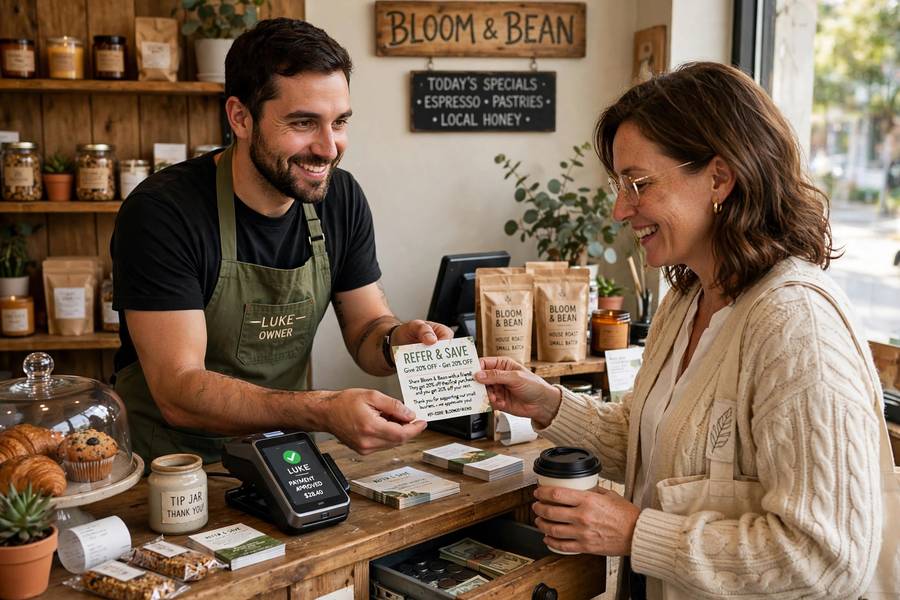
Physical referral cards. For local businesses: a card the customer hands to a friend — with the referrer’s name on it, a clear offer (“$20 off your first visit, courtesy of [name]”), and your contact info. Tangible, trackable, effective.
The namedrop incentive. “Tell them to mention your name” — simplest tracking there is. When the new customer says “Sarah sent me,” you know exactly who to thank.
Social sharing. A pre-written post or story template customers can share with one tap. Works best for visually appealing or community-oriented businesses.
Remove every other barrier. Don’t require referrers to fill out forms, create accounts, or explain your services. Their job is the introduction; your job is everything after. The easier the handoff, the more handoffs happen.

Referral Programs and Incentives
Should you pay for referrals? It depends — but structured incentives significantly increase referral volume:
The two-sided reward. Both referrer and referred get something: “$25 for you, $25 for your friend.” Two-sided rewards outperform referrer-only rewards because the referrer feels generous rather than mercenary — they’re giving their friend a gift, not selling them out.
What to offer. Cash, account credit, free products/services, upgrades, gift cards — match the incentive to your business. Service businesses: credit toward future work. Retail: store credit or free product. The incentive should feel generous relative to the effort (which is minimal) — $10 feels insulting, $25–50 feels appreciative.
Tiered rewards for super-referrers. Customers who refer repeatedly deserve escalating recognition: after 3 referrals, a bigger reward; after 5, VIP status. Your top referrers are unofficial salespeople — treat them accordingly.
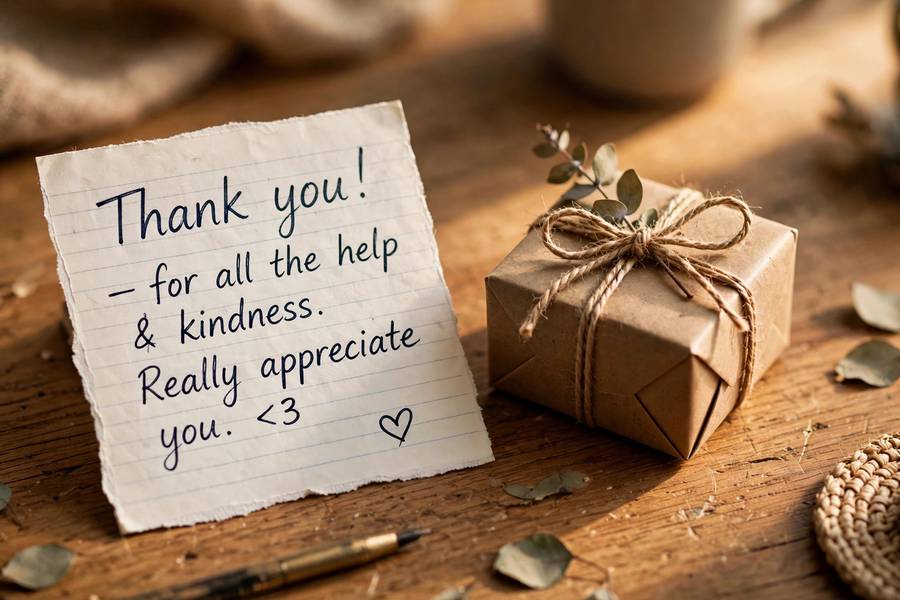
Non-monetary recognition. Public thanks (with permission), a “founding referrer” status, early access to new offerings, a handwritten note from the owner. Recognition often motivates more than cash — people refer primarily to help friends and look knowledgeable, not for $25.
Keep it simple. If the program needs a FAQ to explain, it’s too complex. One sentence should cover it: “Refer a friend, you both get $25.” Complexity kills participation.
Formal vs informal. Small businesses often do better with informal (“send me someone and I’ll take care of you both”) than formal programs — it feels personal rather than corporate. Formalize when volume justifies it, not before.
Partner Referrals the Multiplier
Customer referrals are one-to-one. Partner referrals are one-to-many — and they’re the highest-leverage referral source available:
Find complementary businesses. Who serves your ideal customers without competing? The wedding photographer partners with florists and venues. The IT consultant partners with accountants and office suppliers. The gym partners with physical therapists and nutritionists. Map your customer’s full journey and identify who owns the adjacent steps.
Propose the mutual exchange. “I regularly meet people who need [their service]. I’d love to refer them to you — and if you encounter anyone needing [your service], I’d appreciate the same.” Lead with what you give, not what you want. Generosity first builds partnerships that last.
Make partners look good. When you refer to a partner, brief the customer (“tell them I sent you — they’ll take great care of you”) and follow up with the partner on the outcome. Partners who hear “your referral became my best client” send more. Partners who hear nothing stop sending.
Formalize what works. A quarterly coffee, a shared referral tracking sheet, co-hosted events, bundled offers. The partnerships that produce should get deliberate attention — they’re business assets.
The power law applies. In my experience, 2–3 strong referral partners outperform 20 casual ones. Invest deeply in the few relationships that actually produce, rather than spreading thin across many.
The Thank You Loop
What happens after a referral determines whether you get another one:
Thank immediately. When a referral comes in, thank the referrer the same day — a call for valuable ones, a personal note always. Speed signals that you noticed and that it mattered.
Report the outcome. “Just wanted you to know — your introduction to Mike turned into a great project. Thank you.” Closing the loop is deeply satisfying for referrers and motivates the next one. Most businesses never do this; it’s a massive missed opportunity.
Deliver the incentive promptly. Delayed rewards feel like broken promises.
Take exceptional care of referred customers. They’re carrying your referrer’s reputation along with their own expectations. White-glove treatment for referrals isn’t just good service — it’s protecting the relationship that produced them.
The compounding effect: referrer thanked + outcome reported + incentive delivered + referred customer delighted = a referrer for life who actively looks for the next introduction. Each referral handled well produces the next one. Each referral handled poorly kills the source permanently.
Tracking Your Referral Engine
Measure these monthly:
Referral volume: how many referred prospects arrived? Trending up means the engine works; flat means the ask isn’t happening systematically.
Referral close rate: what percentage of referrals become customers? Should be 2–5x your cold close rate. If it’s not, the issue is your sales process, not the referrals.
Referrals per customer: what percentage of customers refer at least once? 10–20% is healthy; below 5% means you’re not asking enough or not delivering refer-worthy experiences.
Source breakdown: which customers refer most? Which partners produce? Double down on what works — and study your best referrers to understand what triggers their advocacy.
Revenue from referrals: what share of new revenue is referral-driven? Growing this percentage is the goal — it means decreasing dependence on paid acquisition.
Referral Mistakes That Backfire
Asking before delivering value. The premature ask — requesting referrals from a customer who’s barely started — feels extractive and damages the relationship. Earn it first.
Incentivizing without delighting. Paying for referrals of a mediocre experience produces mercenary referrals that don’t convert and damage your reputation. Fix the experience; the referrals follow.
Making it complicated. Multi-tier programs with points, thresholds, and expiration dates — customers won’t bother. Simplicity wins.
Forgetting to thank. The number-one referral killer. An unthanked referrer feels used, not appreciated. The thank-you costs nothing and determines everything.
Treating referred customers as regular leads. Slow follow-up or standard treatment on a referred prospect insults both the prospect and the referrer. Referrals get priority handling, always.
Never asking at all. The most common mistake by far. Studies consistently show customers are willing to refer but rarely asked. The gap between willingness and asking is pure lost revenue — close it with a system.
Your happiest customers want to refer you. They’re just waiting to be asked, at the right moment, in the right way, with the friction removed. Build the system, work it consistently, and watch your best customers become your best salespeople.
Frequently Asked Questions
Ask directly at peak satisfaction moments — after a successful delivery, upon receiving a compliment, or at renewal. Be specific about who you want (“do you know any dental practices struggling with no-shows?”), make it easy with a pre-written intro, and frame it as helping the referred person.
Two-sided incentives (both referrer and friend get rewarded) work best — typically $25–50 in value. Keep the program dead simple: one sentence should explain it. Non-monetary recognition like public thanks and VIP status often motivates as much as cash.
Right after the customer experiences value: project completion, a compliment, a reorder, or problem resolution. Build the ask into your process (project closeout, satisfaction surveys, delivery packages) so it happens consistently rather than when remembered.
Identify complementary businesses serving your customers, propose a mutual exchange leading with what you’ll give, make partners look good by briefing referred customers, and report outcomes back. Invest deeply in 2–3 productive partnerships rather than spreading thin.
10–20% of customers referring at least once is healthy; below 5% signals you’re not asking systematically or not delivering refer-worthy experiences. Track referral volume, close rate, and revenue share monthly to measure your engine.