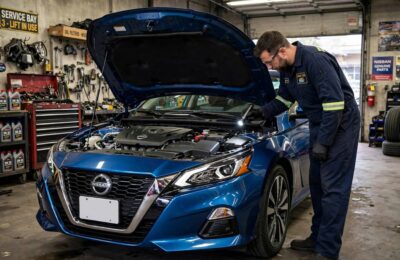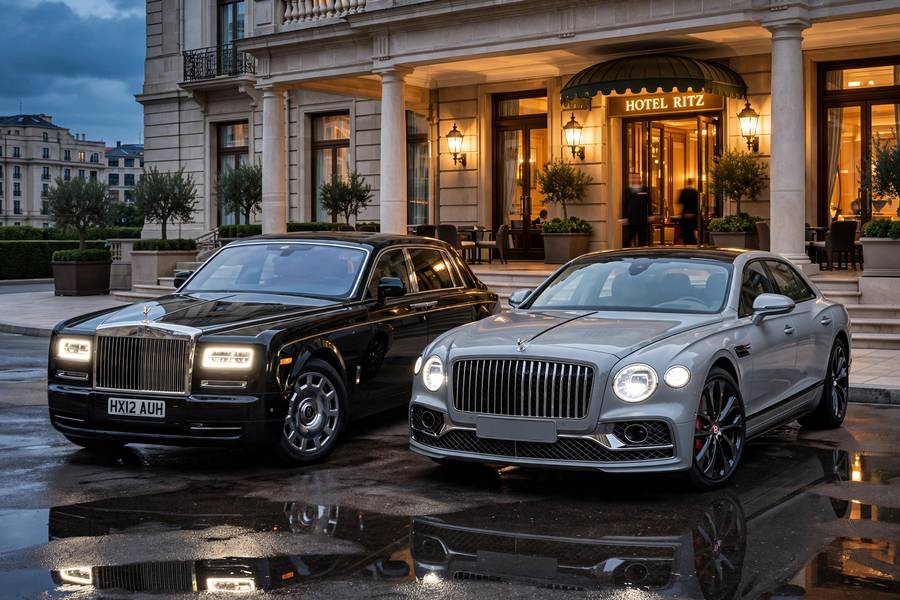
Rolls Royce vs Bentley — which is more luxurious? It’s the question every car enthusiast argues about, and having worked on both in the shop, I can give you an answer most reviewers won’t: it depends on what “luxury” means to you, because these two brands define it completely differently.
One builds the world’s quietest, most isolated throne room. The other builds a handcrafted grand tourer you actually want to drive yourself. Both cost more than most houses. Let me break down where each one wins, honestly, from someone who’s had both on the lift.
Contents
- The One-Sentence Difference
- Craftsmanship: Hand-Built vs Hand-Finished
- Ride Quality and Isolation
- Interior Design Philosophy
- The Driving Experience
- Technology and Features
- Reliability and Maintenance Reality
- Prestige and Brand Image
- Price Comparison
- Verdict: Which Is More Luxurious
The One-Sentence Difference
Rolls-Royce is the ultimate passenger’s car — engineered for silence, isolation, and being chauffeured. Bentley is the ultimate driver’s luxury car — handcrafted like a Rolls, but built for the person behind the wheel.
If you want to be driven, buy the Rolls. If you want to drive, buy the Bentley. That single distinction explains nearly every difference between them.
Craftsmanship: Hand-Built vs Hand-Finished
Both brands market hand craftsmanship heavily, and both deliver — but differently.
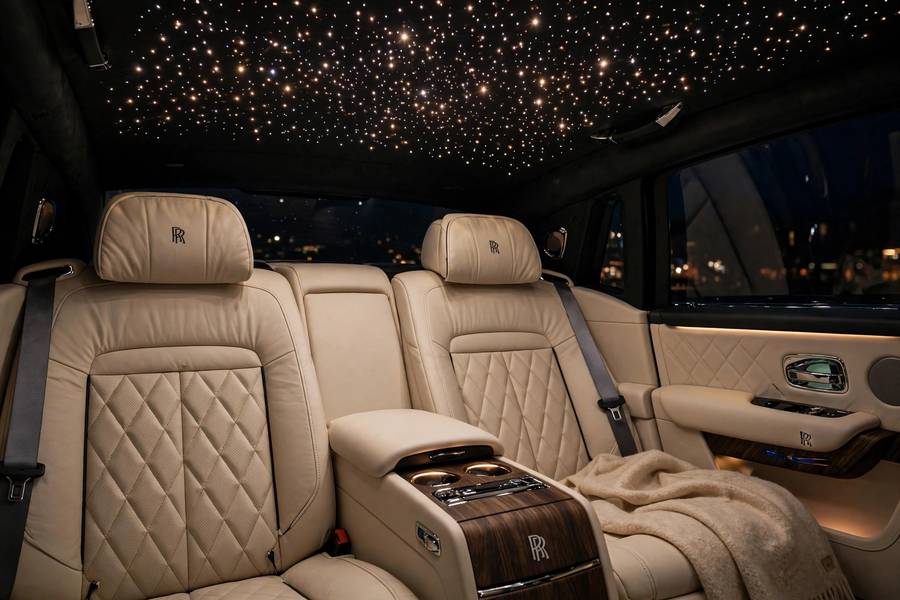
Rolls-Royce takes a coachbuilt approach. The Phantom’s body panels are finished by hand, the paint gets multiple layers with hand-sanding between coats, and the interior is essentially a bespoke commission — buyers choose veneers, leathers, embroidery, even starlight headliner constellations matched to a specific night sky. The famous Spirit of Ecstasy retracts into the grille at the touch of a button. From the shop side, panel gaps are the tightest I’ve measured on any production car, and the paint depth is absurd — you can practically swim in it.
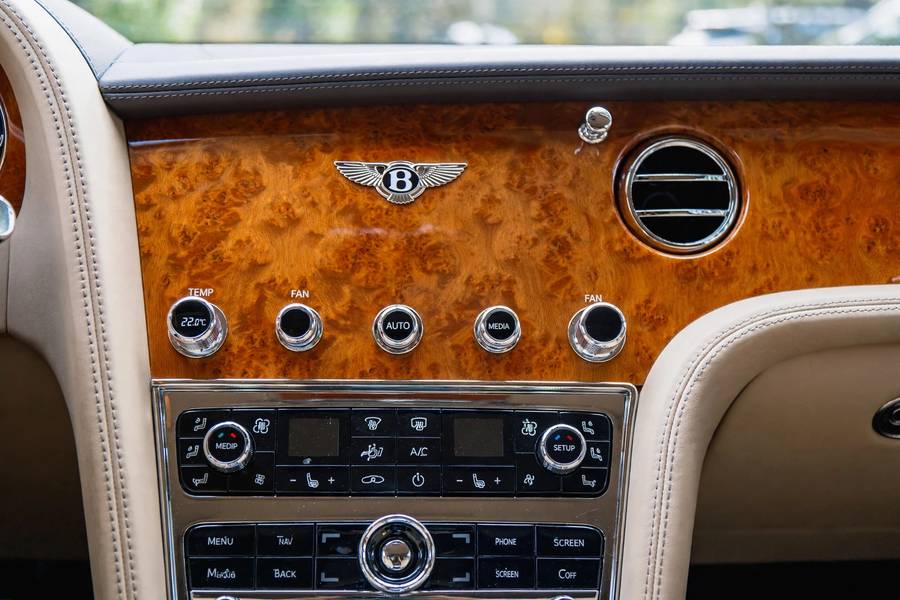
Bentley is equally hand-intensive but more traditionally “workshop.” The Flying Spur and Continental GT interiors feature hand-stitched leather (a single steering wheel takes hours), book-matched wood veneers, and knurled metal controls that feel like precision instruments. Bentley’s craftspeople do things machines still can’t — the cross-stitching on diamond-quilted seats, the metalworking on the organ-stop vent controls.
My take: Rolls-Royce craftsmanship feels more theatrical — designed to awe. Bentley craftsmanship feels more tactile — designed to be touched and used. Both are leagues beyond normal luxury cars. I’d call this one a draw, with Rolls edging ahead on sheer bespoke extravagance.
Ride Quality and Isolation
This is where Rolls-Royce pulls away, and it’s not close.
The Phantom rides on what Rolls calls the “magic carpet ride” — air suspension with a stereo camera system that reads the road ahead and pre-adjusts the dampers. Combined with the most sound insulation I’ve ever seen in a car (over 100kg of it, plus double-glazed windows all around and foam-filled tires), the result is genuinely surreal. At 70 mph, the cabin is quieter than most living rooms. I’ve had the hood up on a running Phantom and had to check the tach to confirm the V12 was on.
Bentley is superb by any normal standard — the Flying Spur on air suspension is supremely comfortable, quiet, and composed. But park it next to a Phantom and the difference is audible. The Bentley lets in a whisper of the world; the Rolls seals it out entirely.
Winner: Rolls-Royce, decisively. If isolation is your definition of luxury, nothing on earth beats a Phantom.
Interior Design Philosophy
Rolls-Royce interiors are about grandeur and understatement simultaneously. Clean architectural lines, vast expanses of leather and wood, minimal visible technology (screens hide away; the philosophy is that luxury shouldn’t look like a Best Buy). The rear cabin is the focus — reclining seats, picnic tables, champagne cooler, theater screens. It feels like a private members’ club that happens to move.
Bentley interiors are warmer and more driver-focused. The rotating display (a party trick where the center screen flips to reveal analog gauges or a clean veneer panel) is pure theater, but the overall feel is a cockpit — everything oriented around the driver, rich materials everywhere your hands land. The rear is luxurious but clearly secondary.
My take: Rolls for the passenger, Bentley for the driver. The Phantom’s back seat is the single finest place to sit in any car on sale. The Bentley’s driver’s seat is the finest place to drive from.
The Driving Experience
Here’s where Bentley wins outright, and Rolls-Royce doesn’t even try to compete.
Bentleys are genuinely engaging to drive. The Continental GT with its W12 (or the newer V8 hybrid) is fast in a way that surprises people — 0-60 in the low 3s for the Speed models — and the chassis is composed, with rear-biased all-wheel drive and a level of agility that defies the car’s size. The Flying Spur is a sedan you can hustle down a back road and enjoy. Steering has feel. The car shrinks around you.
Rolls-Royces drive… like Rolls-Royces. The Phantom is effortless, silent, and completely isolated — which is the point. But “engaging” isn’t in the vocabulary. The steering is light to the point of vagueness, the car leans on its air suspension in corners, and pushing it feels wrong — like sprinting in a tuxedo. The Ghost is slightly more driver-friendly, but it’s still a chauffeur’s car first.
Winner: Bentley, by a mile. If you enjoy driving, this isn’t a contest.
Technology and Features
Both are owned by German giants (Rolls by BMW, Bentley by VW Group), and both borrow technology accordingly.
Rolls-Royce hides its tech. The infotainment is BMW-derived but reskinned; driver assists exist but are discreet. The famous features are experiential: starlight headliner, power-closing coach doors, the umbrellas in the doors, the “gallery” dashboard (a glass-enclosed art space across the dash). It’s technology in service of theater.
Bentley is more tech-forward. The rotating display, night vision, advanced driver assists, and the newer hybrid powertrains show a brand more willing to embrace modernity. The tech feels integrated rather than hidden.
My take: Bentley for tech enthusiasts, Rolls for tech minimalists. Neither will embarrass you, but they have opposite philosophies about whether you should see the technology.
Reliability and Maintenance Reality
Time for the shop-floor honesty. Both are expensive to maintain — staggeringly so by normal standards — but there are differences.
Rolls-Royce benefits from BMW powertrain architecture (the V12 is BMW-derived), which means the core mechanicals are well-understood. But everything around them is bespoke, low-volume, and priced accordingly. A brake job can run $5,000+. Tires are special-order. And dealer-only in most markets — independent shops (like mine) can do basic work, but anything electronic or proprietary goes back to the dealer.
Bentley shares more with the VW Group parts bin (the W12 and V8 have Audi/Porsche DNA), which helps slightly with parts availability and independent-shop serviceability. But “slightly” is doing heavy lifting — you’re still looking at $3,000+ brake jobs and eye-watering prices for anything with a winged-B logo on the box.
Real talk: Budget $5,000–$10,000/year in maintenance for either, more as they age. Depreciation is brutal on both (which is why smart money buys them used). Neither is “reliable” in the Toyota sense — they’re reliable in the “maintained regardless of cost” sense. Skip maintenance on either and you’ll learn what a $30,000 repair bill looks like.
Prestige and Brand Image
Rolls-Royce sits alone at the top of the automotive prestige hierarchy. It’s the car of heads of state, royalty, and billionaires who don’t need to prove anything. The brand has never made a “cheap” car and never will. Arriving in a Phantom says something no other car says.
Bentley is prestigious but more accessible — the “entry” Continental GT costs roughly half a Phantom. It’s the choice of successful people who still drive themselves: entrepreneurs, athletes, executives. Slightly sportier image, slightly less “old money.”
Neither is a wrong answer. But if the question is purely “which carries more prestige,” it’s Rolls-Royce, and it’s not particularly close.
Price Comparison
Approximate starting prices (before the inevitable bespoke options that add six figures):
| Rolls-Royce | Bentley | |
|---|---|---|
| Flagship sedan | Phantom: ~$500,000+ | Flying Spur: ~$220,000+ |
| Coupe/Convertible | Spectre (electric): ~$420,000+ | Continental GT: ~$240,000+ |
| SUV | Cullinan: ~$400,000+ | Bentayga: ~$200,000+ |
Rolls-Royce operates in a price tier above Bentley across the board. A well-optioned Phantom can exceed $700,000. Bespoke commissions go higher still.
Verdict: Which Is More Luxurious
If “luxurious” means isolation, craftsmanship theater, rear-seat opulence, and ultimate prestige: Rolls-Royce wins. The Phantom is the most luxurious car on sale, full stop. Nothing seals you from the world like it, nothing coddles rear passengers like it, and nothing carries its presence.
If “luxurious” means handcrafted materials you interact with while driving, engagement, and a car that’s luxurious and fun: Bentley wins. The Continental GT and Flying Spur are the best driver’s luxury cars in the world.
My honest answer to “which is more luxurious”: the Rolls-Royce. Luxury, at its purest, is about being completely removed from effort and noise — and nobody does that better. But the Bentley is the one I’d rather own, because I like driving. And that’s really what this debate comes down to: are you buying a throne, or a driver’s seat?
For the broader ultra-luxury picture, see most luxurious cars — where both brands dominate the top tier. And if you’re cross-shopping drivetrains in this segment, AWD vs 4WD explained covers the mechanical side, though at this price point, the answer is always all-wheel drive. Even royalty gets flat tires — how to change a tire applies to Phantoms too.
Frequently Asked Questions
Rolls-Royce is more luxurious by the traditional definition — unmatched isolation, rear-seat opulence, bespoke craftsmanship, and prestige. Bentley is the better driver’s luxury car, with more engaging handling and driver-focused interiors.
Yes, significantly. The Phantom uses over 100kg of sound insulation, double-glazed windows, and foam-filled tires to achieve the quietest cabin of any production car — noticeably quieter than even the excellent Bentley Flying Spur.
Both are extremely expensive — budget $5,000–$10,000/year. Rolls-Royce tends to cost more due to lower volumes and more bespoke parts, while Bentley benefits slightly from shared VW Group architecture. Neither is cheap to run.
No. Rolls-Royce Motor Cars is owned by BMW, and Bentley is owned by Volkswagen Group. They were once under the same corporate umbrella decades ago but have been separate — and rivals — for over 20 years.
Both depreciate heavily — often 40–50% in the first five years. Limited editions and bespoke commissions hold better. Neither is an investment; buy for the experience, ideally used, after someone else absorbed the depreciation.