Your tires are telling you exactly what’s wrong with your car — most people just don’t speak the language. After a decade in the shop, I can glance at a set of tires and tell you whether it’s camber, toe, pressure, or shocks. This tire wear patterns misalignment guide teaches you to do the same.
Every pattern has a cause. Learn the patterns, and you’ll catch problems when they’re cheap instead of when they’re a $800 set of tires.
Contents
- How to Read Your Tires: The 5-Minute Inspection
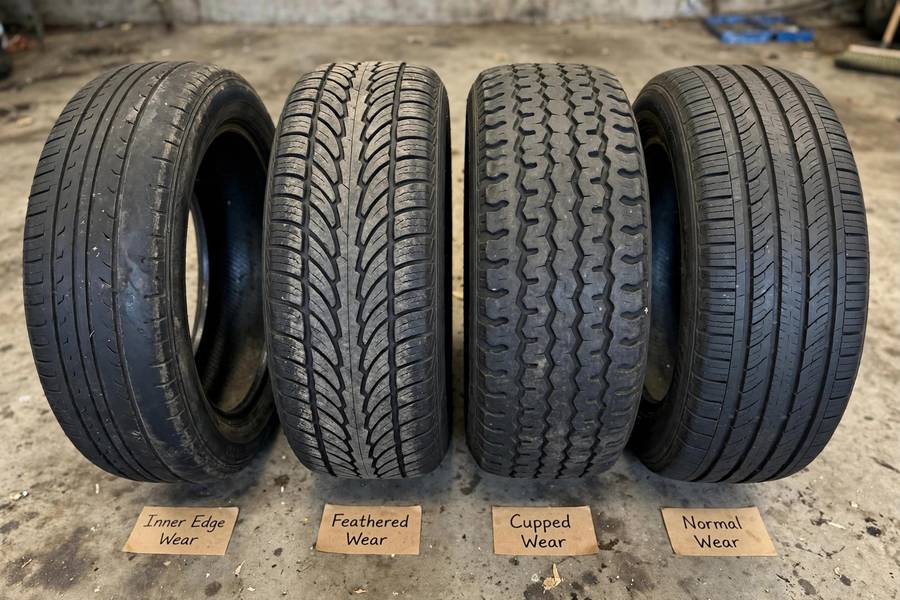
- Inner Edge Wear: Too Much Negative Camber
- Outer Edge Wear: Positive Camber or Hard Cornering
- Feathering: The Toe Problem Signature
- Center Wear: Overinflation
- Both Edges Worn: Underinflation
- Cupping and Scalloping: Shocks and Balance
- Patchy Flat Spots: Braking and Balance Issues
- One Tire Different From the Rest
- What to Do About Each Pattern
How to Read Your Tires: The 5-Minute Inspection
Before the patterns, the method. Do this monthly — it takes five minutes:
- Park on flat ground, steering straight. Turn the front wheels full-lock left, inspect, then full-lock right — this exposes the inner edges you’d otherwise miss.
- Look across the full tread width of each tire — inner edge, center, outer edge.
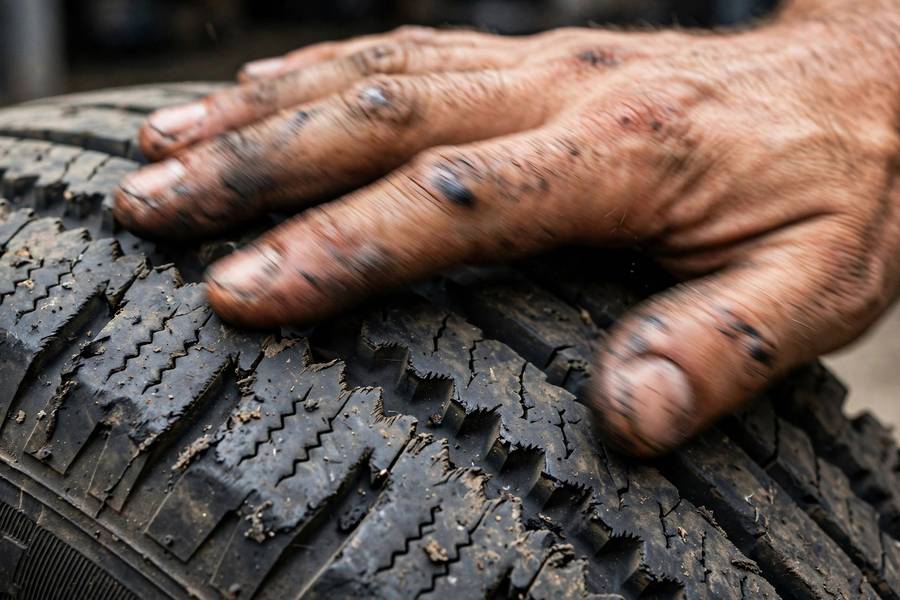
- Run your hand across the tread in both directions. Your fingers detect feathering and cupping your eyes miss.
- Check all four, plus compare front to rear and left to right.
- Note pressure while you’re there — many “wear patterns” are just pressure problems.
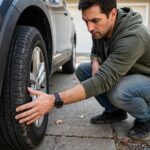
Crouch down for the inner edges. Seriously — inner-edge camber wear hides on the side you never look at, and it’s the most common alignment-related wear I see.
Inner Edge Wear: Too Much Negative Camber
What it looks like: The inside shoulder of the tire is worn smooth — sometimes bald — while the rest of the tread looks normal. You have to crouch to see it, which is why it surprises people.
What it means: Negative camber — the top of the wheel tilting inward. The tire rides on its inner edge instead of flat.
Common causes: – Sagging springs or worn struts letting the car sit lower than designed (most common on high-mileage cars) – Camber knocked out by a pothole or curb hit – Worn control arm bushings letting the geometry shift – On some cars, aggressive factory camber specs (performance cars often run notable negative camber from the factory — check whether it’s actually out of spec before worrying)
What to do: Get the alignment checked, but also have the tech check ride height and bushings. Aligning a car with sagging springs treats the symptom — the camber will drift again. Fix the underlying cause, then align.
Outer Edge Wear: Positive Camber or Hard Cornering
What it looks like: The outside shoulder wearing faster than the rest of the tread. Mirror image of inner-edge wear.
What it means: Positive camber (top of wheel tilting outward) — less common than negative camber issues — or the driver corners hard enough to roll onto the outer edges regularly.
Common causes: – Positive camber from worn or damaged suspension components – Aggressive cornering habits (the wear will be on the outside of the loaded tire — typically both fronts if you enjoy on-ramps) – Overloaded vehicle leaning on outer edges
What to do: If it’s alignment-related, the rack will show positive camber out of spec. If your driving style is the cause, the fix is free: slow down for corners. Tires are cheaper than the alternative, but smooth is faster anyway.
Feathering: The Toe Problem Signature
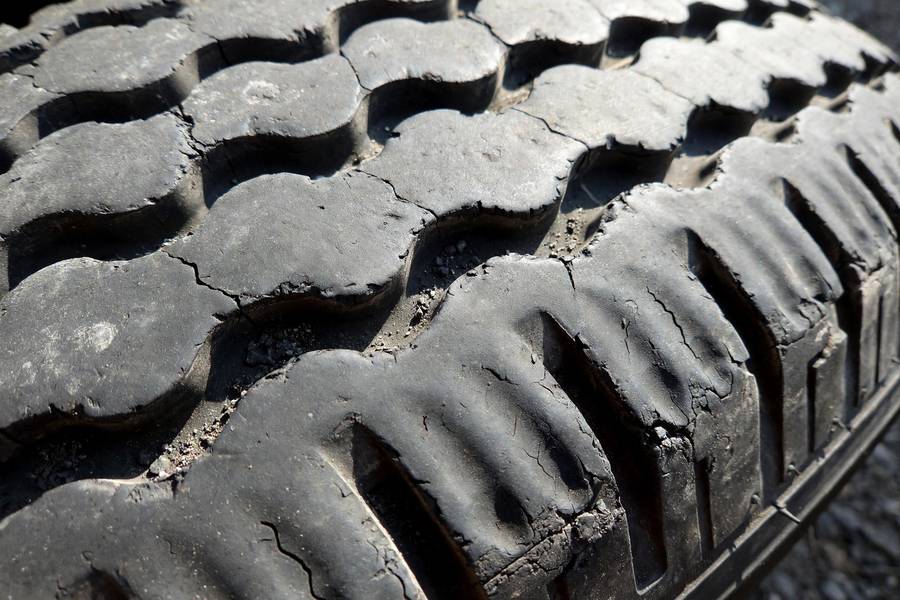
What it looks like: Run your hand across the tread one way — smooth. The other way — rough, with a sawtooth or ridged feel. The tread blocks are worn into little ramps. Visually, the tread looks “swept” in one direction.
What it means: Toe misalignment. The tire is being dragged slightly sideways as it rolls, shaving each tread block into a wedge. This is the #1 tire-killer among alignment issues — bad toe destroys tires faster than bad camber.
Why it matters so much: A tire with bad toe scrubs on every single rotation. At highway speed, that’s roughly 800+ scrubs per mile. Even a small toe error compounds into massive wear over thousands of miles. I’ve seen feathered tires go from “looks okay” to “needs replacement” in one long road trip.
What to do: Alignment, promptly. Feathering in progress means active damage — every mile driven is rubber lost. Also check tie rod ends for play; worn tie rods cause dynamic toe changes that feather tires even when static alignment looks acceptable.
Center Wear: Overinflation
What it looks like: The center of the tread worn down, both edges still healthy. The tire looks “crowned” — bulging in the middle.
What it means: Overinflation. Too much pressure balloons the center of the tread outward, so only the middle contacts the road.
Common causes: – Inflating to the max pressure on the sidewall instead of the door-jamb spec (the sidewall number is a maximum, not a target) – Not adjusting for temperature (pressure rises as tires warm up; setting pressure hot leads to overinflation) – Faulty gauge reading low, causing overfill
What to do: Set pressure to the vehicle manufacturer’s spec (driver’s door jamb sticker), measured cold. This one’s free to fix and also improves ride comfort and grip — overinflated tires have a smaller contact patch, which means less traction.
Both Edges Worn: Underinflation
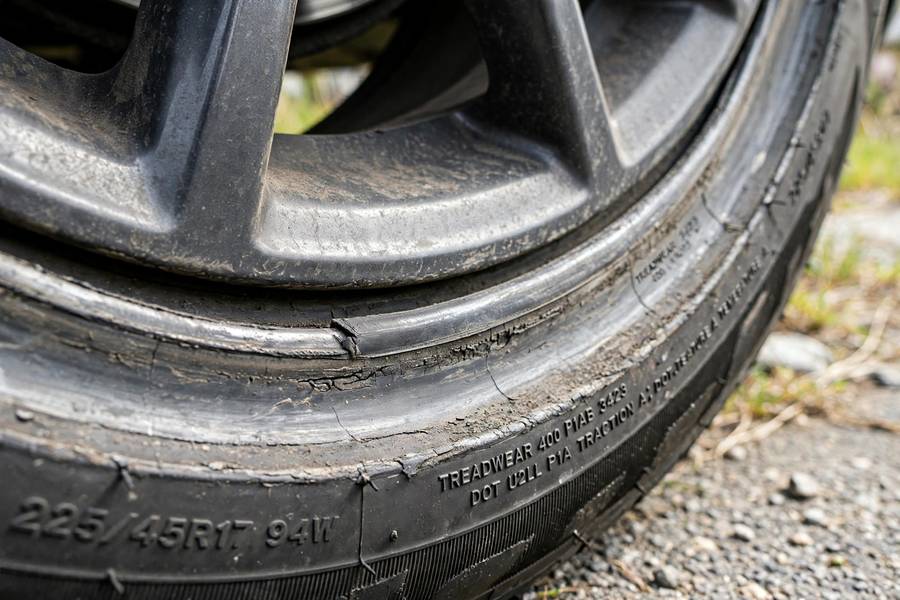
What it looks like: Both shoulders worn, center tread still deep. The opposite of center wear.
What it means: Underinflation. Low pressure lets the tire squat, so the edges carry the load and the center lifts slightly.
Why it’s dangerous: Underinflation doesn’t just wear tires — it generates heat. The sidewalls flex excessively, building internal heat that can cause sudden blowouts, especially at highway speed in hot weather. This is the wear pattern most likely to kill you, not just cost you money.
What to do: Inflate to spec immediately, then find the leak. Chronic underinflation means a slow leak — nail, bad valve stem, corroded rim bead, or a puncture. Check pressure weekly until you’re sure it’s holding.
Cupping and Scalloping: Suspension and Balance
What it looks like: Dips or scallops worn into the tread — high and low spots around the circumference, like someone took bites out of the tread blocks. Run your hand around the tire and feel the undulation.
What it means: The tire is bouncing as it rolls instead of staying planted. Each bounce slams a tread section into the pavement harder, wearing dips.
Common causes: – Worn shocks or struts — the #1 cause. Dead dampers let the wheel hop. – Tire imbalance — a heavy spot throws the tire up and down each rotation. – Worn ball joints or wheel bearings — play lets the wheel move unpredictably. – Sometimes combined with alignment issues, but cupping’s primary signature is bounce, not angle.
What to do: This is a suspension/maintenance issue, not purely alignment. Have shocks/struts tested (the bounce test: push down hard on the corner — it should rebound once and settle, not keep bouncing), check balance, and inspect for play. Fix the bounce, then assess whether alignment is also needed.
Patchy Flat Spots: Braking and Balance Issues
What it looks like: One or more flat patches worn into the tread — smooth bald spots interrupting normal tread.
What it means: – A single flat spot: Panic stop with locked wheels (or ABS failure on one wheel). The tire skidded instead of rolling. – Multiple patchy spots: Severe imbalance or a bent rim causing the tire to contact unevenly.
What to do: Single flat spot from an emergency stop — monitor it; if it’s minor, the tire may be fine. Severe flat-spotting causes vibration and needs tire replacement. Multiple patches mean balance/rim issues to diagnose.
One Tire Different From the Rest
Sometimes the pattern isn’t a type — it’s a location. One tire wearing differently from the other three tells you the problem is at that corner:
- One front tire feathered, others fine: That side’s tie rod or that wheel’s toe specifically
- One rear tire inner-worn: That corner’s camber — bushing, spring, or impact damage on that side
- Diagonal patterns (front-left and rear-right, say): Often rotation history combined with an alignment issue — the wear started on one axle and moved with rotation
Always compare all four. The odd one out is pointing at the problem corner, which saves diagnostic time at the shop.
What to Do About Each Pattern
Quick-reference action plan:
| Pattern | Likely Cause | Action |
|---|---|---|
| Inner edge wear | Negative camber | Alignment + check springs/bushings |
| Outer edge wear | Positive camber / cornering | Alignment or adjust driving |
| Feathering | Toe out of spec | Alignment ASAP + check tie rods |
| Center wear | Overinflation | Set pressure to door-jamb spec |
| Both edges worn | Underinflation | Inflate + find the leak |
| Cupping/scalloping | Worn shocks / balance | Suspension check + balance |
| Flat spots | Skid / balance | Assess severity, rebalance or replace |
| One tire odd | Corner-specific issue | Inspect that corner’s components |
The golden rule: fix the cause, then align. Aligning over worn parts, wrong pressure, or dead shocks wastes the alignment. And remember — alignment corrects future wear; it doesn’t restore tread that’s already gone. Catching patterns early is the whole game.
If you’re seeing any of these, the next step is understanding the angles behind them — read what wheel alignment actually is for the full breakdown of camber, caster, and toe. When wear has gone too far, knowing how to change a tire keeps you safe. And if your car pulls more in rain or snow, your drivetrain plays a role too — see AWD vs 4WD explained.
Frequently Asked Questions
Inner or outer edge wear indicates camber problems; feathered tread (smooth one way, rough the other) indicates toe problems. Both are alignment issues, but toe feathering destroys tires faster.
Feathering is caused by toe misalignment — the tire drags slightly sideways as it rolls, shaving tread blocks into wedges. Worn tie rod ends can also cause dynamic toe changes that feather tires.
Cupping (scalloped dips in the tread) means the tire is bouncing — usually worn shocks or struts, sometimes imbalance or worn ball joints. It’s a suspension issue first, alignment second.
Alignment stops further uneven wear but can’t restore tread that’s already gone. Fix the underlying cause (worn parts, pressure, etc.) first, then align — aligning over bad parts wastes the service.
Inner-edge wear is the classic sign of excessive negative camber — commonly from sagging springs, worn struts, worn bushings, or a pothole/curb impact. It hides on the side you never look at, so crouch down and check monthly.