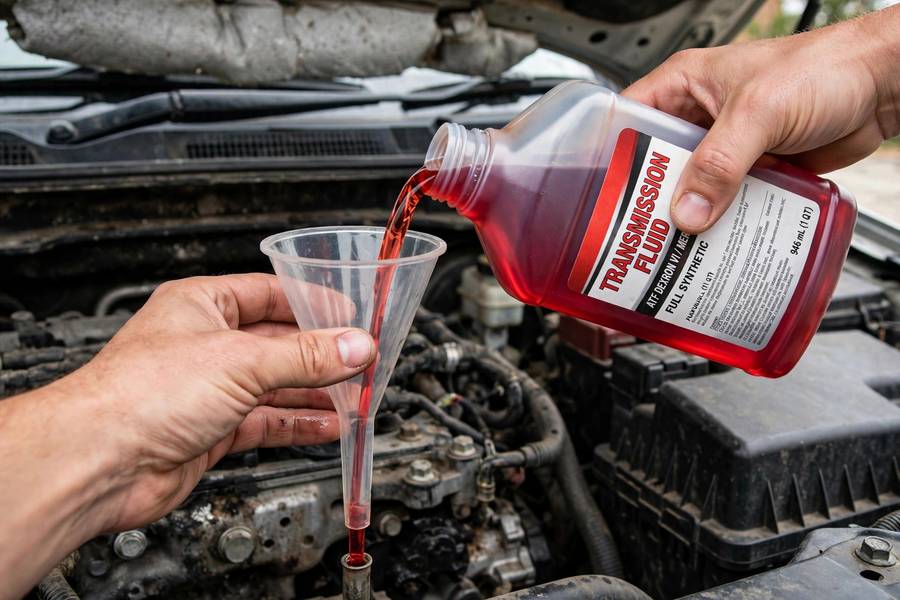
Adding transmission fluid sounds simple — pour fluid in until it’s full, right? And it IS simple, right up until it isn’t. The transmission is one of the few places on a car where “close enough” can mean foaming fluid, erratic shifts, blown seals, and a repair bill that makes you wish you’d just read the manual. I’ve seen people wreck transmissions with kindness, overfilling them a quart at a time because they thought more fluid was safer than less.
It’s not. Underfilled and overfilled are both bad — differently bad, but bad. Here’s how to add fluid the right way: the correct fluid, the right fill point, and the go-slow method that keeps you out of trouble.
First things first: before adding anything, check your transmission fluid properly so you know the actual level and condition. Adding fluid to a transmission that’s low because of a leak is like refilling a bucket with a hole — necessary short-term, but find the hole.
Table of Contents
- Step 1: Confirm You’re Actually Low
- Step 2: Get the Correct Fluid (This Is Non-Negotiable)
- Step 3: Find the Fill Point
- Step 4: Add Fluid Slowly
- Step 5: Recheck at Operating Temperature
- How Much Is Too Much? Overfilling Explained
- If It’s Low Again Soon: Find the Leak
- Frequently Asked Questions
Step 1: Confirm You’re Actually Low
Don’t add fluid based on vibes. Actually check it:
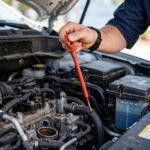
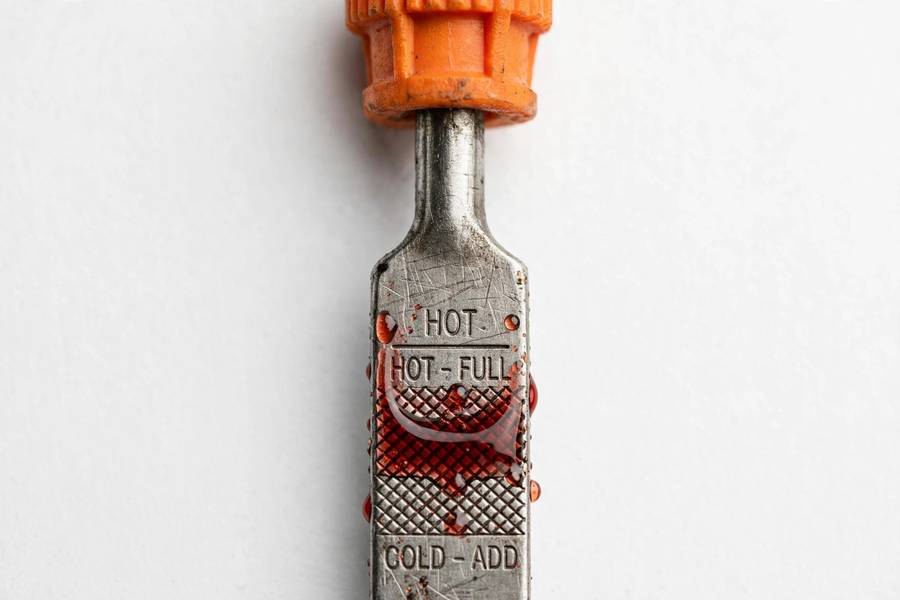
- With a dipstick: engine running, transmission in Park, on level ground, fluid at operating temperature (drive 10-15 minutes first). Pull the dipstick, wipe it, reinsert fully, pull again, read the level against the HOT marks.
- Without a dipstick: the fill-plug method — car level, fluid warm, remove the fill plug, and see whether fluid seeps out. I wrote a full guide on checking your transmission fluid without a dipstick if that’s your situation.
Also note the color and smell while you’re in there. If the fluid is dark, burnt, or milky, adding fresh fluid is a band-aid on a bigger problem — address the underlying issue, don’t just top off.
And one more check: is the engine actually running and warm? Cold readings lie. A transmission that reads low when cold can read perfectly fine at temperature. I’ve watched people add a quart to a “low” cold transmission and then discover it was overfull once warm. Patience saves transmissions.
Build the habit while you’re at it: gearboxes reward the same regular attention engines do. If you’re not already checking your oil level on a schedule, start — the five-minute check habit is what catches low fluid before it becomes a repair bill, in engines and transmissions alike.
Step 2: Get the Correct Fluid (This Is Non-Negotiable)
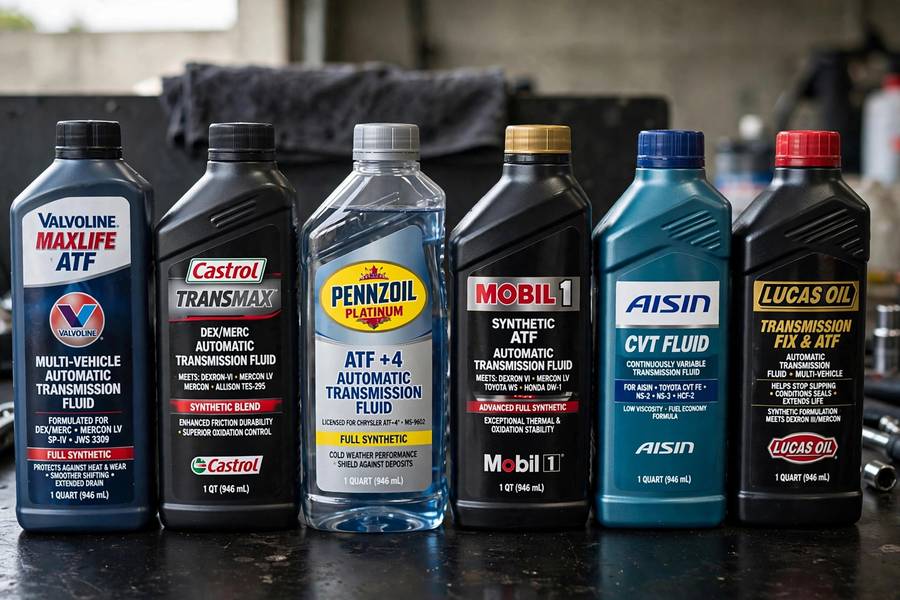
This is where I get preachy, because this is where transmissions die. Transmission fluid is NOT interchangeable the way motor oil mostly is. Different transmissions need different friction characteristics, viscosities, and additive packages, and using the wrong fluid can cause slipping, shudder, and premature wear.
How to find your spec:
- Owner’s manual — the definitive answer. It’ll name the exact spec (Dexron VI, ATF+4, Mercon V, Toyota WS, Honda DW-1, Nissan NS-3 for CVTs, etc.).
- The dipstick itself — many dipsticks have the fluid spec stamped right on them.
- The fill plug or transmission case — sometimes stamped nearby on sealed units.
The “universal ATF” bottles at the parts store claim to cover multiple specs. Some do it well; some are wishful thinking in a bottle. My rule: if your transmission specs something specific and expensive (looking at you, CVT fluids and German specs), buy the exact spec. The $10 you save on universal fluid isn’t worth the gamble on a $4,000 transmission.
Never mix fluid types. If the car has Dexron VI, don’t top it off with Type F from your uncle’s garage. Mixing can cause foaming and friction problems.
Step 3: Find the Fill Point
Cars with a dipstick: the dipstick tube IS the fill point. You add fluid through the same tube the dipstick lives in, using a long-neck funnel. It seems obvious once you know it, but I get this question constantly — yes, pour it down the dipstick tube.
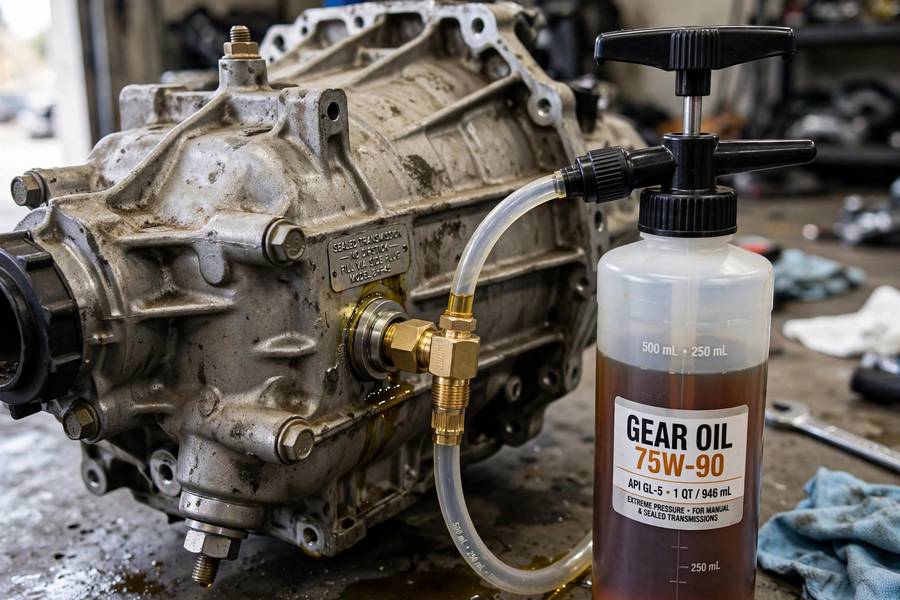
Cars without a dipstick (sealed units): the fill point is the fill plug on the side of the transmission case. You’ll need a hand-pump bottle adapter (a few dollars, screws onto the fluid bottle) because you’re pumping fluid sideways into a plug hole, not pouring from above. The car needs to be level — on stands or a lift — and the fluid warm.
One thing to never do: don’t mistake the drain plug for the fill plug. Loosen the FILL plug first, always. If you drain first and then can’t get the fill plug open, you’re having a very bad day.
Step 4: Add Fluid Slowly
This is the whole secret. The entire technique. Add fluid in small increments and recheck between each one.
The method:
- Add about half a quart (roughly half a liter).
- Wait a minute for it to settle down the tube.
- Recheck the level (dipstick out, wipe, reinsert, read — or the fill-plug seep check).
- Repeat until the level hits the correct mark.
Half a quart at a time feels tediously slow. Do it anyway. The difference between “a little low” and “overfilled” is often less than a quart, and it’s much easier to add more than to remove excess.
For sealed units via the fill plug: pump fluid in slowly until it just begins to seep back out of the fill hole, then stop. That seep is your “full” mark. Reinstall the plug.
Engine on or off? For dipstick cars, check and add with the engine running in Park (that’s how the level is meant to be read — the pump is circulating fluid). For sealed-unit fill plugs, most procedures are engine OFF — but some (certain VW/Audi overflow plugs) are engine ON. Follow your car’s procedure.
One more patience note: after each addition, give the fluid a full minute to drain down the tube before rechecking. Reading too soon shows a falsely high level from fluid still clinging to the tube walls — and that false reading is how careful people still end up overfilled. The dipstick reads the sump, not the tube; wait for the two to agree.
Step 5: Recheck at Operating Temperature
After adding, drive the car for 10-15 minutes — normal driving, not a drag race — then recheck on level ground with the engine running. Fluid expands as it heats, so the final reading has to be at temperature.
What you’re looking for:
- Dipstick: level between the HOT marks, fluid clean and red, no bubbles or foam on the stick.
- Fill plug: slight seep at the plug hole with the car level.
Then take it for a longer drive and pay attention to shift quality. Shifts should be smooth and consistent. If anything feels off — delayed engagement, harsh shifts, slipping — recheck the level. And if the level was right and it still acts up, the problem wasn’t the level.
How Much Is Too Much? Overfilling Explained
Overfilling is the sneaky one, because it feels like it should be harmless. It’s not. Here’s what happens with too much fluid:
- Foaming. The rotating components whip the excess fluid into foam. Foamy fluid can’t build proper hydraulic pressure and doesn’t lubricate well — it’s mostly air.
- Erratic shifting. Foamed fluid causes inconsistent pressure, which means delayed, harsh, or slipping shifts.
- Overheating. Foam doesn’t cool as well as liquid. The transmission runs hotter, which degrades the fluid faster — a vicious cycle.
- Blown seals and leaks. Excess fluid increases internal pressure, which finds the weakest seal and pushes past it. Congratulations, you now have a leak too.
If you overfilled: remove the excess. On dipstick cars, a fluid extraction pump through the dipstick tube works (cheap tool, useful to own). On sealed units, crack the fill plug with the car level and let the excess seep out. Then recheck at temperature.
How much over is too much? Even half a quart over can cause foaming on some transmissions. The HOT mark is the target, not a suggestion.
If It’s Low Again Soon: Find the Leak
Transmission fluid doesn’t get “used up” the way engine oil does — engines burn a little oil normally; transmissions shouldn’t lose fluid at all. If you added fluid last month and it’s low again, you have a leak. Common spots:
- Pan gasket — the classic. Wetness around the transmission pan.
- Cooler lines — the lines running to the radiator. Look for wet fittings.
- Axle seals / output shaft seals — fluid near where the axles enter the transmission.
- Dipstick tube O-ring — small leak, easy fix.
- Torque converter seal — the expensive one. Fluid dripping from between the engine and transmission.
Put cardboard under the car overnight to pinpoint the drip location. Red or pink spots = transmission fluid. Then fix the source — topping off forever is just a slow, expensive way to ignore the problem.
Frequently Asked Questions
Yes. On cars with a dipstick, add fluid through the dipstick tube with a long-neck funnel. On sealed transmissions without a dipstick, add it through the side fill plug using a hand pump. Always use the exact fluid spec for your car and add slowly, rechecking the level.
On most cars, you pour it down the transmission dipstick tube using a funnel. On sealed transmissions with no dipstick, you pump it through the fill plug on the side of the transmission case with the car level and the fluid warm.
Yes, and it’s harmful. Overfilled fluid gets whipped into foam by rotating parts, causing erratic shifting, overheating, and blown seals. Add fluid in half-quart increments and recheck at operating temperature to avoid overfilling.
Wrong fluid can cause slipping, shuddering, harsh shifts, and accelerated wear because friction characteristics and viscosity differ between specs. If you added the wrong fluid, don’t drive far — have it drained and refilled with the correct spec.
Transmissions don’t consume fluid, so a repeat low level means a leak — commonly the pan gasket, cooler lines, or axle seals. Find and fix the source; repeated topping off just delays the repair and risks running low between checks.