“Are CVTs reliable?” is the question I get most at backyard barbecues, and my answer always disappoints people who want a yes or no: it depends — on the brand, the era, and above all the maintenance. Some CVTs are among the most reliable transmissions on the road. Others earned every bit of their terrible reputation.
I’ve worked on enough of these to have opinions, and I have the scarred knuckles to back them up. If you’re still learning the basics, start with what a CVT transmission is and how it works — then come back for the unfiltered reliability verdict.
Table of Contents
- The Short Answer
- Where the Bad Reputation Came From
- The Reliable Ones: Honda and Toyota
- The Middle of the Pack
- The Problem Children: Nissan’s Jatco Era
- What the Data Actually Shows
- Maintenance: The Great Equalizer
- Buying Used: CVT Red Flags
- What I Tell Customers Asking “Should I Buy It?”
- Frequently Asked Questions

The Short Answer
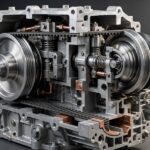
A well-designed CVT with proper fluid maintenance is reliable — full stop. Honda and Toyota CVTs routinely run 200,000+ miles with nothing but scheduled fluid changes. The design itself isn’t fragile; a steel push-belt on variable pulleys is elegant, proven engineering that’s been in production cars for decades.
But “reliable” comes with an asterisk the size of a torque converter: CVTs are less forgiving than conventional automatics. Skip maintenance on a regular automatic and it’ll probably forgive you. Skip it on a CVT and you’re rolling dice. And certain manufacturers shipped units with genuine design flaws that no amount of maintenance could fully fix.
So the honest answer is two-part: the good ones are very reliable, and the bad ones were very bad. Know which one you’re looking at.
Where the Bad Reputation Came From
The CVT’s reputation wasn’t always bad. Early adopters in the 2000s — Honda Civics and Insights, Mini Coopers, some Audis — had CVTs that were quirky but generally fine. The reputation cratered in the late 2000s and 2010s, and one supplier deserves most of the blame: Jatco.
Jatco’s CVTs, fitted to millions of Nissans (Altima, Sentra, Rogue, Murano, Pathfinder) and some Mitsubishis and Suzukis, suffered from a perfect storm of issues: undersized transmission coolers that let fluid overheat, belt and pulley designs that wore prematurely, and valve body problems that caused shuddering. Failures under 100,000 miles weren’t rare — they were a pattern. Nissan extended warranties, faced class-action lawsuits, and eventually redesigned the units, but the damage to the CVT’s reputation was done.
Here’s the unfair part: millions of drivers lumped every CVT in with the bad Jatco units. Your neighbor’s 2013 Altima dying at 85,000 miles became “CVTs are junk” — when the Honda Civic with 220,000 miles on its original CVT sitting in the same driveway never made the story.
The Reliable Ones: Honda and Toyota
Let me say something nice, because these two earned it.
Honda’s CVTs are, in my experience, the gold standard. Honda committed to CVTs early and engineered them properly — robust belt designs, excellent fluid specifications, and conservative torque management in the software. I regularly see Honda CVTs with 200,000+ miles on original hardware. The Civic, Accord, and CR-V CVTs are some of the most trouble-free transmissions in the industry, period.
Toyota’s CVTs are right there with Honda. Toyota’s K-series CVTs (Corolla, etc.) are overbuilt in typical Toyota fashion, and their newer “Direct Shift” CVTs add a physical launch gear that takes stress off the belt during the hardest part of driving — pulling away from a stop. It’s clever engineering that directly addresses the CVT’s weakest moment.
Both manufacturers also spec excellent fluids and — critically — their dealer networks actually service CVTs properly. A lot of reliability is downstream of the service ecosystem, and Honda/Toyota have good ones.
The Middle of the Pack
Subaru’s Lineartronic uses a chain instead of a push-belt, which handles torque well. Early versions (around 2010–2014) had torque converter issues that Subaru addressed with extended warranties. Modern ones are solid with proper maintenance — I’d rate them a notch below Honda/Toyota but well above the problem units.
Hyundai/Kia’s IVT (their name for their CVT, “Intelligent Variable Transmission”) uses a chain-type design and has been generally decent since its 2019-ish introduction. Not enough high-mileage data yet for a final verdict, but early signs are positive.
Mitsubishi’s Jatco-sourced units improved in later generations but carry the family history. Maintain aggressively.
GM, Ford, and most Europeans largely avoided CVTs in favor of conventional automatics and dual-clutches, so there’s less to say — which is itself a data point about how the industry viewed early CVT reliability.
The Problem Children: Nissan’s Jatco Era
I want to be fair to current Nissan, because the newer units are genuinely better. But if you’re shopping used, you need to know the danger zone:
- 2007–2016 Nissan Altima, Sentra, Rogue, Murano, Pathfinder with the Jatco JF011E and related units: the highest-risk CVTs on the used market. Shuddering, whining, overheating, and outright failure were common.
- Nissan extended the CVT warranty to 10 years/120,000 miles on many of these — which tells you everything about how widespread the problems were.
- 2017+ models with redesigned units are notably better, though I’d still maintain them on the aggressive end of the schedule.
If you’re considering a used Nissan from the bad era at a tempting price — and they’re always temptingly priced, because the market knows — budget for a potential transmission replacement or walk away. A cheap car with a $5,000 transmission time bomb isn’t cheap.
What the Data Actually Shows
Anecdotes are fun, but let me ground this:
- Consumer reliability surveys consistently rank Honda and Toyota CVT-equipped models among the most reliable cars in their segments. The transmission is rarely the complaint.
- The same surveys show Nissan’s CVT-era models scoring below average specifically on transmission complaints — a targeted problem, not a brand-wide one.
- Warranty extension programs and class actions cluster almost entirely around specific Jatco units, not CVTs generally.
- Fleet operators — the people who track cost-per-mile ruthlessly — run Honda and Toyota CVTs to high mileage without special concern.
The pattern is clear: reliability varies by manufacturer and design generation, not by “CVT” as a category. Judging all CVTs by the worst ones is like judging all turbo engines by the worst turbo engine ever made.
Maintenance: The Great Equalizer
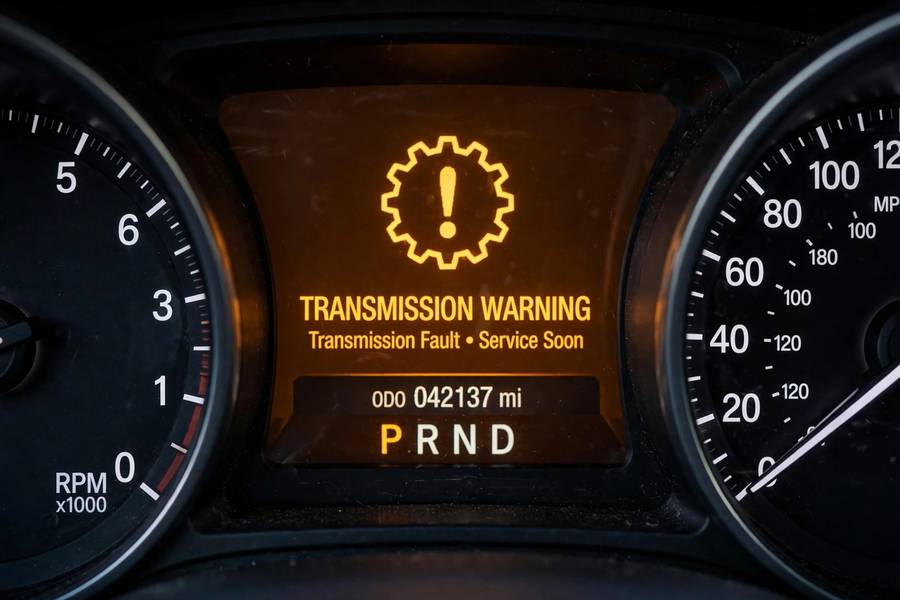
Here’s what I tell every CVT owner regardless of brand: the fluid change is the whole game. I’ve covered the warning signs of CVT transmission problems in detail elsewhere in this series, but the reliability angle deserves emphasis — the difference between a CVT that dies at 90,000 and one that lives to 220,000 is very often just fluid changes.
The formula that works: – Fluid service every 30,000–50,000 miles with the exact OEM fluid – Never tow over the rated limit – Address whining, shuddering, or slipping immediately – Let the car warm up before driving hard – Fix leaks the moment they appear
Do that, and even a middle-of-the-pack CVT will likely outlast your interest in the car. Skip it, and even a Honda CVT will eventually remind you that physics doesn’t negotiate.
Buying Used: CVT Red Flags
Shopping for a used car with a CVT? Beyond my general advice on how to buy a used car without getting burned, here are CVT-specific checks:
- Cold-start test drive. Drive it cold — shudder or whine that appears before warmup is a bad sign.
- Highway merge test. Full-throttle acceleration should be smooth. Slipping (RPMs climbing without matching speed) is a walk-away signal.
- Check the service records. Regular fluid changes documented? Great. “Lifetime fluid, never serviced” at 110,000 miles? Budget accordingly.
- Scan for codes. A $20 OBD scanner won’t read transmission codes on most cars, but a pre-purchase inspection at a shop will. Worth every penny.
- Research the specific unit. Not just the brand — the model year and transmission code. A 2019 Rogue and a 2013 Rogue have very different CVTs.
What I Tell Customers Asking “Should I Buy It?”
After twenty minutes of internet research, most people walk into the shop and ask me the same thing: “Just tell me — should I buy this car?” Here’s the script I actually give them, and it’s shorter than this article.
First question: which unit, not which brand? A Toyota CVT from 2018 on and a Honda CVT from 2015 on — buy with confidence if the price is right. A Nissan from the Jatco era — I pull up the model-year history before I say another word, because a 2019 Rogue and a 2013 Rogue are different animals wearing the same badge.
Second question: do the service records exist? A stack of receipts showing fluid services every 30,000–50,000 miles is worth more than any warranty I can sell you. No records at 100,000 miles doesn’t mean walk away — it means budget for a fluid service on day one and price that into the offer.
Third question: how does it feel? The cold-start test drive I described above is my non-negotiable. Smooth is smooth. Whine, shudder, or slipping under light throttle at any temperature — I don’t care what the records say, I tell them to walk.
The honest bottom line I give customers: a good CVT with records is as dependable as anything on the road. A bad CVT, or a good one somebody ignored for a decade, is a four-figure bill waiting for a date. The car doesn’t decide which one you get. The maintenance history does.

Frequently Asked Questions
Well-designed CVTs from Honda and Toyota are very reliable long term, often exceeding 200,000 miles with fluid maintenance. Reliability varies hugely by manufacturer — early-2010s Nissan Jatco units were notably problematic.
Honda’s CVTs have the best track record in my experience, followed closely by Toyota’s. Both routinely last 200,000+ miles with scheduled fluid changes and show up rarely in transmission complaint data.
Mostly from Jatco CVTs in 2007–2016 Nissans, which suffered widespread premature failures from overheating and belt wear. Those units poisoned the reputation of all CVTs, including the reliable ones from Honda and Toyota.
Not necessarily. A Honda or Toyota with a CVT is a safe buy. Be cautious with used Nissans from the 2007–2016 era, verify service history on any used CVT, and get a pre-purchase inspection that includes a transmission scan.
They need more diligent fluid maintenance — every 30,000–50,000 miles with the exact OEM fluid. A conventional automatic forgives skipped services better, but a maintained CVT is just as reliable.