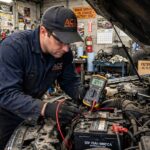

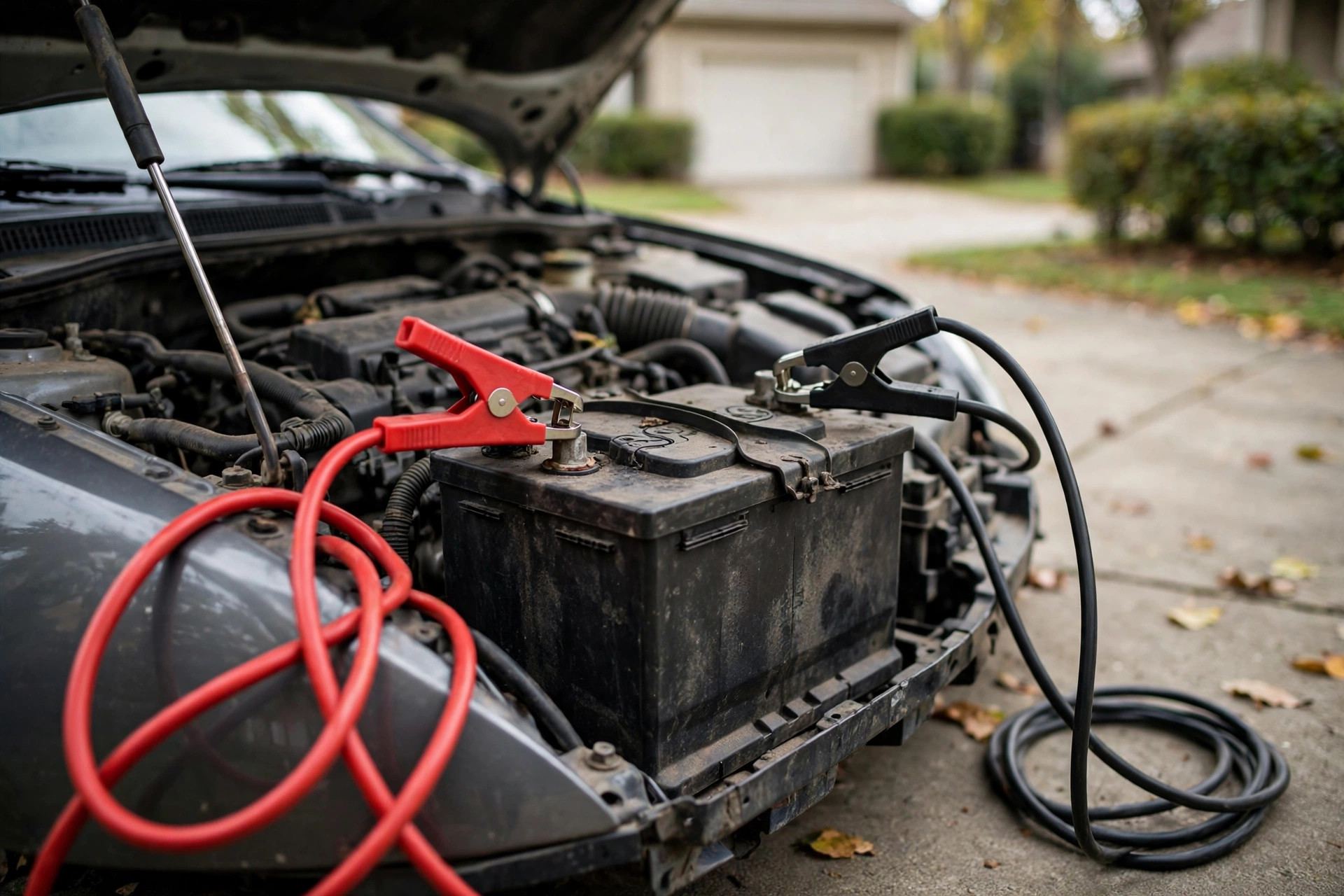
A customer towed his car into our shop on a Monday morning. Dead battery, he’d jumped it himself on Sunday — cables on backwards, red to black, big spark, the whole show. The jump “worked.” The car started. Then the dashboard lit up like a Christmas tree and the alternator died a week later. Total bill for his Sunday shortcut: just under $900.
We break down how to fix a car scratch step by step in a separate guide.
I’ve jump-started hundreds of cars in ten years turning wrenches. Done right, it’s a five-minute job with zero drama. Done wrong, it fries electronics that cost real money. The difference is the order you connect the cables and about sixty seconds of patience. Here’s the full procedure — including the parts most guides skip, like what to do after the car starts so you don’t end up stranded again.
When a Jump Start Is the Answer (And When It’s a Bandage)
A jump start helps when the battery is simply drained — lights left on overnight, a door ajar, a car that sat for three weeks. The battery is fine; it’s just empty. A jump gives it enough juice to turn the starter, and then the alternator recharges it as you drive.
A jump start does NOT fix:
- A dead battery that’s actually dead. Batteries last 3–5 years. If yours is six years old and won’t hold a charge, jumping it just delays the inevitable — usually to the worst possible moment, like a rainy night in a bad parking lot.
- A bad alternator. If the car dies again shortly after the jump, or the battery warning light stays on while driving, the alternator isn’t recharging anything. That’s a shop job.
- A parasitic drain. Something’s drawing power when the car is off — a trunk light, a faulty module. The battery will be dead again tomorrow morning. Jumping treats the symptom.
My rule from the shop: if you’ve jumped the same car twice in a month, stop jumping and start diagnosing. The jump is a rescue, not a repair.
What You Actually Need
Option 1: Jumper cables. Get a proper set — 20 feet long, 4-gauge or thicker (lower number = thicker wire). The skinny $15 cables at the checkout counter can’t carry enough current for a V6 on a cold morning. Expect to pay $30–50 for a set that actually works. Keep them in the trunk. They last a decade.
Option 2: A portable jump pack. This is what I recommend to most people now. A lithium jump starter the size of a paperback book, $60–100, holds a charge for months, and you don’t need a second car. I’ve started V8s with these. Charge it twice a year and forget about it until you need it. Would I spend my own money on one? I already did — there’s one in my glove box right now.
What you don’t need: a stranger’s goodwill and perfect parking alignment. With a jump pack, the whole “find a donor car” problem disappears.
Safety First: The 60-Second Checklist
Car batteries contain sulfuric acid and produce hydrogen gas. The risks are small but real, so do this check before you touch anything:
- Look at the battery. Cracked case? Leaking fluid? Smells like rotten eggs? Stop. Don’t jump it — call a tow. A damaged battery can be dangerous.
- Check the terminals. Heavy white or blue-green crust on the terminals means corrosion. Brush it off if you can (a wire brush or even a rag). Bad connections are the number-one reason jumps “don’t work.”
- No smoking, no sparks near the battery. Hydrogen gas plus a spark is the one genuinely scary scenario. This is why the cable order matters.
- Both cars off, keys out, everything electrical off — headlights, radio, phone chargers, heated seats. You’re about to push a surge of current through the system; don’t add load to it.
- Check the voltage. This sounds technical, but it’s one glance: both batteries should be 12-volt. It’s printed on the label. (Virtually all normal cars are 12V. If you’re jumping something unusual, verify.)
Gloves and eye protection if you have them. I never skipped them in the shop, and neither should you.
The Correct Cable Order, Step by Step
This is the whole job. Memorize the order: positive to positive, negative to ground. Here’s exactly how:
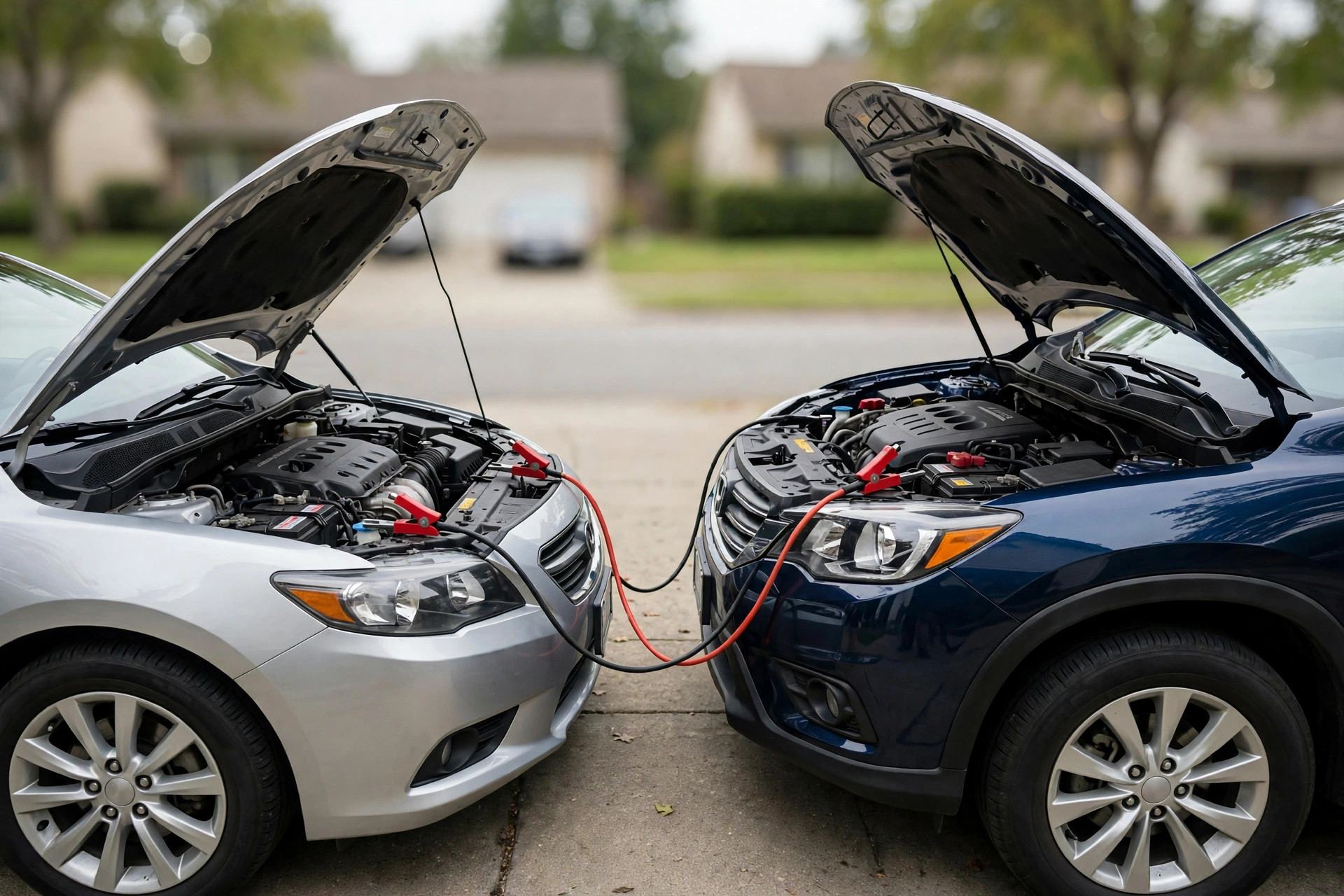
Step 1: Park the working car close enough that the cables reach, but the cars must NOT touch each other. Both engines off.
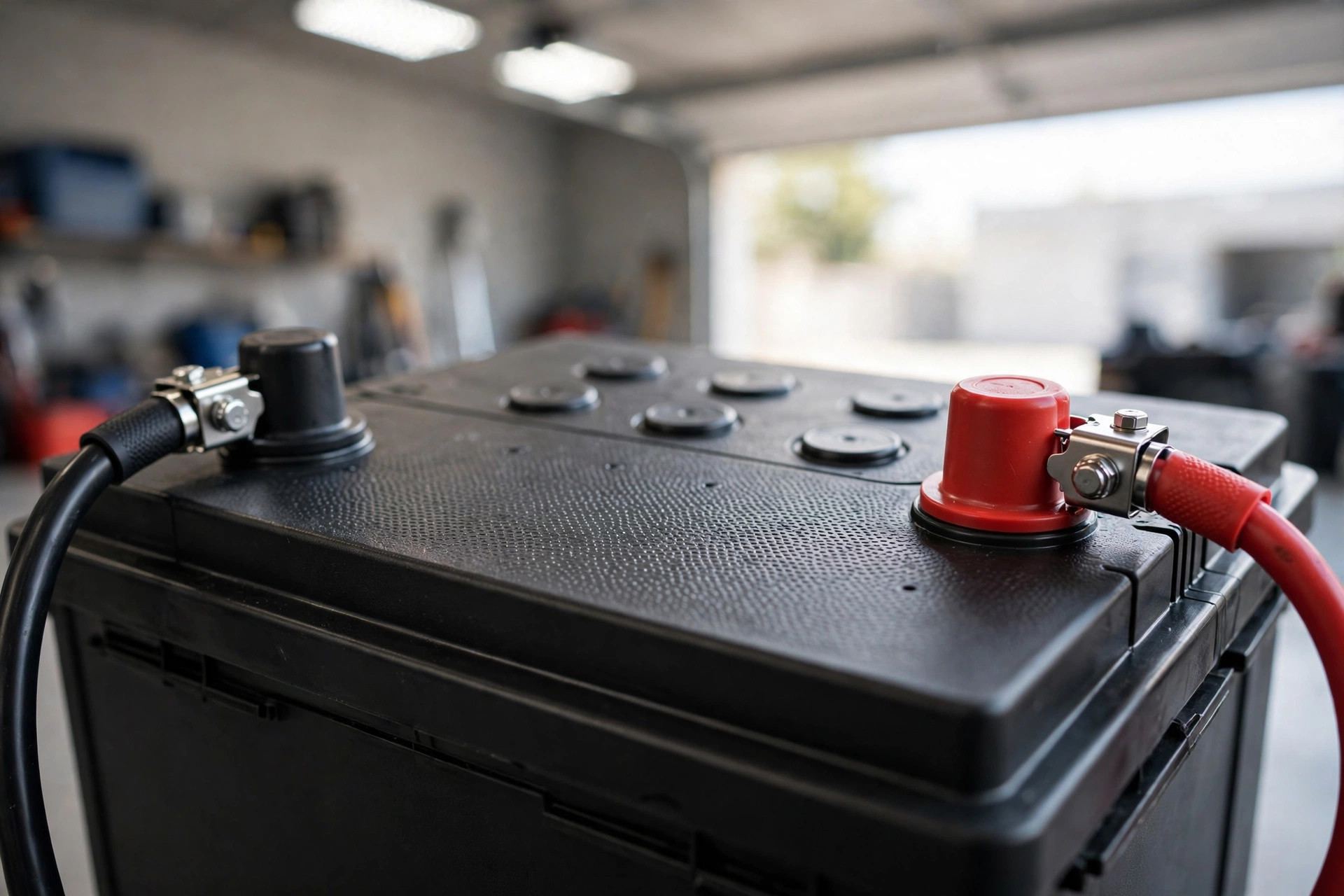
Step 2: Identify the terminals. Positive is marked with a + and usually has a red cap or red cable. Negative is marked − and usually black. If the markings are corroded off, the positive terminal is slightly larger — but clean them and verify. Guessing here is how my Monday-morning customer ended up with a $900 bill.
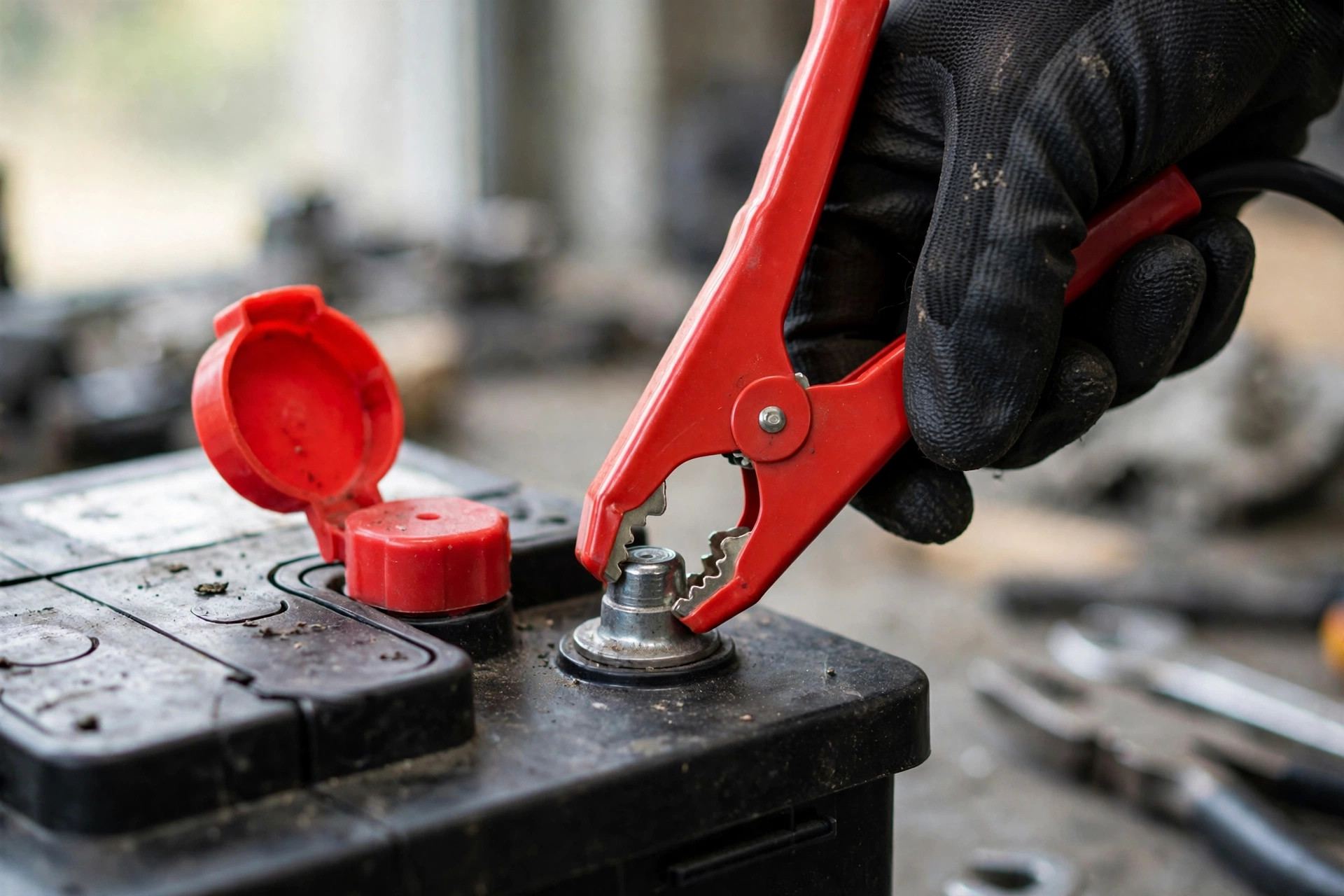
Step 3: Connect the RED clamp to the POSITIVE (+) terminal of the DEAD battery.
Step 4: Connect the other RED clamp to the POSITIVE (+) terminal of the GOOD battery.
Step 5: Connect the BLACK clamp to the NEGATIVE (−) terminal of the GOOD battery.
Step 6: Connect the last BLACK clamp to an unpainted metal surface on the DEAD car’s engine block — a bolt, a bracket, bare metal away from the battery. This is the ground connection.
Why the last connection goes to ground instead of the dead battery’s negative terminal: the final connection always makes a small spark. You want that spark happening away from the battery, where hydrogen gas might be sitting. That’s it. That’s the entire reason. It’s a small detail that prevents a rare but genuinely bad outcome.
Double-check: red to dead positive, red to good positive, black to good negative, black to dead car’s metal ground. Cables not touching each other, not near fans or belts.
Starting Sequence: What to Do Now
- Start the working car. Let it run for 2–3 minutes. This puts some charge into the dead battery and stabilizes the voltage.
- Try to start the dead car. Turn the key or push the button. If it cranks slowly but doesn’t catch, wait two more minutes and try again. Don’t crank for more than 10 seconds at a time — you’ll overheat the starter.
- If it starts, leave it running. Don’t rev the engine like you’re in a movie. Just let it idle.
If it won’t start after 3–4 tries: stop. The problem probably isn’t just a drained battery. Check your connections — a loose clamp is the most common cause of a failed jump. If the connections are solid and it still won’t turn over, you may have a bad starter, a completely sulfated battery, or an electrical fault. That’s tow-truck territory, not cable territory.
The 30 Minutes After the Jump (Don’t Skip This)
This is the part every quick guide leaves out, and it’s the part that actually matters.
Drive the car for at least 30 minutes — real driving, not idling in the driveway. The alternator needs sustained engine RPM to recharge the battery. Idling barely charges it. Highway or steady suburban driving is ideal. Turn off every electrical accessory you can: AC, heated seats, headlights (if daylight), phone chargers. Every amp the accessories use is an amp not going into the battery.
Then test it. After that drive, turn the car off, wait five minutes, and restart it. If it cranks strongly, the battery took the charge and you’re probably fine. If it’s sluggish, the battery isn’t holding a charge — drive straight to an auto parts store and have them test it. Most do battery testing free, and it takes five minutes.
Watch for the battery warning light on the dash during that drive. If it stays on, the alternator isn’t charging. Get to a shop — you’re running on borrowed battery power and the car will die when it runs out, possibly in traffic.
When It’s Not the Battery
Straight talk from the shop floor:
- Clicking but no crank, even with good cables: likely the starter motor or a bad connection at the starter. Not a battery problem.
- Cranks fine but won’t fire: that’s fuel or spark, not the battery. Jumping won’t help.
- Battery dies overnight, repeatedly: parasitic drain. Something’s staying on. Common culprits: glove box lights, trunk lights, aftermarket stereos, failing modules. A shop can find it with a multimeter in under an hour.
- Swollen battery case: the battery is cooked — overcharged or frozen. Replace it. Don’t jump a swollen battery.
Knowing which of these you’re dealing with is the whole game. A jump start is for one specific problem: a healthy battery that’s temporarily empty. Everything else needs a different fix.
Battery Replacement: My Honest Rules
Batteries die. Here’s how I think about replacement, after watching thousands of them:
- Age: at 4 years, start paying attention. At 5, budget for a replacement. Past 6, you’re on borrowed time. The date sticker is on the battery — check it.
- Slow cranking on cold mornings is the classic early warning. Don’t ignore it for a month and then act surprised.
- Buy the right size. The group size is printed on the old battery and in your owner’s manual. Wrong size = loose fit = vibration damage = early death.
- Would I buy the cheapest battery? For most daily drivers, a mid-range battery from a reputable brand is the sweet spot. The bargain-bin battery saves you $40 and dies a year earlier. The premium one is overkill unless you’re in extreme cold. And if you’re weighing car costs against the bigger picture, it helps to know where you stand — understanding what your credit score means matters when a car repair lands on a credit card.
For more of my automotive guides — the stuff I’d tell you over the counter — they’re all in the automotive section.
Frequently Asked Questions
Red to dead positive, red to good positive, black to good negative, black to an unpainted metal ground on the dead car’s engine. The order matters because the final connection makes a small spark — you want that spark away from the battery, where hydrogen gas can collect. Connect in that exact sequence and reverse it when removing.
Yes — and you should. Start the working car first and let it run 2–3 minutes before attempting to start the dead car. This stabilizes voltage and puts some charge into the dead battery, making the start easier on both vehicles’ electrical systems.
It can if done wrong. Reversed cables are the big one — connecting positive to negative can fry the ECU, alternator diodes, and fuses, a repair that easily runs into hundreds of dollars. Voltage spikes from poor connections are a smaller risk. Done correctly, with the right order and solid connections, jump starting is safe for modern cars.
Drive for at least 30 minutes of real driving — not idling. The alternator needs sustained engine RPM to recharge the battery, and idling barely charges it. Turn off accessories like AC and heated seats during the drive so maximum current goes into the battery. Then turn the car off, wait five minutes, and restart to confirm the battery held the charge.
Sometimes, but a truly dead battery — one that reads near zero volts or is several years past its life — often won’t take or hold a charge. If the car won’t start after 3–4 properly connected attempts, or if it dies again within a day, the battery is likely sulfated beyond recovery and needs replacement, not another jump.
Yes, as long as you follow the correct cable order and ensure solid connections. Modern cars have sensitive electronics, which is exactly why the order matters — the ground-last connection keeps the inevitable small spark away from the battery. Many owner’s manuals include jump-start procedures; a portable jump pack is the lowest-risk option since it eliminates the second vehicle entirely.
The Bottom Line
Red to dead positive, red to good positive, black to good negative, black to engine ground. Start the good car, wait, start the dead car, then drive thirty real minutes. And if you’re jumping the same car twice in a month, the cables aren’t the problem — the battery is. Test, don’t guess. That’s the whole philosophy, and it applies to everything under the hood.