Every time AI funding hits a new record, someone asks me the same question with a half-smirk: “So when’s the next AI winter?” It’s a fair question. History says AI hype cycles end in embarrassment — the field has frozen over twice before, and investors have long memories when the bill arrives. But history also says the conditions that caused those freezes don’t quite match what we have now. I want to give you an honest answer, not a comforting one: yes, another AI winter is possible, but it probably wouldn’t look like the last ones, and the odds depend on factors most people ignore.
I say this as someone who has read the old grant reports and the old apologies. The first winter came in the 1970s, the second in the late 1980s. Both followed the same script: wild promises, slow delivery, vanishing money. Today’s boom rhymes with that script in uncomfortable ways — the promises are wild again. But the infrastructure underneath is different in ways that matter. Let’s work through the evidence properly. If you need the background first, my guide on what is an AI winter covers how the field froze last time.
Table of Contents
- What an AI Winter Actually Is
- The Overheating Signs I Can’t Ignore
- What’s Structurally Different This Time
- Three Ways Another Winter Could Start
- What Probably Won’t Cause One
- How I’d Measure the Temperature
- If It Happens, What Survives
- My Verdict
- Frequently Asked Questions
What an AI Winter Actually Is
Before forecasting, let’s define the thing. An AI winter isn’t a year when AI has a bad quarter. It’s a sustained collapse of funding and institutional belief — research money dries up, governments redirect grants, companies shutter labs, and “artificial intelligence” becomes a phrase people avoid in pitch decks. The 1970s winter followed overpromising from early symbolic AI; the late-1980s winter followed the collapse of the expert-systems market. Both lasted roughly a decade.
The key mechanism is expectations versus delivery. Winters don’t begin when technology fails — they begin when expectations outrun delivery for long enough that the people writing checks stop believing. Notice who matters here: not researchers, not journalists, but funders. Researchers kept working through both winters; they just did it with a tenth of the money and a different vocabulary.
That’s why the question “could there be another AI winter” is really the question “could funders stop believing?” Right now, funders believe very hard. The question is whether belief is anchored in anything solid.
The Overheating Signs I Can’t Ignore
I try to be skeptical of my own skepticism, but some warning lights are genuinely blinking.
First, the promises have inflated past anything reasonable. We’ve gone from “this model writes decent code” to “this model will automate most knowledge work within two years” in about eighteen months. Every AI cycle has featured a version of this leap — the moment predictions shift from product roadmaps to civilization-scale claims. That’s the classic overheating signature. When a demo of a slightly better chatbot gets framed as a step toward superintelligence, we’re in the danger zone of the hype curve.
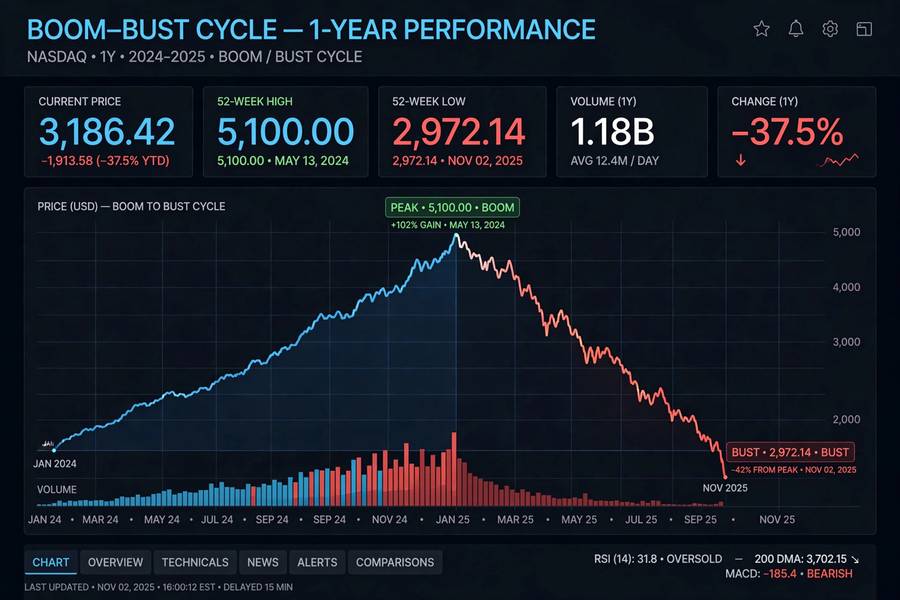
Second, the money is increasingly financial rather than commercial. Massive funding rounds are being justified by future capabilities rather than current revenues. I’m not saying the technology is fake — it’s real and impressive — but the valuations assume a near-term transformation that the technology hasn’t demonstrated yet. Past winters began exactly here: investment outrunning commercialization, then a single disappointing earnings season resetting everything.
Third, concentration risk is extreme. A handful of companies and a handful of data centers carry most of the bet. That makes the system fragile to specific shocks — an energy crunch, a hardware export ban, a single spectacular failure. Diversified bubbles deflate slowly. Concentrated ones can snap.
None of this guarantees a winter. But if you lived through the dot-com crash — or just read about it with any attention — the pattern recognition should make you uncomfortable. Overheating doesn’t have to be fatal to be real.
What’s Structurally Different This Time
Now the other side, because fairness demands it. Several things about the current boom are genuinely unlike the 1970s or 1980s, and they’re the reason I’d bet against a full repeat.
The technology ships. This is the big one. The old AI winters froze systems that barely worked outside labs. Today’s AI systems work — they’re embedded in products millions of people use daily. Winter killed expert systems partly because customers stopped buying them. It’s much harder to “stop buying” technology that’s woven into search, email, coding tools, and customer service. Deployed utility is winter-resistant.
The talent base is enormous. Previous winters devastated AI research because the field was tiny — a few dozen labs, a few hundred people. Lose funding and the field nearly dies. Today, hundreds of thousands of engineers work on AI across academia and industry. A funding shock would hurt, but the field wouldn’t lose its critical mass. You can’t unemploy your way back to 1975 anymore.
The economics are real, even if the valuations aren’t. Companies are genuinely saving money and making money with AI tools right now — not in a hypothetical future, but in this quarter’s earnings. That’s the difference between the dot-com crash (revenue-free) and the dot-com crash’s aftermath (the survivors were real). A valuation correction is likely at some point; a total funding collapse requires funders to conclude the technology has no commercial value, and that’s a much harder case to make.
These three factors don’t make AI winter-proof. They make it winter-resistant — the difference between a cold snap and an ice age.
Three Ways Another Winter Could Start
If I’m wrong and the ice comes back, here’s how I think it happens — three plausible triggers, ranked by how much they worry me.
1. An infrastructure bottleneck that stops progress. AI’s current trajectory depends on absurd amounts of compute and energy. If chip supply tightens severely, or if energy costs make training runs economically absurd, or if scaling laws visibly flatten — progress stalls while promises keep climbing. The gap between promised superintelligence and delivered slightly-better-models becomes undeniable. This worries me most because it’s physical, not psychological. You can’t hype your way past physics.
2. A catastrophic, well-publicized failure. AI systems are being deployed into consequential decisions — hiring, lending, medical triage, critical infrastructure. The history of artificial intelligence shows that trust collapses faster than it builds. One spectacular, televised catastrophe — an autonomous system causing mass harm, a model-driven financial event — could trigger regulatory overreaction and funding panic simultaneously. Every AI incident makes this slightly more likely, which is why serious AI incident reporting matters: it surfaces problems before they become winters.
3. The slow deflation. No drama, no crash — just years of AI products that are good but not transformative, returns that are fine but not civilization-changing, and funders gradually reallocating to the next shiny thing. This is actually the most likely form a new winter takes: not a bang but a shrug. The word “AI” quietly exits pitch decks again, not because the technology failed but because the returns bored people.

What Probably Won’t Cause One
Some candidates for winter-triggers get discussed a lot and deserve dismissal.
Model capability plateaus alone won’t do it. People treat “GPT-N is only slightly better than GPT-(N-1)” as a winter trigger, but plateaus in capability don’t kill deployed products. Search engines stopped getting dramatically better years ago; nobody declared a search winter. Useful-enough is a stable state.
Regulation won’t do it either — probably. AI regulation is tightening worldwide, and some of it will be clumsy. But regulation tends to consolidate advantage for incumbents rather than kill a field; compliance costs hurt startups more than giants. A genuinely draconian ban is politically unlikely in the countries doing the most AI research.
Competition from “the next paradigm” won’t do it. Every decade someone declares deep learning dead and the next paradigm imminent. Even if true, that’s succession, not winter — funding follows capability, wherever it lives.
The winter candidates that fail share a trait: they inconvenience AI rather than discredit it. Winters need discrediting.
How I’d Measure the Temperature
If you want to watch for a coming freeze yourself, ignore the headlines and watch the money and the language. These are my four gauges:
Grant language. In the run-up to past winters, researchers kept working but changed vocabulary — “AI” became “intelligent systems,” “informatics,” anything unfundable-sounding got renamed. If you see AI researchers suddenly rebranding their field, the freeze has already started culturally.
Enterprise renewal rates. Watch whether companies renew AI contracts after the pilot phase. Pilots are bought with enthusiasm; renewals are bought with ROI. A wave of non-renewals is the canary in the coal mine.
Startup mortality. Winter doesn’t announce itself in the giants — it announces itself in seed rounds. When early-stage AI startups can’t raise, the ecosystem’s immune system is failing.
The ratio of demos to deployments. Demos are cheap; deployments are expensive. When the industry’s output is mostly demos, belief is being manufactured. When it’s mostly deployments, belief is being earned.
I’d also watch one meta-signal: whether the phrase “AI winter” itself starts getting used as a joke by insiders or as a warning by outsiders. Both, at different times, have been leading indicators.
If It Happens, What Survives
Let’s say the ice comes. What’s different about a winter in the 2020s versus the 1980s? A few things survive that didn’t last time.
Open-source models survive — they’re too widely distributed to defund. The 1980s winter killed commercial products; it couldn’t have killed something every laptop can run. Today’s openly available models mean a funding freeze slows progress but can’t erase the capability base.
Applied AI survives. The boring, profitable applications — fraud detection, recommendation systems, industrial optimization — don’t need hype. They need maintenance. Winter kills moonshots, not plumbing.
And the research survives in distributed form. The field is too big and too international to be strangled by any single country’s funding decisions. The 1970s winter worked because AI lived in a few government-funded labs. That world is gone.
So even in the worst case, we’re looking at a slowdown, not a dark age. The knowledge doesn’t get unlearned. The models don’t get deleted. The engineers don’t forget how to engineer.
My Verdict
Could there be another AI winter? Yes — but I’d bet against the classic version. The technology is too deployed, the field too large, the economics too real for a full 1980s-style freeze.
What I would bet on, uncomfortably, is a correction wearing winter’s clothes: a period where valuations collapse, moonshots die, startups evaporate, and the conversation shifts from “AI will change everything by Tuesday” to “AI is a useful tool with real limits.” That’s not a winter in the historical sense. It’s maturity — arriving, as maturity always does, disguised as disappointment.
The honest posture is this: enjoy the boom, but build like the boom ends. Use the tools for what they actually do. Keep the receipts on every grand claim. And remember that the field survived two winters already — the people who kept working through them built the foundations we’re standing on. If the ice comes back, the ones who keep building through it will build the next thaw.

Frequently Asked Questions
Yes, it’s possible, but a full repeat of the 1970s or 1980s freezes is unlikely. Today’s AI is widely deployed in real products, the talent base is enormous, and the economics are real — all of which make the field far more winter-resistant than it was. A valuation correction is more likely than a total funding collapse.
Both previous AI winters followed the same script: wild promises, slow delivery, then vanishing funding. The 1970s winter followed overpromising from early symbolic AI research, and the late-1980s winter followed the collapse of the expert-systems market. In both cases, funders stopped believing the hype.
Key warning signs include researchers quietly rebranding away from the term “AI,” enterprises failing to renew AI contracts after pilots, early-stage AI startups unable to raise seed funding, and an industry output dominated by demos rather than real deployments.
Open-source models, boring profitable applications like fraud detection and recommendation systems, and the distributed global research community would all survive. A modern winter would slow progress and kill moonshots, but it couldn’t erase the capability base the way the 1980s winter nearly did.
Parts of it show classic bubble signs — inflated promises, valuations based on future capabilities rather than current revenue, and extreme concentration in a few companies. But unlike pure bubbles, the underlying technology generates real commercial value today, which makes a simple boom-bust story less certain.