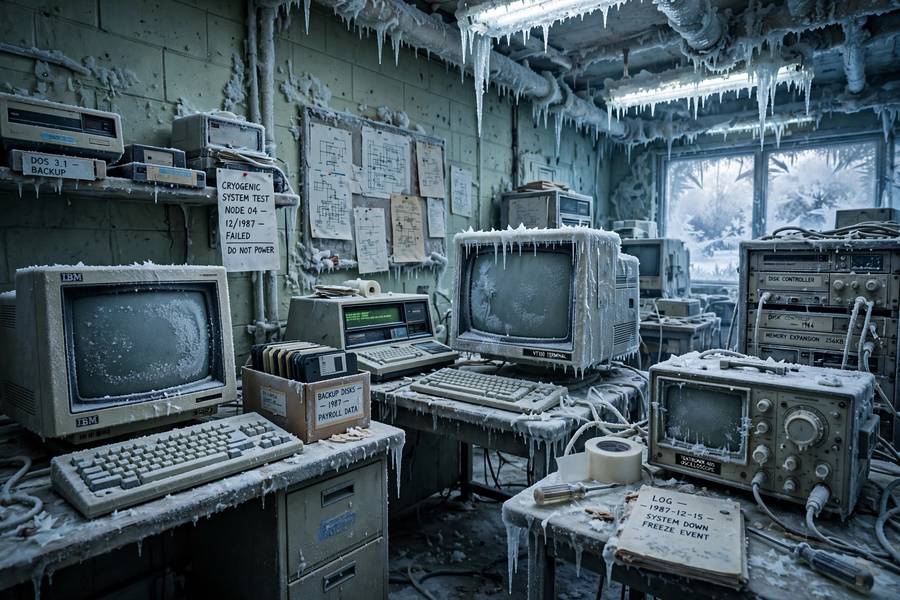
Twice in living memory, artificial intelligence went from the most exciting technology on Earth to a punchline — funding evaporated, researchers fled the field, and “AI” became a label startups avoided. The causes of AI winter aren’t mysterious, but they’re widely misunderstood. It wasn’t that AI “failed.” It’s that promises outran capabilities, money outran results, and when the bill came due, the entire field paid for the hype of its loudest voices.
Understanding the causes of AI winter matters now more than ever, because the current AI boom rhymes uncomfortably with the pre-winter periods. The same dynamics — extravagant promises, massive funding, capabilities that impress in demos and disappoint in deployment — are visible today. History doesn’t repeat, but it does set traps for people who don’t study it. For the overview, see what AI winter is and the broader history of artificial intelligence.
Table of Contents
- What an AI Winter Actually Is
- Cause One: Promises That Outran Reality
- Cause Two: The Technical Walls
- Cause Three: The Funding Death Spiral
- Cause Four: The Talent Exodus
- Cause Five: The Label Became Toxic
- How the Two Winters Differed
- The Role of Government Funding
- Warning Signs for Today
- Frequently Asked Questions
What an AI Winter Actually Is
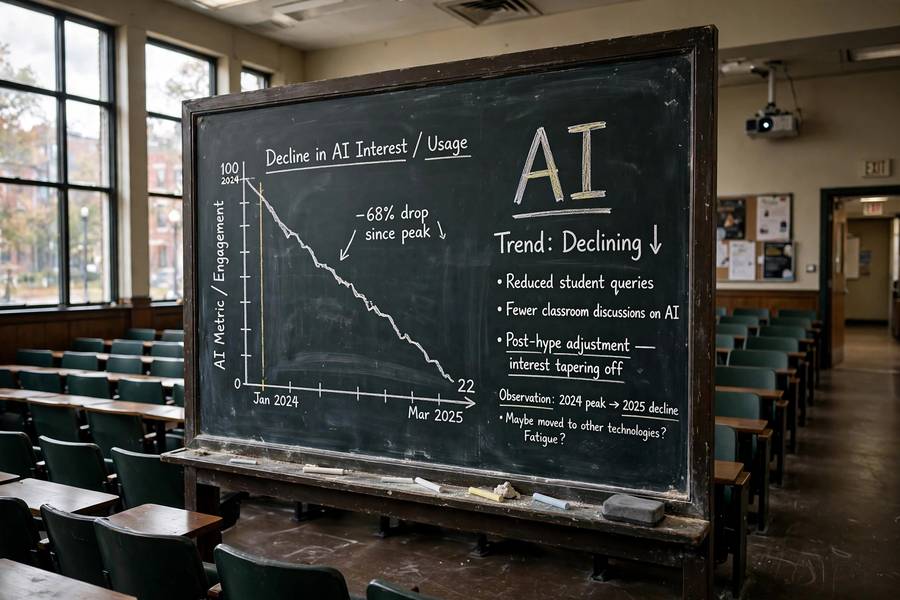
An AI winter is a period of reduced funding, interest, and research activity in artificial intelligence, following a period of hype and inflated expectations. The term covers two main episodes: the first winter (roughly mid-1970s to early 1980s) and the second (late 1980s to 1990s, sometimes extended to the early 2000s). Some historians count smaller “mini-winters” too, but the big two are the canonical ones.
Crucially, research didn’t stop during winters — it slowed, scattered, and rebranded. Important work continued under other names (machine learning, pattern recognition, informatics), and some of the foundations of today’s AI were laid during the cold years by researchers working with minimal funding and maximal skepticism. Winters kill hype, not science — but they kill careers, labs, and momentum, which amounts to nearly the same thing for the people living through them.
The winters also weren’t purely bad. The first winter forced the field to confront its foundational limitations; the second forced a shift from hand-coded expert systems to learning from data. Adversity clarified. But the human cost — abandoned PhDs, shuttered labs, a generation warned away from the field — was real, and the causes are worth understanding precisely so we can avoid a third.
Cause One: Promises That Outran Reality
The primary cause of both winters was the same: leading researchers and promoters promised far more than the technology could deliver, on timelines that were fantasy. In the 1960s, prominent AI figures predicted human-level machine intelligence within a generation — one famously suggested the problem would be solved within a single summer by a handful of graduate students. In the 1980s, expert system companies promised to bottle human expertise and sell it, with projections of a multi-billion-dollar industry materializing in years.
These weren’t fringe claims — they came from the field’s leaders, were amplified by media hungry for robot stories, and were believed by funders writing large checks. When the predictions failed to materialize, the backlash wasn’t proportional to the shortfall; it was proportional to the hype. A field that promises the moon and delivers a ladder doesn’t get credit for the ladder. It gets defunded for the missing moon.
The mechanism is worth naming: the hype cycle’s peak creates commitments — funding levels, institutional investments, public narratives — calibrated to the promises, not the reality. When reality arrives, the gap becomes a crisis of confidence. The bigger the hype, the deeper the winter.
Cause Two: The Technical Walls
Behind the broken promises were genuine technical limitations that the hype had papered over. In the first winter’s run-up, early AI worked beautifully on toy problems — blocks-world puzzles, simplified language tasks — and researchers extrapolated to the real world. The real world fought back: combinatorial explosion (problems that were trivial at small scale became computationally impossible at real scale), the frame problem (representing common-sense knowledge turned out to be enormously hard), and hardware limits (1970s computers simply couldn’t do what the theories required).
The second winter’s wall was different: expert systems — the 1980s’ great hope — hit the knowledge acquisition bottleneck. Encoding human expertise as rules worked for narrow domains but didn’t scale; every new domain needed its experts interviewed, its rules hand-crafted, its edge cases enumerated. Maintenance was a nightmare — rule bases became brittle, contradictory, and unmaintainable as they grew. The systems were also expensive, requiring specialized Lisp machines that general-purpose computers soon outperformed at a fraction of the cost.
In both cases, the pattern was identical: approaches that worked in constrained demonstrations failed to scale to real-world complexity. Contrast that with how AI models are trained today — learning from data at scale, rather than hand-coded rules. The demos weren’t fraudulent — they were real achievements on real (small) problems. The error was extrapolation: assuming that what works at toy scale works at world scale.
Cause Three: The Funding Death Spiral
Funding dynamics turned disappointment into collapse through a feedback loop. Here’s how it worked: hype attracts funding → funding produces demos, not products → the gap between promises and results becomes undeniable → high-profile reports document the shortfall → funders cut AI specifically → labs close, projects cancel → the field’s visible output shrinks → remaining funders see a dying field and cut further.
The trigger events are famous. In the UK, the 1973 Lighthill Report concluded AI research had failed to deliver on its grand promises and recommended cutting funding to all but a few labs. In the US, DARPA shifted priorities after critical reviews, and the cuts cascaded through universities.
The death spiral’s cruelest feature: it punishes the careful researchers along with the hype merchants. The scientists who made modest claims and did solid work lost their funding because their flamboyant colleagues had poisoned the well. Winters are indiscriminate — they freeze the prudent and the reckless alike, which is why researchers who lived through them developed a lasting allergy to hype.

Cause Four: The Talent Exodus
When funding collapses, people leave — and talent flight compounds the winter. Graduate students were advised (correctly, for their careers) to avoid AI. Professors rebranded their work to escape the toxic label. Industry researchers moved to fields with paychecks. The field didn’t just lose money; it lost its future — the cohort that would have become the next generation of leaders.
This created a missing generation effect. When AI revived in the 2000s-2010s, many of its leaders were either veterans who’d endured the winters or newcomers from adjacent fields (physics, statistics, neuroscience) who’d never been “AI people.” The winters selected for stubbornness and outsiders — which arguably shaped the field’s character, for better and worse.
The exodus also destroyed institutional knowledge. Labs that closed took their expertise, code, and research programs with them. When funding returned, parts of the wheel had to be reinvented. This is the hidden cost of winters: not just the lost years, but the lost continuity. Science is a social enterprise, and scattering the society sets the science back further than the calendar suggests.
Cause Five: The Label Became Toxic
Perhaps the most telling cause: “artificial intelligence” itself became a term researchers avoided. During the winters, calling your work “AI” was a funding kiss of death — reviewers associated it with broken promises. So researchers called it machine learning, pattern recognition, data mining, intelligent systems, computational intelligence — anything but AI.
This rebranding was rational self-preservation, but it had a strange effect: AI continued advancing under aliases, and when the “AI revival” came, it was partly a rebranding back. The winters didn’t stop progress toward intelligent machines; they stopped people from calling it that. The label’s toxicity outlasted the technical problems — a reminder that scientific fields are social constructs as much as intellectual ones, vulnerable to reputation dynamics that have nothing to do with truth.
The modern echo is worth noting: today’s “AI” label is being slapped on everything from chatbots to spreadsheets with macros, repeating the dilution that preceded past winters. When everything is AI, the term means nothing — and meaningless terms are fragile when results disappoint.
How the Two Winters Differed
The first winter (mid-70s to early 80s) was primarily academic and government-funded — a crisis of basic research funding after grand promises failed. Its character was intellectual: the field’s foundational approaches (symbolic AI, perceptrons) hit walls, and the theoretical mood turned pessimistic. Recovery came from new paradigms (expert systems, connectionism’s revival).
The second winter (late 80s to 90s) was primarily commercial — a market collapse after the expert system bubble burst. Its character was economic: companies failed, hardware markets vanished, and industry investment dried up. Academic research continued at reduced levels, increasingly under the “machine learning” alias. Recovery came from data and compute: the internet provided massive datasets, GPUs provided massive compute, and learning-based approaches finally had the fuel they’d always needed.
The difference matters for today’s assessment. A modern AI winter, if one comes, would likely be commercial first (like the second) — driven by the gap between AI investment and AI revenue — rather than academic. The technical foundations are stronger now, but the financial dynamics rhyme.
The Role of Government Funding
Government funding — especially DARPA in the US — was the field’s lifeblood in the early decades, and government priorities shaped both winters. The pattern: defense agencies funded ambitious AI for strategic reasons, grew impatient with the pace, commissioned critical reviews, and redirected money to more immediately useful technologies. The Lighthill Report (UK) and the American Association for Artificial Intelligence’s own reckonings played similar roles.
This created a structural vulnerability: a field dependent on a few large patrons is hostage to their attention spans. When DARPA sneezed, AI caught pneumonia. The modern field is more diversified — industry funding now dominates — but concentration risk persists in new forms: a handful of tech giants fund most frontier research, and their priorities could shift.
The lesson for researchers and institutions: diversify funding, under-promise, and build the boring infrastructure (datasets, benchmarks, shared tools) that survives patron shifts. The labs that weathered the winters best were those with diverse support and modest claims — unglamorous advice that remains correct.
Warning Signs for Today
Reading the causes of AI winter as a pattern checklist for the present is sobering. Promises outrunning reality? The claims around artificial general intelligence timelines echo the 1960s confidently. Technical walls? Current systems have well-documented limitations (reasoning, reliability, grounding) that scaling hasn’t fully solved. Funding death spiral dynamics? Investment levels assume revenue growth that hasn’t materialized yet. Talent concentration? The field depends heavily on a few labs and companies. Label toxicity risk? “AI-powered” is already becoming noise.
None of this predicts a winter — the differences from past pre-winter periods are real too: genuine utility, massive adoption, and technical foundations (learning from data at scale) that are sounder than symbolic AI or expert systems were. But the checklist is worth running honestly, because the people most confident that “this time is different” are usually the ones who haven’t studied last time.

Frequently Asked Questions
AI winters were caused by hype outrunning reality (extravagant promises that failed), genuine technical walls (approaches that didn’t scale), funding death spirals (cuts compounding after disappointing results), talent flight, and the “AI” label becoming toxic. Both winters followed the same hype-to-disappointment cycle.
Two major ones: the first from roughly the mid-1970s to early 1980s (academic funding collapse after symbolic AI stalled), and the second from the late 1980s through the 1990s (commercial collapse after the expert system bubble burst). Some historians count smaller mini-winters as well.
The 1973 Lighthill Report was a UK government-commissioned review concluding AI research had failed to deliver on its grand promises. It recommended cutting funding to all but a few labs, effectively ending British AI research for a decade and triggering the first AI winter’s funding collapse.
No — research continued at reduced levels, often rebranded as machine learning, pattern recognition, or informatics to avoid the toxic “AI” label. Important foundations of modern AI were laid during the winters by researchers working with minimal funding. Winters kill hype and momentum, not all science.
It’s possible — the warning signs (hype outpacing results, massive investment ahead of revenue, technical limitations) rhyme with pre-winter periods. But today’s foundations are stronger: genuine utility, massive adoption, and data-driven approaches that scale. The honest answer is that vigilance, not complacency or panic, is warranted.