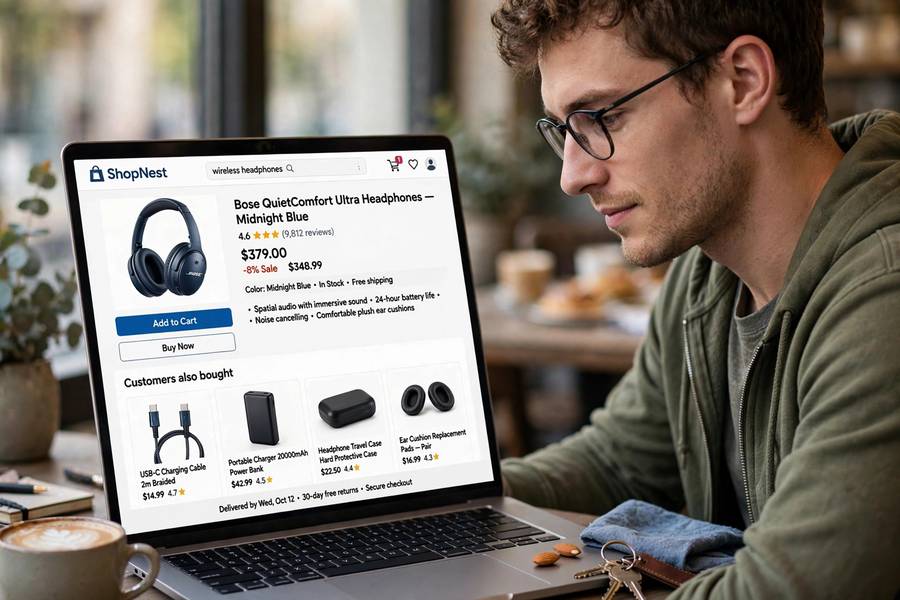
Amazon’s recommendation engine is credited with driving over a third of the company’s revenue. Let that sink in: more than a third of what the world’s largest retailer sells is sold because an algorithm suggested it. “Customers who bought this also bought” might be the most valuable sentence in the history of commerce — eleven words that built an empire.
I’ve always found Amazon’s system fascinating because it’s the oldest large-scale recommender still running — it predates Netflix’s streaming algorithm, YouTube’s watch-time optimization, all of it. And unlike its flashier cousins, it has a harder job: recommending things you buy, not things you watch. A bad video recommendation wastes ten minutes; a bad product recommendation wastes your money. Here’s how it works. The general theory is in how recommendation algorithms work.
Table of Contents
- The 35% Number (and Why It Matters)
- Customers Who Bought This Also Bought
- Item-Based Collaborative Filtering: The Core Engine
- Your Personalized Homepage and Emails
- Frequently Bought Together and the Bundle Logic
- Sponsored vs Organic: The Two Kinds of Recommendations
- The Data: What Amazon Knows About Your Shopping
- Why Buying Is Harder Than Watching
- How to Get Better Recommendations (or Escape Them)
- Frequently Asked Questions
The 35% Number (and Why It Matters)
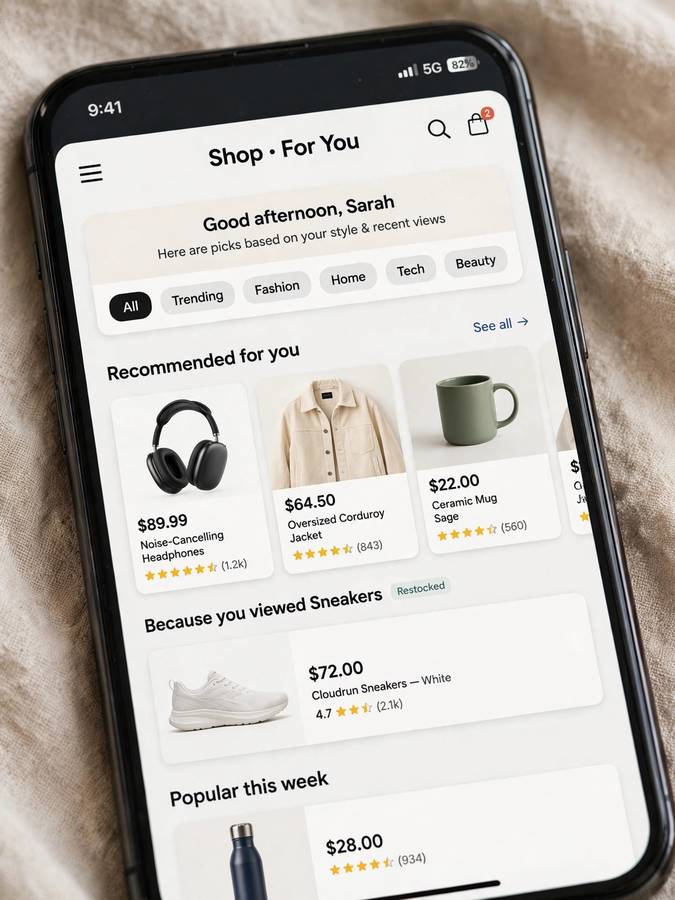
The oft-cited figure — roughly 35% of Amazon’s revenue comes from recommendations — dates back years and the real number today is likely higher, folded into the general personalization of the entire shopping experience. But the point stands: recommendations aren’t a feature of Amazon’s store. They are the store.
This matters because it means your Amazon is not everyone else’s Amazon. Prices can differ (through coupons and targeted offers, not usually base price discrimination — though the perception persists), product ordering differs, and the suggestions differ. You’re shopping in a store built for one.
Customers Who Bought This Also Bought
The most famous recommendation widget on the internet deserves a close look. On every product page, a carousel shows items frequently purchased alongside or after the product you’re viewing. It feels like folk wisdom — “people like you also got the case with the phone” — but it’s item-based collaborative filtering, computed at massive scale.
How it works: Amazon analyzes purchase histories across hundreds of millions of customers, finding items with correlated buying patterns. If a large number of people who bought hiking boots also bought merino socks, the system links those items — no understanding of hiking required. The correlation is the knowledge.
The genius of the widget is placement: it appears at the moment of maximum purchase intent. You’re already buying; the friction to add one more item is near zero. The recommendations don’t need to be perfect — they need to be plausible at the moment your wallet is open. A 5% attach rate on billions of transactions is a fortune.
It also creates discovery. Most of us don’t know what accessories exist for products we buy. The widget functions as a knowledgeable salesperson: “you’ll want the filter replacements too.” Sometimes it’s genuinely helpful; sometimes it’s how you end up owning three garlic presses.
Item-Based Collaborative Filtering: The Core Engine
Amazon’s foundational innovation — published in a famous 2003 paper by Linden, Smith, and York — was item-based collaborative filtering at scale.
The older user-based approach (“find similar customers”) was computationally brutal: comparing every customer to every other customer, constantly, for hundreds of millions of users. Amazon’s insight was to flip it: instead of matching similar users, match similar items. Compute, offline, which items are “related” based on purchase correlations. Then recommendation is a fast lookup: customer bought X → show items related to X.
Item similarities are stable — a tent’s relationship to a sleeping bag doesn’t change hourly — so they can be precomputed in batch jobs. The online serving is then just: take the customer’s purchase and browsing history, look up related items, rank by predicted interest, display. Fast, scalable, and remarkably effective.
Modern Amazon layers deep learning on top — neural models that capture subtler patterns than raw correlations — but the item-based skeleton persists. It’s one of those rare ideas that’s both theoretically elegant and brutally practical, which is why it’s still running two decades later.
Your Personalized Homepage and Emails
Beyond product pages, Amazon personalizes the entire experience:
Homepage. The rows of “inspired by your browsing,” “recommended for you,” and category suggestions are generated from your behavioral profile — recent views, purchases, searches, and wishlist items. Like Netflix’s rows, the selection and ordering are yours alone.
Search results. Amazon search re-ranks results using your history. Two people searching “headphones” see different orderings — the system boosts items similar to your past purchases and views. This is why Amazon search sometimes feels like it reads your mind and sometimes feels broken: it’s optimizing for your predicted purchase, not for the literal query.
Every surface is an opportunity, and every opportunity is measured. Amazon tests recommendation variants relentlessly — the system you see today is the survivor of millions of A/B tests.
Frequently Bought Together and the Bundle Logic
“Frequently bought together” looks similar to “also bought” but answers a different question: not “what else might you like” but “what goes with this right now.” The distinction matters — it’s the difference between discovery and completion.
The bundle logic captures complementarity: phone + case, camera + memory card, grill + cover. These are items used together, and the data reveals the relationships without anyone teaching the system what a “complement” is. Purchase co-occurrence is enough.
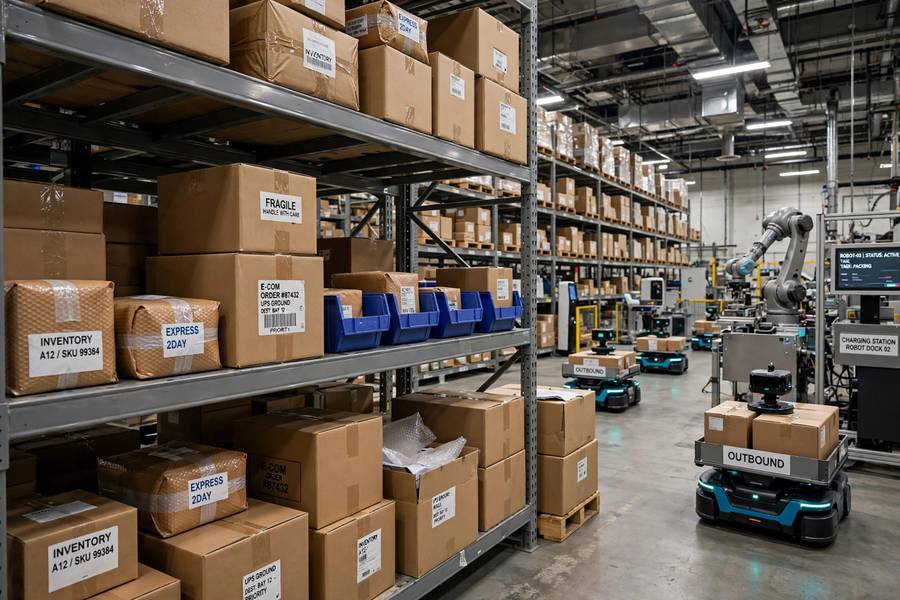
Amazon also uses this for pricing and promotion: bundle discounts, “buy together” pricing, and inventory planning. If the data shows two items are always bought together, stocking and warehousing can be coordinated. The recommendation data feeds the logistics operation — the algorithm doesn’t just sell, it shapes what gets stocked where.
For shoppers, the practical note: “frequently bought together” is the most genuinely useful widget, because complements are objectively helpful (you do need the memory card). It’s also the one most worth sanity-checking — the bundle price isn’t always the best price for the components.
Sponsored vs Organic: The Two Kinds of Recommendations
Critical distinction that many shoppers miss: not everything labeled as a recommendation is algorithmic in the pure sense. Amazon mixes two streams:
Organic recommendations come from the behavioral models — genuinely predicted to interest you based on data.
Sponsored placements are ads — sellers paying for placement in recommendation slots, on search results, and on product pages. They’re labeled “Sponsored,” but the label is small and the placement mimics organic recommendations deliberately.
The sponsored stream uses relevance too (irrelevant ads don’t convert, so Amazon’s ad system also predicts purchase likelihood), but the ranking includes bid amounts. A sponsored product might outrank a better organic match because the seller paid more. Ad targeting layered on behavioral data is also where questions about what AI bias is get practical — when purchase predictions correlate with demographics, personalization and discrimination get hard to tell apart.
The “also bought” carousel is mostly organic; the top of search results is heavily sponsored. Knowing which stream you’re looking at changes how much weight to give it.
The Data: What Amazon Knows About Your Shopping
The behavioral inventory:
Purchases. The core — what you bought, when, how much you paid, whether you returned it. Returns are strong negative signals; the system learns what disappointed you.
Browsing. Product views, time on page, image zooms, review reading. Browsing without buying signals interest with hesitation — the system may follow up with a price-drop email.
Search. Queries reveal intent directly. Searching “standing desk” three times in a week is a purchase waiting to happen, and the system treats it accordingly.
Cart behavior. Adds, removals, abandoned carts. Cart abandonment triggers follow-up emails — the digital equivalent of the salesperson calling after you.
Reviews and ratings. What you rated and what you wrote. Also which reviews you found helpful — meta-behavior that refines taste modeling.
Cross-service data. Prime Video viewing, Alexa queries, Kindle reading — within Amazon’s ecosystem, data flows. Your Prime Video sci-fi habit informs your book recommendations. The ecosystem is the moat and the data source.
Contextual. Device, location, time, Prime membership status, purchase frequency. High-frequency buyers get different treatment than occasional ones.
It’s comprehensive, and it’s all in service of one prediction: what will you buy next?
Why Buying Is Harder Than Watching
A closing reflection on why Amazon’s problem is technically harder than Netflix’s or YouTube’s:
Sparse data. You watch hundreds of videos a month but buy a handful of products. Less behavioral data per user means weaker profiles — the system must do more with less.
High stakes. A bad recommendation costs money, not minutes. Users are less forgiving, and the system must be more careful. This is why Amazon leans conservative — complements and close substitutes rather than wild discovery.
One-time purchases. You buy a refrigerator once a decade. The system can’t learn your refrigerator taste from repetition — it gets one shot. Durables are fundamentally harder than consumables.
Gifting. A significant share of purchases are for other people, polluting the behavioral profile. Your nephew’s birthday gift becomes “your” interest in dinosaur toys. Amazon’s household profiles and the sheer volume of data mitigate this, but it’s a persistent noise source.
Price sensitivity. Recommendations must account for budget — the perfect product at triple your usual spend is a bad recommendation. Price-aware ranking adds a dimension that content recommenders don’t face.
That Amazon does this well despite the difficulty is a testament to the engineering. That it drives a third of revenue is a testament to the economics of reducing friction at the moment of intent.
How to Get Better Recommendations (or Escape Them)
For better recommendations: rate purchases honestly, maintain wishlists (they’re preference declarations), browse deliberately, and use separate profiles for household members. Clean signals, better predictions.
For escaping them: use incognito for gift shopping (protects your profile from dinosaur-toy pollution), clear browsing history periodically, turn off personalized ads in settings, and remember that search results are re-ranked — try logging out for the “neutral” view occasionally.
For smarter shopping regardless: always check whether a recommendation is sponsored, compare the “frequently bought together” bundle price against buying separately, and read reviews beyond the top few — the recommendation got you to the product; the reviews tell you whether to buy it.

Frequently Asked Questions
Amazon primarily uses item-based collaborative filtering: it precomputes relationships between products based on purchase correlations across hundreds of millions of customers, then recommends items related to your browsing and purchase history. Deep learning models now layer on top for subtler patterns, personalizing your homepage, search results, emails, and product pages.
It’s item-based collaborative filtering in action: Amazon found that customers who purchased the item you’re viewing also frequently purchased the suggested items. The relationship comes from purchase-pattern correlations across the customer base, not from any human understanding of the products.
Both exist. Organic recommendations come from behavioral models predicting your interests. Sponsored placements are paid ads labeled “Sponsored” — they use relevance prediction too, but ranking includes seller bids. Search results tops and some carousels skew heavily sponsored.
The widely cited figure is around 35%, though it dates back years and the true share today — counting all personalization across homepage, search, emails, and product pages — is likely higher. Recommendations are core to Amazon’s business, not a side feature.
Usually consumable replenishment logic (it thinks you need refills), household-profile mixing (someone else’s purchase attributed to you), or gift purchases polluting your profile. Deleting irrelevant items from browsing history and using separate profiles helps keep recommendations accurate.
Keep reading: